Greyfriars Kirk
Before becoming King of Scots, Robert the Bruce committed a shocking act within the walls of a Dumfries church.
Full story unlocks in the tour
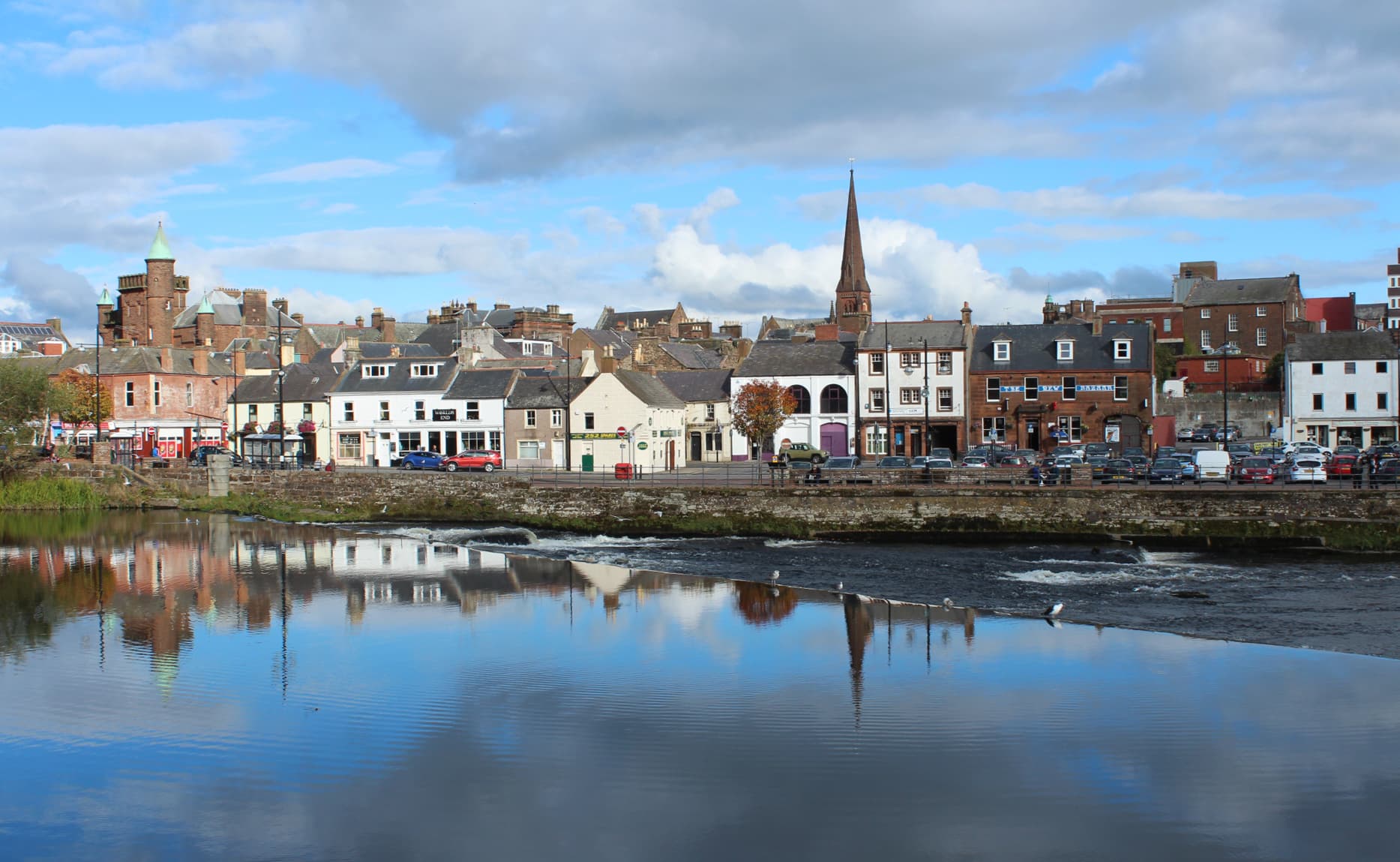 Billy McCrorie / CC BY-SA 2.0, via Wikimedia Commons
Self-guided audio walking tour of Dumfries — GPS route, offline playback, story-driven narration in 32 languages.
“Where Scotland's national bard found his final inspiration, and secrets linger in the sandstone.”
Not the postcards. The stories even locals don't know — whispered in your ear, right where they happened.
Before becoming King of Scots, Robert the Bruce committed a shocking act within the walls of a Dumfries church.
Robert Burns, Scotland's national poet, had a preferred 'howff' in Dumfries, and it holds more than just literary history.
The modest sandstone house where Robert Burns spent his final years holds a poignant detail about his family life.
Discover every secret of Dumfries
Every address, every reveal in full — in your ear, right where it happened.
You pick your stops. You walk. The voice reveals what the others miss.
Your self-guided audio tour of Dumfries is ready — pick your landmarks, choose your language, and start the moment you arrive.
BuyLume has a built-in augmented-reality guide. Hold your phone up and its camera shows the street ahead of you, with a glowing arrow laid over the real view that always points to your next stop — no map to puzzle over, no wrong turns. Like everything in Lume, it works fully offline.
Dumfries, often called 'The Queen of the South,' is a historic market town on the banks of the River Nith in southwest Scotland. It is the largest town in the Dumfries and Galloway region and holds a significant place in Scottish history and literature. The town's red sandstone architecture and numerous bridges spanning the Nith create a distinctive character.
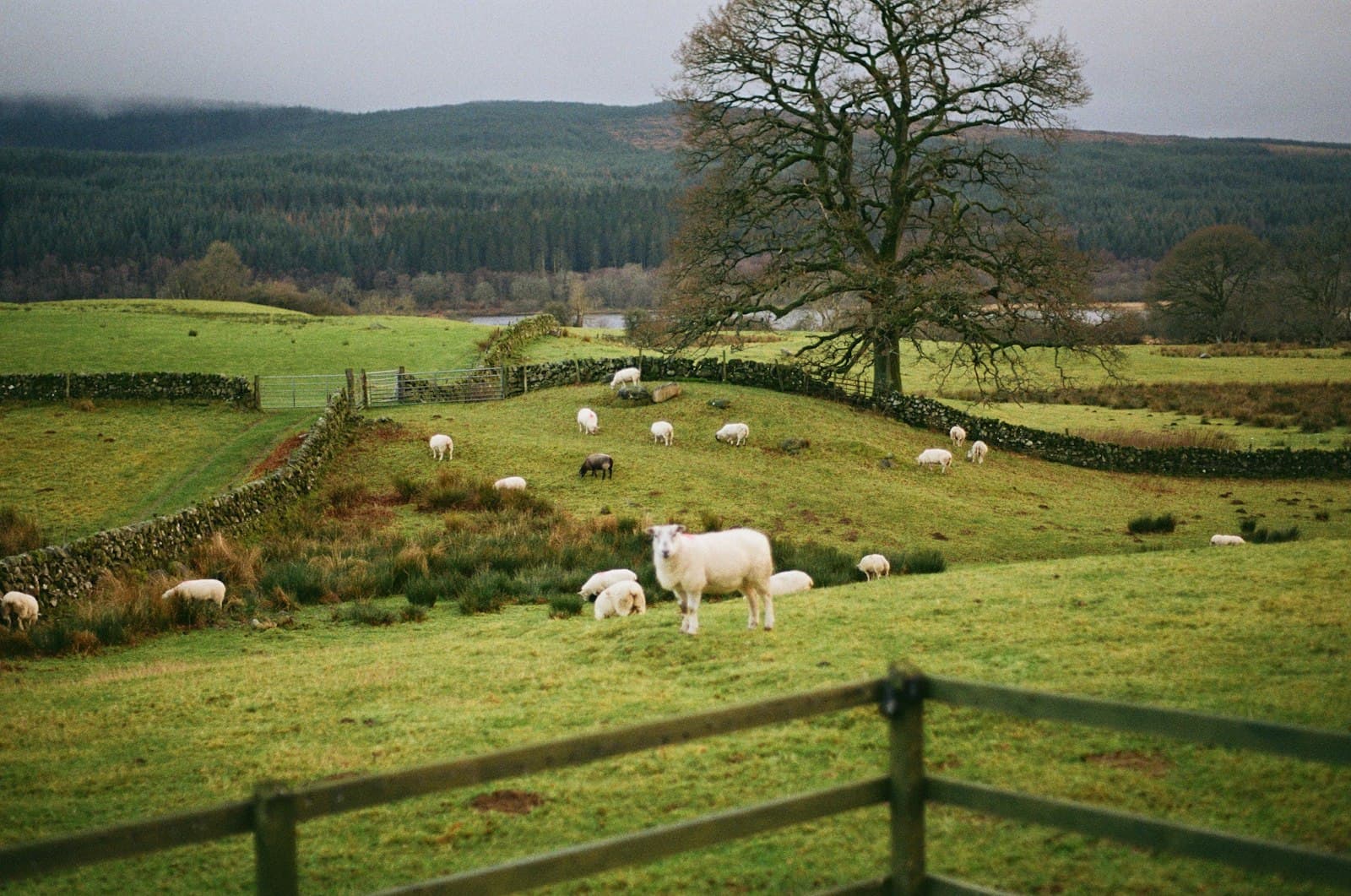
Beyond its architectural charm, Dumfries is most celebrated for its deep connections to Robert Burns, Scotland's national poet, who spent his final, prolific years here. Visitors can trace his footsteps through various sites, from his homes to his preferred taverns. The surrounding Dumfries and Galloway region, with its rugged coastline, rolling hills, and forests, offers a blend of natural beauty and historical intrigue, making Dumfries an ideal base for exploration.
The history of Dumfries stretches back to Roman times, with traces of their presence still found in the region. After the Romans, the area was part of various kingdoms, including Rheged and Northumbria, before falling under Scottish rule in the 11th century.
Dumfries was designated a Royal Burgh by King William the Lion in 1186, a testament to its strategic importance as a frontier town near the English border and a vital market and port. Its location, bordered by the River Nith and Lochar Moss, provided natural defenses. However, this proximity to England also meant frequent conflict; the town was sacked, plundered, or occupied by English armies multiple times between 1300 and 1570.
A pivotal moment in Scottish history occurred in Dumfries in 1306 when Robert the Bruce murdered his rival, John Comyn III of Badenoch, at Greyfriars Kirk, setting in motion his bid for the Scottish throne. Centuries later, in 1745, Bonnie Prince Charlie and his Jacobite forces held the town for ransom, demanding funds and shoes for his men before retreating as the Duke of Cumberland approached.
Dumfries' most famous resident, Robert Burns, lived here from 1791 until his death in 1796. During these final years, he worked as an excise officer and penned some of his most enduring poetry. His legacy is woven into the fabric of the town, with numerous memorials and sites dedicated to him, including his house, the Robert Burns Centre, and his mausoleum.
The town also has a darker historical note, being the site of Scotland's last public hanging in 1868. In the 20th century, Dumfries played a significant role during World War II, hosting a brigade of the Norwegian armed forces in exile. Today, Dumfries continues to evolve, balancing its past with its role as a regional hub for retail and tourism.
Begin your exploration at the Robert Burns House, where Scotland's national poet spent his final years, now a museum showcasing his life and work. Nearby, the Robert Burns Centre offers an excellent audio-visual presentation and a scale model of 1790s Dumfries. Do not miss the Burns Mausoleum in St Michael's churchyard, the poet's final resting place.
Cross the pedestrian-only Devorgilla Bridge, one of Scotland's oldest, for scenic views of the River Nith. Explore the historic Globe Inn, Robert Burns' preferred pub, which offers tours and a glimpse into his personal life. For a deeper dive into local history, the Dumfries Museum and Camera Obscura provides panoramic views of the town and exhibits on its past.
Further afield, the dramatic, triangular Caerlaverock Castle with its moat is a medieval fortress worth visiting. The Dumfries and Galloway Aviation Museum at the former RAF Dumfries site offers insights into the region's wartime contributions. For outdoor enthusiasts, Mabie Forest provides trails for walking, cycling, and mountain biking. The Twelve Apostles Stone Circle, one of Britain's largest, offers a glimpse into prehistoric times.
Dumfries is a year-round destination, but the late spring through early autumn (May to September) offers the most pleasant weather for outdoor activities. July is typically the warmest month, with average highs around 65°F (18°C). This period also coincides with various festivals, including the Dumfries & Galloway Arts Festival in May. While winter is quieter, it has its own charm, especially during the annual Big Burns Supper Festival in January, celebrating Robert Burns with concerts and performances. Autumn brings golden hues to the landscape, ideal for peaceful walks.
Dumfries is easily accessible by road and rail. It is approximately a 1.5-hour drive from Glasgow and Edinburgh, and just over an hour from Carlisle. Regular train services connect Dumfries to Glasgow, Edinburgh, and Carlisle. Local buses provide transport within the town and to surrounding areas, though pre-booking taxis or private hire is recommended for reliability. Walking is a great way to explore the town centre.
Accommodation options range from hotels and B&Bs to self-catering cottages. The town centre offers a variety of dining choices, from traditional pubs to modern bistros, with local specialties like haggis and seafood. Free Wi-Fi is often available in public areas, and several GP surgeries are located in Dumfries. If exploring the wider region, consider a Dumfries and Galloway day rider bus ticket for unlimited travel.
Dumfries in Korean, in Chinese or in Hebrew — and 29 more languages, every stop narrated by a native voice. The widest language range of any self-guided audio tour.
Available in: