Cathédrale de Dunkeld
Dans les pierres vénérables de la Cathédrale de Dunkeld, un secret médiéval est resté caché pendant des siècles.
L'histoire complète se débloque dans le tour
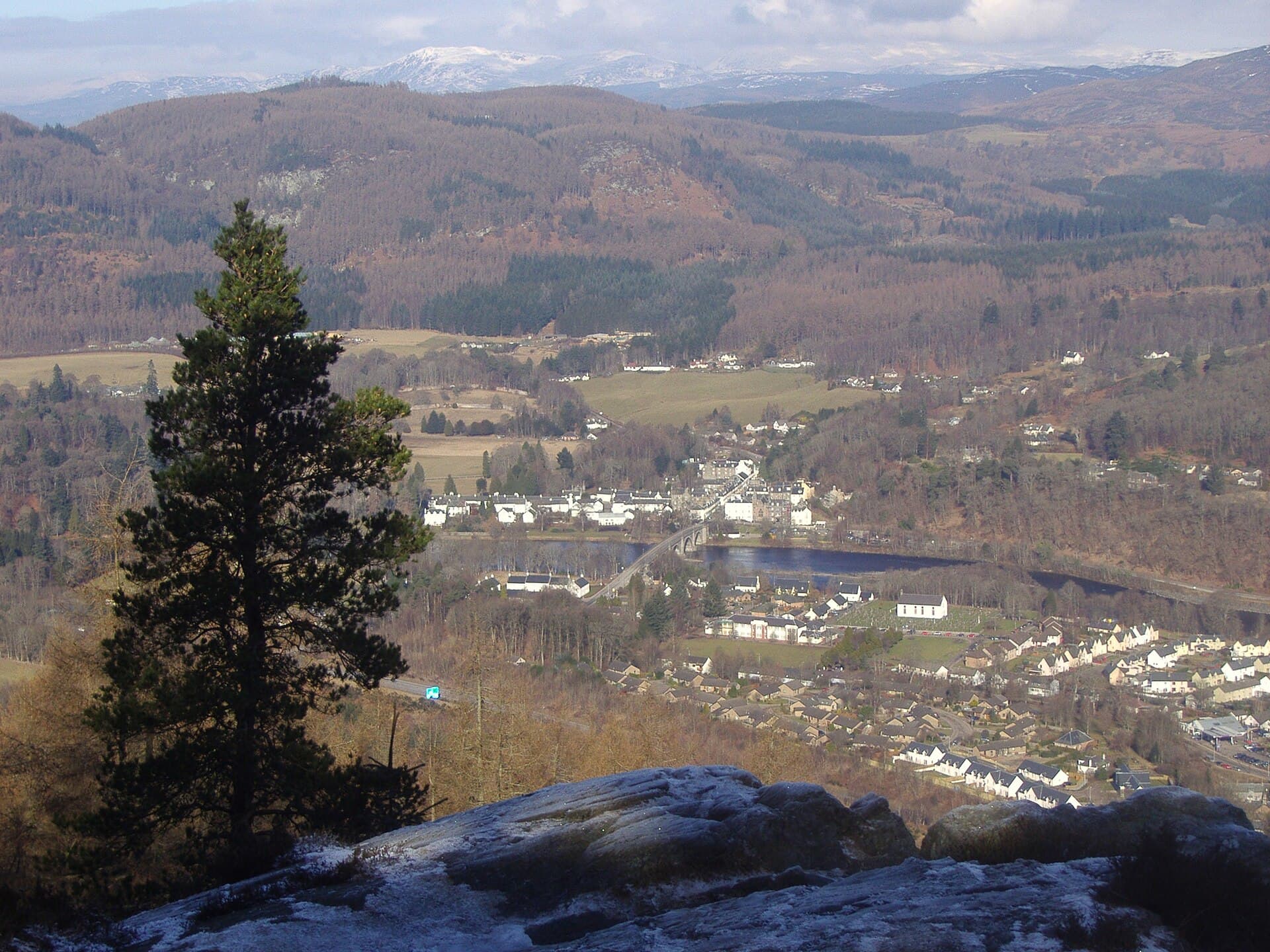 Euan Nelson / CC BY-SA 2.0, via Wikimedia Commons
Visite audio autoguidée de Dunkeld — parcours GPS à pied, lecture hors ligne, narration en 32 langues.
“Là où les pierres anciennes rencontrent les arbres majestueux et le doux murmure de la rivière Tay.”
Pas les cartes postales. Les histoires que même les habitants ignorent — soufflées à l'oreille, là où elles se sont passées.
Dans les pierres vénérables de la Cathédrale de Dunkeld, un secret médiéval est resté caché pendant des siècles.
Au cœur de la forêt de L'Hermitage, vous pourriez tomber sur une curieuse tradition monétaire.
L'auteure adorée de Pierre Lapin a trouvé l'inspiration pour ses contes fantaisistes non pas dans le Lake District, mais dans la campagne écossaise autour de Dunkeld.
Découvrez tous les secrets de Dunkeld
Chaque adresse, chaque révélation en entier — dans ton oreille, là où elle s'est passée.
Tu choisis tes lieux. Tu marches. La voix te révèle ce que les autres ignorent.


Votre visite audioguidée de Dunkeld vous attend — choisissez vos lieux, votre langue, et lancez-vous dès votre arrivée.
AcheterLume intègre un guide en réalité augmentée. Levez votre téléphone : sa caméra montre la rue devant vous, avec une flèche lumineuse posée sur l'image réelle qui pointe toujours vers votre prochain arrêt — aucune carte à déchiffrer, aucun mauvais virage. Comme tout dans Lume, ça fonctionne entièrement hors-ligne.
Dunkeld, une ville historique du Perth and Kinross, en Écosse, est située sur la rive nord de la rivière Tay, directement en face du village de Birnam. C'est un lieu où la beauté naturelle s'entremêle avec un passé riche et stratifié. Ses bâtiments des XVIIe et XVIIIe siècles bien conservés, dont beaucoup ont été restaurés par le National Trust for Scotland, contribuent à son caractère distinctif, invitant les visiteurs à flâner dans ses rues et à s'imprégner de son charme historique.
La ville et ses environs, connus sous le nom de « Big Tree Country » (Pays des Grands Arbres), sont célèbres pour leurs impressionnantes forêts, y compris certains des plus hauts arbres de Grande-Bretagne. Des douces promenades le long de la Tay aux randonnées plus aventureuses dans les bois de L'Hermitage, Dunkeld offre une évasion sereine dans la nature. Au-delà de ses paysages pittoresques, Dunkeld présente une scène culturelle animée, avec des boutiques indépendantes, des restaurants locaux et un lien fort avec la musique folk écossaise.
L'histoire documentée de Dunkeld remonte à environ 730 après J.-C., lorsque des moines Culdee y ont établi une colonie. Son emplacement stratégique, gardant l'un des principaux passages entre les Lowlands et les Highlands écossais, en a fait un site important pour les Pictes et les Romains. La proéminence de la ville a considérablement augmenté en 848 après J.-C. lorsque Kenneth MacAlpin, le premier roi à unir les Écossais et les Pictes, a reconstruit le monastère et, deux ans plus tard, a déplacé les reliques de Saint Colomba d'Iona à Dunkeld pour les protéger des raids vikings. Cela a fait de Dunkeld le centre religieux de l'Écosse et le siège de l'église celtique.
L'actuelle Cathédrale de Dunkeld, dédiée à Saint Colomba, a commencé sa construction vers 1325, son chœur étant achevé en 1350. Cependant, la Réforme en 1560 a entraîné d'importantes destructions à la cathédrale, bien que le chœur ait été re-couvert en 1600 pour servir d'église paroissiale. La ville a subi de nouvelles dévastations lors de la Bataille de Dunkeld le 21 août 1689. Dans ce féroce conflit de 16 heures, les forces gouvernementales des Cameronians ont réussi à défendre Dunkeld contre 4 000 Jacobites, mais la majeure partie de la ville a été incendiée. Des impacts de balles de mousquet de la bataille sont encore visibles sur le pignon est de la cathédrale.
La reconstruction a été lente, mais Dunkeld a réémergé comme une ville marchande animée, un lieu où convergeaient les routes de transhumance, soutenant des industries comme le brassage, le tannage et le tissage. Un développement significatif fut la construction du pont à sept arches de Thomas Telford sur la rivière Tay en 1809, qui a grandement amélioré la communication et le transport. Cependant, l'arrivée ultérieure du chemin de fer sur la rive sud de la rivière, contournant Dunkeld, a entraîné un déclin de son importance commerciale. Au milieu du XXe siècle, des parties de la vieille ville étaient tombées en ruine, mais des efforts de restauration importants par le National Trust for Scotland et le Perth County Council ont préservé le caractère historique de Dunkeld.
Commencez votre exploration à la Cathédrale de Dunkeld, un mélange frappant d'architecture romane et gothique avec une nef partiellement en ruine qui évoque un sentiment d'intemporalité. Le chœur fonctionne toujours comme l'église paroissiale, et à l'intérieur, vous pouvez trouver la tombe d'Alexander Stewart, le « Loup de Badenoch ». Les jardins paisibles, situés au bord de la rivière Tay, offrent des endroits idylliques pour la contemplation.
Promenez-vous le long de Cathedral Street et de The Cross, où de nombreuses maisons des XVIIe et XVIIIe siècles, restaurées par le National Trust for Scotland, mettent en valeur le patrimoine architectural de la ville. Cherchez la fontaine commémorative d'Atholl à The Cross, ornée de sculptures complexes de la faune. Pour une touche d'histoire littéraire, traversez le pont de Thomas Telford jusqu'à Birnam pour voir le Chêne de Birnam, considéré comme le dernier vestige du bois de Birnam de Shakespeare dans Macbeth.
Juste à côté de l'A9, L'Hermitage offre une promenade captivante à travers des sapins de Douglas imposants, certains des plus hauts arbres de Grande-Bretagne. Suivez la rivière Braan jusqu'à Ossian's Hall, une folie du XVIIIe siècle qui offre des vues spectaculaires sur les chutes de Black Linn. La région abrite également la Grotte d'Ossian, une grotte fantaisiste. Pour les amateurs de faune, la réserve du Loch of the Lowes du Scottish Wildlife Trust, à quelques minutes en voiture, est un endroit privilégié pour observer les balbuzards pêcheurs du printemps à la fin de l'été.
Dunkeld est une destination enrichissante tout au long de l'année, chaque saison offrant une expérience distincte. Le printemps (avril-mai) apporte moins de foules et l'arrivée des balbuzards pêcheurs au Loch of the Lowes, ainsi que des jacinthes des bois en fleurs dans les forêts. L'été (juin-août) offre le temps le plus chaud et les heures de clarté les plus longues, idéal pour les activités de plein air, bien que ce soit la période la plus fréquentée. L'automne (septembre-octobre) est particulièrement spectaculaire, car le « Big Tree Country » du Perthshire se transforme en un festival de rouges, d'ors et de cuivres, surtout à L'Hermitage. L'hiver (novembre-mars) offre une visite calme et atmosphérique avec des feux de cheminée confortables dans les pubs, bien que certaines attractions puissent avoir des horaires réduits.
Dunkeld est facilement accessible, située juste à côté de la route A9, à environ 90 minutes en voiture d'Édimbourg et de Glasgow. La ville partage une gare ferroviaire, Dunkeld & Birnam, sur la Highland Main Line, offrant des trains directs depuis Perth, Inverness et Édimbourg. Une fois à Dunkeld, la ville est mieux explorée à pied, la plupart des attractions étant facilement accessibles. Plusieurs parkings payants sont disponibles. Le National Trust for Scotland gère plusieurs sites à Dunkeld et dans ses environs, y compris L'Hermitage, qui dispose de son propre système de stationnement payant (gratuit pour les membres du NTS). La ville offre une gamme d'hébergements, des chambres d'hôtes aux hôtels, ainsi qu'une variété de boutiques indépendantes, de cafés et de pubs.
Dunkeld en coréen, en chinois ou en hébreu — et dans 29 autres langues, chaque étape narrée par une voix native. La plus large gamme de langues de tous les audioguides autoguidés.
Disponible en :