El Antiguo Teatro de Epidauro
La legendaria acústica de Epidauro no fue solo un diseño afortunado. El secreto reside no solo en su forma, sino en el propio material de sus asientos.
La historia completa se desbloquea en el tour
 Jean Housen / CC BY-SA 4.0, via Wikimedia Commons
Tour de audio autoguiado de Epidauro — ruta GPS a pie, reproducción offline, narración en 32 idiomas.
“Donde la curación ancestral se encontró con el arte dramático, y cada susurro resonaba.”
No las postales. Las historias que ni los locales conocen — al oído, justo donde ocurrieron.
La legendaria acústica de Epidauro no fue solo un diseño afortunado. El secreto reside no solo en su forma, sino en el propio material de sus asientos.
Antes de los hospitales modernos, la gente buscaba curación en Epidauro. Sus tratamientos eran mucho más inmersivos y místicos que una visita al médico hoy en día.
Más allá de las representaciones dramáticas y la curación, Epidauro también albergaba competiciones atléticas. Estos juegos tenían una conexión única con el propósito principal del santuario.
Descubre todos los secretos de Epidauro
Cada dirección, cada revelación al completo — a tu oído, justo donde ocurrió.
Eliges tus paradas. Caminas. La voz te revela lo que los demás ignoran.


Lume incluye una guía de realidad aumentada. Levanta el móvil y su cámara muestra la calle que tienes delante, con una flecha luminosa sobre la imagen real que siempre apunta a tu próxima parada — sin mapas que descifrar, sin giros equivocados. Como todo en Lume, funciona completamente sin conexión.
Epidauro, situado en el lado noreste del Peloponeso en la región de Argólida, es un sitio Patrimonio de la Humanidad de la UNESCO reconocido por su teatro antiguo notablemente conservado y su importante santuario de curación. Esta antigua ciudad griega sirvió como un centro comercial vital y, más famosamente, como el principal lugar de culto de Asclepio, el dios de la medicina. Los visitantes de hoy pueden explorar un extenso sitio arqueológico que ofrece una profunda visión de la medicina, la espiritualidad y la vida cultural de la antigua Grecia, todo ello en medio de un paisaje tranquilo y cubierto de pinos.
El sitio de Epidauro no es simplemente una colección de ruinas; es un lugar donde la historia resuena profundamente. La magnitud y la conservación de sus monumentos, particularmente el teatro, continúan cautivando. Fue aquí donde los antiguos griegos buscaron curas milagrosas y donde las representaciones teatrales aún resuenan a través de milenios, ofreciendo una conexión única con el pasado.
Los orígenes de Epidauro como centro de curación se remontan a principios del primer milenio a.C., con el desarrollo del culto a Apolo Maleatas. Para el siglo VI a.C., su hijo, Asclepio, el dios de la medicina, se convirtió en la deidad principal adorada en el santuario. Peregrinos de todo el Mediterráneo viajaban al Asclepeion, buscando curas para sus dolencias a través de una combinación de medios físicos y espirituales. El proceso de curación en Epidauro era un sistema sofisticado, que integraba rituales religiosos, medicina práctica y terapia psicológica. Los pacientes se sometían a purificación, dormían en el enkoimeterion (dormitorio sagrado) esperando sueños divinos, y participaban en diversas actividades como baños y ejercicios atléticos en el estadio.
Epidauro alcanzó su apogeo en los siglos IV y III a.C., un período que vio la construcción de muchos edificios monumentales, incluyendo el Templo de Asclepio, el Tholos, el Enkoimeterion, el Katagogion (casa de huéspedes), el Estadio y, el más famoso, el Teatro Antiguo. El teatro, diseñado por Policleto el Joven a finales del siglo IV a.C. (alrededor del 340-330 a.C.), es considerado el teatro griego antiguo más perfecto debido a su excepcional simetría, belleza y acústica inigualable. Podía albergar entre 13.000 y 14.000 espectadores y acogía concursos de música y representaciones de drama antiguo, que se creía que tenían efectos positivos en la salud mental y física.
A pesar de ser saqueado en el siglo I a.C. por Mitrídates, el santuario fue reconstruido y continuó floreciendo durante la época imperial romana, incluso funcionando como un centro de curación cristiano antes de su eventual declive. En el año 395 d.C., el sitio fue saqueado por los godos, y aproximadamente 30 años después, el emperador Teodosio II ordenó su cierre ya que era un santuario pagano. Hoy en día, el Santuario de Asclepio y el Teatro Antiguo son reconocidos como Patrimonio de la Humanidad de la UNESCO, inscritos en 1988 por su arquitectura ejemplar y su importancia en el desarrollo y la difusión de santuarios y cultos de curación.
El sitio arqueológico de Epidauro ofrece un viaje completo a través de la vida griega antigua, abarcando tanto un renombrado centro de curación como un magnífico lugar cultural. El Teatro Antiguo de Epidauro es la atracción más célebre del sitio, reconocido por su extraordinaria acústica y notable conservación. Los visitantes pueden probar la acústica dejando caer una moneda en la orquesta y escuchándola claramente desde las filas más altas, a 55 metros de distancia. Durante el verano, el Festival de Epidauro sigue albergando dramas griegos clásicos, permitiendo al público experimentar las representaciones como lo hacían hace 2.400 años.
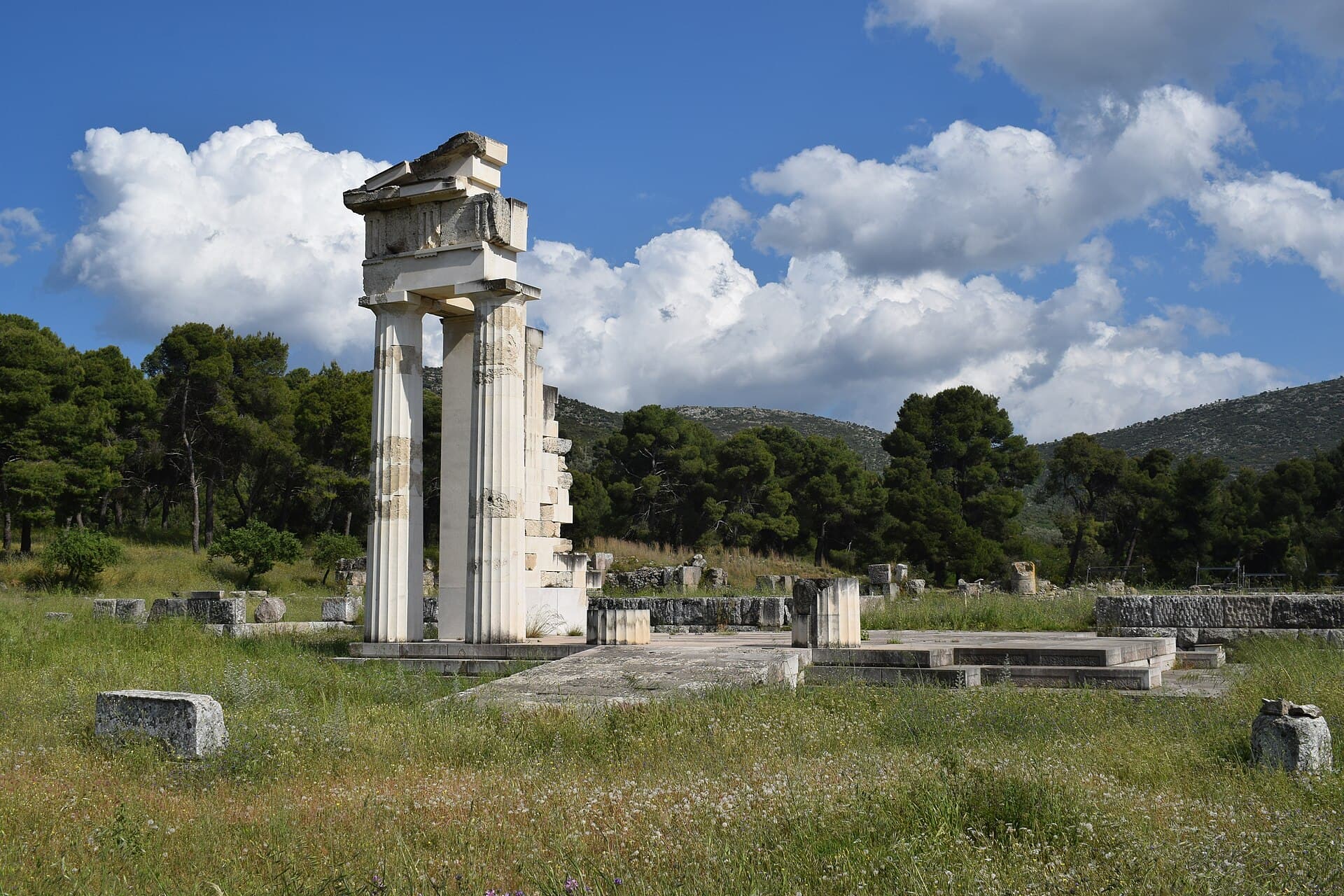
Adyacente al teatro se encuentra el Santuario de Asclepio, un vasto complejo de edificios sagrados y cívicos. Las estructuras clave incluyen los cimientos del Templo de Asclepio, el misterioso Tholos circular con sus intrincados patrones de suelo, y el Enkoimeterion, donde los pacientes dormían buscando la intervención divina. El Antiguo Estadio, construido en el siglo V a.C., albergaba juegos atléticos en honor a Asclepio. El Museo Arqueológico de Epidauro, ubicado dentro del sitio, exhibe artefactos como instrumentos quirúrgicos, ofrendas votivas y estelas inscritas que detallan curas milagrosas, proporcionando una visión de las antiguas prácticas médicas. Para una experiencia diferente, el Pequeño Teatro de la Antigua Epidauro en Palaia Epidavros alberga actuaciones musicales en julio, y cerca, la Ciudad Sumergida ofrece una oportunidad única de snorkel entre ruinas antiguas.
Los momentos ideales para visitar Epidauro son la primavera (abril-mayo) y el otoño (septiembre-octubre). Durante estos períodos, las temperaturas son moderadas, las flores silvestres están en flor y las multitudes son generalmente más pequeñas, lo que permite una experiencia más contemplativa. El verano (junio-agosto) trae el Festival de Epidauro, con actuaciones en el teatro antiguo, pero también calor intenso y grupos de turistas más grandes. Se recomienda llegar temprano por la mañana (8:00-10:00 AM) para disfrutar de la soledad y temperaturas más frescas, o más tarde por la tarde para evitar las horas pico de afluencia.
Epidauro se encuentra en la península de Argólida, aproximadamente a 150 kilómetros (un viaje de 2 horas) de Atenas y a 30 kilómetros (un viaje de 35 minutos) de Nafplio. Se puede llegar en coche o autobús desde Atenas, y muchos operadores turísticos ofrecen excursiones de un día. El sitio arqueológico y el museo funcionan todo el año, con horarios de verano (abril-octubre) que se extienden hasta las 8:00 PM y horarios de invierno hasta las 5:00 PM. La tarifa de entrada suele incluir el acceso tanto al sitio arqueológico como al museo. Los estudiantes de la UE con identificación válida tienen entrada gratuita, y los mayores de 65 años de países de la UE reciben tarifas reducidas. El sitio tiene una pequeña cafetería cerca de la entrada, aunque los precios están orientados al turismo. Se recomiendan zapatos cómodos para explorar las extensas ruinas. Asistir a una actuación en el Festival de Epidauro requiere entradas separadas, que pueden oscilar entre 20€ y 60€.
Epidauro en coreano, en chino o en hebreo — y 29 idiomas más, cada parada narrada por una voz nativa. La mayor variedad de idiomas de cualquier audioguía autoguiada.
Disponible en: