Vathia
Las imponentes casas-torre de piedra de Vathia, aparentemente abandonadas, guardan un secreto sobre las actividades nocturnas de sus antiguos habitantes.
La historia completa se desbloquea en el tour
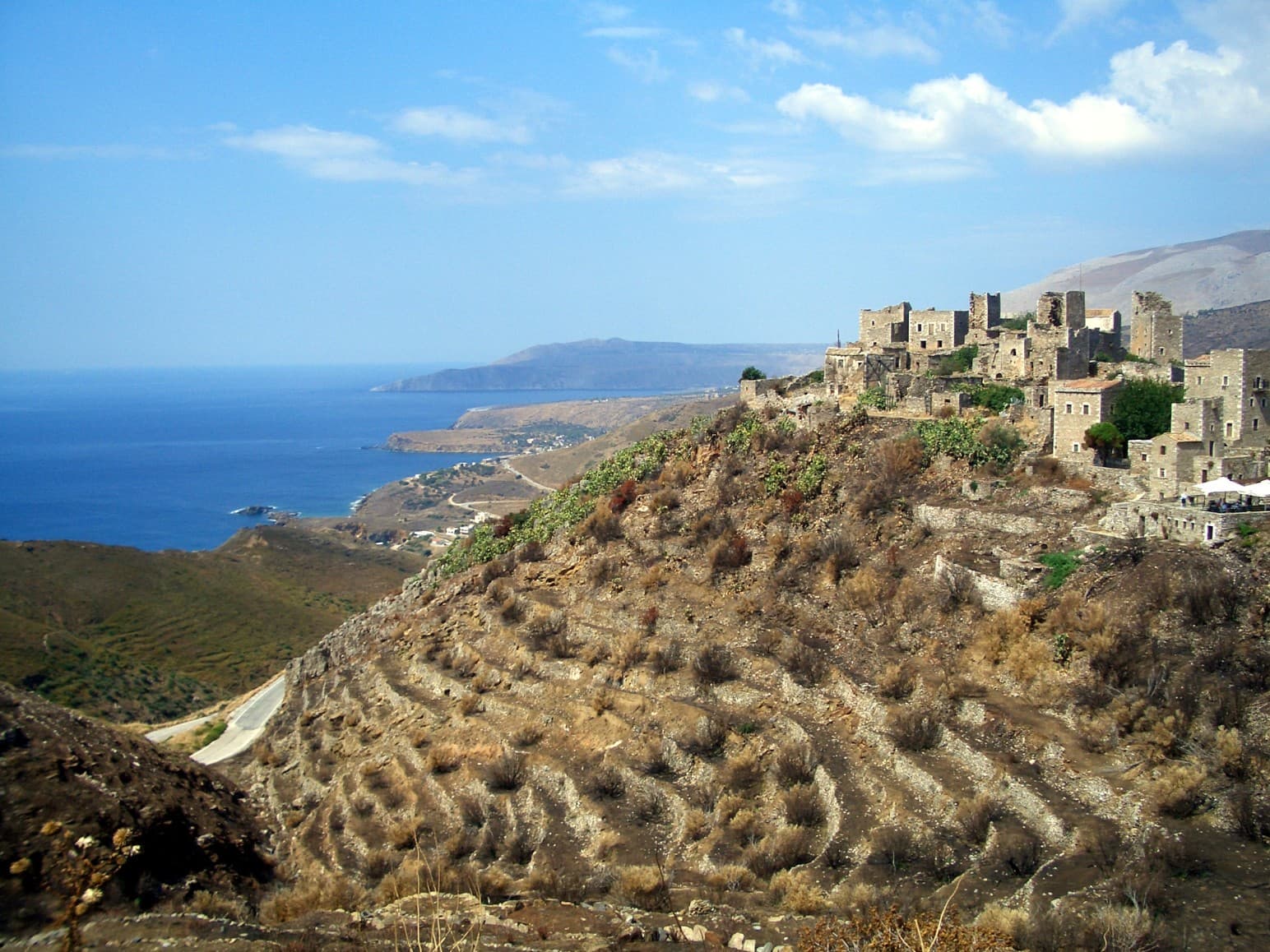 Wladyslaw / CC BY-SA 3.0, via Wikimedia Commons
Tour de audio autoguiado de Vathia — ruta GPS a pie, reproducción offline, narración en 32 idiomas.
“Torres de piedra que vigilan un mar inquieto, donde la historia se alza imponente.”
No las postales. Las historias que ni los locales conocen — al oído, justo donde ocurrieron.
Las imponentes casas-torre de piedra de Vathia, aparentemente abandonadas, guardan un secreto sobre las actividades nocturnas de sus antiguos habitantes.
A pesar de parecer desiertas, algunas de las antiguas casas-torre de Vathia tienen un sorprendente propósito moderno.
Un viajero del siglo XIX observó que Vathia estaba dividida por un conflicto que dejó una marca significativa en el pueblo.
Descubre todos los secretos de Vathia
Cada dirección, cada revelación al completo — a tu oído, justo donde ocurrió.
Eliges tus paradas. Caminas. La voz te revela lo que los demás ignoran.
Tu tour de audioguía por Vathia te espera — elige tus lugares, tu idioma y empieza al llegar.
ComprarLume incluye una guía de realidad aumentada. Levanta el móvil y su cámara muestra la calle que tienes delante, con una flecha luminosa sobre la imagen real que siempre apunta a tu próxima parada — sin mapas que descifrar, sin giros equivocados. Como todo en Lume, funciona completamente sin conexión.
Vathia, un pueblo en la península de Mani en Grecia, presenta una silueta impactante de casas-torre de piedra contra un paisaje accidentado. Este asentamiento histórico, mencionado por primera vez en 1571, se erige como un testimonio de la arquitectura única y la historia social de la región de Mani. En una colina con vistas al Mediterráneo, las viviendas fortificadas de Vathia, densamente agrupadas y de varios pisos, crean una atmósfera cautivadora, casi de castillo. Antaño una comunidad bulliciosa, Vathia experimentó un período de declive y abandono en el siglo XX a medida que sus habitantes buscaban oportunidades en otros lugares, lo que le valió la reputación de 'pueblo fantasma'.
Hoy en día, Vathia es un destino cautivador para aquellos que buscan sumergirse en una parte distintiva de la historia y la cultura griegas. La dramática arquitectura del pueblo y su entorno natural virgen lo convierten en un lugar favorito para fotógrafos y exploradores. Vagando por sus estrechos senderos de piedra, los visitantes pueden explorar las torres abandonadas y disfrutar de amplias vistas de la costa y las áridas montañas circundantes. El estado griego reconoció la importancia cultural de Vathia en la década de 1980, invirtiendo en esfuerzos de restauración que han devuelto la vida a algunas de las casas-torre como casas de huéspedes, permitiendo una experiencia auténtica e inmersiva.
Los orígenes de Vathia se remontan a 1571, cuando fue documentada por primera vez como "casale di Vathia" por una misión diplomática veneciana. Para 1618, un censo no oficial registró el pueblo con 20 hogares, y para 1700, el censo de Grimani contabilizó 212 habitantes en 54 familias, lo que indica un crecimiento sustancial. La ubicación estratégica del pueblo y la feroz independencia de los maniotas moldearon su desarrollo. Las icónicas casas-torre de Vathia, construidas principalmente entre los siglos XVIII y XIX, son ejemplos claros de la arquitectura feudal y de fortificación maniota. Estas fortalezas de piedra cuadradas y de varios pisos fueron diseñadas para albergar a familias extensas y ofrecer protección contra invasores, como piratas, y clanes rivales durante las sangrientas disputas que duraron generaciones.
La vida en Vathia estuvo marcada por una cultura guerrera, con los maniotas resistiendo ferozmente el dominio otomano y manteniendo un grado de autonomía. Las pequeñas ventanas de las casas-torre servían como aspilleras durante los conflictos, y algunas incluso presentaban matacanes con fines defensivos. Relatos históricos, como el de William Martin Leake en 1805, destacan la intensidad de estas rivalidades entre clanes, señalando que Vathia había estado dividida por facciones en guerra durante 40 años, lo que resultó en aproximadamente 100 muertes. El pueblo alcanzó su apogeo en el siglo XIX, con alrededor de 300 residentes. Sin embargo, a medida que avanzaba el siglo XX, Vathia experimentó un declive significativo. Muchos habitantes se fueron en busca de mejores oportunidades económicas en ciudades más grandes, particularmente después de la Segunda Guerra Mundial y la Guerra Civil Griega, lo que llevó al abandono del pueblo entre las décadas de 1960 y 1970. En la década de 1980, el estado griego inició esfuerzos de restauración para preservar el patrimonio cultural único de Vathia, transformando algunas de las torres históricas en casas de huéspedes.
El principal atractivo de Vathia reside en su colección de aproximadamente 70 casas-torre de piedra medievales, algunas de las cuales alcanzan los cuatro pisos de altura. Estas estructuras, agrupadas en la ladera, ofrecen una conexión tangible con el pasado de la región y la singular arquitectura maniota. Los visitantes pueden pasear por los estrechos senderos de piedra que serpentean entre las torres en ruinas, explorando los exteriores e imaginando las vidas de las familias que alguna vez las habitaron.
Más allá de las maravillas arquitectónicas, Vathia ofrece acceso a la escarpada costa de la península de Mani. El pueblo está situado a unos 2 kilómetros del mar, ofreciendo amplias vistas del Mediterráneo. El pintoresco puerto de Gerolimenas se encuentra directamente debajo del pueblo, y numerosas playas poco concurridas y calas solitarias salpican la costa, ideales para quienes buscan tranquilidad. Para aquellos que deseen explorar más a fondo, antiguos senderos conectan Vathia con pueblos vecinos como Alika, brindando oportunidades para practicar senderismo con espectaculares vistas costeras y vislumbres de otros asentamientos abandonados. El paisaje árido pero fascinante, con sus afloramientos rocosos y vistas al mar, es particularmente gratificante para la fotografía.
Los momentos más favorables para visitar Vathia son durante la primavera (mayo-junio) y el otoño (septiembre-octubre). Durante estos períodos, las temperaturas son suaves, típicamente alrededor de 22-25°C, y las multitudes son mínimas. La primavera trae consigo flores silvestres que cubren la península de Mani, creando condiciones ideales para el senderismo. El otoño ofrece temperaturas cálidas del mar, perfectas para nadar. Aunque todas las instalaciones están abiertas en verano (junio-agosto), las temperaturas pueden alcanzar los 35°C, lo que hace que la exploración al mediodía sea intensa. En invierno (noviembre-marzo) muchos hoteles y restaurantes cierran, aunque algunos alojamientos permanecen abiertos todo el año.
Vathia se encuentra en la península de Mani, en el sureste de Laconia. Para llegar a Vathia desde Atenas, se puede conducir, lo que toma aproximadamente 4-5 horas a través del Peloponeso, o tomar un ferry de 5 horas a un puerto cercano y luego organizar un traslado corto. Se recomienda alquilar un coche para tener flexibilidad al explorar la península de Mani. Las opciones de alojamiento en Vathia se limitan a casas de piedra tradicionales convertidas o pequeñas casas de huéspedes. La cercana ciudad portuaria de Gerolimenas también ofrece alojamiento adicional con comodidades más modernas. Un presupuesto diario típico para visitar Vathia oscila entre 80 y 150 euros, cubriendo alojamiento, comidas y actividades, aunque los costos pueden ser más altos debido a la ubicación remota y la infraestructura turística masiva limitada. Use zapatos resistentes para caminar por el terreno rocoso y lleve agua, especialmente si planea hacer senderismo, ya que la sombra es limitada.
Vathia en coreano, en chino o en hebreo — y 29 idiomas más, cada parada narrada por una voz nativa. La mayor variedad de idiomas de cualquier audioguía autoguiada.
Disponible en: