Château d'Eu
Queen Victoria's first journey abroad as monarch wasn't to a grand European capital, but to a seemingly quiet French town.
Full story unlocks in the tour
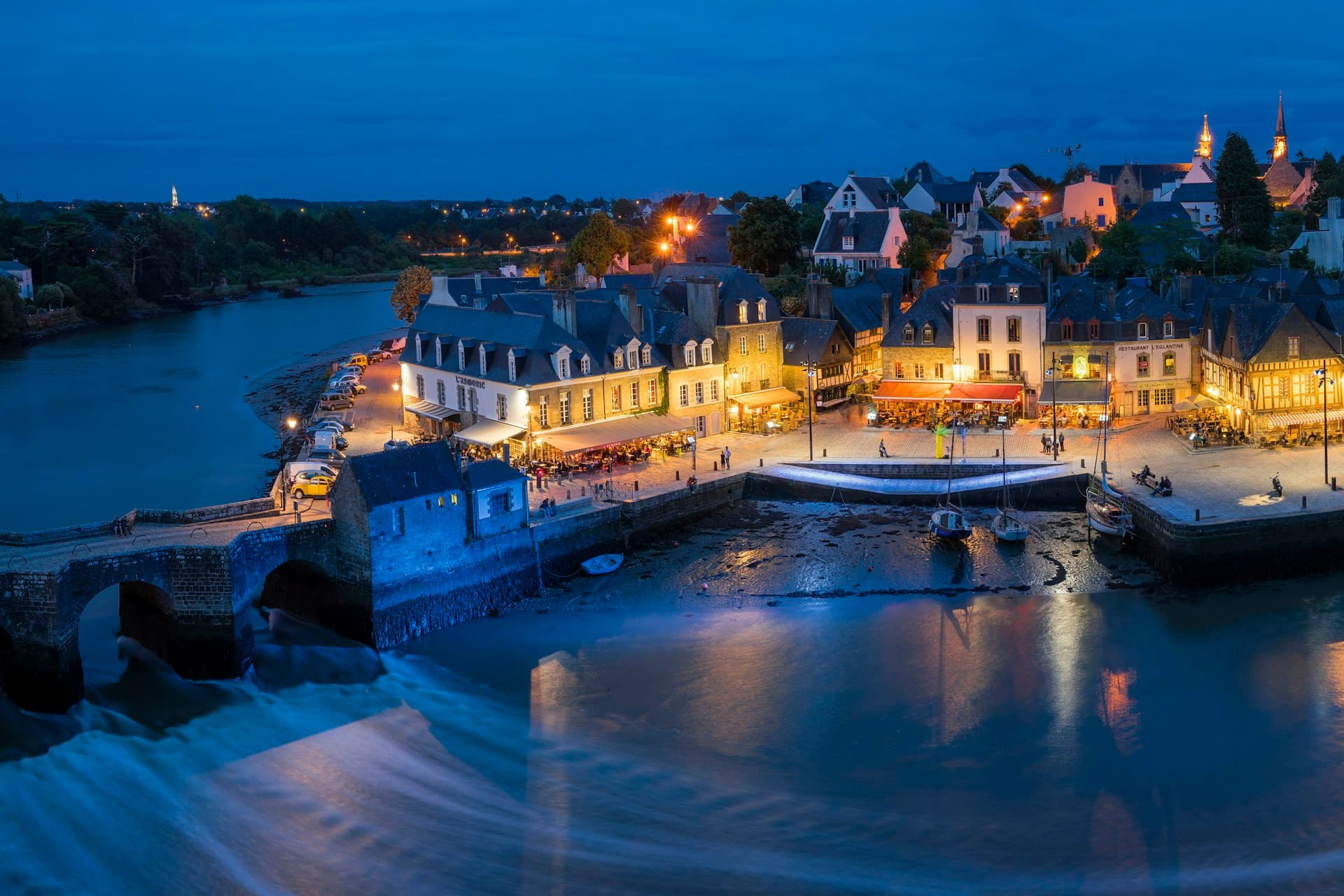 Photo of Trouville-sur-Mer, via Wikimedia Commons
Self-guided audio walking tour of Eu — GPS route, offline playback, story-driven narration in 32 languages.
“Eu: Where French Royalty and Irish Saints Left Their Mark.”
Not the postcards. The stories even locals don't know — whispered in your ear, right where they happened.
Queen Victoria's first journey abroad as monarch wasn't to a grand European capital, but to a seemingly quiet French town.
Deep beneath the collegiate church rests a crypt that holds a surprising claim to fame for its age.
The Château d'Eu became a temporary home for an exiled royal family, far from their own empire.
Discover every secret of Eu
Every address, every reveal in full — in your ear, right where it happened.
You pick your stops. You walk. The voice reveals what the others miss.


Your self-guided audio tour of Eu is ready — pick your landmarks, choose your language, and start the moment you arrive.
BuyLume has a built-in augmented-reality guide. Hold your phone up and its camera shows the street ahead of you, with a glowing arrow laid over the real view that always points to your next stop — no map to puzzle over, no wrong turns. Like everything in Lume, it works fully offline.
Eu, a town in the Seine-Maritime department of Normandy, France, offers a journey through centuries of history, from medieval fortifications to royal residences. Its name, derived from the Bresle river, which was once known as 'Ou' or 'Eu' in the Middle Ages, hints at its deep roots. Positioned at the confluence of several roads and near the mouth of the Bresle, Eu is a town that has witnessed pivotal moments in French and European history.
Today, Eu combines its profound past with a peaceful, small-town appeal, making it an intriguing stop for those exploring the Normandy region. The town's historical significance is underscored by its association with figures like William the Conqueror, Joan of Arc, and King Louis-Philippe I, whose summer residence, the Château d'Eu, remains a central attraction.
The origins of Eu stretch back to 996 when Duke Richard I of Normandy established the County of Eu as a defensive march against eastern invasions. A significant early event was the marriage of William, Duke of Normandy (later William the Conqueror), to Matilda, daughter of the Count of Flanders, at the castle chapel in Eu in 1050. The town's strategic importance continued, with King Richard I of England, also Duke of Normandy, overseeing the construction of city walls in the 12th century.
Eu also played a role in the Hundred Years' War, with Joan of Arc spending a night as a prisoner within the castle walls in 1430 during her journey to Rouen. The original castle was deliberately demolished in 1475 by order of King Louis XI to prevent its capture by the English. A century later, in 1578, Henri I, Duke of Guise, and his wife Catherine de Clèves began construction of the current Château d'Eu, which was completed by Anne Marie Louise d'Orléans, Duchess of Montpensier, known as 'La Grande Mademoiselle.'
The château experienced its most illustrious period between 1830 and 1848, serving as the beloved summer residence of King Louis-Philippe I. It was here that Louis-Philippe hosted Queen Victoria of England on two occasions, in 1843 and 1845, visits that were crucial in fostering Anglo-French friendship. After Louis-Philippe's abdication, the château was confiscated by Napoleon III, its collections auctioned, and later restored by Eugène Viollet-le-Duc for Philippe VII, Count of Paris. In 1964, the city of Eu acquired the château, transforming part of it into the City Hall and establishing the Musée Louis-Philippe in 1973.
The Château d'Eu is the focal point of any visit, housing the Musée Louis-Philippe. This museum showcases royal memorabilia, including furniture, paintings, and porcelain that once adorned the castle. Visitors can explore the royal apartments and admire the architecture, which blends Renaissance elegance with Louis XIII-style brick and stone classicism.
Adjacent to the château is the Collégiale Notre-Dame et Saint-Laurent. This 13th-century Gothic collegiate church is recognized for its architectural grandeur, with a high nave and a crypt beneath the choir. The crypt, redesigned by Louis-Philippe after French Revolution damage, contains the tombs of the Counts of Eu, including the effigy of Saint Laurent O'Toole. The church also features a grand 17th-century organ and a notable 16th-century polychrome sculpture of the Entombment of Christ.
Beyond these main attractions, the town of Eu itself invites exploration with its quiet streets and historic buildings. The Chapel of the former Jesuit College, built between 1622 and 1624, is an interesting example of architecture from that era and contains the cenotaphs of Catherine de Clèves and Henri de Guise.
The ideal time to visit Eu is during the late spring to early autumn months (April-May and September-October). During these 'shoulder seasons,' temperatures are mild, and the gardens are at their best, with fewer crowds than in the peak summer months of July and August. June and September offer pleasant weather and a more relaxed atmosphere. While July and August are livelier due to coastal visitors, they also bring higher temperatures and larger crowds.
Eu is accessible by road, with connections to the RD 1015, RD 925, RD 940, and RD 1314. The town also has a train station with connections to Beauvais and Le Tréport. Parking is generally easy and free in most areas, including near the Château, town center, and church, though spaces can fill up during weekends and summer holidays.
The Château d'Eu – Musée Louis-Philippe is typically open from mid-March to early November, with specific hours that may vary, usually closing on Tuesdays and Friday mornings. The Collégiale Notre-Dame et Saint-Laurent has varying hours depending on the season, with longer hours from April to September. Admission to the collegiate church is free. For dining, Eu offers a selection of restaurants and cafés, with options for traditional Norman cuisine and refined French dishes.
Eu in Korean, in Chinese or in Hebrew — and 29 more languages, every stop narrated by a native voice. The widest language range of any self-guided audio tour.
Available in: