Ksar Zenaga
One of Figuig's seven fortified settlements holds a secret about its unique defense against a French attack.
Full story unlocks in the tour
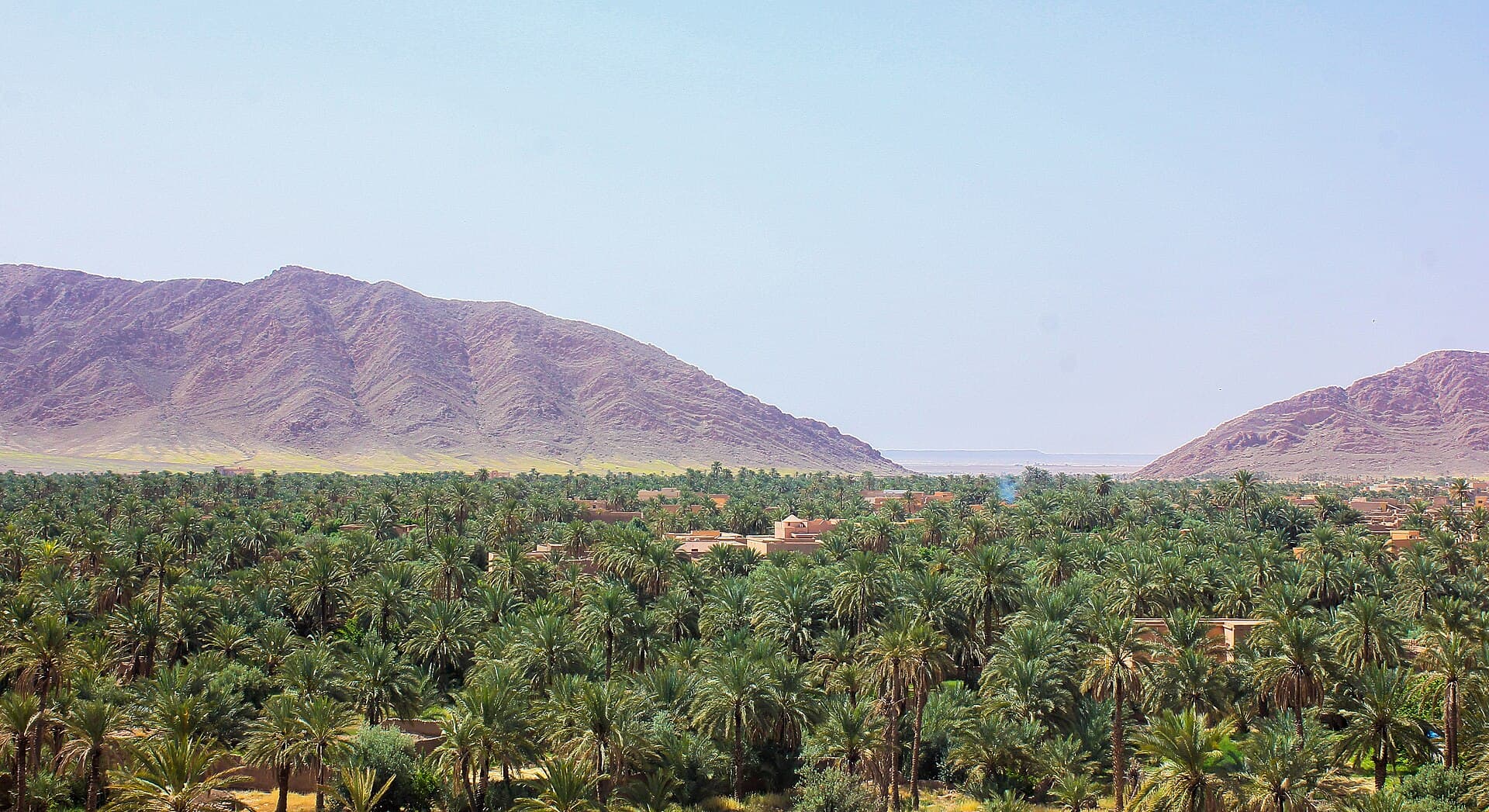 Charaf7 / CC BY-SA 4.0, via Wikimedia Commons
Self-guided audio walking tour of Figuig — GPS route, offline playback, story-driven narration in 32 languages.
“Where ancient kasbahs meet the desert's quiet breath.”
Not the postcards. The stories even locals don't know — whispered in your ear, right where they happened.
One of Figuig's seven fortified settlements holds a secret about its unique defense against a French attack.
The dates from Figuig are legendary, but their survival has faced a silent, devastating threat.
Beyond the palm groves, a singular 'salt mountain' plays an unexpected role in Figuig's ecosystem and local life.
Discover every secret of Figuig
Every address, every reveal in full — in your ear, right where it happened.
You pick your stops. You walk. The voice reveals what the others miss.

Your self-guided audio tour of Figuig is ready — pick your landmarks, choose your language, and start the moment you arrive.
BuyLume has a built-in augmented-reality guide. Hold your phone up and its camera shows the street ahead of you, with a glowing arrow laid over the real view that always points to your next stop — no map to puzzle over, no wrong turns. Like everything in Lume, it works fully offline.
Figuig, an oasis town in eastern Morocco, is a place where time seems to slow, offering a profound sense of connection to ancient traditions and the desert's quiet grandeur. Situated near the Algerian border and the Atlas Mountains, this remote destination is characterized by its abundant date palm groves and seven historic ksars, or fortified villages. Unlike Morocco's more bustling cities, Figuig provides a peaceful atmosphere and a glimpse into a traditional Berber way of life that has remained largely untouched by widespread tourism.
The journey to Figuig itself is part of its allure, winding through dramatic landscapes until the verdant oasis appears like a mirage against the arid backdrop. Here, the air carries the sweet scent of date palms, and the silence is broken only by the rustling of leaves and distant voices. It's a destination for those seeking genuine cultural immersion, a chance to explore ancient architecture, and an opportunity to observe how communities have thrived for centuries in a challenging desert environment.
## A Crossroads of Ancient Routes Figuig's history stretches back to the 8th century, with archaeological evidence suggesting human presence dating to the Neolithic period. For centuries, this oasis town held significant strategic importance, serving as a vital stop on two major caravan routes: one for pilgrims traveling to Mecca and another connecting Tangier to Timbuktu across the Sahara Desert. This position fostered a rich cultural blend of Berber and Arab influences that are still evident today.
## The Rise of the Seven Ksars The town's singular structure is defined by its seven ksars—Loudaghir, Lamaïz, Laabidate, Ouled Slimane, Hammam Foukani, Hammam Tahtani, and Zenaga. These fortified mudbrick and stone villages began to develop in the 11th century, each designed to protect communities from the harsh desert conditions and historical conflicts. Each ksar historically managed its own date palm groves, and competition for resources, particularly water, occasionally led to conflicts between them.
## Resilience and Resistance Figuig has a history of resilience, having repelled invaders for centuries. Notably, in 1881, the French attempted to quell the resistance of Figuig, who supported Algerian resistance against them. A fierce battle took place at Zenaga, resulting in significant casualties on both sides, but ultimately a victory for the people of Figuig. Later, in 1903, General Oconor's forces shelled Ksar Zenaga, destroying homes and date palms, yet the local resistance remained unbroken. The town was eventually taken by French forces in 1904 and became part of the French protectorate of Morocco in 1912.
## A Changing Landscape Modernization has brought both progress and challenges to Figuig. While it has raised the standard of living somewhat, it has also drawn a portion of the population away, leading to a struggle for stability. Despite these changes, Figuig has largely maintained its traditional irrigation systems and earthen architecture, preserving a unique cultural landscape that is now on Morocco's Tentative List for World Heritage.
The heart of Figuig lies within its seven ancient ksars: Loudaghir, Lamaïz, Laabidate, Ouled Slimane, Hammam Foukani, Hammam Tahtani, and Zenaga. Wander through their narrow, maze-like alleys, where mudbrick and stone structures create a timeless atmosphere, and discover how these designs keep interiors cool even in extreme heat.
Beyond the fortified villages, lose yourself in the extensive palm groves, which stretch over 12 square kilometers. These groves are the lifeblood of Figuig, sustaining the community through date production. If you visit during the harvest season (late summer to early autumn), you can observe traditional harvesting methods and even participate, gaining a unique insight into the region's agricultural heritage. Take the opportunity to learn about the ingenious khattara irrigation system, which has sustained Figuig's agriculture for centuries.
The surrounding desert, while not featuring expansive sand dunes, offers a different kind of beauty with its arid and rocky landscapes. It's an ideal setting for quiet contemplation, hiking, or simply watching the sun set, transforming the sky into a canvas of colors. Engage with the local culture at the markets, where fresh produce and handmade crafts offer an authentic shopping experience.
The most comfortable time to visit Figuig is from October to April. During these months, temperatures are cooler and more enjoyable for exploring the oasis and its surroundings, typically ranging from 16°C to 26°C. December, January, and February are also ideal, with pleasant daytime temperatures, though nights can be cool. This period often coincides with the date harvest, offering a unique cultural experience. Avoid visiting from May to August, as temperatures can climb above 40°C, making outdoor activities uncomfortable.
Figuig's remote location requires some planning to reach. Buses from major cities like Oujda offer access, though the journey can be long. Shared taxis are another option, departing once all seats are occupied. Once in Figuig, the ksars and palm groves are best explored on foot.
Accommodation options include guesthouses and small, often family-run hotels, many housed in traditional dwellings, offering an authentic experience. Expect basic but comfortable amenities. Figuig is generally considered safe for travelers, but it's always wise to be aware of your surroundings, especially at night, and to respect local customs by dressing modestly. The local currency is the Moroccan Dirham (MAD). While Arabic and French are spoken, the local Berber dialect, Figuig Berber, is also prevalent.
Figuig in Korean, in Chinese or in Hebrew — and 29 more languages, every stop narrated by a native voice. The widest language range of any self-guided audio tour.
Available in: