Kasbah du Glaoui
Cette forteresse vieillissante de Taliouine porte un héritage complexe, tissé avec la vie d'une figure formidable de l'histoire marocaine.
L'histoire complète se débloque dans le tour
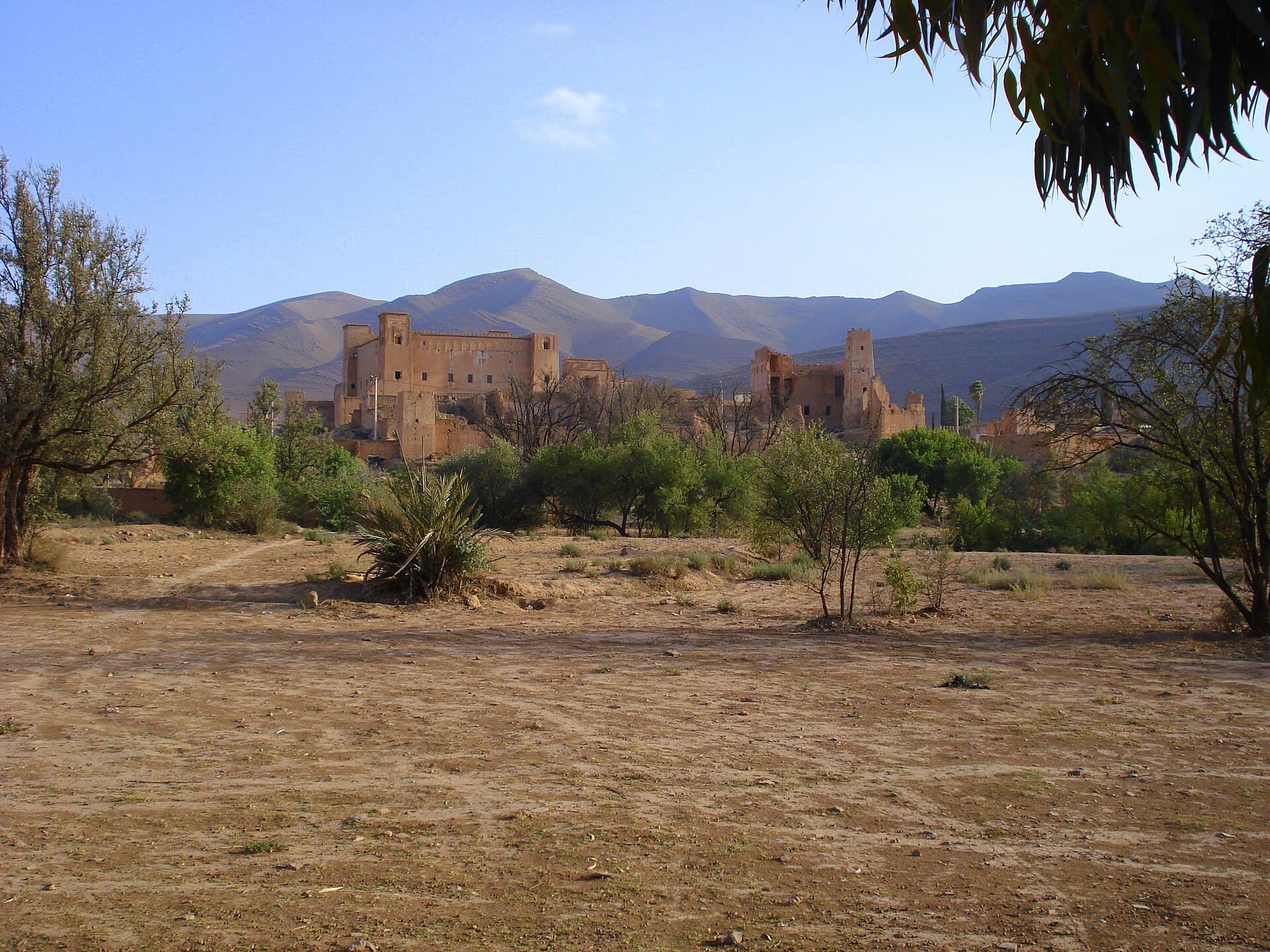 Hydroxy from Zürich, Schweiz / CC BY-SA 2.0, via Wikimedia Commons
Visite audio autoguidée de Taliouine — parcours GPS à pied, lecture hors ligne, narration en 32 langues.
“Là où les fils pourpres émergent des champs violets, et la terre respire des histoires anciennes.”
Pas les cartes postales. Les histoires que même les habitants ignorent — soufflées à l'oreille, là où elles se sont passées.
Cette forteresse vieillissante de Taliouine porte un héritage complexe, tissé avec la vie d'une figure formidable de l'histoire marocaine.
À quelques kilomètres de Taliouine, une synagogue magnifiquement restaurée révèle un chapitre méconnu du patrimoine marocain.
L'« or liquide » du Maroc, l'huile d'argan, implique une méthode de production traditionnelle avec un élément inattendu.
Découvrez tous les secrets de Taliouine
Chaque adresse, chaque révélation en entier — dans ton oreille, là où elle s'est passée.
Tu choisis tes lieux. Tu marches. La voix te révèle ce que les autres ignorent.


Votre visite audioguidée de Taliouine vous attend — choisissez vos lieux, votre langue, et lancez-vous dès votre arrivée.
AcheterLume intègre un guide en réalité augmentée. Levez votre téléphone : sa caméra montre la rue devant vous, avec une flèche lumineuse posée sur l'image réelle qui pointe toujours vers votre prochain arrêt — aucune carte à déchiffrer, aucun mauvais virage. Comme tout dans Lume, ça fonctionne entièrement hors-ligne.
Taliouine, largement reconnue comme la capitale marocaine du safran, est une ville captivante située entre le Haut Atlas et l'Anti-Atlas. Cette destination sereine de la région de Souss-Massa offre une immersion authentique dans la vie berbère traditionnelle, un contraste tranquille avec l'énergie des grandes villes du Maroc. C'est un lieu où le paysage même raconte une histoire, avec des champs en terrasses qui s'illuminent d'une mer de fleurs de crocus violets chaque automne.
Les voyageurs sont attirés par Taliouine pour son atmosphère authentique, où les traditions séculaires s'entremêlent avec une beauté naturelle saisissante. Au-delà de l'illustre « or rouge », la région présente des décors montagneux spectaculaires, d'anciennes kasbahs et un rythme de vie tranquille qui tourne autour des rythmes de la terre. C'est un excellent point de départ pour ceux qui recherchent une immersion culturelle, des promenades pittoresques et une compréhension plus profonde du cœur agricole du Maroc.
L'histoire de Taliouine remonte à des siècles, sa position stratégique sur les anciennes routes commerciales favorisant sa croissance en tant que centre commercial et culturel. La vallée du Souss, où se trouve Taliouine, a été façonnée par diverses civilisations, chacune laissant son empreinte au fil du temps. Les communautés berbères ont habité cette région depuis des époques préhistoriques, vivant en harmonie avec l'environnement. Au fil des siècles, le commerce a prospéré avec d'autres civilisations méditerranéennes, notamment les Phéniciens et les Romains.
Pendant la période islamique, Taliouine a été intégrée aux dynasties berbères locales, telles que les Almoravides et les Almohades. Ces dynasties ont contribué au développement économique et culturel de la région, favorisant la croissance de l'agriculture et du commerce. Cependant, une grande partie de l'histoire plus récente et documentée de Taliouine est liée à son exportation la plus renommée : le safran. Pendant des siècles, les habitants de Taliouine ont cultivé et récolté cette précieuse épice, forgeant leur identité et consolidant sa réputation de capitale marocaine du safran.
Un monument architectural important, la Kasbah du Glaoui, également connue sous le nom de Kasbah de Taliouine, témoigne d'une époque puissante. Cette forteresse du désert, antérieure au milieu des années 1900, est devenue le siège administratif de Thami El Glaoui, un chef éminent et le Pacha de Marrakech. Bien que des parties de la kasbah aient fait l'objet d'une restauration partielle, une grande partie d'entre elles est dans un état de délabrement éloquent, offrant un aperçu profond d'une époque révolue. Après l'indépendance du Maroc dans les années 1950, la kasbah est devenue une partie de l'Institut musulman de Taroudant et englobe maintenant de nombreuses maisons dans la région de Taliouine.
Le peuple berbère, également connu sous le nom d'Amazigh, a une présence profondément enracinée en Afrique du Nord, précédant les incursions arabes et romaines de plus de 4 000 ans. Historiquement, les sociétés berbères étaient structurées en tribus, s'installant souvent dans les régions montagneuses pour se protéger. Leur survie dépendait de la maîtrise de l'agriculture, de l'élevage et du commerce transsaharien. Taliouine continue d'être principalement peuplée de tribus berbères, la variété berbère du Tashelhit étant la langue la plus parlée. La culture et les traditions durables du peuple amazigh ont résisté à diverses influences historiques, y compris les raids arabes et le protectorat français, tout en embrassant l'islam.
Le principal attrait de Taliouine est sa connexion au safran, et l'exploration de cet « or rouge » est une expérience essentielle. Pendant la saison de la récolte (fin octobre à novembre), les champs se transforment en un panorama violet vif. Visitez la Coopérative Souktana du Safran, la plus ancienne coopérative de safran de la ville, pour en apprendre davantage sur le processus complexe de récolte et de séchage, savourer du thé ou du chocolat au safran et acquérir d'authentiques produits locaux.
Dominant l'horizon se trouve la Kasbah du Glaoui, une forteresse historique du désert qui offre des vues imprenables sur les montagnes environnantes. Bien que des portions soient en ruine, certaines sections ont été partiellement restaurées, permettant aux visiteurs de se promener dans ses cours, ses jardins et ses tours de guet.
Pour une compréhension plus approfondie du safran, le Musée du Safran offre un aperçu de son histoire, de ses méthodes de récolte traditionnelles et de ses coutumes séculaires. Ne manquez pas le Souk de Taliouine, qui se tient tous les lundis, où les habitants des villages voisins se rassemblent pour vendre leurs marchandises. C'est un centre animé de commerce et d'interaction sociale, offrant un véritable aperçu de la culture des marchés marocains.
Au-delà de la ville, la région offre des opportunités d'explorer les paysages saisissants des montagnes de l'Anti-Atlas. Envisagez une randonnée sur le Jebel Siroua, un ancien pic volcanique considéré comme l'une des plus belles promenades de la région de l'Anti-Atlas, révélant de magnifiques gorges et des villages isolés.
La période idéale pour découvrir Taliouine est pendant la saison de la récolte du safran, qui s'étend généralement de fin octobre à novembre. À cette période, les champs sont illuminés par les fleurs de crocus violets, et la ville s'anime avec le Festival annuel du Safran, qui propose des défilés traditionnels, des danses folkloriques et des dégustations de safran. Le temps pendant cette saison est également agréable pour les activités de plein air.
Le printemps (mars-mai) et l'automne (septembre-novembre) sont également excellents pour les activités de plein air et la randonnée en général, avec des températures diurnes confortables. Bien que l'été puisse être chaud, l'hiver offre un ciel clair et des vues splendides, bien que les nuits en haute altitude puissent être assez froides.
Taliouine est accessible en voiture depuis Marrakech et d'autres grandes villes marocaines, avec des routes offrant des vues panoramiques sur les montagnes. Le trajet depuis Agadir dure environ 2,5 heures. Les options d'hébergement sont généralement modestes, composées de simples maisons d'hôtes plutôt que de complexes hôteliers opulents, offrant une expérience authentique et accueillante. De nombreuses maisons d'hôtes proposent des dîners tagine traditionnels préparés par des familles locales.
Compte tenu du caractère calme et traditionnel de Taliouine, il est conseillé de s'habiller modestement pour respecter les coutumes locales. Bien que les prix du safran soient souvent fixés dans les coopératives, la négociation peut être possible au souk. Il y a une banque avec un distributeur automatique de billets en ville. Pour ceux qui prévoient de visiter pendant le Festival du Safran, il est recommandé de réserver son hébergement à l'avance en raison de l'activité accrue. Pensez à planifier votre visite pour inclure un lundi afin de découvrir le souk hebdomadaire animé.
Taliouine en coréen, en chinois ou en hébreu — et dans 29 autres langues, chaque étape narrée par une voix native. La plus large gamme de langues de tous les audioguides autoguidés.
Disponible en :