El apodo 'Pueblo de las 45 Kasbahs'
Nkob es famoso como el 'Pueblo de las 45 Kasbahs', pero el número real de estas casas fortificadas podría sorprenderte.
La historia completa se desbloquea en el tour
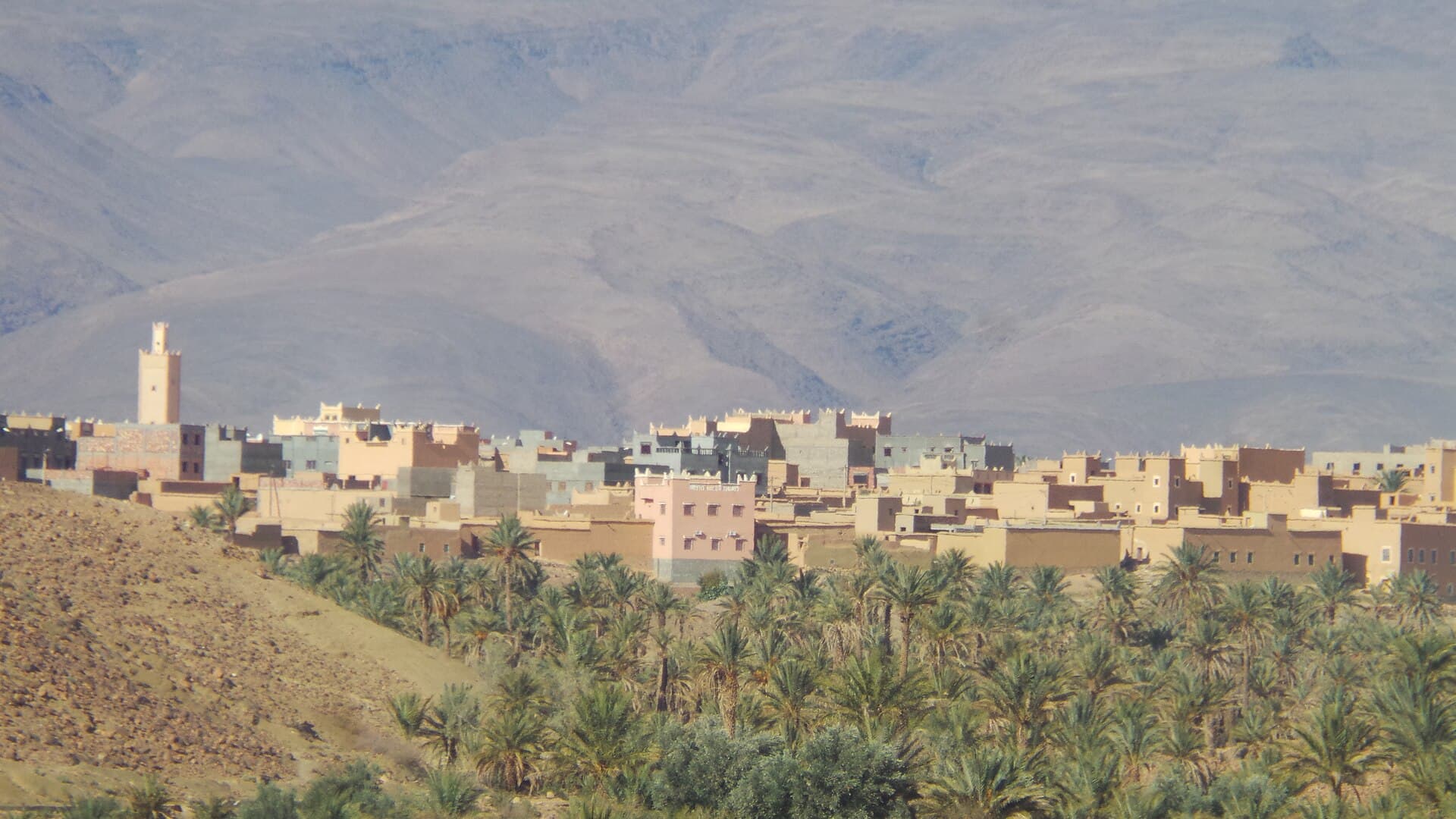 محمج فكري 1968 / CC BY-SA 4.0, via Wikimedia Commons
Tour de audio autoguiado de Nkob — ruta GPS a pie, reproducción offline, narración en 32 idiomas.
“Donde antiguas kasbahs se alzan del desierto, contando historias de resiliencia bereber y comercio sahariano.”
No las postales. Las historias que ni los locales conocen — al oído, justo donde ocurrieron.
Nkob es famoso como el 'Pueblo de las 45 Kasbahs', pero el número real de estas casas fortificadas podría sorprenderte.
La tribu Ait Atta, central para la identidad de Nkob, mantuvo una feroz independencia durante siglos.
El nombre 'Nkob' no es solo una colección aleatoria de sonidos; tiene un origen tangible y subterráneo.
Descubre todos los secretos de Nkob
Cada dirección, cada revelación al completo — a tu oído, justo donde ocurrió.
Eliges tus paradas. Caminas. La voz te revela lo que los demás ignoran.


Tu tour de audioguía por Nkob te espera — elige tus lugares, tu idioma y empieza al llegar.
ComprarLume incluye una guía de realidad aumentada. Levanta el móvil y su cámara muestra la calle que tienes delante, con una flecha luminosa sobre la imagen real que siempre apunta a tu próxima parada — sin mapas que descifrar, sin giros equivocados. Como todo en Lume, funciona completamente sin conexión.
Nkob, a menudo conocido como el 'Pueblo de las 45 Kasbahs', es un cautivador pueblo amazigh situado entre las dramáticas montañas del Jbel Saghro y el verde Valle del Draa, en el sur de Marruecos. Este tranquilo refugio ofrece una profunda visión de la vida y la arquitectura bereber tradicional, lejos de los caminos turísticos más frecuentados. Su horizonte único, dominado por numerosas kasbahs de tierra fortificadas, es un testimonio de siglos de resiliencia cultural.
La vida en Nkob transcurre a un ritmo suave, guiada por los ritmos de las estaciones. Aquí, las palmeras datileras florecen en los oasis, y los pastores nómadas atraviesan las tierras altas rocosas con sus rebaños. Sirve como un auténtico centro para la cultura amazigh, particularmente la de la tribu Ait Atta, famosa por su feroz independencia y sus tradiciones orales profundamente arraigadas. Ya sea que te atraigan sus maravillas arquitectónicas, el encanto de los paisajes desérticos o la calidez de su gente, Nkob ofrece una experiencia inmersiva e inolvidable.
La ubicación estratégica de Nkob en el cruce entre el Valle del Draa y la región del Saghro ha moldeado su historia durante siglos. Fue un puesto vital en la antigua ruta transahariana de caravanas que conectaba Marruecos con Tombuctú, facilitando el intercambio de bienes y culturas a través de vastas distancias. Esta importancia histórica está visiblemente grabada en el paisaje del pueblo, sobre todo a través de su notable concentración de kasbahs.
Las kasbahs mismas, que suman alrededor de 45, son más que impresionantes estructuras; son testimonios vivientes del ingenio arquitectónico y las necesidades defensivas del pasado. Construidas con 'pisé' —una mezcla de arcilla, paja y agua— estas casas familiares fortificadas fueron diseñadas para resistir tanto el duro clima sahariano como las incursiones tribales. Sus torres almenadas y los intrincados patrones geométricos bereberes a menudo denotaban la riqueza y el linaje de las familias que las construyeron. Más allá de sus funciones defensivas y residenciales, las kasbahs también servían como espacios neutrales para la resolución de problemas comunitarios.
Central para la identidad de Nkob es la tribu Ait Atta, un antiguo grupo amazigh cuya presencia precede a la llegada árabe e islámica a Marruecos en el siglo VII. Los Ait Atta fueron una fuerza dominante entre los siglos XV y XIX, conocidos por su inquebrantable independencia. Su bastión eran las escarpadas montañas del Jbel Saghro, que enmarcan dramáticamente a Nkob. Esta independencia se demostró famosamente en 1933 durante la Batalla de Bougafer, donde los Ait Atta resistieron a una formidable fuerza militar francesa durante 42 días. Esta profunda herencia continúa definiendo a Nkob, convirtiéndolo en un centro para la cultura y las tradiciones amazigh.
Nkob recompensa la exploración a pie, particularmente a través de su casco antiguo y los oasis circundantes. Comienza paseando por la famosa colección de 45 kasbahs del pueblo, observando su intrincada arquitectura de tierra e imaginando siglos de vida bereber dentro de sus muros. Muchas han sido bellamente restauradas, y algunas incluso se han transformado en casas de huéspedes. Considera visitar las terrazas de hoteles kasbah como Kasbah Baha Baha o Kasbah Ait Omar para disfrutar de vistas panorámicas del horizonte de kasbahs y los palmerales.
Un paseo por los exuberantes palmerales (palmeraie) es esencial. Aquí, puedes descubrir el antiguo sistema de seguia (irrigación), conocido como khettaras, que ingeniosamente mantiene la vida en esta región árida transportando agua a través de canales subterráneos. El pueblo también alberga un zoco (mercado) semanal que es una auténtica experiencia local, dirigido a los residentes en lugar de a los turistas. Es un excelente lugar para encontrar productos locales, artículos de cuero hechos a mano, henna fina, almendras cultivadas orgánicamente y cosméticos y ropa bereber tradicionales.
Para aquellos interesados en la herencia de la tribu Ait Atta, el Museo Etnográfico dentro de Kasbah Baha Baha ofrece una fascinante colección de artefactos históricos, incluyendo armas de guerra, trajes de boda y herramientas nómadas. Nkob también es un punto de partida reconocido para aventuras de senderismo en los dramáticos paisajes volcánicos de las montañas del Jbel Saghro, ofreciendo rutas más tranquilas que algunos de los senderos más concurridos de las montañas del Atlas.
La mejor época para visitar Nkob es durante la primavera (marzo a mayo) y el otoño (septiembre a noviembre). Durante estos meses, las temperaturas son agradablemente cálidas, típicamente oscilando entre 18°C y 27°C (64°F a 82°F), lo que lo hace ideal para explorar las kasbahs, los oasis y emprender caminatas por la montaña. Las precipitaciones son mínimas, asegurando días claros y soleados. Los veranos, particularmente julio y agosto, pueden ser extremadamente calurosos, con máximas diurnas que alcanzan los 38°C (100°F), lo que puede hacer que las actividades al aire libre sean incómodas. Los inviernos (diciembre a febrero) son más frescos, con máximas diurnas alrededor de 17°C (63°F) y mínimas nocturnas que bajan a 4°C (39°F), pero aún ofrecen menos multitudes para hacer turismo.
Nkob está situado en la carretera entre Ouarzazate y Tazzarine, parte de la ruta sur que conecta Marrakech con las Dunas de Erg Chebbi en Merzouga. La mayoría de los viajeros llegan a Nkob por carretera, ya sea como parte de un tour organizado, en coche privado o en gran taxi. Desde Ouarzazate, es aproximadamente un viaje de dos horas hacia el sureste. Hay grandes taxis disponibles en la Estación Central de Autobuses de Ouarzazate. Una vez en Nkob, el pueblo y sus dos oasis circundantes se exploran fácilmente a pie.
Las opciones de alojamiento en Nkob incluyen acogedoras casas de huéspedes, hoteles kasbah boutique y riads familiares, muchos de los cuales son kasbahs restauradas que ofrecen una auténtica hospitalidad. La comida suele ser marroquí tradicional, como tagine, cuscús y pan recién horneado. Al interactuar con los lugareños, vístase con modestia y siempre pida permiso antes de tomar fotografías. Si bien el dialecto bereber regional (Tashelhiyt) y el árabe marroquí (Darija) son ampliamente hablados, el francés también es común, y el inglés está ganando popularidad entre las generaciones más jóvenes y aquellos en el sector de la hostelería.
Nkob en coreano, en chino o en hebreo — y 29 idiomas más, cada parada narrada por una voz nativa. La mayor variedad de idiomas de cualquier audioguía autoguiada.
Disponible en: