Candi Cangkuang
Parmi les reliques anciennes de Garut, un complexe de temples singulier partage son terrain avec un voisin inhabituel.
L'histoire complète se débloque dans le tour
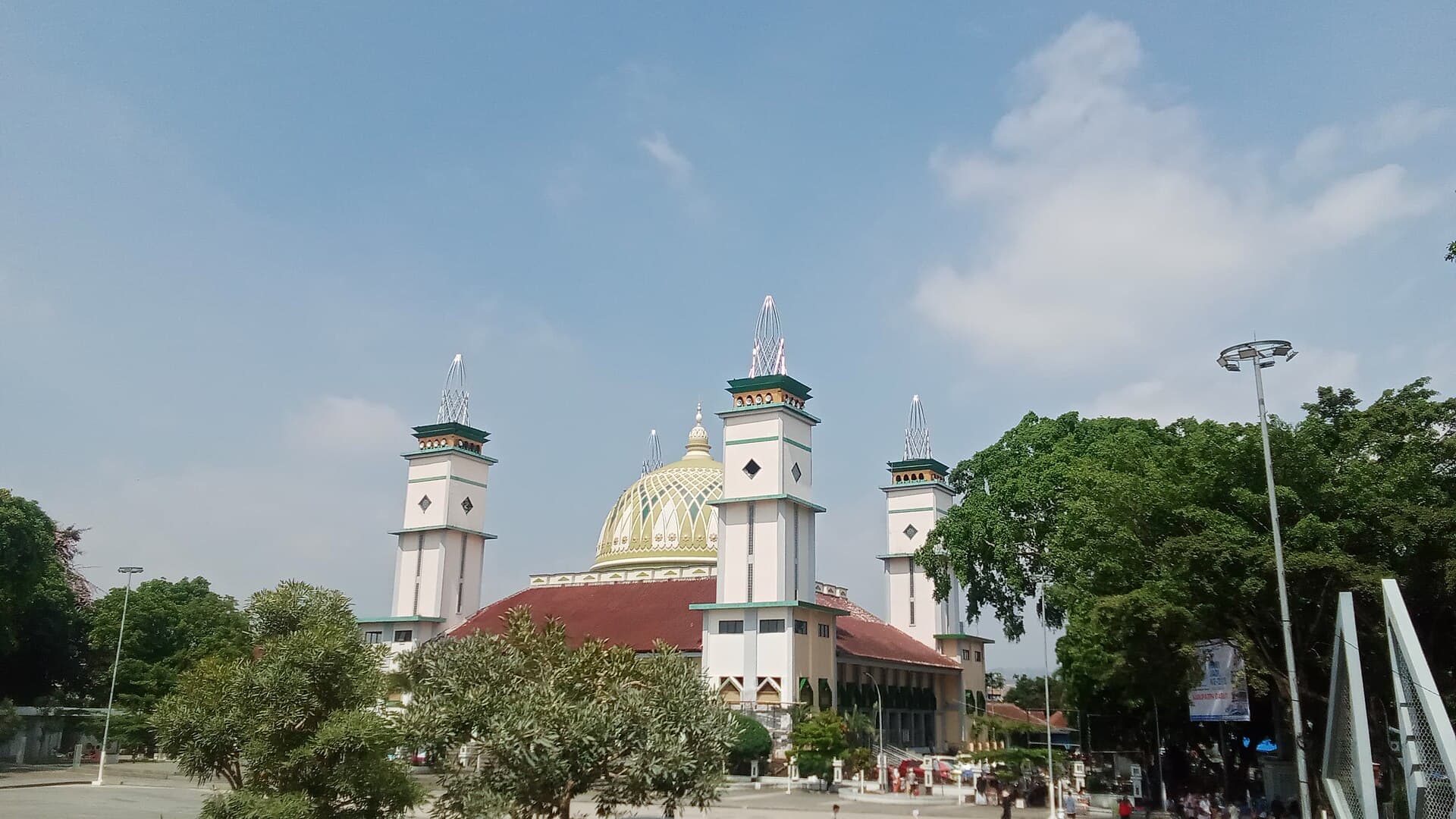 Sillrizqiyanazz / CC BY-SA 4.0, via Wikimedia Commons
Visite audio autoguidée de Garut — parcours GPS à pied, lecture hors ligne, narration en 32 langues.
“Garut : Là où les sommets volcaniques touchent les nuages et chaque panorama dévoile une histoire.”
Pas les cartes postales. Les histoires que même les habitants ignorent — soufflées à l'oreille, là où elles se sont passées.
Parmi les reliques anciennes de Garut, un complexe de temples singulier partage son terrain avec un voisin inhabituel.
Les eaux tranquilles de Situ Bagendit recèlent un récit dramatique d'avarice et de justice divine.
La célèbre douceur de Garut possède une origine inattendue, la liant à l'ingéniosité en période de pénurie.
Découvrez tous les secrets de Garut
Chaque adresse, chaque révélation en entier — dans ton oreille, là où elle s'est passée.
Tu choisis tes lieux. Tu marches. La voix te révèle ce que les autres ignorent.


Votre visite audioguidée de Garut vous attend — choisissez vos lieux, votre langue, et lancez-vous dès votre arrivée.
AcheterLume intègre un guide en réalité augmentée. Levez votre téléphone : sa caméra montre la rue devant vous, avec une flèche lumineuse posée sur l'image réelle qui pointe toujours vers votre prochain arrêt — aucune carte à déchiffrer, aucun mauvais virage. Comme tout dans Lume, ça fonctionne entièrement hors-ligne.
Située dans les hautes terres de l'ouest de Java, Garut est une régence souvent moins reconnue que ses voisins plus éminents, pourtant elle possède un attrait distinct qui évoque la grandeur volcanique, les traditions durables et un rythme de vie plus tranquille. Surnommée la « Kota Intan » ou « Ville Diamant » pour sa beauté perçue et ses terres fertiles, Garut offre un répit rafraîchissant loin du tumulte des centres urbains. Ici, des plantations de thé émeraude drapent les collines ondulantes, des volcans actifs se dressent comme des sentinelles silencieuses, et des lacs tranquilles reflètent le ciel, forgeant un paysage à la fois dramatique et profondément serein.
Garut est un endroit où l'air est vif, les salutations sont chaleureuses et le rythme de la vie quotidienne suit le doux flux et reflux de la nature. C'est une destination pour ceux qui recherchent des expériences indonésiennes authentiques, de la dégustation de délices locaux uniques à l'exploration de sites historiques antérieurs à l'époque coloniale. Qu'il soit attiré par le frisson des ascensions volcaniques, le calme des sources chaudes ou la beauté complexe de l'artisanat traditionnel, Garut promet un voyage qui engage tous les sens et laisse une impression durable.
## Des anciens royaumes aux charmes coloniaux Le récit de Garut est profondément entrelacé avec les anciens royaumes sundanais qui ont autrefois prospéré à travers l'ouest de Java. Des découvertes archéologiques, notamment dans des régions comme Candi Cangkuang, indiquent une habitation humaine précoce et l'influence des cultures hindou-bouddhistes dans la région bien avant l'arrivée des puissances européennes. Ces premiers habitants ont développé des méthodes agricoles sophistiquées, utilisant le sol volcanique fertile et les abondantes sources d'eau.
À l'époque du Sultanat de Mataram, puis de la Compagnie néerlandaise des Indes orientales (VOC), la position stratégique et les terres productives de Garut en ont fait un centre agricole important. Les Néerlandais, en particulier, ont reconnu son potentiel pour les cultures de plantation, conduisant à l'établissement de vastes domaines de thé et de café dans ses hautes terres. Cette période a également vu le développement d'infrastructures, y compris des routes et des chemins de fer, pour faciliter le transport de ces marchandises. C'est à cette époque que Garut a gagné son surnom de « La Suisse de Java », un témoignage de ses paysages pittoresques qui évoquaient des souvenirs de chez eux pour les visiteurs européens.
Le 20e siècle a apporté des transformations substantielles, y compris la lutte de l'Indonésie pour l'indépendance. Garut, comme de nombreuses autres régions, a contribué au mouvement nationaliste. Après l'indépendance, la régence s'est concentrée sur le développement de son secteur agricole et de son potentiel touristique émergent. Aujourd'hui, Garut continue de mêler son tissu historique durable à une approche tournée vers l'avenir, protégeant son patrimoine culturel tout en embrassant le développement moderne. Les vestiges de son passé, des temples anciens à l'architecture de l'époque coloniale, se dressent comme des témoins silencieux de son histoire continue.
Commencez votre exploration à Candi Cangkuang, un complexe de temples hindous du VIIIe siècle, situé de manière unique à côté du village traditionnel de Kampung Pulo, offrant un rare aperçu des croyances anciennes et des coutumes vivantes. Pour un aperçu du drame naturel de Garut, voyagez jusqu'au Mont Papandayan, un volcan actif connu pour sa frappante « forêt morte » et ses champs d'edelweiss animés, parfaits pour la randonnée et la photographie. Découvrez la tranquillité à Situ Bagendit, un lac pittoresque imprégné de folklore local, idéal pour la navigation de plaisance et pour profiter des environs sereins.
Offrez-vous la détente au Col de Darajat, où les sources chaudes géothermiques et les parcs aquatiques offrent une expérience apaisante au milieu de grands panoramas montagneux. Explorez les origines des célèbres articles en cuir de Garut dans le quartier de Sukaregang, où vous pourrez observer les artisans au travail et trouver des souvenirs distinctifs. Ne manquez pas de goûter au Dodol Garut, l'emblématique douceur collante, auprès de l'un des nombreux producteurs locaux. Pour une évasion naturelle rafraîchissante, visitez Curug Orok, une cascade avec une légende locale poignante.
La période idéale pour visiter Garut se situe pendant la saison sèche, qui s'étend généralement d'avril à octobre. Durant ces mois, attendez-vous à des journées plus ensoleillées, une humidité réduite et des températures plus confortables, ce qui est parfait pour les activités de plein air comme la randonnée volcanique et l'exploration des plantations de thé. La saison des pluies, de novembre à mars, apporte des précipitations plus importantes, ce qui peut rendre certains chemins et sentiers difficiles à parcourir, bien que les paysages apparaissent particulièrement luxuriants et verdoyants.
Garut est accessible par la route depuis Bandung, qui abrite un aéroport international (Aéroport international Husein Sastranegara - BDO). De Bandung, vous pouvez organiser une voiture privée, prendre un bus public ou utiliser un service de navette. À Garut, les options de transport local incluent les angkot (mini-vans), les ojek (taxis-motos) et quelques possibilités de location de voitures. La monnaie locale est la roupie indonésienne (IDR). Des distributeurs automatiques de billets sont disponibles dans les centres urbains, mais il est judicieux d'avoir de l'argent liquide pour les petites transactions dans les zones plus rurales. Le bahasa Indonesia est la langue officielle, mais le sundanais est largement parlé par les habitants. Apprendre quelques phrases de base en sundanais sera apprécié. Bien que généralement sûr, prenez les précautions de voyage habituelles, surtout lors de l'exploration de zones reculées ou de la participation à des activités d'aventure.
Garut en coréen, en chinois ou en hébreu — et dans 29 autres langues, chaque étape narrée par une voix native. La plus large gamme de langues de tous les audioguides autoguidés.
Disponible en :