Historische Geraer Höhler (Beer Cellars)
Beneath the city streets lies a network of tunnels, not for defense or escape, but for something far more essential to German culture.
Full story unlocks in the tour
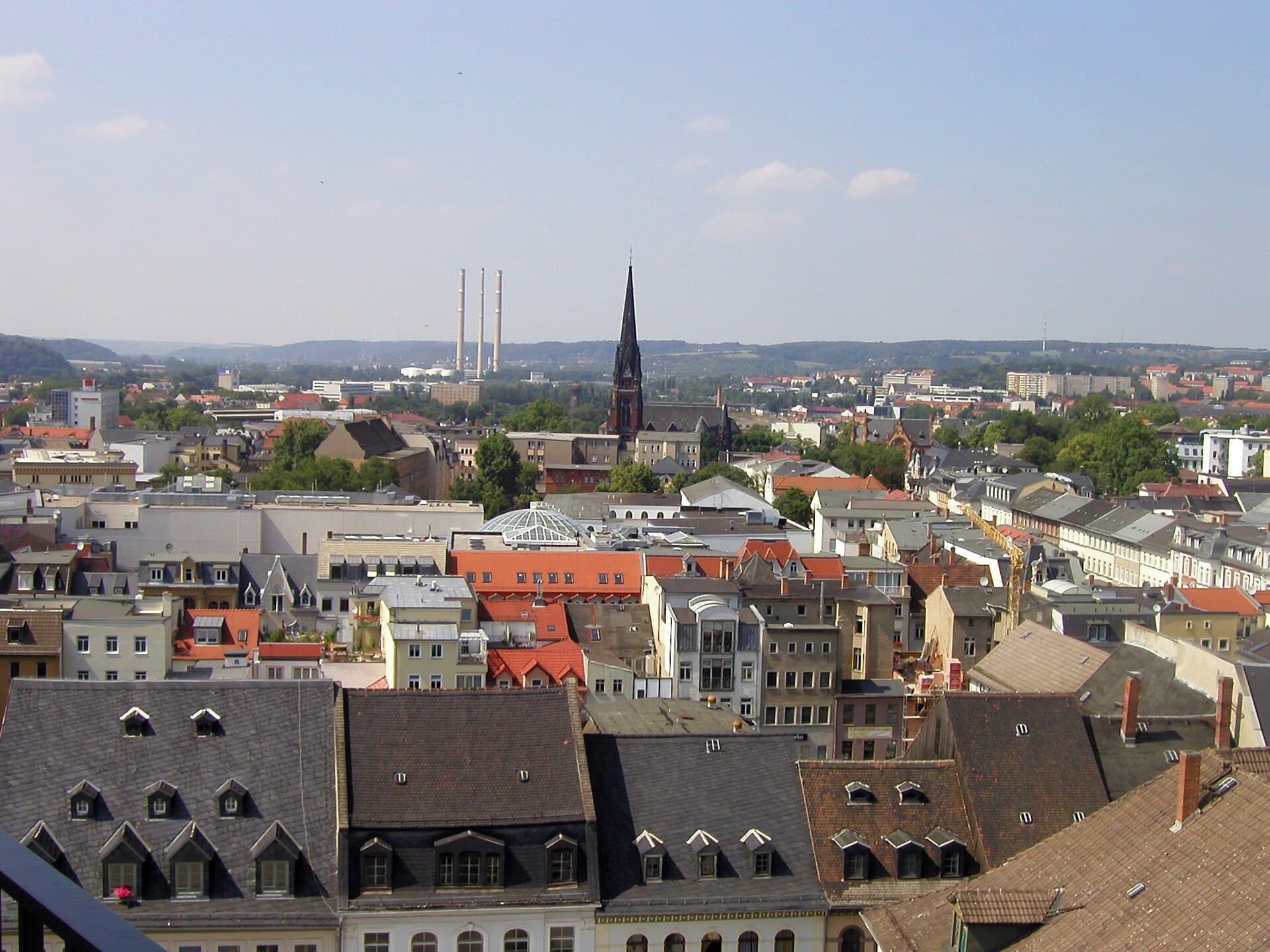 The original uploader was Schorle at German Wikipedia. / CC BY-SA 3.0, via Wikimedia Commons
Self-guided audio walking tour of Gera — GPS route, offline playback, story-driven narration in 32 languages.
“Where industry's echoes meet artistic rebellion.”
Not the postcards. The stories even locals don't know — whispered in your ear, right where they happened.
Beneath the city streets lies a network of tunnels, not for defense or escape, but for something far more essential to German culture.
Gera's grand theater, a striking example of Neo-Renaissance architecture, holds a secret within its walls that once caused quite a stir among its patrons.
This expansive urban park, a legacy of a major horticultural exhibition, features a unique collection of gardens that celebrate global connections.
Discover every secret of Gera
Every address, every reveal in full — in your ear, right where it happened.
You pick your stops. You walk. The voice reveals what the others miss.


Your self-guided audio tour of Gera is ready — pick your landmarks, choose your language, and start the moment you arrive.
BuyLume has a built-in augmented-reality guide. Hold your phone up and its camera shows the street ahead of you, with a glowing arrow laid over the real view that always points to your next stop — no map to puzzle over, no wrong turns. Like everything in Lume, it works fully offline.
Gera, the third-largest city in Thuringia, Germany, offers a compelling blend of historical depth, industrial heritage, and artistic spirit. Situated in the picturesque valley of the White Elster River, surrounded by rolling hills and dense forests, it provides a serene escape from bustling metropolises. The city's architectural landscape showcases well-preserved villas and public buildings in Art Nouveau and Jugendstil styles, testaments to its past as a wealthy industrial center.
Known as the "Otto-Dix-Stadt" after its most famous son, the renowned painter Otto Dix, Gera embraces its cultural identity. Beyond its artistic connections, the city maintains a verdant character, with extensive parks and gardens providing ample opportunities for outdoor recreation. Gera's convenient location, approximately 60 km from Leipzig and 80 km from Erfurt, makes it an accessible starting point for exploring Central Germany.
Gera's recorded history stretches back over a millennium, with its first mention in documents dating to 995 AD. Initially, the name "Gera" referred to the broader area of the Elster river valley rather than a specific settlement. By 1237, it was recognized as a town, though the exact date of its municipal charter remains unclear.
The city's early development was shaped by its strategic location and political affiliations. In 999, Emperor Otto III assigned the "province" of Gera to the Quedlinburg Abbey. Later, in 1209, the protectorship of the area was granted to the Vogts of Weida, ancestors of the influential Reuss family, who would go on to rule Gera until 1918. Gera became the main residence and capital of the Principality of Reuss-Gera from 1564 to 1918.
The city faced numerous challenges throughout its history, including significant destruction by fires in 1639, 1686, and 1780. The devastating fire of 1780, in particular, razed most of the medieval old town, leading to a large-scale reconstruction that shaped much of its current appearance. Despite these setbacks, Gera consistently rebuilt itself.
The 19th century marked a period of rapid growth and transformation for Gera. It emerged as a major center for the textile industry, fueled by the introduction of mechanical looms and the development of railways. This industrial boom contributed to Gera becoming one of the wealthiest cities in the region, a legacy still visible in the numerous stately villas that dot the cityscape. In 1892, Gera was at the forefront of technological progress, launching one of Germany's first electric tramway systems.
During the interwar period, Gera became a hub for architectural experimentation, with notable Bauhaus and "New Objectivity" style buildings designed by architects like Thilo Schoder. World War II brought heavy damage to the city, including the destruction of Osterstein Palace. After the war, Gera became part of East Germany and served as the administrative center of the Gera District from 1952 to 1990. Following German reunification in 1990, Gera was reincorporated into the state of Thuringia.
Begin your exploration in Gera's historic center at the Marktplatz, where the Renaissance Town Hall, built in 1574, stands with its distinctive tower. You can climb the tower for a modest fee to enjoy panoramic views of the city. Nearby, the Stadtapotheke (City Pharmacy) captivates with its intricately decorated oriel window.
Delve into Gera's unique past by visiting the Historische Geraer Höhler, a labyrinthine system of underground beer cellars dating back to the 16th and 17th centuries. Guided tours offer a fascinating glimpse into the city's brewing traditions. Above ground, the Natural History Museum, housed in the baroque Schreibersche Haus, showcases the flora, fauna, and geology of East Thuringia, including a collection of 340 minerals in its own beer cellars.
Art enthusiasts will find much to appreciate, especially at the Otto Dix Haus, the birthplace of the influential German painter. This museum presents a significant collection of Dix's works, offering insight into his life and artistic evolution. The Orangerie, a beautiful Baroque complex in the former Kitchen Garden, serves as an exhibition hall for the Gera Art Collection, featuring works by masters like Rembrandt and Tintoretto.
For a dose of performing arts, the Theater Altenburg Gera is a striking Neo-Renaissance building that houses Thuringia's only five-division theater, offering a diverse program of opera, ballet, drama, and concerts. Finally, unwind in the expansive Hofwiesenpark, a 30-hectare park created for the 2007 Federal Garden Show, featuring diverse green spaces, themed gardens, and recreational areas.
Gera experiences a temperate climate with four distinct seasons. The most pleasant time to visit for warm-weather activities and sightseeing is from late June to early September, when average daily temperatures range from 22°C to 25°C. August is typically the clearest month, with less cloud cover. While precipitation is distributed throughout the year, July sees the highest rainfall, so an umbrella is always a good idea. Winters are cool but generally mild for Central Europe, with January being the coldest month, averaging around 2.1°C during the day.
Gera is well-connected by train and bus networks. The Gera Hauptbahnhof (main station) is a short walk from the city center, with regional train connections to Leipzig, Jena, Weimar, Erfurt, Saalfeld, and Chemnitz, which offer access to long-distance routes. For air travel, Leipzig/Halle Airport (LEJ) is the most convenient, with train connections to Gera. Alternatively, Erfurt Airport (ERF) and Dresden International Airport (DRS) are also options, though further away.
Getting around Gera is straightforward. The city maintains one of Germany's oldest electric tram networks, with vintage trams often making appearances during city festivals. Public transport is efficient, though less frequent at night, making taxis a practical choice for late-night travel. For those who enjoy active exploration, inexpensive bicycle rentals are available, and the city's green spaces offer numerous hiking opportunities. German is the primary language, and while younger residents may speak English, learning a few basic German phrases is always appreciated.
Gera in Korean, in Chinese or in Hebrew — and 29 more languages, every stop narrated by a native voice. The widest language range of any self-guided audio tour.
Available in: