Blessed Bernard's Well, Old Market Square
A statue in the main square holds a jug, which locals believe possesses a special power.
Full story unlocks in the tour
 Roweromaniak / CC BY-SA 3.0, via Wikimedia Commons
Self-guided audio walking tour of Grodzisk Wielkopolski — GPS route, offline playback, story-driven narration in 32 languages.
“Where effervescent Polish beer flows and history echoes across two market squares.”
Not the postcards. The stories even locals don't know — whispered in your ear, right where they happened.
A statue in the main square holds a jug, which locals believe possesses a special power.
Examine the dome of the town's oldest church, and you will discern a surprising figure.
The 'Polish champagne' beer style nearly faded from its place of origin.
Discover every secret of Grodzisk Wielkopolski
Every address, every reveal in full — in your ear, right where it happened.
You pick your stops. You walk. The voice reveals what the others miss.
Your self-guided audio tour of Grodzisk Wielkopolski is ready — pick your landmarks, choose your language, and start the moment you arrive.
BuyLume has a built-in augmented-reality guide. Hold your phone up and its camera shows the street ahead of you, with a glowing arrow laid over the real view that always points to your next stop — no map to puzzle over, no wrong turns. Like everything in Lume, it works fully offline.
Grodzisk Wielkopolski, a town in western Poland, bears a name that suggests its fortified beginnings and its place within the Greater Poland (Wielkopolska) region. Situated along the Letnica River, it is a place where centuries of human endeavor have shaped a distinct local culture, most famously recognized for its singular beer style, Grodziskie. Often called 'Polish champagne' for its lively effervescence, this smoked wheat beer stands as a testament to the town's enduring brewing heritage.
Beyond its liquid gold, Grodzisk Wielkopolski unfolds as a town of compelling contrasts. Its layout, with two separate market squares joined by Szeroka Street, reveals a past where two distinct urban entities merged into one. From medieval strongholds to a center of the Polish Reformation and a resilient community through partitions and wars, Grodzisk Wielkopolski offers a layered narrative for those who wander its streets and delve into its stories.
The origins of Grodzisk Wielkopolski can be traced back to the 13th century, with the first written record of the settlement, then named Grodisze, appearing in 1257. While the precise date of its founding and the granting of Magdeburg rights have been lost to time, a document from 1303 confirms its status as a town. Early on, Grodzisk was a noble town, owned first by the Borków and later by the Ostroróg families.
The 16th century marked a significant era for Grodzisk, as it became a focal point for new religious currents, drawing dissidents from Bohemia and Western Europe. Stanisław Ostroróg, a Lutheran, transferred control of the local church to Protestants in 1563 and established a new school, transforming Grodzisk into an important printing center for the Polish Reformation. However, Catholicism was re-established in 1594 by Jan Ostroróg.
The town's story became deeply intertwined with brewing. The first privileges for a brewery were granted in 1601, and by the close of the 18th century, Grodzisk contained 53 breweries. The unique Grodziskie beer, known for its yeast sediment and effervescence, earned it the moniker 'Polish champagne.' Its reputation spread across Wielkopolska and beyond, becoming a symbol of prestige and an expensive commodity.
Grodzisk Wielkopolski endured numerous conflicts and shifts in sovereignty. It was annexed by Prussia in the Second Partition of Poland in 1793 but played an important role in the Kościuszko Uprising in 1794. The town was part of the Duchy of Warsaw from 1807 to 1815 before being reannexed by Prussia. In 1848, during the Revolutions, residents expelled the Prussians, though they eventually lost the town after a valiant defense led by Jewish physician Marcus Mosse.
The town served as a command and supply post during the Wielkopolska Uprising (1918-1919), eventually rejoining independent Poland. The interwar period saw rapid economic development, with Grodzisk serving as a county seat until 1932. The Nazi occupation brought intense Germanization and forced displacements, with a transitional camp for Jews and Poles established nearby. Grodzisk Wielkopolski was liberated by the Red Army and local volunteers on January 27, 1945.
After World War II, the brewing industry declined, and the final batch of Grodzisk beer was brewed in 1994. However, in recent years, the legendary beer has seen a revival, with the brewery on Poznańska Street reactivated by new owners. Today, Grodzisk Wielkopolski is an industrial and services center, perpetuating its traditions while embracing its renewed identity.
Begin your journey in the Old Market Square, where the striking Town Hall commands attention. Nearby, you will discover Blessed Bernard's Well with its 19th-century wooden housing and the figure of Blessed Bernard. Remember to touch the jug for good fortune! Just west of the Old Market Square stands the Parish Church of St. Hedwig of Silesia, a blend of Renaissance, Baroque, and Gothic elements, notable for the figure of St. Florian atop its dome.
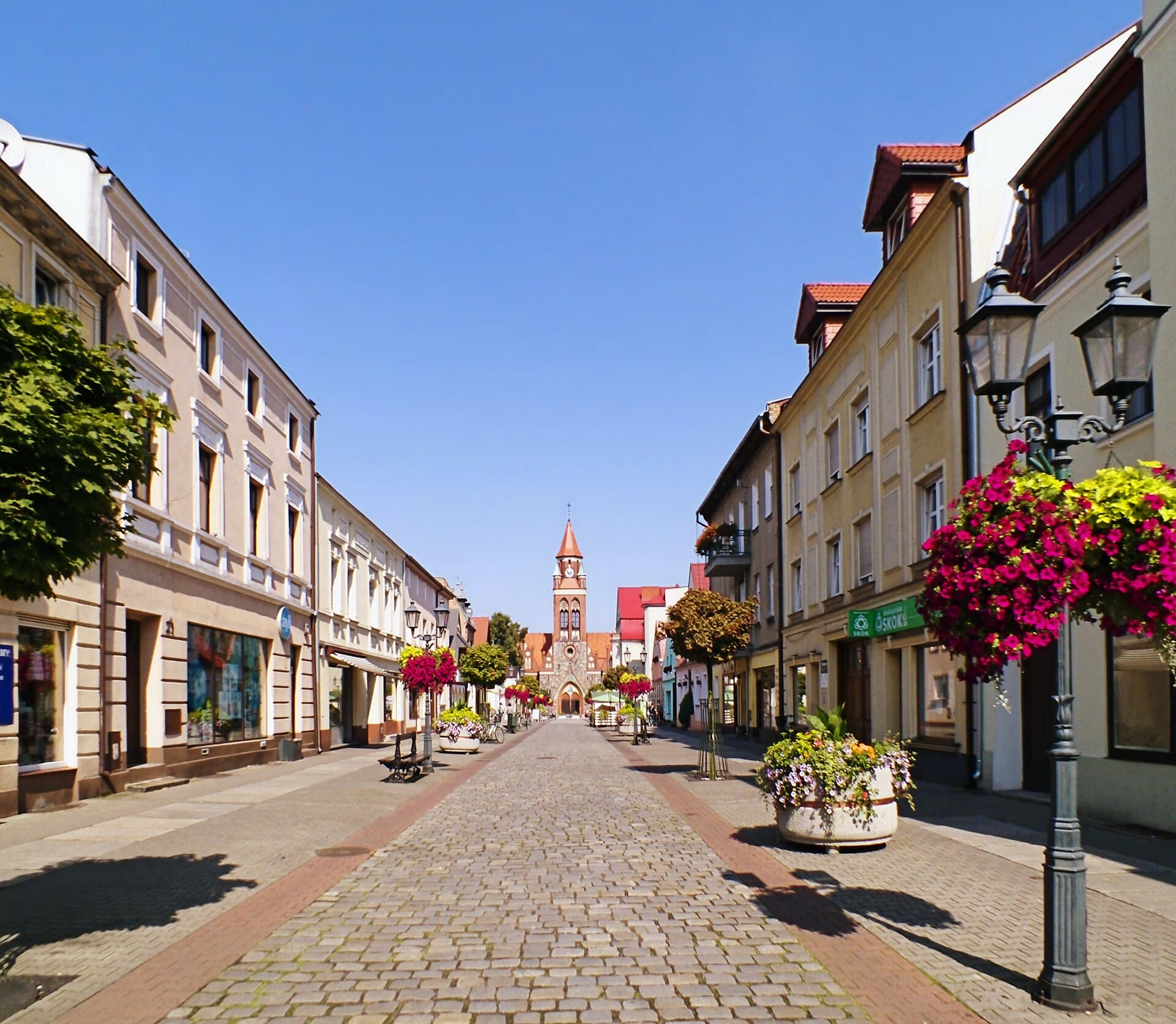
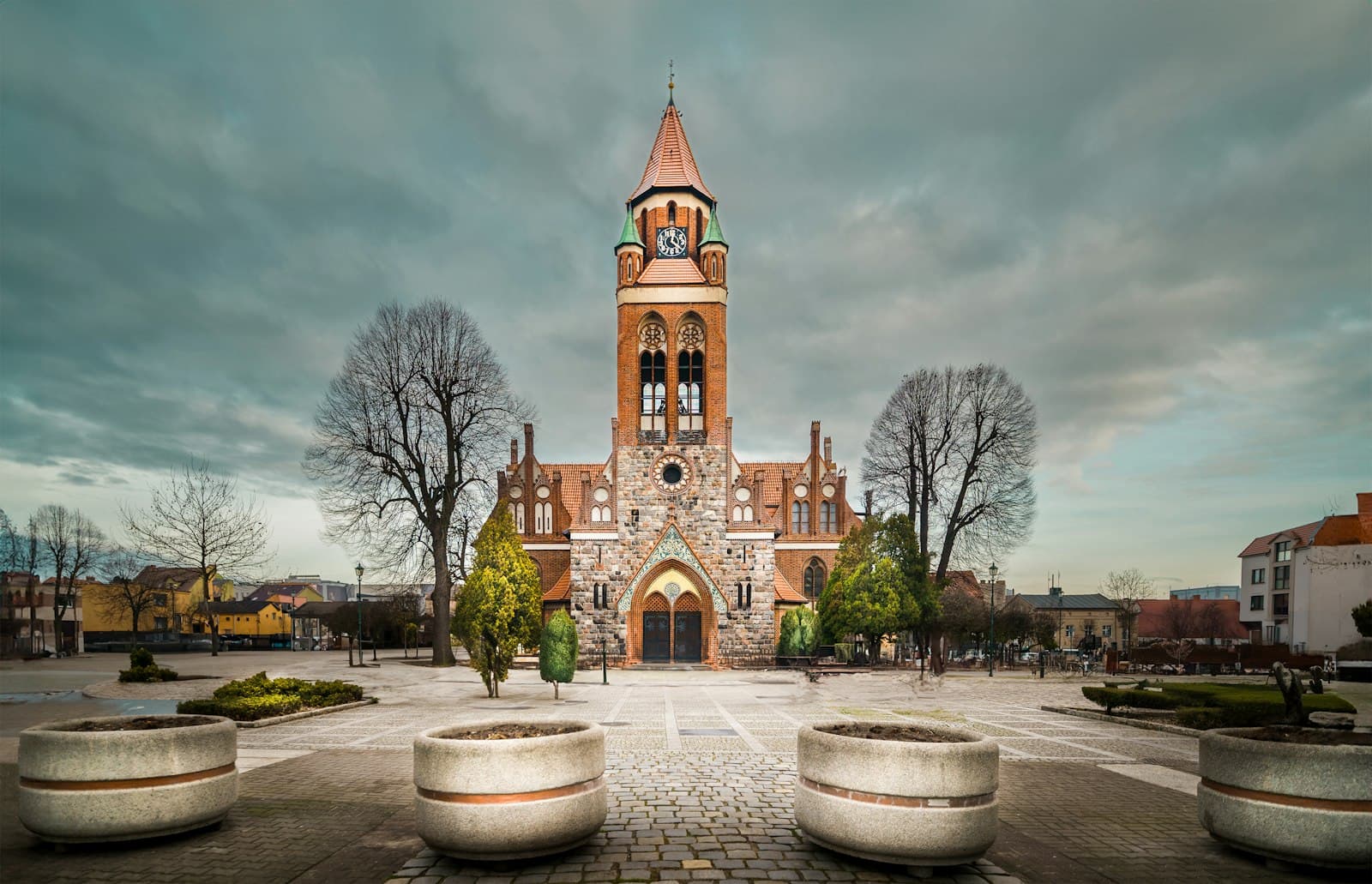
Follow Szeroka Street to the Plac Powstańców Wielkopolskich, the 'new' market square, where the neo-Gothic former Protestant church (now the Catholic Church of the Most Sacred Heart of Jesus) dominates the space. The Grodzisk Tradition Museum Chamber, situated in the late 19th-century Łubieński manor, offers insights into local history, including the large panoramic painting of the 1848 defense of Grodzisk.
For a glimpse into the town's celebrated brewing heritage, seek out the Browar Grodzisk (Grodzisk Brewery) on Poznańska Street, the birthplace of Grodziskie beer. The Grodzisk Wielkopolski Railway Station, with its historic buildings, also warrants a visit, particularly if you appreciate film history. For a distinctive outdoor activity, consider a ride on the Grodzisk Platelayers' Trolley Railway on the old Kościan-Grodzisk line.
Grodzisk Wielkopolski offers a pleasant experience throughout the warmer months, from late spring to early autumn (May to September). The weather during this period is generally mild, making it ideal for walking tours and outdoor pursuits. Summers provide the best opportunity to experience local festivals, including the 'Grodziskie Piwobranie' (Grodzisk Beer Festival), which celebrates the town's brewing heritage, typically held once a year.
Grodzisk Wielkopolski is located in the Greater Poland Voivodeship, along the Letnica River. The town is accessible via National Road 32 and Voivodeship Road 308. It is also served by railway line 357, with regional trains connecting to Poznań Główny and Wolsztyn.
The town provides various dining establishments, offering traditional Polish cuisine and international selections. Accommodation options range from hotels to guesthouses. The official website of Grodzisk Wielkopolski (grodzisk.wlkp.pl) offers additional information on local attractions and services. The local time zone is UTC+1 (CET), with UTC+2 during summer (CEST).
Grodzisk Wielkopolski in Korean, in Chinese or in Hebrew — and 29 more languages, every stop narrated by a native voice. The widest language range of any self-guided audio tour.
Available in: