Koło Castle Ruins
The ruins of Koło Castle tell a tale of shifting defenses, but what secret lies beneath its very foundations, hinting at an even older, forgotten protector?
Full story unlocks in the tour
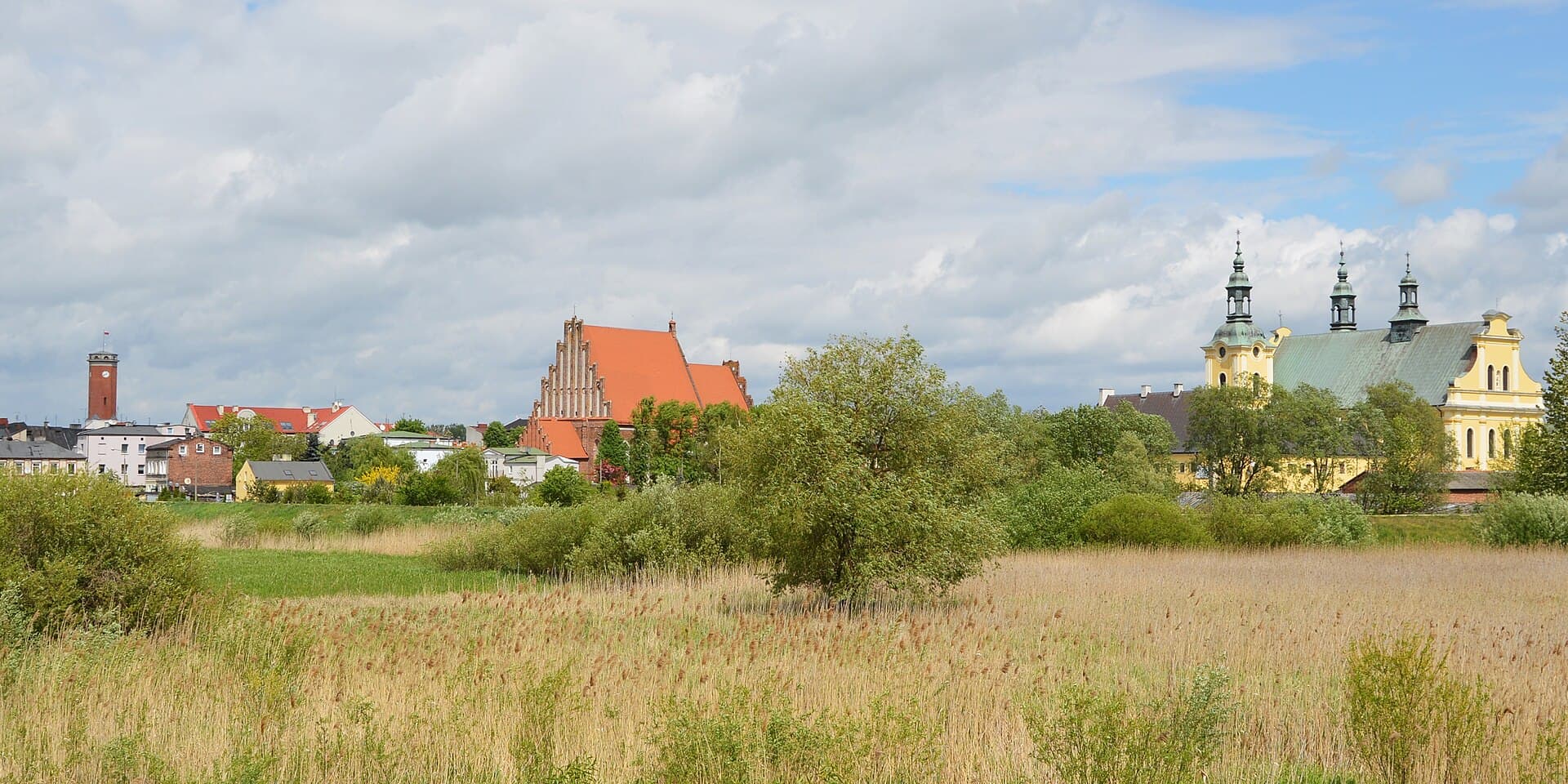 Kolanin / CC BY-SA 4.0, via Wikimedia Commons
Self-guided audio walking tour of Koło — GPS route, offline playback, story-driven narration in 32 languages.
“Where medieval echoes meet a river's embrace.”
Not the postcards. The stories even locals don't know — whispered in your ear, right where they happened.
The ruins of Koło Castle tell a tale of shifting defenses, but what secret lies beneath its very foundations, hinting at an even older, forgotten protector?
The Jewish community of Koło thrived for centuries, but their synagogue met a tragic end. What surprising accusation did the Nazis make after its destruction?
The railway station in Koło witnessed a devastating event at the very beginning of World War II. What tragic cargo was present during the bombing?
Discover every secret of Koło
Every address, every reveal in full — in your ear, right where it happened.
You pick your stops. You walk. The voice reveals what the others miss.

Your self-guided audio tour of Koło is ready — pick your landmarks, choose your language, and start the moment you arrive.
BuyLume has a built-in augmented-reality guide. Hold your phone up and its camera shows the street ahead of you, with a glowing arrow laid over the real view that always points to your next stop — no map to puzzle over, no wrong turns. Like everything in Lume, it works fully offline.
Koło, a town on the Warta River in central Poland, offers a journey through centuries of Polish history. Its name, meaning 'circle' or 'wheel,' is thought to derive from the river's bend where the settlement was established, giving it a natural defensive advantage from its earliest days. Today, Koło is a regional center for industry, education, and tourism, providing a glimpse into both its medieval past and its resilience through tumultuous periods.
Strategically positioned as an important road junction connecting Western Europe with Warsaw and Moscow, Koło has long been a place of passage and significance. Visitors can explore the remnants of its royal past, delve into the stories of its diverse communities, and appreciate the serene landscapes along the Warta River.
## From Royal Stronghold to Industrial Hub Koło's recorded history begins in 1362 when King Casimir III the Great granted it town rights. It was a royal estate and the seat of a starosta (a royal administrator). The king also initiated the construction of Koło Castle, a Gothic defensive structure intended to protect Greater Poland from the Teutonic Knights and secure the Warta River crossing. While Casimir the Great is often credited, archaeological findings suggest earlier defensive structures existed on the castle site.
For centuries, the castle was a significant meeting place. Kings, including Władysław Jagiełło and Casimir Jagiellonian, visited frequently, and the nobility of Greater Poland held regional councils there. In 1410, Koło was a gathering point for the Greater Poland nobility who advocated for war against the Teutonic Order, a precursor to the Battle of Grunwald. In 1452, King Casimir Jagiellonian met with representatives of the Prussian Union at the Royal Castle to discuss the Thirteen Years' War.
The town prospered through trade and handicrafts until the 17th century, when the Swedish Invasion (1655–1660) led to its decline. It began to recover in the 19th century with the development of factories. Following the Second Partition of Poland in 1793, Koło briefly fell under Prussian rule but was quickly returned to Polish control after the Kościuszko Uprising of 1794. It later became part of the Russian-controlled Congress Poland after the Congress of Vienna in 1815.
## The Shadow of World War II Koło had a significant Jewish population dating back to the 15th century, with Jews receiving the right of residence from King Sigismund II Augustus in 1564. By 1939, Jews constituted approximately 41.6% of the town's population. The German invasion in September 1939 brought immense suffering. The Koło railway station was bombed, and the synagogue was burned down, with the Nazis falsely blaming the Jewish community. A ghetto was established in December 1940, and Koło became a key deportation point for Jews from the Wartheland to the Chełmno extermination camp. The town was liberated by the Soviet 1st Belorussian Front on January 20, 1945.
Begin your exploration at the Koło Castle Ruins, a Gothic fortress dating from the 14th century, strategically built on a bend of the Warta River. While largely in ruins today, you can still discern fragments of its outer walls, the foundations of the gatehouse, and the lower part of a tower, offering a picturesque setting for reflection.
In the town center, the Church of the Raising of the Holy Cross, built at the turn of the 14th and 15th centuries, is a notable stop. Inside, look for a Gothic pulpit and the stone tomb of Jan of Garbów, son of the legendary Polish knight Zawisza the Black. Nearby, the Koło Town Hall, an 18th-century classicist building, stands in the market square, believed to be on the site of an earlier royal manor.
For a deeper understanding of Koło's industrial heritage, visit the Museum of Ceramics, which showcases the town's history of faience production. Reflect on the town's tragic wartime history at the memorial marker at the site of the former Koło synagogue, and the boulder dedicated to the memory of the 80,000 Jews transported from the Łódź ghetto to Chełmno extermination camp, located near the historic railway station. The Monument to the Fighters for Freedom and Independence on the Warta reservoir also commemorates victims of past struggles.
Consider a stroll along the Embankment Trail along the Warta River for scenic views of the river and its floodplains, a popular route for cycling.
Koło is best visited during the warmer months, from late spring to early autumn (May to September), when the weather is pleasant for exploring outdoor historical sites and enjoying walks along the Warta River. The town experiences a temperate climate. While specific local events are not widely publicized for international tourists, Poland generally offers various cultural festivals and outdoor activities during this period.
Koło is situated in the Greater Poland Voivodeship, approximately 30 km east of Konin and 120 km east of Poznań. National road 92 bypasses Koło to the east, and voivodeship roads 473 and 270 meet in the town. Koło also has a railway station on the Berlin-Warsaw line, making it accessible by train. For accommodation, options range from apartments to hotels, with several choices available in Koło and nearby areas like Konin. The local currency is the Polish Złoty (PLN). Polish is the official language, though some English may be spoken in tourist-related establishments. Foreign tourist numbers are relatively low, suggesting a less crowded experience for visitors.
Koło in Korean, in Chinese or in Hebrew — and 29 more languages, every stop narrated by a native voice. The widest language range of any self-guided audio tour.
Available in: