Koszalin Cathedral
The ancient walls of Koszalin Cathedral hold more than just centuries of prayer.
Full story unlocks in the tour
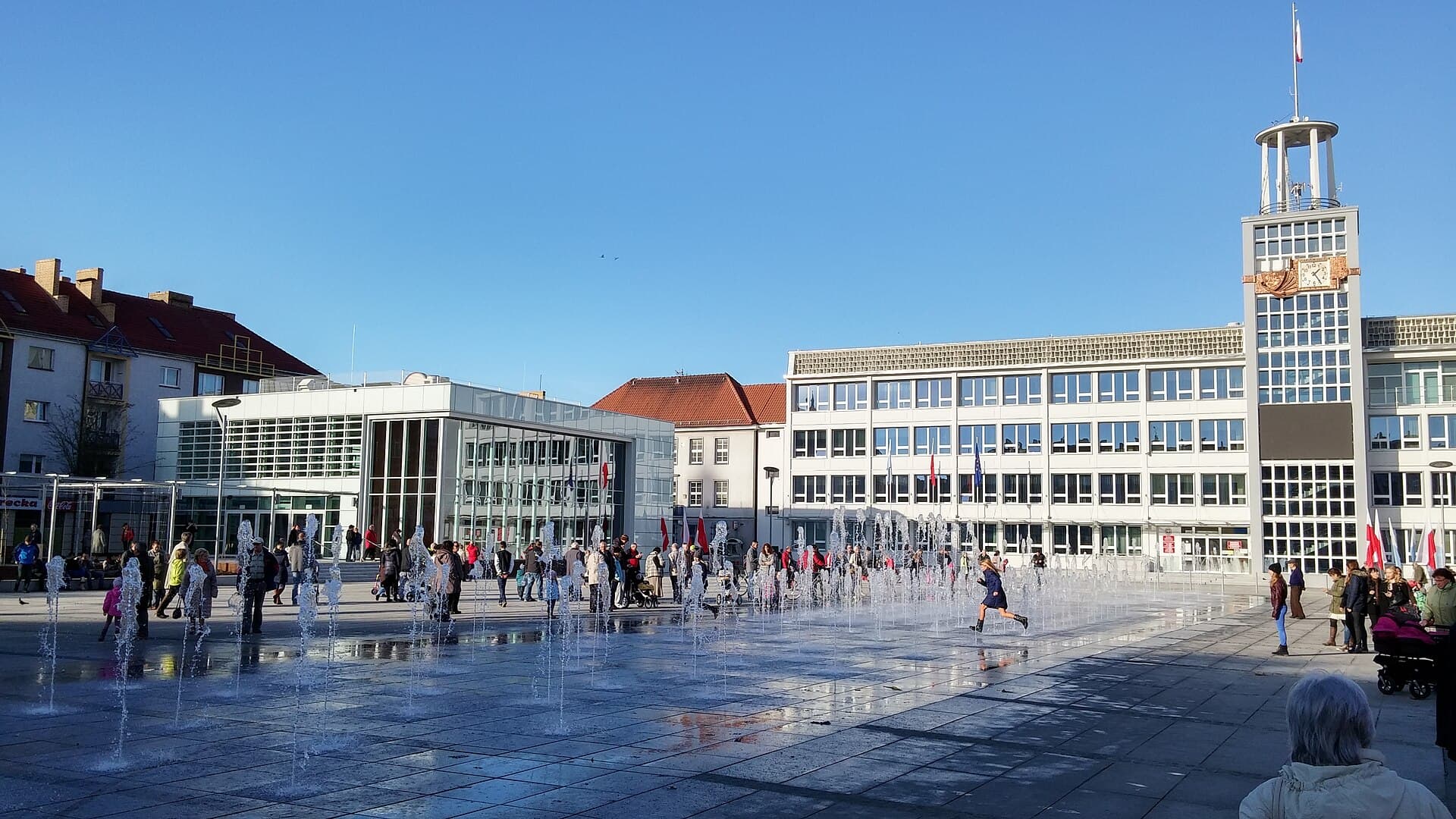 Marcin.pw / CC BY-SA 4.0, via Wikimedia Commons
Self-guided audio walking tour of Koszalin — GPS route, offline playback, story-driven narration in 32 languages.
“Where Baltic breezes carry echoes of Hanseatic trade and Pomeranian legends.”
Not the postcards. The stories even locals don't know — whispered in your ear, right where they happened.
The ancient walls of Koszalin Cathedral hold more than just centuries of prayer.
Before it became a Christian pilgrimage site, Chełmska Hill was a place of a different kind of reverence.
Among the ancient trees in the Park of Pomeranian Dukes, one might notice a curious absence.
Discover every secret of Koszalin
Every address, every reveal in full — in your ear, right where it happened.
You pick your stops. You walk. The voice reveals what the others miss.

Your self-guided audio tour of Koszalin is ready — pick your landmarks, choose your language, and start the moment you arrive.
BuyLume has a built-in augmented-reality guide. Hold your phone up and its camera shows the street ahead of you, with a glowing arrow laid over the real view that always points to your next stop — no map to puzzle over, no wrong turns. Like everything in Lume, it works fully offline.
Koszalin, a city in northwestern Poland, offers a compelling blend of historical depth and contemporary energy, just a short distance from the Baltic Sea coast. Resting upon the Dzierżęcinka river, it functions as an important cultural and administrative center within the West Pomeranian Voivodeship. With a population exceeding 100,000, Koszalin maintains an intimate atmosphere despite its regional prominence. Its strategic location, approximately 12 kilometers from the Baltic Sea, makes it an excellent starting point for exploring both the city's own attractions and the wider coastal region.
Often considered a passage to the Baltic, Koszalin itself is a destination worth exploring. The city's compact center is easily traversed on foot, inviting visitors to wander through its historic streets and uncover its unique character. From its medieval origins to its current role as a regional capital, Koszalin's narrative is etched into its architecture, verdant spaces, and lively cultural scene. Whether drawn to historical landmarks, peaceful parks, or the promise of local flavors, Koszalin provides a balanced experience that combines cultural discovery with natural splendor.
## From Slavic Settlement to Hanseatic Outpost Koszalin's history extends back to ancient times, with archaeological findings indicating early human settlements from various cultures, including the Funnelbeaker and Lusatian. The area became part of the emerging Polish state around 967 under Mieszko I. By the 12th century, it was part of the Duchy of Pomerania, a state connected to Poland.
The first written mention of Koszalin, then called Cossalitz or Koszalice, dates to 1214, when Duke Bogislaw II of Pomerania granted the village to a Norbertine monastery. A pivotal moment arrived on May 23, 1266, when Bishop Hermann von Gleichen officially granted Koszalin city rights under Lübeck Law, a framework that greatly encouraged urban development, trade, and crafts. This legal status, along with its advantageous location on trade routes, helped Koszalin flourish, becoming one of the most prosperous towns in Pomerania during the 14th century.
Koszalin's access to the Baltic Sea was solidified in 1331 with the acquisition of the village of Jamno, parts of Lake Jamno, and the settlement of Unieście. This direct link to the sea allowed Koszalin to join the powerful Hanseatic League in 1386, further boosting its commercial importance and leading to trade with cities like Gdańsk and Lübeck, as well as Danish and Swedish ports. However, this maritime connection also sparked conflicts with rival seaports like Kołobrzeg.
## Shifting Powers and Modern Renewal Over the centuries, Koszalin experienced various rulers. After the extinction of the Griffin dynasty in the 17th century, the region was divided, and Koszalin came under Brandenburgian rule in 1653. A devastating fire in 1718 nearly led to the town's abandonment. From 1815 to 1945, it served as the capital of the Prussian part of Pomerania, transforming into an important industrial center and railway junction. The construction of a railway line connecting Gdańsk with Szczecin in 1859 further cemented its industrial significance.
During World War II, Koszalin suffered significant destruction, with over 40% of its buildings destroyed by the Red Army in March 1945. Following the war, under the Potsdam Agreement, Koszalin was incorporated into Poland. The city rapidly rebuilt and grew, becoming the capital of the Koszalin Voivodeship from 1950 to 1998, a period during which it was one of Poland's fastest-growing cities. Today, Koszalin stands as a testament to its enduring spirit, blending its deep past with a dynamic contemporary identity.
Begin your exploration in the Old Town Market Square (Rynek Staromiejski), the city's social heart, where historic facades and cafes create a lively atmosphere perfect for observing daily life. Just a short stroll away is the majestic Koszalin Cathedral (Cathedral of the Immaculate Conception), a 14th-century Gothic masterpiece whose soaring ceilings and stained-glass windows are truly captivating.
For a breath of fresh air, head to the Park Książąt Pomorskich (Pomeranian Dukes' Park), a sprawling green oasis in the city center with winding paths, charming bridges, and ancient trees. History enthusiasts will appreciate the Museum in Koszalin, housed in the historic Mill Manager's Palace, offering a comprehensive collection on the region's past, from archaeology to folk culture.
Ascend Góra Chełmska (Chełmska Hill) for expansive views of Koszalin and the surrounding area. This hill is also home to the Sanctuary of Our Lady of Thrice Admirable, a significant pilgrimage site consecrated by Pope John Paul II in 1991. For a unique cultural experience, check the schedule at the Amfiteatr (Amphitheatre), an open-air performance space within the park that hosts concerts and festivals. If you're traveling with family or simply seeking some aquatic fun, the Koszalin Water Park offers pools, slides, and a relaxation zone. Do not miss the opportunity to take a nostalgic journey on the Koszalin Narrow Gauge Railway, which offers scenic views of the region.
The optimal time to visit Koszalin for comfortable weather and outdoor activities spans from late spring to early fall, specifically May to September. During these months, temperatures are mild to warm, with July and August experiencing highs around 22°C (72°F) and pleasant nights. Summer also offers up to 17 hours of daylight, maximizing exploration time. While July sees the highest precipitation, it also provides the clearest skies. Expect more activity and higher prices during peak summer (July-August) due to coastal tourism.
Koszalin is easily navigable, with a well-developed network of city buses covering the entire urban area. A standard bus ticket costs approximately 2.90 PLN, and a 24-hour ticket is around 8 PLN. For excursions to the nearby beach resorts of Mielno and Unieście, you can take bus number 1 from in front of the train station, or one of the private vans. During the summer, a special train also operates to Mielno.
The Koszalin Train Station provides connections to numerous destinations across Poland, including Szczecin, Gdańsk, and Poznań. The city center is generally well-lit and secure for evening strolls, though it's always prudent to avoid unlit alleys on the outskirts. Koszalin offers moderate prices for dining and entertainment, often lower than in Poland's major tourist centers. For non-EU tourists, the Tax Free system allows for VAT refunds on purchases made in participating stores.
Koszalin in Korean, in Chinese or in Hebrew — and 29 more languages, every stop narrated by a native voice. The widest language range of any self-guided audio tour.
Available in: