Mill Gate (Brama Młyńska)
Among Poland's ancient city gates, Stargard presents a singular architectural marvel.
Full story unlocks in the tour
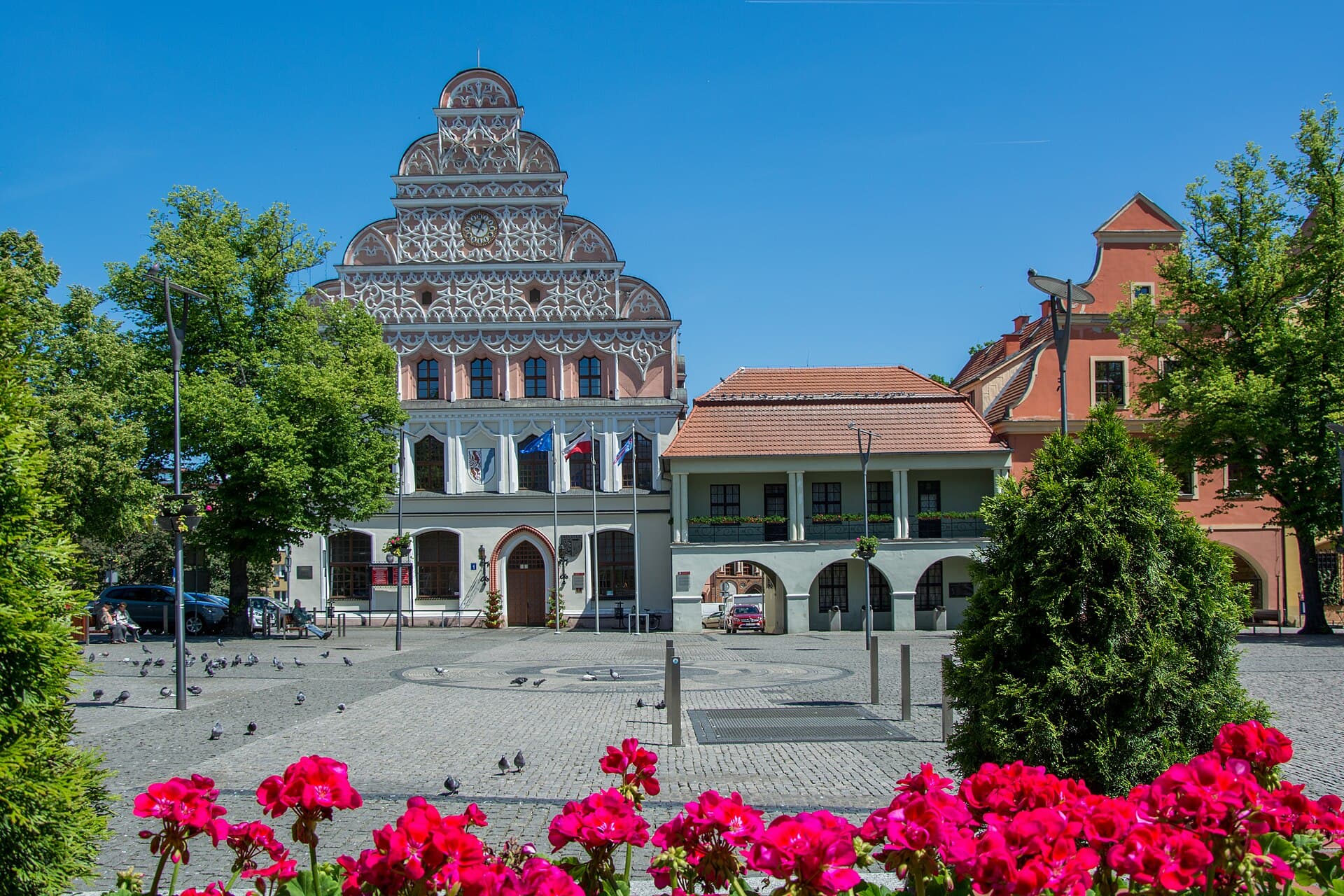 Małgorzata Jakubowska / CC BY-SA 4.0, via Wikimedia Commons
Self-guided audio walking tour of Stargard — GPS route, offline playback, story-driven narration in 32 languages.
“Where Brick Gothic towers narrate tales of Hanseatic might and a meridian marks the sun's true passage.”
Not the postcards. The stories even locals don't know — whispered in your ear, right where they happened.
Among Poland's ancient city gates, Stargard presents a singular architectural marvel.
In Stargard, discover a precise point where the sun's rhythm and your timepiece find perfect accord.
One of Europe's grandest brick churches holds a subtle wonder within its ancient stones.
Discover every secret of Stargard
Every address, every reveal in full — in your ear, right where it happened.
You pick your stops. You walk. The voice reveals what the others miss.

Your self-guided audio tour of Stargard is ready — pick your landmarks, choose your language, and start the moment you arrive.
BuyLume has a built-in augmented-reality guide. Hold your phone up and its camera shows the street ahead of you, with a glowing arrow laid over the real view that always points to your next stop — no map to puzzle over, no wrong turns. Like everything in Lume, it works fully offline.
Stargard, a city in northwestern Poland, invites a compelling journey through centuries of history, etched into its Brick Gothic architecture and medieval fortifications. Situated on the Ina River, it stands as the second-largest city in the Szczecin agglomeration and a significant railway junction.
Though largely rebuilt after extensive damage during World War II, Stargard retains an evocative character, welcoming visitors to explore its ancient city walls, imposing churches, and unique historical markers. It is a place where the past is tangible, from its origins as an 8th-century settlement to its prominent role in the Hanseatic League.
## Early Beginnings and Hanseatic Power Stargard's story commences as a small settlement around the 8th century, becoming part of the emerging Polish state in 967 under the Piast dynasty. The city was first documented in 1124 and officially granted city rights by Barnim I, Duke of Pomerania, in 1243. Its strategic location on the Ina River swiftly transformed it into a vital trading center within the Duchy of Pomerania.
By 1283, Stargard even maintained its own port on the Ina River, facilitating trade. The city's prosperity deepened when it joined the influential Hanseatic League in 1363, solidifying its economic standing. This period, spanning the 14th and 15th centuries, marked Stargard's greatest flourishing, even amidst a notable trade rivalry and a decade-long maritime conflict with the nearby city of Szczecin.
## Wars, Destruction, and Rebirth The 17th century brought significant hardship, as Stargard was repeatedly captured during the Thirty Years' War, enduring immense destruction, including a fire set by the Swedish commander to prevent its recapture. The war led to a drastic decline in population, with approximately 75% of residents perishing or relocating. After the war, Stargard became part of Brandenburg-Prussia in 1653 and later the Kingdom of Prussia in 1701.
The 18th and 19th centuries saw a period of reconstruction and renewed development, particularly with the arrival of railway connections in the mid-19th century, which spurred industrialization and expanded the city beyond its medieval fortifications. However, the 20th century brought further devastation during World War II, with heavy bombing destroying over 75% of the city and many of its historical sites. In the final stages of the war, the local population was evacuated by the Germans before the approaching Soviet army.
Following World War II, Stargard became part of Poland again, a decision made at the Potsdam Conference. Polish officials took control in March 1945, and new Polish residents, some displaced from eastern Poland, moved to the city. The city's name was briefly changed to Stargard Szczeciński in 1950 to differentiate it from Starogard Gdański, before reverting to simply Stargard in 2016. Stargard has since risen from the debris, developing into a modern Polish town while meticulously rebuilding and preserving its profound historical heritage, much of which is now part of the European Route of Brick Gothic.
Stargard's Old Town offers a trove of Brick Gothic architecture, a testament to its medieval prosperity and careful reconstruction. Begin at the Collegiate Church of the Blessed Virgin Mary, Queen of the World (St. Mary's Church), a monumental 13th-century structure and one of Europe's largest brick churches. Its intricate details and imposing presence are truly captivating. Nearby, St. John's Church, another 15th-century Gothic marvel, features a commanding 99-meter high tower.
Wander along the well-preserved medieval fortifications, which include ramparts, walls, and several distinctive gates and towers. Do not overlook the Mill Gate (Brama Młyńska), a unique 15th-century water gate, the only one of its kind still standing in Poland. Explore the Pyrzyce Gate from the 13th century and the 15th-century Wałowa Gate. Ascend the Red Sea Tower (Baszta Morze Czerwone) for expansive views of the city.
The Renaissance Town Hall, with its remarkable 16th-century design, anchors the Old Market Square. Also worth seeing are the 16th-century Granary and the largest conciliation cross in Europe, dating from 1542. For a moment of reflection, visit the 15th Meridian Monument, marking Stargard's unique geographical position. The Bolesław I the Brave Park offers a pleasant green space for repose.
The most favorable time to visit Stargard, and Poland generally, is during the late spring (May) and early autumn (September and October) for comfortable weather and fewer crowds. Summer months (June to August) are also favored, providing agreeable temperatures for outdoor activities, though it can be quite active. July typically registers as the warmest month, with an average high of 73°F (23°C). Winters (November to February) are very cold and snowy, with January being the coldest month. However, if you appreciate festive atmospheres, December can be charming with its holiday spirit.
Stargard is well-connected, ensuring ease of access for travelers. It functions as a major railway junction, offering convenient train access. For those arriving by air, the nearest significant airport is likely Szczecin-Goleniów Airport, located relatively close. Within the city, a dependable bus system facilitates movement. Stargard presents a range of accommodation options, including hotels, with some available for refundable bookings. It is always prudent to reserve your lodging in advance, especially during peak season, to secure better value. The city is amenable to pedestrians, particularly in the Old Town, allowing for pleasant strolls among its historic sites. Stargard ranks highly among Polish municipalities for foreign tourists, indicating a hospitable environment.
Stargard in Korean, in Chinese or in Hebrew — and 29 more languages, every stop narrated by a native voice. The widest language range of any self-guided audio tour.
Available in: