The Rega River
For centuries, the seemingly tranquil Rega River was the stage for a fierce and surprisingly long-lasting battle.
Full story unlocks in the tour
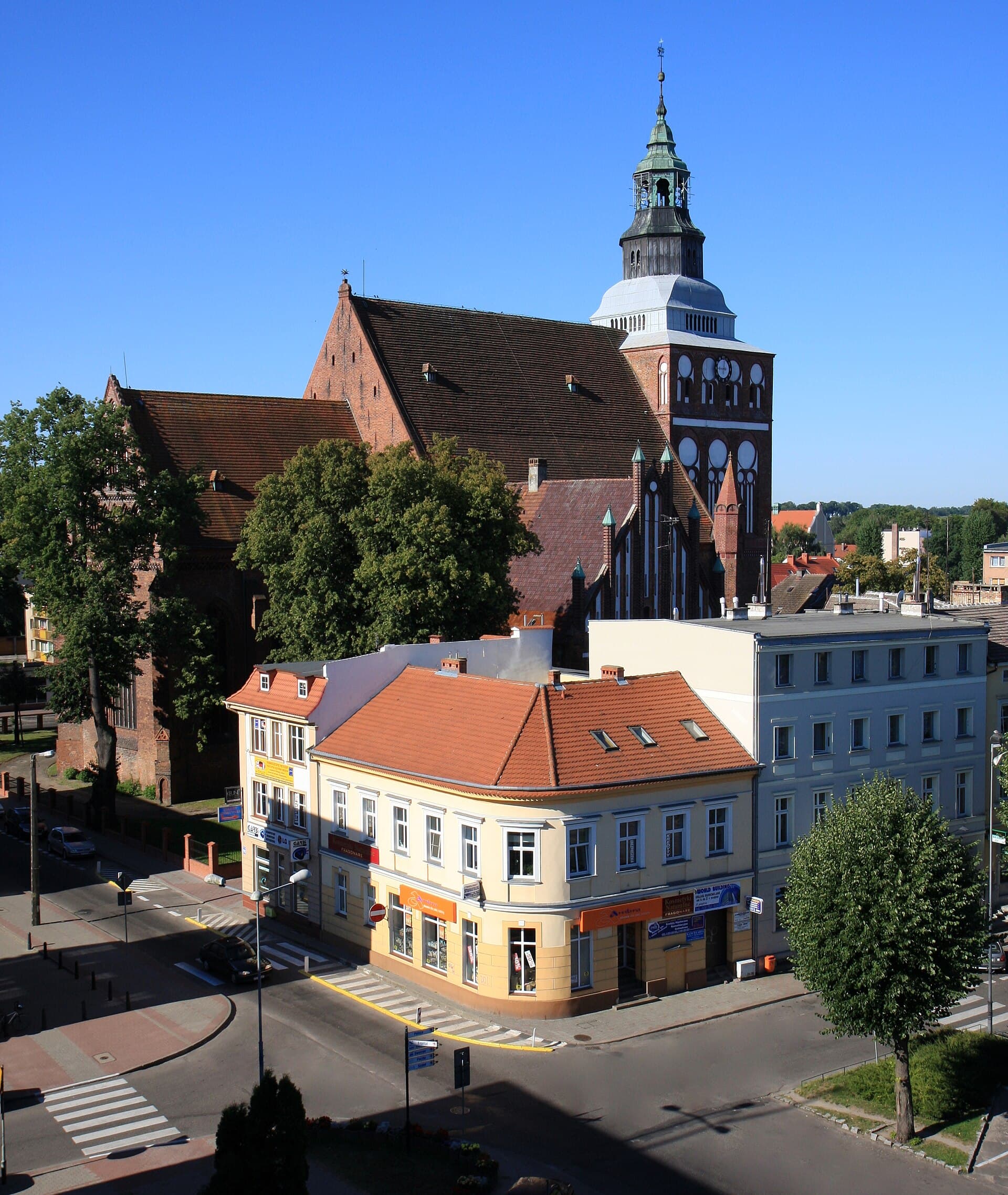 Sławomir Mariusz Jacko / CC BY 3.0, via Wikimedia Commons
Self-guided audio walking tour of Gryfice — GPS route, offline playback, story-driven narration in 32 languages.
“Where griffins guard medieval secrets and narrow-gauge trains whisper of a bygone era.”
Not the postcards. The stories even locals don't know — whispered in your ear, right where they happened.
For centuries, the seemingly tranquil Rega River was the stage for a fierce and surprisingly long-lasting battle.
Beneath the modern streets of Gryfice, fragments of a once-imposing defense system still lie, revealing a city prepared for more than just trade.
One of Gryfice's most prominent medieval structures once suffered a fiery setback, altering its appearance for centuries.
Discover every secret of Gryfice
Every address, every reveal in full — in your ear, right where it happened.
You pick your stops. You walk. The voice reveals what the others miss.
Your self-guided audio tour of Gryfice is ready — pick your landmarks, choose your language, and start the moment you arrive.
BuyLume has a built-in augmented-reality guide. Hold your phone up and its camera shows the street ahead of you, with a glowing arrow laid over the real view that always points to your next stop — no map to puzzle over, no wrong turns. Like everything in Lume, it works fully offline.
Gryfice, a historic town in northwestern Poland, carries the legacy of its past within its well-preserved medieval architecture and the quiet flow of the Rega River. Its name, derived from the Old Slavic word 'gryf,' meaning griffin, reflects its deep historical roots and the mythical creature that symbolizes strength and protection in Polish folklore.
Situated approximately 22 kilometers from the Baltic Sea coast, Gryfice offers a blend of historical exploration and a connection to the natural beauty of the West Pomeranian Voivodeship. The town, with a population of around 16,600, serves as the capital of Gryfice County and continues to play an important role in the political, economic, and social life of its community.
Gryfice's origins trace back to a Slavic settlement at a ford across the Rega River. In 1262, Duke Wartislaw III of the House of Griffin granted the settlement town privileges under Lübeck law, establishing 'Nova civitas' (New City), which would become modern-day Gryfice. The town's name, 'Griphemberch' (Griffin's mountain), was later bestowed by Barnim I, Duke of Pomerania, honoring the griffin symbol on the ducal coat of arms.
From 1262 to 1648, Gryfice thrived under the rule of the Pomeranian dukes. Its strategic location on the Rega River fostered maritime trade and navigation, leading to its associate membership in the Hanseatic League in 1365. This affiliation brought prosperity, despite a prolonged 350-year conflict with the nearby town of Trzebiatów over navigation rights on the Rega.
To protect its burgeoning trade and citizens, construction of defensive walls began at the end of the 13th century. These fortifications, reaching a total length of 650 meters, included three gates (High Gate, Stone Gate, and Rega Gate) and three shooting towers (Powder Tower, Bridge Tower, and Mill Tower). Religious life also flourished, with a Franciscan monastery established in the 13th century, and by the following century, the city contained five churches, almshouses, and hospitals. A Latin school, mentioned in 1386, is considered by many to be the oldest in Pomerania.
The 17th century brought devastation with the Thirty Years' War, significantly impacting the town's population and economy. Following the Treaty of Westphalia in 1648, Gryfice became part of Brandenburg-Prussia, and later, in 1701, the Kingdom of Prussia. It remained under German rule until the end of World War II.
At the close of World War II, on March 5, 1945, the Soviet Red Army captured Gryfice, and Polish forces entered the town on March 8. Approximately 40% of the town was destroyed, but many historical monuments either survived or were reconstructed. The German population was expelled, and Polish settlers, including those displaced from areas annexed by the Soviet Union, repopulated the town. The post-war period saw the rebuilding of Gryfice, with the establishment of schools, a hospital, and various industries, including a sugar factory that became a leading producer in Poland by 1951.
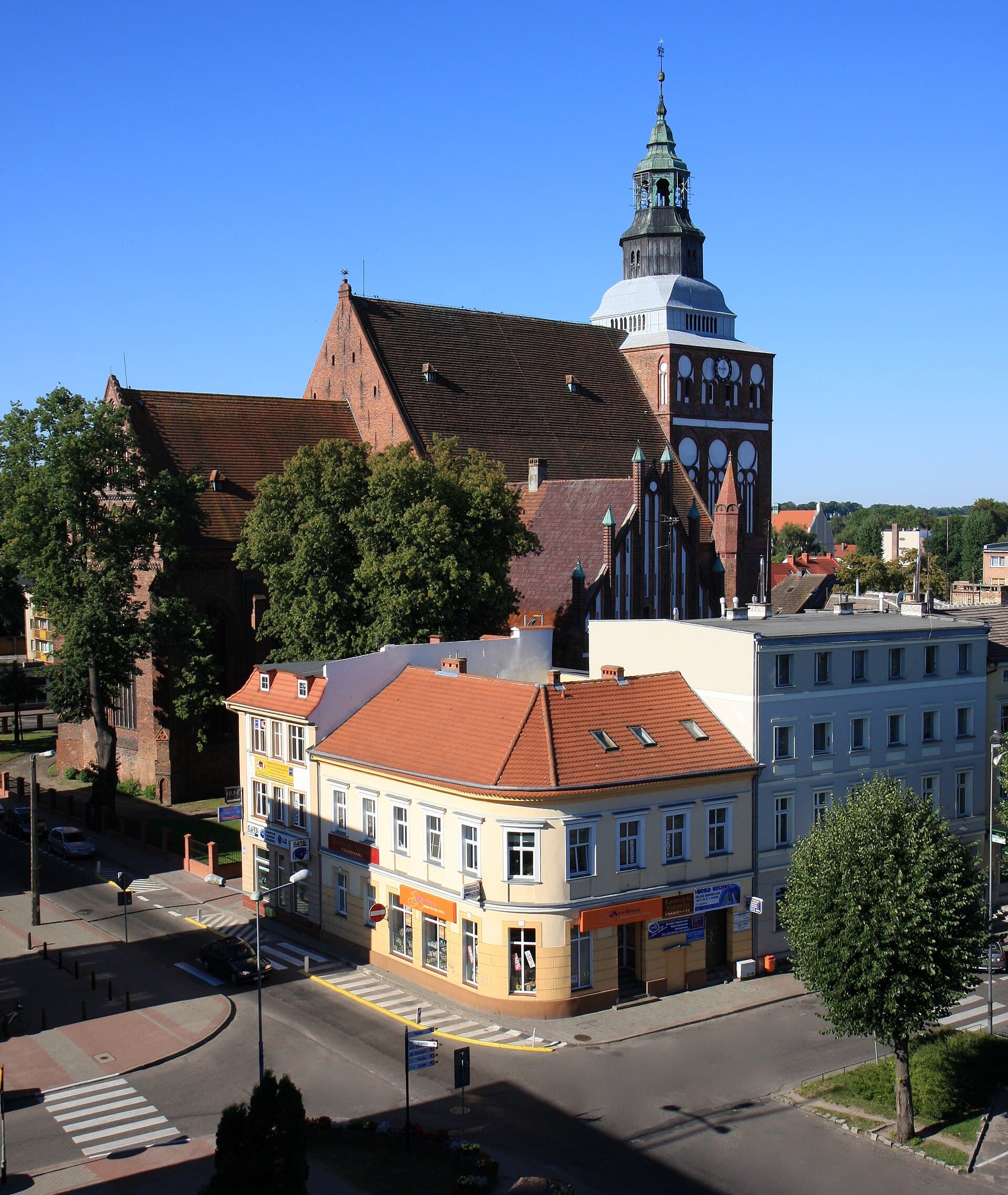
Gryfice offers several compelling sights that speak to its long and varied history. The Church of the Assumption of the Blessed Virgin Mary is a prominent Gothic structure, with construction beginning in the late 13th century and culminating in the addition of its tower and sacristy in the 15th century. Inside, you can find a Romanesque baptismal font from the 13th century and a Gothic triptych from the late 15th century.
Remnants of Gryfice's medieval defenses are still visible, including the High Gate (Brama Wysoka) and the Stone Gate (Brama Kamienna). The High Gate, once part of the city's defensive walls, now houses the Gryfice Region Museum and a tourist information point. The Powder Tower (Baszta Prochowa), a Gothic shooting tower from the 15th century, is another preserved fragment of the city's fortifications, offering a glimpse into its past.
For railway enthusiasts, the Pomeranian Narrow Gauge Railways Museum in Gryfice provides a compelling journey. This open-air museum showcases locomotives, carriages, and equipment from the region's extensive narrow-gauge railway network, which once played a vital role in connecting rural areas with towns and ports. The Seaside Narrow-Gauge Railway itself still operates as a tourist attraction, offering scenic rides through the picturesque landscapes of the municipalities of Gryfice, Karnice, and Rewal.
The best time to visit Gryfice is during the late spring (May-June) or early autumn (September-October) when the weather is generally mild and pleasant for exploring, and tourist crowds are fewer. Summer (July-August) offers the warmest weather and longest days, ideal for outdoor activities, but it's also the peak tourist season, meaning more visitors and potentially higher prices. While winters are cold and snowy, December can be a festive time to visit, especially for holiday celebrations.
Gryfice is accessible by train, with connections from major Polish cities like Szczecin, Kołobrzeg, and Poznań. The journey from Warsaw to Gryfice by train, including transfers, takes approximately 6 hours. For those preferring bus travel, services are available, though they typically take longer. Within Gryfice, many attractions are reachable on foot, particularly in the central Old Town area. For exploring the wider region, including the Seaside Narrow-Gauge Railway, local transportation or car rental might be beneficial. The official language is Polish, and the local currency is the Polish Złoty (PLN).
Gryfice in Korean, in Chinese or in Hebrew — and 29 more languages, every stop narrated by a native voice. The widest language range of any self-guided audio tour.
Available in: