Kranai Island (Marathonisi)
This small islet, now linked to the mainland, carries a legendary love story.
Full story unlocks in the tour
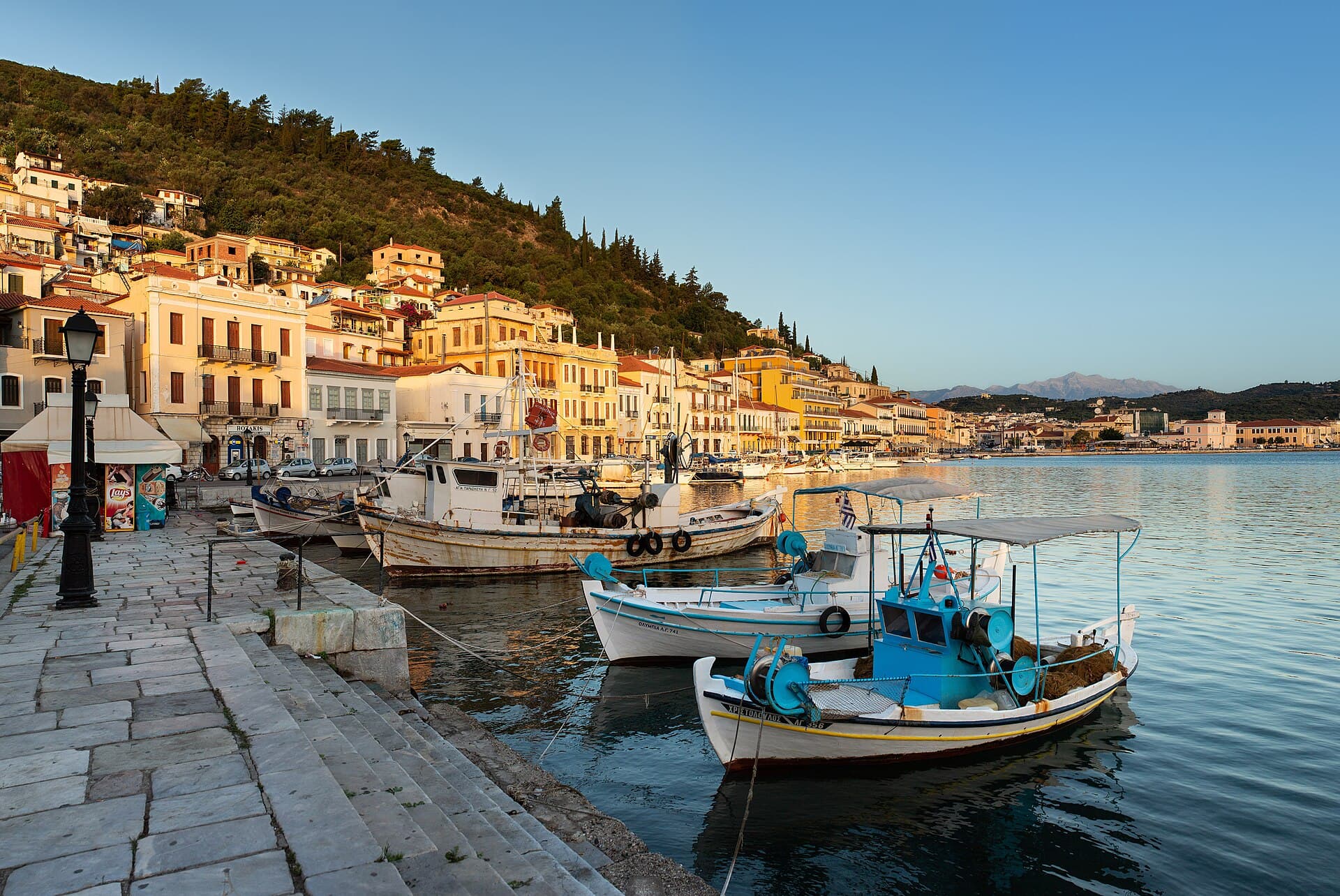 Diliff / CC BY-SA 4.0, via Wikimedia Commons
Self-guided audio walking tour of Gythio — GPS route, offline playback, story-driven narration in 32 languages.
“Where ancient myths meet the Aegean breeze.”
Not the postcards. The stories even locals don't know — whispered in your ear, right where they happened.
This small islet, now linked to the mainland, carries a legendary love story.
The elegant 19th-century lighthouse on Kranai Island holds an unexpected secret within its foundation.
Off the coast of Valtaki Beach, a cargo ship rests in the shallow waters, its presence veiled in intrigue.
Discover every secret of Gythio
Every address, every reveal in full — in your ear, right where it happened.
You pick your stops. You walk. The voice reveals what the others miss.


Your self-guided audio tour of Gythio is ready — pick your landmarks, choose your language, and start the moment you arrive.
BuyLume has a built-in augmented-reality guide. Hold your phone up and its camera shows the street ahead of you, with a glowing arrow laid over the real view that always points to your next stop — no map to puzzle over, no wrong turns. Like everything in Lume, it works fully offline.
Gythio, a coastal town in the southeastern Peloponnese, serves as the historic entrance to the rugged Mani Peninsula. Its pastel-colored neoclassical buildings descend Mount Koumaros to a busy waterfront, creating an inviting atmosphere. Once the principal seaport of ancient Sparta, Gythio offers an authentic look into Greek coastal life, away from more crowded tourist areas.
The town's crescent-shaped harbor is a lively center where fishing boats return with their daily catch, and tavernas serve fresh seafood. Gythio's location makes it an ideal spot for exploring the dramatic landscapes of Mani, with its distinctive stone tower houses and wild coastline. The blend of maritime appeal, historical depth, and natural beauty makes Gythio a captivating destination.
Gythio's name itself is rooted in myth, derived from the Homeric words "gyia" (earth) and "theos" (god), translating to "Land of Gods." Legend attributes its founding to a dispute between Heracles and Apollo over the sacred Delphic Tripod, with the city named to honor both deities after neither emerged victorious.
Gythio's history extends to prehistoric times, with archaeological findings confirming its ancient origins. According to Greek mythology, the city was founded by Heracles and Apollo. In antiquity, it served as the main port and naval base for powerful Sparta, approximately 40 kilometers to the north.
During the First Peloponnesian War in 455 BC, Athenian admiral Tolmides burned Gythio, but the city was rebuilt and likely became the shipyard for the Spartan fleet in the Second Peloponnesian War. In 195 BC, during the Roman-Spartan War, Gythio was seized with the support of a combined Roman, Pergamese, and Rhodian fleet. Following this, between 195 BC and 297 AD, Gythio flourished as an independent town and the capital of the Koinon of Free Laconians, a confederation of twenty-four cities established to maintain autonomy from Sparta. It was eventually declared free by Caesar Augustus.
During Roman times, Gythio prospered as a major trading center, exporting valuable goods such as purple dye, porphyry, and rose antique marble. The Romans left their mark with impressive public buildings and a thriving purple dye industry, fueled by the plentiful murex snails in the Laconian Gulf. Remnants of this era, including an ancient Roman theater, baths, and a temple dedicated to emperors Augustus and Tiberius, can still be found today.
However, this prosperity was cut short. Around 375 AD, a catastrophic earthquake and subsequent tidal wave destroyed much of the city, submerging parts of it underwater. Gythio was largely abandoned during medieval times, becoming a small village throughout the Byzantine and Ottoman eras. Its importance revived in the 17th century under Venetian influence and grew significantly during the Greek War of Independence in the early 1800s, when refugees flocked to Mani, making Gythio a major town and a key harbor for the region. The modern port officially opened in 1960.
Today, Gythio is the largest and most important town in Mani and the second-largest city in Laconia after Sparta. The central shopping area and the seafront were designated as a Preserved Monument in 1975, with various buildings receiving historical preservation status since 1982.
Begin your exploration on Kranai Island, also known as Marathonisi, connected to the mainland by a short causeway. Here, you'll find the Tzanetakis Tower, a traditional stone tower house built in 1829 that now functions as the Historical and Ethnological Museum of Mani, offering insights into the region's unique culture and past. At the northern end of the islet, the 1873 octagonal Lighthouse of Gythio stands 22 meters tall, providing wide views of the city and the Laconian Gulf. A small church dedicated to Agios Petros is also on the island.
Back on the mainland, walk along Gythio's waterfront promenade, lined with colorful neoclassical buildings dating from the 1800s. The Town Hall, built in 1891, houses an archaeological museum with ancient Greek and Byzantine collections. Further up the street, the Parthenagogio (Girl's School), designed by architect Ernst Ziller in 1886, now serves as the Cultural Center of the Municipality. To the north of the modern settlement, at the foot of the ancient citadel, lies the Ancient Theater of Gythio, a Roman-era amphitheater from the 2nd century AD, which once seated 2,000 spectators and is still occasionally used for events.
For a singular sight, drive about 5 kilometers northeast of Gythio to Valtaki Beach to see the Dimitrios shipwreck, a rusty cargo ship stranded on the sand since 1981, offering a dramatic photographic subject against the backdrop of Mount Taygetus. Mavrovouni Beach, south of town, is a long sandy stretch known for being a nesting site for endangered Caretta-Caretta sea turtles from June to August.
The most pleasant times to visit Gythio are May, June, September, and October. During these months, the weather is comfortable, with warm swimming temperatures and fewer crowds. July and August are the warmest and busiest months, with average daily highs around 90°F (32°C), attracting many Greek vacationers. April and November offer milder weather, suitable for exploration, though swimming might be cooler. The dry season in Gythio typically runs from April to September.
Gythio is located in the southeastern Peloponnese, approximately 250 kilometers (155 miles) from Athens. The nearest airport is Kalamata International Airport, about 100 kilometers away. Renting a car is recommended for exploring the surrounding Mani villages and beaches. Free parking is available along the northern end of the waterfront.
Accommodation options range from waterfront hotels to villas and apartments. It is advisable to book early for visits during the peak season of July and August. Several banks with ATMs are located on the main harbor road. Gythio serves as a main port with ferry connections to Kythira and Crete, particularly during the summer months (June through September). Check ferry schedules in advance and book tickets early during peak season. A Wednesday morning market offers local produce and goods.
Gythio in Korean, in Chinese or in Hebrew — and 29 more languages, every stop narrated by a native voice. The widest language range of any self-guided audio tour.
Available in: