Blätterhöhle Cave
Deep within a side valley of the Lenne river, a seemingly ordinary cave conceals a truth that reconfigures the timeline of human presence in Europe.
Full story unlocks in the tour
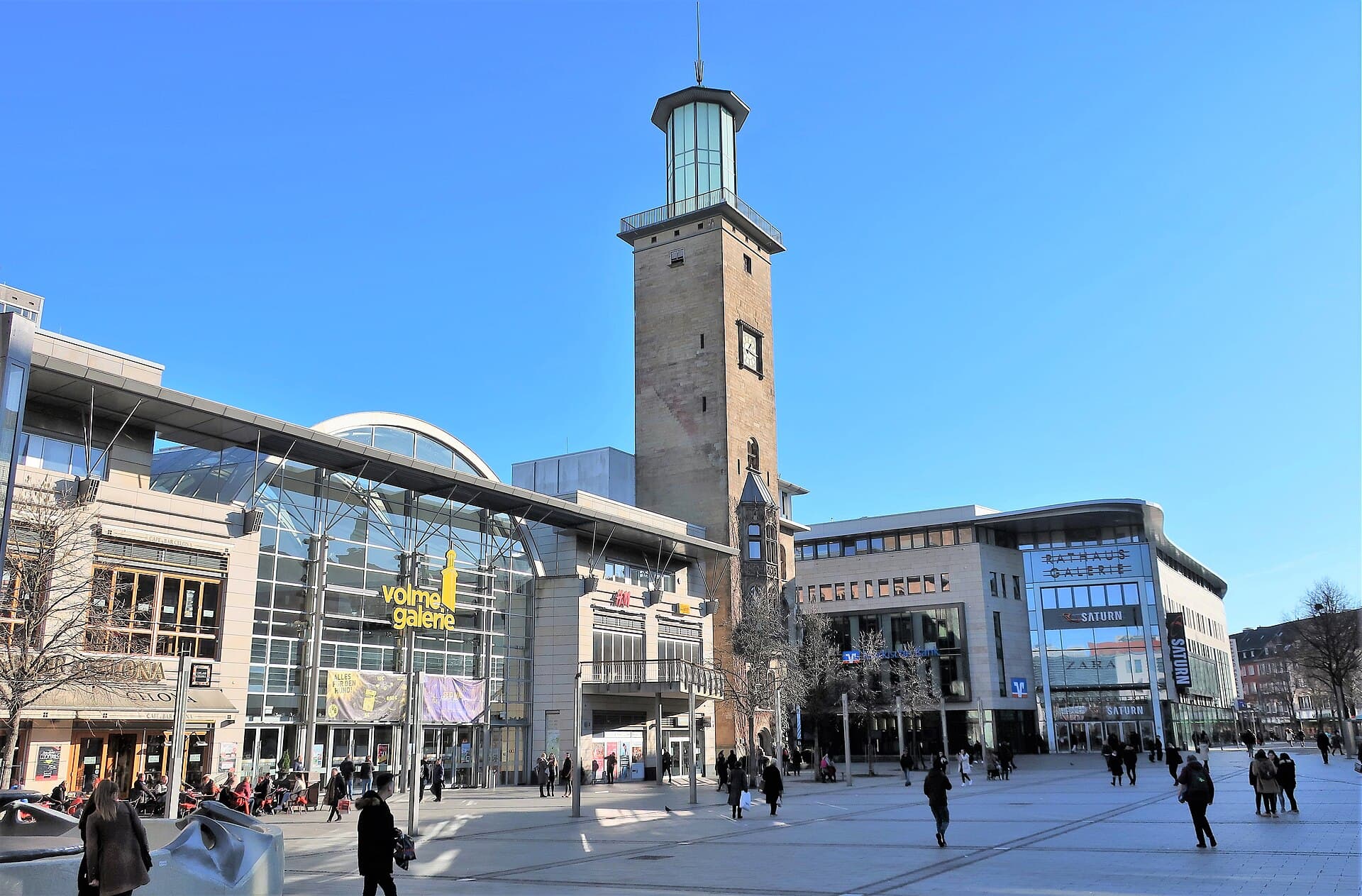 Bärwinkel,Klaus / CC BY-SA 4.0, via Wikimedia Commons
Self-guided audio walking tour of Hagen — GPS route, offline playback, story-driven narration in 32 languages.
“Where the forge's fire meets the forest's embrace, and vision shapes the urban form.”
Not the postcards. The stories even locals don't know — whispered in your ear, right where they happened.
Deep within a side valley of the Lenne river, a seemingly ordinary cave conceals a truth that reconfigures the timeline of human presence in Europe.
Beneath the modern streets of Hagen lies a relic of wartime endurance, a structure that defied destruction and became a testament to survival.
An Art Nouveau marvel in Hagen was not merely a beautiful home, but the heart of a visionary's ambition to transform an industrial city into a cultural haven.
Discover every secret of Hagen
Every address, every reveal in full — in your ear, right where it happened.
You pick your stops. You walk. The voice reveals what the others miss.

Your self-guided audio tour of Hagen is ready — pick your landmarks, choose your language, and start the moment you arrive.
BuyLume has a built-in augmented-reality guide. Hold your phone up and its camera shows the street ahead of you, with a glowing arrow laid over the real view that always points to your next stop — no map to puzzle over, no wrong turns. Like everything in Lume, it works fully offline.
Hagen, a city in North Rhine-Westphalia, Germany, rests at the southeastern edge of the Ruhr area, where the rivers Ruhr, Lenne, Volme, and Ennepe converge. This unique confluence of waterways historically fueled its development as a nexus for metalworking, a legacy still etched into its character. Despite its industrial past, Hagen is remarkably green, with 42% of its area covered by forests and 63% by green spaces, making it the most densely wooded city in North Rhine-Westphalia.
The city, home to nearly 200,000 inhabitants, offers a compelling blend of urban dynamism and natural tranquility. It is a place where medieval fortifications stand alongside industrial monuments and early 20th-century avant-garde masterpieces. Hagen is also known for its academic prominence, hosting the FernUniversität, Germany's largest and only state-owned distance learning university, with over 70,000 students.
Hagen's origins can be traced back to around 1200, when it was likely a farm situated at the junction of the Volme and Ennepe rivers. The region itself appears in historical records as early as 775, with Charlemagne's troops conquering the Saxon Hohensyburg castle nearby. By the 11th and 12th centuries, early settlements and a church parish were documented in the area. After the conquest of Burg Volmarstein in 1324, Hagen became part of the County of Mark.
The city's economic foundation was laid long before the Industrial Revolution, with metalworking masters producing high-quality knives, blades, and agricultural tools as early as the 15th century. This specialization led to the official establishment of a blacksmiths' guild in 1661. Hagen remained a small settlement until 1746, when Prussian King Friedrich the Great granted it official city status, marking the beginning of its active growth.
The 19th century brought significant transformation with the advent of the railway. Hagen became an important railway junction in 1848, connecting the Ruhr region with river valleys and the rest of Germany, which spurred explosive growth in heavy industry and a population surge. By 1928, Hagen's population exceeded 100,000, earning it the status of a "Großstadt" (major city). However, its industrial significance also made it a target during World War II, with almost three-quarters of the city being razed by bombing raids. Following the war, Hagen was rebuilt in a modern style and became part of the new Prussian Province of Westphalia in 1815.
In 1975, a major municipal reform incorporated the neighboring town of Hohenlimburg, further enriching Hagen's heritage with its medieval castle. Today, Hagen continues to evolve, transitioning from a purely industrial economy to a knowledge-based one, largely due to the presence of the FernUniversität. The city also cultivates a lively cultural scene, exemplified by the "Hagen Impulse" of the early 20th century, where patron Karl Ernst Osthaus fostered modern art and architecture.
One of Hagen's most influential figures was Karl Ernst Osthaus, an industrialist and art patron who, in the early 20th century, sought to transform Hagen into a cultural hub. He founded the Folkwang Museum in 1902, the first museum in Germany dedicated exclusively to modern and contemporary art. Although the Folkwang Museum later moved to Essen, its spirit lives on in Hagen's Osthaus Museum. Osthaus also commissioned the renowned Art Nouveau pioneer Henry van de Velde to design his villa, the Hohenhof, a masterpiece considered a "total work of art." Another prominent figure associated with Hagen is the 20th-century painter Emil Schumacher, who was born in the city and now has a museum dedicated to his work.
Hagen offers a diverse range of attractions, blending its industrial heritage with natural beauty and artistic endeavors. A compelling place to explore is the LWL-Freilichtmuseum Hagen (Westphalian Open-Air Museum), where you can wander through an ensemble of 60 reconstructed traditional workshops and factories, observing forgotten crafts like brewing, blacksmithing, and printing. The museum, open during the summer, also hosts a Christmas market in early December.
For art enthusiasts, the Osthaus Museum Hagen is a key destination, housed in a building designed by Art Nouveau architect Henry van de Velde. It features an impressive collection spanning from classical modernism to contemporary installations. Nearby, the Emil Schumacher Museum showcases the works of the acclaimed 20th-century painter born in Hagen. The Hohenhof Villa, another Henry van de Velde creation, is a significant Art Nouveau masterpiece and offers fascinating exhibits.
History buffs can delve into the past at Schloss Hohenlimburg, a 13th-century castle offering guided tours and scenic views. The Wasserschloss Werdringen, a medieval moated castle, now houses a natural history museum with ancient fossils and archaeological finds. For a unique historical perspective, visit the Bunkermuseum Hagen, a World War II air raid shelter transformed into a museum. Do not miss the Brandt Zwieback Museum to learn about the history of Germany's famous twice-baked rusk.
Nature lovers can enjoy the city's extensive green spaces. Harkortsee and Hengsteysee are picturesque lakes offering opportunities for walking, cycling, boating, and stand-up paddling. The Volkspark is a family-friendly park with walking paths, a lake, playground, and mini-golf. Hagen is also known for the Drei-Türme-Weg (Three Towers Trail), a popular hiking route with beautiful viewing towers.
The most comfortable time to visit Hagen for warm-weather activities is from late June to late August, when average daily temperatures are around 22-23°C (72-73°F). July and August are generally considered the most pleasant months. While summers are warm, be prepared for occasional rain, as precipitation is consistent throughout the year. Winters are mild, with average temperatures above freezing, but often overcast and damp. For a balance of pleasant weather and fewer crowds, consider visiting during spring (April to June) or fall (September to October), which are often ideal for exploring Germany.
Reaching Hagen is convenient. Dortmund Airport (DTM) is approximately 15 km north of Hagen and serves primarily national and European travelers. For those arriving from further afield, Düsseldorf (DUS), Cologne-Bonn (CGN), or Frankfurt Airport (FRA) are additional options. Hagen's central railway station, Hagen Hauptbahnhof, is well-connected by long-distance trains, including high-speed ICE services. Major motorways like the A1, A45, and A46 also connect Hagen to Germany's extensive road network.
Within Hagen, public transportation is primarily handled by Hagener Straßenbahn AG, which operates an extensive network of 36 bus lines. While the name suggests trams, the last tram line closed in 1976, and only buses run today. Tickets are valid across all modes of transport within the Verkehrsverbund Rhein-Ruhr (VRR) public transport association, with prices depending on the number of stops traveled. Customer service centers are available at Körnerstraße 25 and Graf-von-Galen-Ring 24 for information, tickets, and subscriptions.
The Hagen Tourist Information Office, located at Mittelstraße 12 in the city center, offers a comprehensive range of services, including city tours, hiking passes for the 3TürmeWEG, and tickets for local events. They also sell a variety of local souvenirs.
Hagen in Korean, in Chinese or in Hebrew — and 29 more languages, every stop narrated by a native voice. The widest language range of any self-guided audio tour.
Available in: