Château de Hautefort
Picture a castle so cherished, its villagers once rallied to shield it from destruction during a revolution.
Full story unlocks in the tour
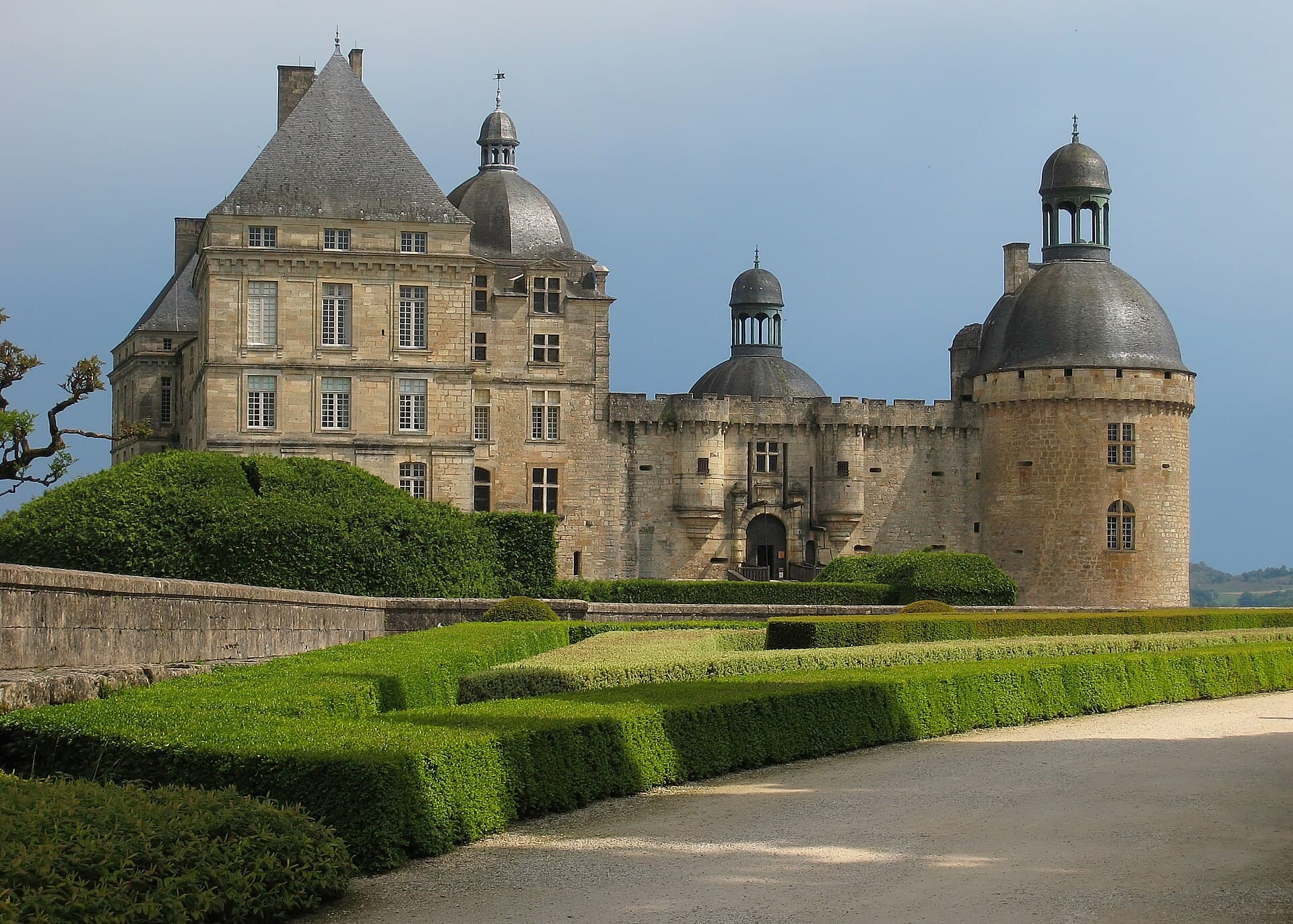 Manfred Heyde / CC BY-SA 3.0, via Wikimedia Commons
Self-guided audio walking tour of Hautefort — GPS route, offline playback, story-driven narration in 32 languages.
“Where grandeur rises from ashes, and history echoes through sculpted gardens.”
Not the postcards. The stories even locals don't know — whispered in your ear, right where they happened.
Picture a castle so cherished, its villagers once rallied to shield it from destruction during a revolution.
Beneath the elegant 17th-century facade of Hautefort lies a concealed world, revealing the daily rhythms of a grand estate.
The meticulously sculpted French formal gardens of Hautefort hold a secret that speaks to profound dedication and scale.
Discover every secret of Hautefort
Every address, every reveal in full — in your ear, right where it happened.
You pick your stops. You walk. The voice reveals what the others miss.


Your self-guided audio tour of Hautefort is ready — pick your landmarks, choose your language, and start the moment you arrive.
BuyLume has a built-in augmented-reality guide. Hold your phone up and its camera shows the street ahead of you, with a glowing arrow laid over the real view that always points to your next stop — no map to puzzle over, no wrong turns. Like everything in Lume, it works fully offline.
Hautefort, a village in the Dordogne region of France, is crowned by its magnificent château, a classical masterpiece that surveys the landscape from a rocky spur. This architectural marvel, with its refined 17th-century design, stands in elegant contrast to the region's more common medieval fortresses. Beyond the château, Hautefort offers a peaceful atmosphere with winding, paved streets and expansive views of the surrounding Auvézère valley.
The village and its iconic castle provide a journey through centuries of time, from its origins as a medieval stronghold to its transformation into a luxurious residence. Visitors can explore beautifully restored interiors, wander through impressive formal gardens, and discover a unique Museum of the History of Medicine. Hautefort is a destination that blends historical grandeur with natural beauty, inviting a slower pace of exploration.
The history of Hautefort stretches back to the early Middle Ages, with the first traces of a fortress on the site dating to the 9th century. Around the year 1000, Guy de Lastours established a defensive structure here, a pivotal point during times of conflict, including the Crusades. His descendant, Gouffier de Lastours, was among the thirty knights who entered Jerusalem in 1099 alongside Godefroy de Bouillon.
In the 12th century, the castle became the property of the influential de Born family, which included the famed troubadour Bertran de Born. Bertran found himself embroiled in a bitter feud with his brother, culminating in a siege by Richard the Lionheart in 1183. Despite the destruction, Richard, moved by Bertran's eulogy for his son Henry, returned the castle to the troubadour.
By the 15th century, the de Gontaut family, who later adopted the name Hautefort, owned the castle. However, it was in the 17th century that the Château de Hautefort truly evolved, transitioning from a medieval fortress into a classical residence. Jacques-François de Hautefort, Marquis de Hautefort, transformed the château into the magnificent building seen today, drawing inspiration from the grand châteaux of the Loire Valley and the era of Louis XIV.
The château survived the French Revolution, safeguarded by the local inhabitants. However, a devastating fire in 1968 destroyed much of its interior, leaving only charred exterior walls. The château was meticulously restored by Baroness de Bastard, who even sold her works of art to fund the extensive reconstruction, with facades, frames, ceilings, and decorations rebuilt identically from photographs. Today, the château is managed by a foundation established by the Baroness in 1984 and remains inhabited by its owners, offering a unique insight into both its turbulent past and its continued legacy.
A visit to Hautefort revolves around the magnificent Château de Hautefort, a 17th-century classical residence. Begin your exploration in the Marquis de Hautefort's private apartments, experiencing 17th-century grandeur with period decor and sensory elements. Continue through the estate kitchens and reception rooms, furnished with exceptional 17th and 18th-century pieces. A powerful experience is the 360° immersive reconstruction of the dramatic 1968 fire, offering a poignant look at the château's destruction and rebirth. You can also observe 21st-century family living spaces, showcasing a blend of history and contemporary art.
The château's celebrated gardens are a significant attraction. Stroll through 3 hectares of formal French gardens, featuring intricate topiary and boxwood designs, before moving into the 30 hectares of romantic English-style parkland with shady paths and ancient trees. The views from the gardens overlook the rolling Dordogne countryside. Beyond the château, explore the Hôtel-Dieu, a 17th-century hospice shaped like a Greek cross, which now houses the Municipal Museum of the History of Medicine, displaying over 6,500 objects and 2,000 medical works. The village itself offers charming paved streets and opportunities for hiking in the surrounding Auvézère valley.
The best time to visit Hautefort for warm-weather activities is from mid-June to mid-September, with late July offering prime conditions for general outdoor tourism. During this period, days are typically clear and dry, with comfortable temperatures. For a quieter experience, consider the shoulder seasons of spring or autumn, or weekday mornings, when the château and gardens are less crowded. The Dordogne in autumn also offers beautiful scenery with golden vineyards and walnut groves, and winter provides a peaceful, intimate atmosphere with fewer crowds, though some attractions may be closed.
The Château de Hautefort is open all year round, with online booking recommended, especially during high season and for special events. A complete visit, encompassing the château, immersive areas, and gardens, typically takes 2 to 2.5 hours. Free guided tours of the château and gardens are offered daily at specific times. Comfortable footwear is advised due to staircases, ancient floors, and garden paths. In summer, bring a hat and sun protection.
Pets on a lead are permitted in the French formal gardens and English park, but not in the château's courtyard or rooms (except for guide dogs). Pushchairs are allowed in the gardens and main courtyard, but not inside the château rooms. Photography without flash is permitted for personal use. The château offers on-site dining options, and picnic areas are available in the English park. Hautefort is approximately 40 km from Brive and 70 km from Sarlat, accessible by car, with parking available near the château.
Hautefort in Korean, in Chinese or in Hebrew — and 29 more languages, every stop narrated by a native voice. The widest language range of any self-guided audio tour.
Available in: