Gare d'Hendaye
Cette gare frontalière, en apparence ordinaire, a autrefois accueilli une rencontre clandestine qui a façonné le cours de la Seconde Guerre mondiale.
L'histoire complète se débloque dans le tour
 Unknown author / CC BY-SA 3.0, via Wikimedia Commons
Visite audio autoguidée de Hendaye — parcours GPS à pied, lecture hors ligne, narration en 32 langues.
“Là où les Pyrénées rencontrent l'Atlantique, et deux cultures s'entremêlent.”
Pas les cartes postales. Les histoires que même les habitants ignorent — soufflées à l'oreille, là où elles se sont passées.
Cette gare frontalière, en apparence ordinaire, a autrefois accueilli une rencontre clandestine qui a façonné le cours de la Seconde Guerre mondiale.
Une petite île discrète sur la Bidassoa abrite un arrangement diplomatique unique entre la France et l'Espagne.
Ce château néo-gothique, à l'architecture éclectique, était bien plus qu'une simple grande résidence.
Découvrez tous les secrets de Hendaye
Chaque adresse, chaque révélation en entier — dans ton oreille, là où elle s'est passée.
Tu choisis tes lieux. Tu marches. La voix te révèle ce que les autres ignorent.


Votre visite audioguidée de Hendaye vous attend — choisissez vos lieux, votre langue, et lancez-vous dès votre arrivée.
AcheterLume intègre un guide en réalité augmentée. Levez votre téléphone : sa caméra montre la rue devant vous, avec une flèche lumineuse posée sur l'image réelle qui pointe toujours vers votre prochain arrêt — aucune carte à déchiffrer, aucun mauvais virage. Comme tout dans Lume, ça fonctionne entièrement hors-ligne.
Hendaye, la ville la plus au sud-ouest de la France continentale, est située à l'embouchure de la Bidassoa, là où elle se jette dans l'océan Atlantique. Cette ville du Pays Basque français offre un mélange singulier d'influences françaises et espagnoles, évident dans sa cuisine, sa culture et même son rythme de vie quotidien. Hendaye se caractérise par trois zones distinctes : la vieille ville, la plage et les collines parsemées de villas.
La ville est une station balnéaire prisée, attirant les visiteurs avec ses vastes plages de sable et une atmosphère plus détendue que ses voisines glamour comme Biarritz. Sa situation directement à la frontière espagnole, séparée de Hondarribia uniquement par la Bidassoa, en fait un fascinant carrefour interculturel.
Au-delà de son attrait côtier, Hendaye possède une histoire captivante façonnée par sa position frontalière stratégique. Des conflits anciens aux réunions importantes du XXe siècle, la ville a joué un rôle discret mais important dans les affaires européennes. Aujourd'hui, elle offre une évasion tranquille avec des opportunités de détente et d'exploration.
## De la paroisse à la ville frontalière L'histoire documentée d'Hendaye commence en 1598, lorsqu'elle obtient son indépendance de la paroisse d'Urrugne avec la construction de l'église Saint-Vincent. Sa position stratégique sur la Bidassoa, marquant la frontière entre la France et l'Espagne, en a fait un point chaud fréquent dans les conflits entre les deux nations. En septembre 1636, pendant la guerre franco-espagnole, la ville fut brièvement occupée par les Espagnols.
## Le Traité des Pyrénées et les conflits persistants Un moment clé de l'histoire d'Hendaye a eu lieu en 1659 sur l'Île des Faisans, une petite terre au milieu de la Bidassoa. C'est là que fut signé le Traité des Pyrénées, mettant officiellement fin à des décennies de guerres intermittentes entre la France et l'Espagne. Malgré ce traité, la ville continua de subir des destructions dues à l'activité militaire transfrontalière. La guerre des Pyrénées (1793-1795) vit Hendaye presque entièrement détruite.
## Une nouvelle ère de développement Le XIXe siècle apporta des changements significatifs à Hendaye. En 1841, une frontière franco-espagnole rigide fut imposée, mettant fin à la fluidité précédente du commerce transfrontalier et de la coexistence culturelle pour les habitants bascophones. Cependant, l'arrivée du chemin de fer en 1863 et l'ouverture de la Gare Internationale d'Hendaye en 1864 inaugurèrent une nouvelle ère de développement. La ville commença à prospérer en tant que station balnéaire, calquée sur la voisine Biarritz, attirant les voyageurs avec ses plages et ses falaises. La compagnie Hendaye-Plage fut créée en 1881, suivie par la création d'un casino et du premier établissement de cure en 1899, consolidant son statut de ville balnéaire en plein essor.
## La Seconde Guerre mondiale et au-delà La position frontalière d'Hendaye la plaça une fois de plus sur la scène mondiale pendant la Seconde Guerre mondiale. Le 23 octobre 1940, la gare de la ville fut le théâtre d'une rencontre clandestine entre Adolf Hitler et le dictateur espagnol Francisco Franco pour discuter de l'éventuelle entrée de l'Espagne dans la guerre. Franco maintint finalement la neutralité de l'Espagne. Dans les années 1980, la région connut de nouvelles agitations avec des assassinats politiques liés à des groupes séparatistes basques.
Aujourd'hui, Hendaye s'est transformée en une paisible station balnéaire, un centre commercial important et un lieu de refuge pour ceux fuyant les conflits, comme on l'a vu pendant la guerre civile espagnole. Elle témoigne de son esprit durable, embrassant son double héritage tout en offrant une expérience côtière tranquille.
Hendaye offre un éventail de sites, de la beauté naturelle aux merveilles architecturales. La Plage d'Hendaye, une étendue de sable fin de trois kilomètres, est l'une des plus longues de la Côte Basque et est idéale pour la baignade, les bains de soleil et les sports nautiques. À son extrémité nord, les Rochers des Deux Jumeaux s'élèvent de la mer, ajoutant un charme distinctif au paysage.
Sur la corniche basque, le Château-Observatoire Abbadia attend d'être découvert. Ce chef-d'œuvre néo-gothique, construit entre 1864 et 1884, fut la demeure et le laboratoire scientifique de l'explorateur Antoine d'Abbadie. Les visiteurs peuvent explorer sa bibliothèque, son observatoire et sa chapelle, tous ornés de décorations uniques reflétant les voyages mondiaux et les activités scientifiques de d'Abbadie. Le Domaine d'Abbadia environnant est un espace naturel protégé avec des falaises et des sentiers côtiers offrant des vues imprenables sur l'océan.
Dans le centre-ville, explorez l'église Saint-Vincent, construite en 1598, avec ses galeries en bois distinctives. Promenez-vous dans le quartier de la Caneta pour voir les ruines du Fort Vauban et des bâtiments historiques comme la Villa Mauresque. Le Port d'Hendaye est un endroit agréable pour une promenade et des fruits de mer frais. Pour un aperçu de la vie locale, visitez la Place de la République, qui accueille un marché fermier animé le mercredi matin.
La meilleure période pour visiter Hendaye pour les activités par temps chaud est de fin juin à mi-septembre. Pendant ces mois, les températures sont confortables, allant de 17°C à 25°C, et il y a plus d'heures d'ensoleillement. Juillet et août sont particulièrement chauds et ensoleillés, avec le moins de précipitations. La température de la mer est également la plus chaude en juillet et août, avec une moyenne d'environ 21°C. Pour ceux qui préfèrent un temps plus doux et moins de foule, avril, mai, juin, septembre et octobre sont également recommandés.
Hendaye est facilement accessible en train, la Gare d'Hendaye étant un important carrefour ferroviaire entre la France et l'Espagne. Elle est desservie par les services TGV, Intercités et TER, ainsi que par les trains espagnols Renfe. L'Euskotren opère également depuis une gare séparée sur le parvis, reliant Hendaye à Saint-Sébastien en environ 35 minutes.
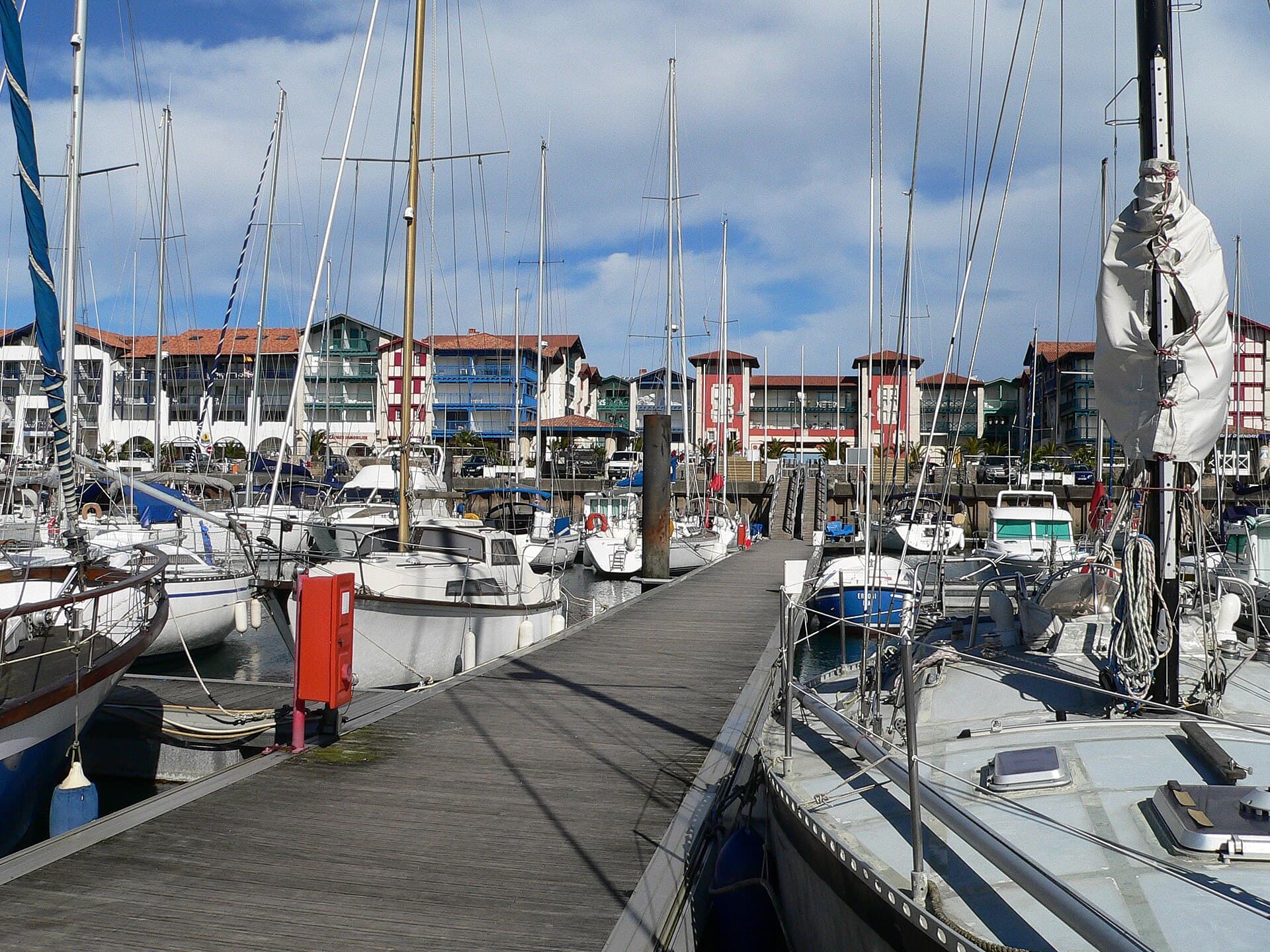
Pour des informations locales, des cartes et des suggestions d'activités, l'Office de Tourisme d'Hendaye est une ressource précieuse. Les options d'hébergement varient, avec des prix généralement plus avantageux pendant la basse saison (de mi-octobre à mi-mars). La ville dispose d'un port de plaisance, offrant 850 places, ce qui en fait le troisième plus grand d'Aquitaine. Des marchés sont organisés régulièrement, notamment un marché artisanal sur le Boulevard de la Mer en juillet et août, une foire gastronomique le mardi et un marché nocturne devant le port de plaisance le jeudi.
Hendaye en coréen, en chinois ou en hébreu — et dans 29 autres langues, chaque étape narrée par une voix native. La plus large gamme de langues de tous les audioguides autoguidés.
Disponible en :