Mameda-machi
This historic district, sometimes called 'Little Kyoto,' holds a secret about its original purpose that sets it apart from its more famous counterpart.
Full story unlocks in the tour
 Mukai / CC BY-SA 3.0, via Wikimedia Commons
Self-guided audio walking tour of Hita — GPS route, offline playback, story-driven narration in 32 languages.
“Where Edo-era prosperity flows with mountain-fed rivers, and manga titans stand guard.”
Not the postcards. The stories even locals don't know — whispered in your ear, right where they happened.
This historic district, sometimes called 'Little Kyoto,' holds a secret about its original purpose that sets it apart from its more famous counterpart.
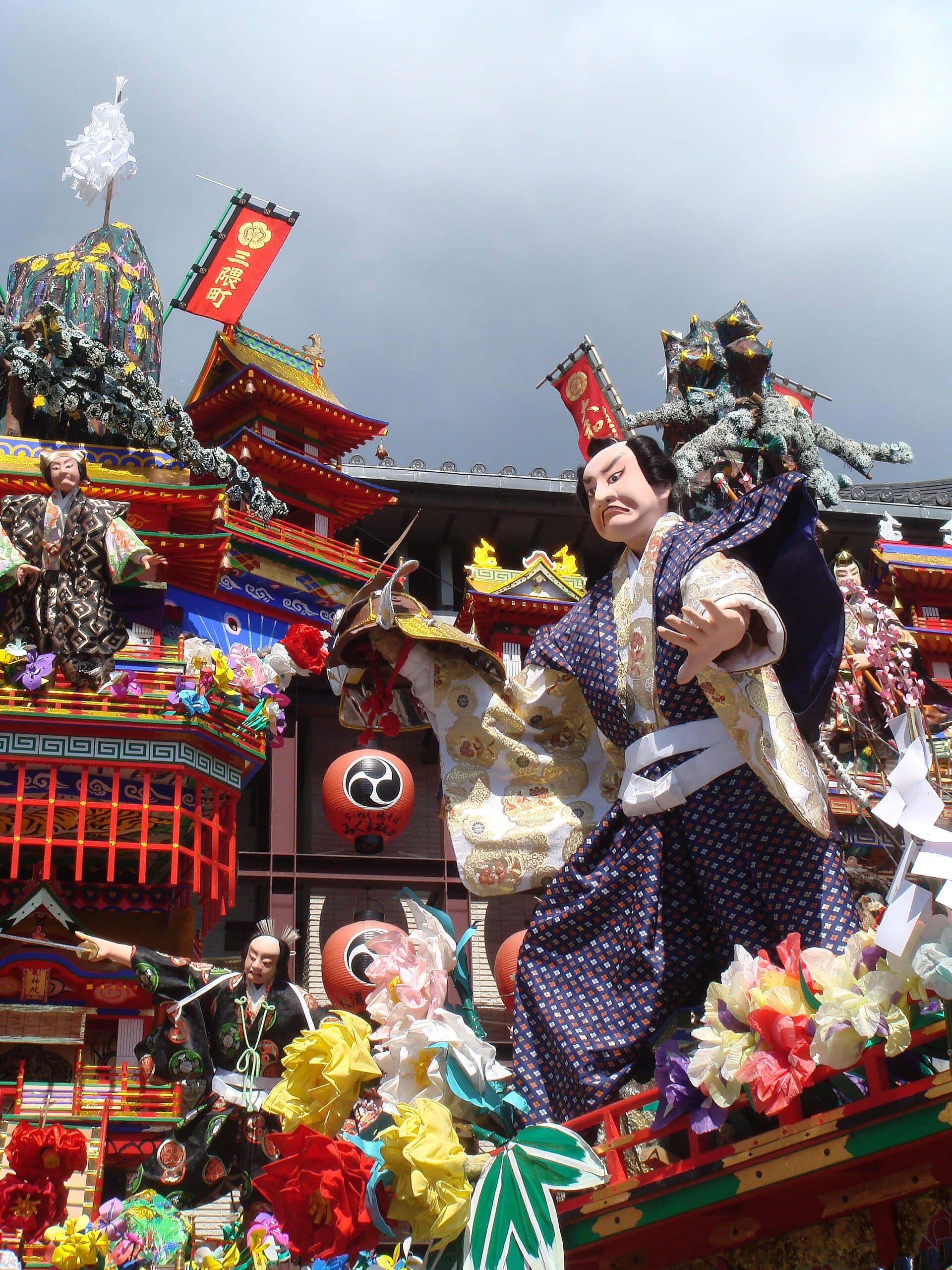
The elaborate floats of Hita's summer festival, recognized by UNESCO, have a unique design influence that might surprise you.
A renowned Edo-period private academy in Hita pioneered a revolutionary approach to education, defying the rigid social norms of its era.
Discover every secret of Hita
Every address, every reveal in full — in your ear, right where it happened.
You pick your stops. You walk. The voice reveals what the others miss.


Your self-guided audio tour of Hita is ready — pick your landmarks, choose your language, and start the moment you arrive.
BuyLume has a built-in augmented-reality guide. Hold your phone up and its camera shows the street ahead of you, with a glowing arrow laid over the real view that always points to your next stop — no map to puzzle over, no wrong turns. Like everything in Lume, it works fully offline.
Hita, sometimes called the 'Little Kyoto of Kyushu,' is a city where the echoes of the Edo period resonate through beautifully preserved streets and merchant houses. Situated in Oita Prefecture, on the island of Kyushu, Hita is cradled by green mountains and crisscrossed by the Mikuma and Kagetsu Rivers, earning it the moniker 'City of Water.' This natural abundance has shaped its culture, from its renowned sake to its traditional crafts and cuisine.
Beyond its historical charm, Hita offers a tranquil escape from the bustling metropolises, inviting visitors to slow down and immerse themselves in authentic Japanese provincial life. It's a place where ancient traditions blend seamlessly with a peaceful pace, and where the region's natural hot springs provide a soothing respite. Hita also holds a surprising connection to modern pop culture, adding another layer of intrigue to this captivating destination.
Hita's strategic location in a natural basin, surrounded by mountains and fed by rivers, made it an important center long before the Edo period. Its origins trace back at least 1,300 years, with early settlers utilizing its natural hot springs. During the Edo period (1603-1868), Hita flourished under the direct control of the Tokugawa Shogunate, earning it the designation of 'tenryo' (shogunate territory). This direct rule brought unique financial privileges to local merchants, leading to the 'Hita-kin' system, where they provided loans to feudal lords across Kyushu.
The city's urban foundation was solidified with the construction of the Mameda-machi district. This area, with its precise street grid and water canal system, transformed Hita into an organized commercial center, a structure that remains evident today. Mameda-machi was specifically developed as a town for commoners, distinguishing it from other historical centers. Hita became a hub of trade, politics, economics, and artisanal crafts, including woodwork and pottery, as well as industries like forestry and fishing.
Hita was also a center of learning, notably home to the Kangien private academy, founded by the Confucian scholar Hirose Tanso (1782–1856). This academy was revolutionary for its time, admitting students regardless of their social status, a rarity in feudal Japan. It grew to become the largest educational center in the Edo period, producing many influential figures. The academy complex is now a national historic site.
The city's natural beauty and singular character have also inspired contemporary artists. Hajime Isayama, the world-renowned manga artist behind 'Attack on Titan,' was born and grew up in Hita. The towering mountains surrounding the city directly influenced the imagery of the colossal walls in his globally popular series, leading to 'anime tourism' with character statues and a dedicated museum in Hita.
Today, Hita continues to celebrate its rich heritage through various festivals and traditional crafts. The Hita Gion Festival, a summer tradition over 400 years old, features magnificent floats that parade through the streets, dedicated to a fierce deity protecting against plagues. It's recognized as a UNESCO Intangible Cultural Heritage. The Tenryo Hita Hina Matsuri, held in spring, showcases elaborate heirloom Hina dolls, reflecting the prosperity of Edo-period merchants.
The city's reputation as the 'City of Water' endures, contributing to the production of excellent sake and traditional Japanese paper. Hita's connection to its rivers is also seen in the traditional 'u-kai' cormorant fishing on the Mikuma River, a practice with centuries of history.
Begin your exploration in the Mameda-machi Shopping Street, a beautifully preserved Edo-period district. Wander through its grid-patterned streets, admiring the traditional merchant houses and stopping at shops offering local handicrafts, sweets, and the famed Hita soy sauce. Do not miss the Kusano Family House, the oldest merchant house in Oita Prefecture, and the Nihongan building, a former pharmacy with impressive Meiji-era architecture.
For a deeper dive into local culture, visit the Kuncho Sake Brewery Museum, housed in a historic brewery that has been producing sake for over 300 years. Here, you can learn about traditional sake-making and enjoy a tasting. Explore the Kangien Academy, a national historic site that was a groundbreaking educational institution in the Edo period.
Fans of 'Attack on Titan' will want to seek out the bronze statues of Eren, Mikasa, and Armin at the foot of Oyama Dam, inspired by the manga's iconic walls. There's also an 'Attack on Titan in HITA Museum ANNEX' at the Sapporo Beer Kyushu Hita Brewery.
Experience Hita's 'City of Water' reputation with a romantic cruise on a traditional yakatabune roofed boat on the Mikuma River. Between May and October, you might even witness 'u-kai' cormorant fishing. Consider a visit to Onta-yaki Pottery Village to see the traditional craft in action, a technique passed down through generations.
For a taste of local cuisine, try Hita Yakisoba, a regional noodle specialty, or fresh 'ayu' river fish dishes.
Hita offers distinct seasonal experiences. Spring (March-May) and autumn (September-November) are generally considered the best times to visit, with pleasant temperatures and comfortable weather. Spring brings cherry blossoms, while autumn showcases vivid fall foliage. Summers (June-August) are warm and humid, with July being the wettest month. Winters (December-February) are cool to cold, with minimal precipitation, making them ideal for onsen experiences. If visiting in late autumn to early spring, you might witness the mysterious 'sokogiri' ground fog.
Hita is easily accessible, approximately 1 hour and 10 minutes by train or car from Hakata, making it a convenient day trip or overnight stay from Fukuoka. The JR Kyushu Kyudai Main Line serves Hita Station. Within Hita, the historic Mameda-machi district is about a 15-minute walk from JR Hita Station.
The official currency is the Japanese Yen (JPY). While credit cards are accepted in many hotels and larger establishments, smaller shops and markets often prefer cash. ATMs are available at 7-Eleven stores and Post Offices. Tipping is not customary in Japan. Hita is considered a very safe city. Comfortable shoes are recommended for walking the historic streets.
Hita in Korean, in Chinese or in Hebrew — and 29 more languages, every stop narrated by a native voice. The widest language range of any self-guided audio tour.
Available in: