La route d'Iruya
Le trajet vers Iruya est une aventure en soi, mais il y a un point précis où le paysage change radicalement, révélant la véritable isolation du village.
L'histoire complète se débloque dans le tour
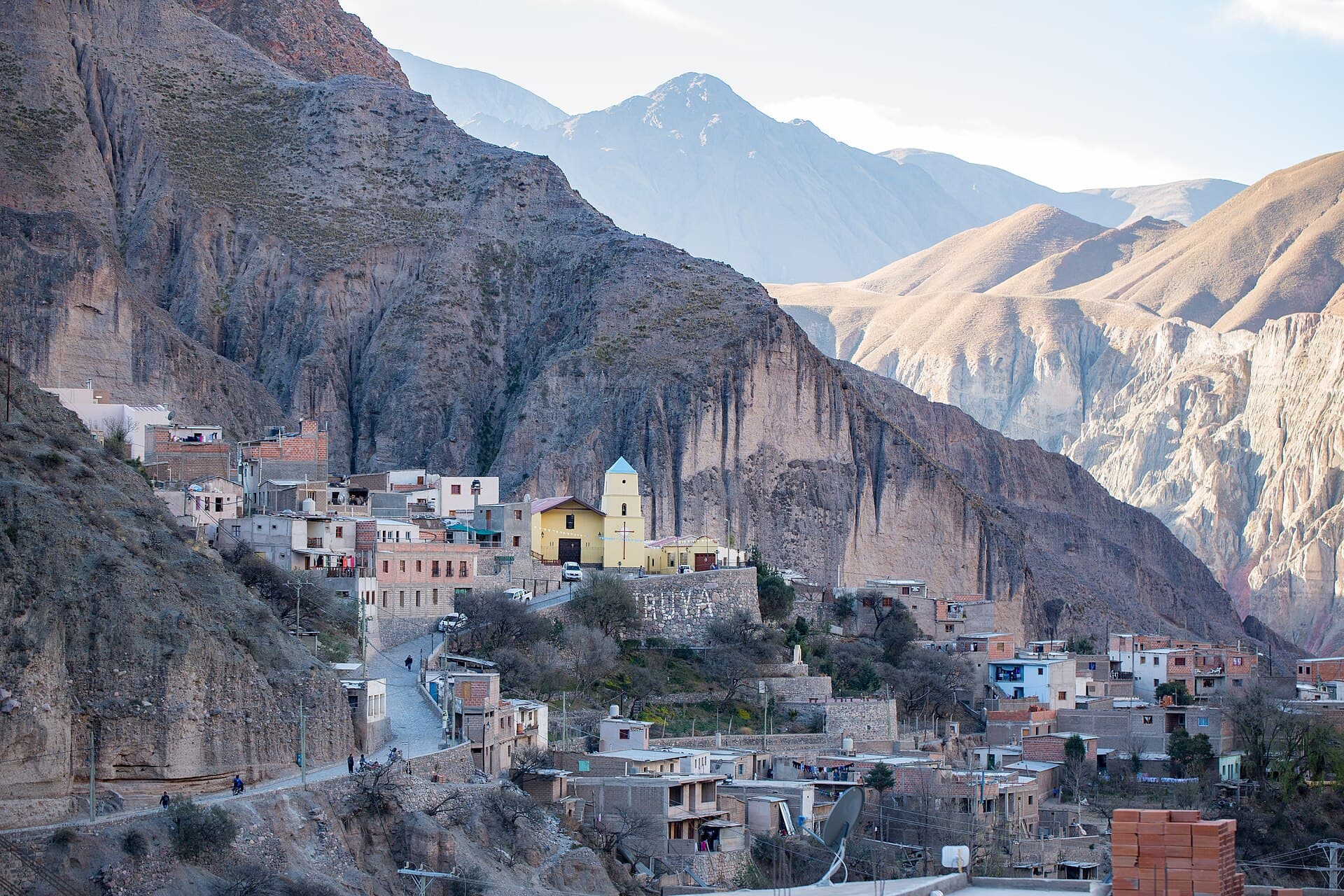 Havardtl / CC BY 4.0, via Wikimedia Commons
Visite audio autoguidée de Iruya — parcours GPS à pied, lecture hors ligne, narration en 32 langues.
“Là où les montagnes murmurent des histoires et les routes racontent des légendes.”
Pas les cartes postales. Les histoires que même les habitants ignorent — soufflées à l'oreille, là où elles se sont passées.
Le trajet vers Iruya est une aventure en soi, mais il y a un point précis où le paysage change radicalement, révélant la véritable isolation du village.
De nombreux cimetières offrent un lieu de recueillement paisible, mais le dernier lieu de repos des habitants d'Iruya est positionné d'une manière qui en dit long sur la relation du village avec son environnement spectaculaire.
Marcher jusqu'au village voisin de San Isidro peut sembler simple, mais le chemin présente un obstacle naturel surprenant et récurrent que les habitants traversent quotidiennement.
Découvrez tous les secrets de Iruya
Chaque adresse, chaque révélation en entier — dans ton oreille, là où elle s'est passée.
Tu choisis tes lieux. Tu marches. La voix te révèle ce que les autres ignorent.


Votre visite audioguidée de Iruya vous attend — choisissez vos lieux, votre langue, et lancez-vous dès votre arrivée.
AcheterLume intègre un guide en réalité augmentée. Levez votre téléphone : sa caméra montre la rue devant vous, avec une flèche lumineuse posée sur l'image réelle qui pointe toujours vers votre prochain arrêt — aucune carte à déchiffrer, aucun mauvais virage. Comme tout dans Lume, ça fonctionne entièrement hors-ligne.
Iruya, un village isolé de la province de Salta en Argentine, semble s'accrocher à flanc de montagne à une altitude de 2 780 mètres le long de la rivière Iruya. Cette colonie isolée, avec une population estimée à 6 160 habitants en 2026, est un lieu où les racines indigènes sont profondes, de nombreux habitants étant des descendants du peuple Kolla. Le nom de la ville, dérivé de la langue quechua, signifie « abondance de paille », un clin d'œil à la végétation locale.
Iruya est une destination pour ceux qui recherchent une expérience authentique, où le mélange des cultures aborigène et hispanique a été préservé pendant plus de 250 ans. Ses rues étroites et sinueuses et ses maisons en adobe, en pierre et en paille évoquent un sentiment d'une époque révolue. Le voyage vers Iruya fait autant partie de l'expérience que la destination elle-même, impliquant un trajet difficile à travers des paysages montagneux saisissants qui révèlent finalement une ville comme suspendue dans le temps.
L'histoire d'Iruya remonte au milieu des années 1600, lorsque des descendants des Incas se sont installés pour la première fois dans la région. La ville a été officiellement fondée en 1753. Des preuves de ses traditions ancestrales sont visibles dans l'Iglesia Nuestra Señora del Rosario y San Roque, une église construite à l'origine en 1690. Cela rend l'église plus ancienne que la date de fondation officielle de la ville elle-même. En reconnaissance de son importance historique et architecturale, Iruya a été déclarée site historique national en 1995.
Les premiers habitants étaient principalement des aborigènes, leurs racines remontant aux Ocloyas, un groupe appartenant à l'ethnie Kolla. Le peuple Kolla est originaire du Kollasuyo, l'une des quatre régions de l'ancien empire inca. Ce profond héritage indigène continue de façonner l'identité culturelle d'Iruya, qui est une intersection fascinante d'influences aborigènes et hispaniques.
Depuis plus de deux siècles et demi, les habitants de la ville ont maintenu leurs modes de vie traditionnels, visibles dans leurs vêtements, leurs coutumes et l'architecture de leurs maisons. L'économie de la ville reposait historiquement sur l'élevage de bétail tel que les moutons, les chèvres et les lamas, ainsi que sur la culture de produits comme le maïs et les pommes de terre. Bien que ces pratiques traditionnelles se poursuivent, le tourisme est de plus en plus devenu une partie intégrante de l'activité économique d'Iruya, attirant des visiteurs désireux de découvrir son patrimoine culturel unique et sa beauté naturelle saisissante.
Iruya offre une gamme de sites et d'activités qui mettent en valeur son cadre unique et son patrimoine culturel. La ville elle-même est une expérience visuelle, avec ses rues étroites et sinueuses et ses maisons traditionnelles en adobe. Un point d'intérêt central est l'Iglesia Nuestra Señora del Rosario y San Roque, une église datant de 1690.
Pour des vues imprenables sur le village et les canyons environnants, visitez le Mirador de la Cruz et le Mirador del Cóndor. Le Mirador del Cóndor, nommé d'après les grands condors qui planent dans les montagnes, est particulièrement recommandé en début d'après-midi pour des panoramas spectaculaires. La randonnée jusqu'au Mirador del Cóndor est un parcours exigeant en montée, d'environ 1 à 2 heures aller-retour.
Une autre activité populaire est la marche vers San Isidro, un village voisin à environ 8 kilomètres au nord d'Iruya. Cette randonnée suit le Río San Isidro, traversant la rivière plusieurs fois. Plus loin, à environ 5 kilomètres au nord-est, se trouvent les ruines de Pucará de Titiconte, un village précolombien offrant un aperçu du passé ancien de la région. Envisagez de visiter Awawa Casa de la Cultura pour des informations locales et la Pasarela Peatonal Iruya – La Banda pour différentes perspectives sur la rivière et la ville.
La meilleure période pour visiter Iruya est pendant la saison sèche, qui s'étend d'avril à octobre. Pendant ces mois, le temps est plus prévisible et les routes de montagne sont plus accessibles. Vous pouvez vous attendre à un temps agréable avec des températures diurnes moyennes comprises entre 16°C et 18°C. La saison des pluies a généralement lieu entre décembre et février, apportant de fortes précipitations qui peuvent rendre les routes impraticables en raison des glissements de terrain et des rivières en crue. Les nuits peuvent être fraîches, même pendant la saison sèche, avec des températures descendant à environ 0°C pendant les mois les plus froids.
Atteindre Iruya fait partie de l'aventure. Bien qu'il se trouve dans la province de Salta, il n'est accessible que via la province de Jujuy, généralement depuis Humahuaca ou Tilcara. Des bus circulent quotidiennement d'Humahuaca à Iruya, le trajet de 75 km prenant environ 3 heures sur une route sinueuse et non pavée. Il est conseillé de réserver les billets de bus à l'avance, surtout pour les voyages le week-end.
Iruya est à une altitude de 2 780 mètres, soyez donc attentif au mal de l'altitude. Restez hydraté et prenez-le doucement le premier jour. Passer quelques jours dans une ville de basse altitude comme Humahuaca (3 012 m) au préalable peut aider à l'acclimatation. La couverture mobile est limitée à Iruya, bien que de nombreux hôtels proposent le Wi-Fi. L'argent liquide est essentiel, car les distributeurs automatiques sont rares et de nombreux établissements n'acceptent pas les cartes de crédit. Des chaussures confortables et robustes sont recommandées pour naviguer dans les rues escarpées et sinueuses de la ville et pour la randonnée.
Iruya en coréen, en chinois ou en hébreu — et dans 29 autres langues, chaque étape narrée par une voix native. La plus large gamme de langues de tous les audioguides autoguidés.
Disponible en :