Dechenhöhle (Dechen Cave)
Two railway workers, a new line, and a surprising discovery beneath their feet.
Full story unlocks in the tour
 Asio otus / CC BY-SA 3.0, via Wikimedia Commons
Self-guided audio walking tour of Iserlohn — GPS route, offline playback, story-driven narration in 32 languages.
“Where industrial ingenuity meets subterranean wonders and forest tranquility.”
Not the postcards. The stories even locals don't know — whispered in your ear, right where they happened.
Two railway workers, a new line, and a surprising discovery beneath their feet.
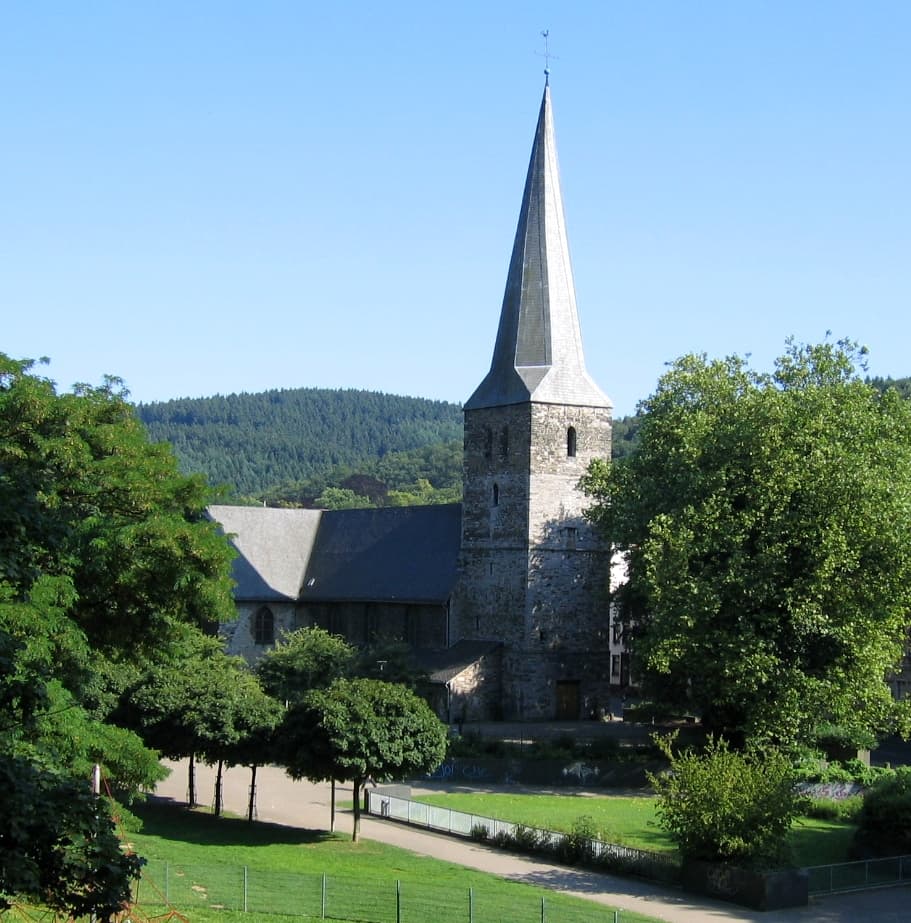
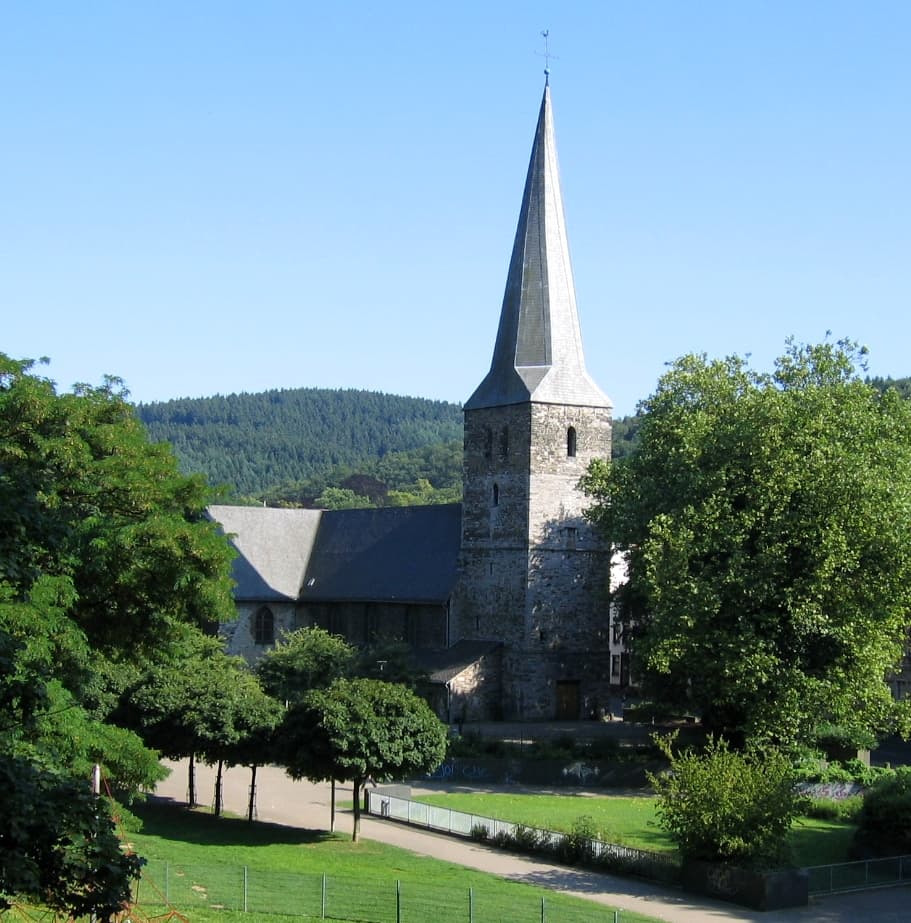
This medieval church, a symbol of Iserlohn, holds a secret beneath its foundations from a darker time.
Before its modern industries, Iserlohn was renowned for a very specific, delicate craft that required over 100 steps.
Discover every secret of Iserlohn
Every address, every reveal in full — in your ear, right where it happened.
You pick your stops. You walk. The voice reveals what the others miss.
Your self-guided audio tour of Iserlohn is ready — pick your landmarks, choose your language, and start the moment you arrive.
BuyLume has a built-in augmented-reality guide. Hold your phone up and its camera shows the street ahead of you, with a glowing arrow laid over the real view that always points to your next stop — no map to puzzle over, no wrong turns. Like everything in Lume, it works fully offline.
Iserlohn, known as the "Forest City," offers a distinctive blend of natural beauty, historical depth, and industrial heritage within Germany's Sauerland region. This city, the largest in the Märkischer Kreis district, provides a serene escape amidst verdant forests, rolling hills, and tranquil lakes, alongside a tangible connection to its past.
From exploring remarkable dripstone caves to wandering through engaging historic streets, Iserlohn presents a varied array of experiences. Its identity is deeply intertwined with both its natural surroundings—reflected in its name, which literally means "iron forest"—and its long-standing industrial traditions, particularly in metalworking. Whether you seek outdoor adventures or a journey through time, Iserlohn invites you to uncover its many facets.
## From Medieval Craft to Industrial Powerhouse Iserlohn's origins trace back to the 11th century, with the first written mention of "Lon" appearing around 1150. It was officially granted municipal rights in 1237 by the Count of the Mark. During the Middle Ages, Iserlohn established itself as a significant center for the production of armaments and light metalware.
## Challenges and Rebellions The city faced numerous challenges throughout its history. In 1712, a devastating fire swept through Iserlohn. Later, in 1849, the city was the scene of a rebellion, reflecting periods of social and political unrest.
## Industrial Revolution and World Wars The 19th century saw Iserlohn's industrial prominence grow, particularly in needle manufacturing, a complex process involving over a hundred steps. This industrial prowess, especially in metalworking, made Iserlohn a target during World War II, as it produced war-relevant products like brass components and hardware for grenades. The city endured Allied bombing, leading to the construction of an air-raid shelter beneath the Oberste Stadtkirche. The war also brought immense tragedy to Iserlohn's Jewish community, with the destruction of its synagogue in 1938 and subsequent deportations.
## Modern Iserlohn In 1975, Iserlohn expanded significantly, incorporating surrounding municipalities like Letmathe, Hennen, Sümmern, and Kesbern, becoming part of the Märkischer Kreis district. Today, Iserlohn continues its industrial legacy with manufactures including machinery, pharmaceuticals, synthetic fibers, textiles, and metal products. It also serves as a center for the training of Germany's military pilots.
Begin your exploration at the Dechenhöhle (Dechen Cave), one of Germany's most visited show caves, discovered by railway workers in 1868. Marvel at the intricate stalactite and stalagmite formations during a guided tour. Adjacent to the cave is the German Cave Museum, offering insights into geology and the cave's discovery.
For sweeping views, ascend the Danzturm, a historic observation tower that offers vistas over Iserlohn and the surrounding Sauerland region. The tower, once a semaphore station, also has a restaurant at its base.
Delve into Iserlohn's industrial past at the Historische Fabrikanlage Maste-Barendorf. This 19th-century industrial settlement now functions as an artist and museum village, featuring a Needle Museum and displays on brass foundry. You can also visit the Stadtmuseum Iserlohn to learn more about local history, crafts, and industrial heritage.
Stroll through Iserlohn Old Town with its compact historic center, cafés, boutiques, and traditional architecture. Don't miss the Oberste Stadtkirche, a Gothic church dating from the 14th century, and the St. Pankratius Church (Bauernkirche), the oldest building in the city, believed to have been founded around 985 AD.
For outdoor relaxation, the Seilersee is a popular lake for walks, jogging, and boating during the summer months.
The best time to visit Iserlohn for general outdoor tourist activities is from late June to late August, with a peak in the first week of August, when temperatures are comfortable and skies are clearer. July is the warmest month, with an average high of 71°F (21°C). For those who prefer fewer crowds, the milder spring (April to June) or fall (September to October) offer pleasant weather for exploring. Winter, from November to March, is colder and cloudier, but December brings festive Christmas markets.
Iserlohn is located in the Märkischer Kreis district of North Rhine-Westphalia, Germany. The city is well-connected by road, with the A46 highway having an exit for Iserlohn-Zentrum. While Iserlohn has a train station, it is the terminus of two railway lines and does not have ICE service. Local transport is primarily managed by MVG buses, which operate both within the city and to neighboring towns. For cyclists, a city map is available at the tourist office or for download, and e-bike rentals are available at the train station. The Iserlohn Tourist Information Office, located at the city train station, provides comprehensive information, guided tour bookings, and tickets for local events. Most places within the relatively small city center are accessible on foot.
Iserlohn in Korean, in Chinese or in Hebrew — and 29 more languages, every stop narrated by a native voice. The widest language range of any self-guided audio tour.
Available in: