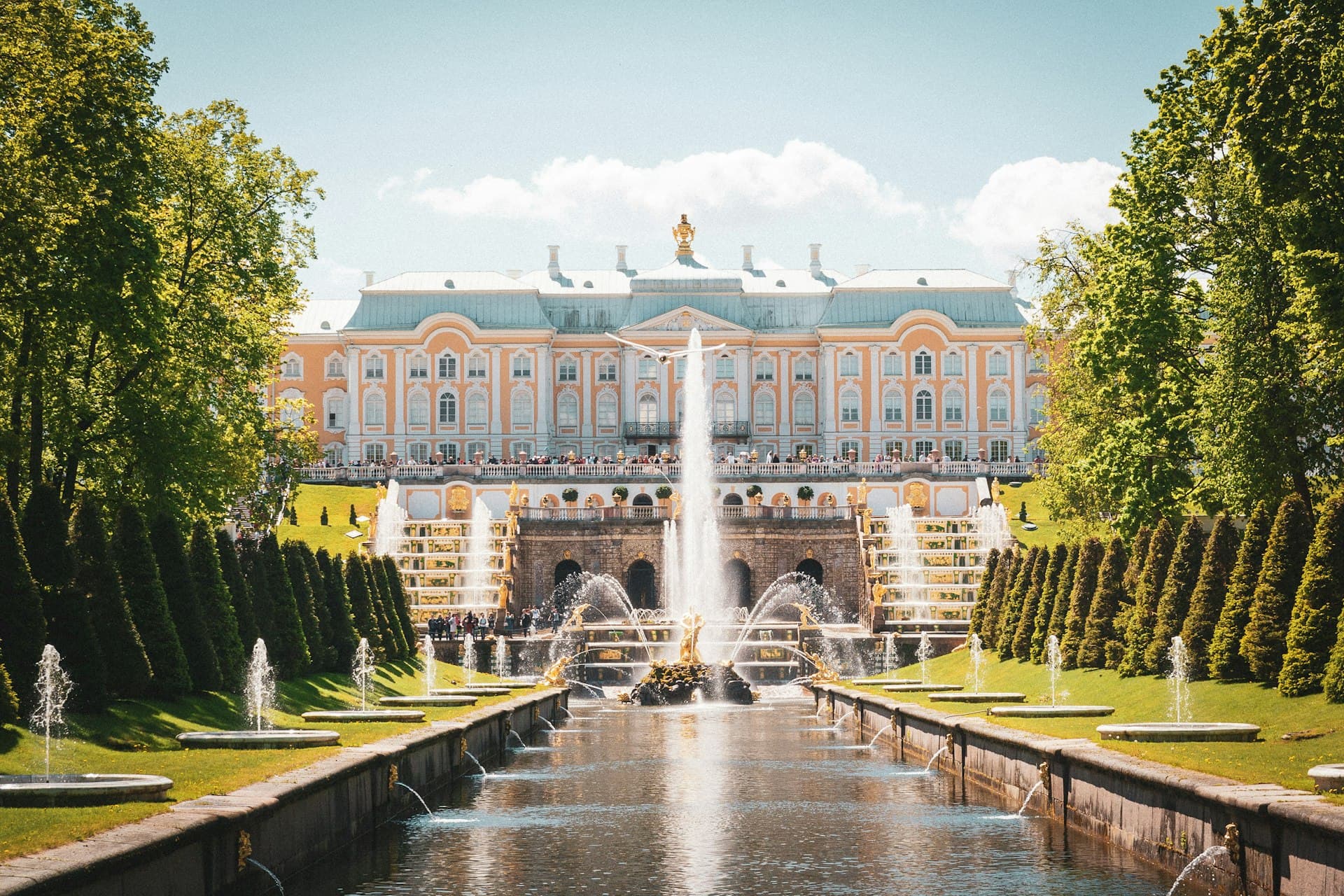
IzborskPhoto of Saint Petersburg, via Wikimedia Commons
RU

Izborsk

Self-guided audio walking tour of Izborsk — GPS route, offline playback, story-driven narration in 32 languages.

Where ancient stones recount forgotten princes and healing waters flow.

The secrets of Izborsk

Izborsk, as no one tells it.

Not the postcards. The stories even locals don't know — whispered in your ear, right where they happened.

3 secrets below. Many more wait inside the tour.
Truvor's Gorodishche

The grand stone cross at Truvor's Gorodishche is said to mark the resting place of Rurik's brother, Truvor, one of Rus's legendary Varangian founders. Yet, archaeological findings paint a different picture.

Full story unlocks in the tour
Izborsk Fortress walls

The formidable walls of Izborsk Fortress were once considered unyielding, earning it the moniker 'Iron City.' Despite this, a small Lithuanian regiment managed to breach them in 1569.

Full story unlocks in the tour
Slovenskie Springs (Springs of the Twelve Apostles)

These ancient springs are believed to hold miraculous healing properties, with each of the twelve streams offering a unique blessing.

Full story unlocks in the tour
The full tour

Discover every secret of Izborsk

Every address, every reveal in full — in your ear, right where it happened.

Get the key to Izborsk

You pick your stops. You walk. The voice reveals what the others miss.

Izborsk — reflection of city lights
Photo: A. L. / Unsplash
Izborsk — A beautiful church stands on a cloudy day.
Photo: Murat Ts. / Unsplash
Izborsk — A person standing in a field in front of a building
Photo: Evgeny Matveev / Unsplash
Choose your time

How long do you have in Izborsk?

Your self-guided audio tour of Izborsk is ready — pick your landmarks, choose your language, and start the moment you arrive.

Buy
About Izborsk

The story of Izborsk

Izborsk, a small village in Russia's Pskov region, possesses a history that stretches back to the dawn of Russian statehood. First recorded in chronicles in 862, it is considered one of the oldest settlements in ancient Rus', predating even the neighboring city of Pskov. This historical-cultural and natural-landscape museum-reserve offers a window into a bygone era, where ancient stone walls and storied springs recount the lives of princes, battles, and enduring traditions.

Often described as an open-air museum, Izborsk is a destination where time seems to slow. Its primary draw is the imposing 14th-century Izborsk Fortress, a testament to medieval defensive architecture. Beyond the fortress, the village is intertwined with natural beauty, including the mystical Slovenskie Springs and the scenic Izborsko-Malskaya Valley.

History

From Ancient Settlement to 'Iron City'

The origins of Izborsk can be traced to the late 7th or early 8th century, when it was established by the Slavic Krivichi tribe on the high cape of what is now Truvor's Gorodishche. The earliest chronicle mention of Izborsk dates to 862, connecting it with the legendary Varangian prince Truvor, Rurik's younger brother, who supposedly made his seat here. However, archaeological evidence suggests a strong Slavic presence from the outset, with no Scandinavian traces from the 9th century.

Izborsk quickly grew in importance, becoming a fortified settlement and a significant center for artisan crafts and trade by the 10th and 11th centuries. The first wooden fortress was constructed in the 10th century, later replaced by a stone incarnation in the 11th century. From 1233 onward, Izborsk found itself at the heart of conflicts between Russian lands and the German crusaders of the Livonian Order. It was captured in 1240 but liberated by Alexander Nevsky's army after the Battle on the Ice in 1242.

The Stone Shield of Defense

In 1330, the Pskov mayor Seloga and local residents moved Izborsk to a new, more defensible site on Zheravya Mountain, where the impressive stone fortress seen today was constructed. This new fortress, with its unique triangular shape and walls up to 4.5 meters thick, proved to be a formidable defense, resisting at least eight sieges by the 15th century. Its resilience earned it the labels 'iron city' and 'stone shield of defense' from its adversaries. The fortress was further reinforced in the 15th and 16th centuries to accommodate cannons.

Despite its strength, Izborsk Fortress was famously captured in 1569 by a small Lithuanian regiment due to a Russian turncoat, an event that deeply disturbed Ivan the Terrible. After the Northern War, as Russia's borders shifted, Izborsk gradually lost its military significance and its status declined. It transitioned from a strategically vital outpost to a quiet village, even becoming part of independent Estonia for two decades (1920-1940) under the name Irboska, before returning to Russia.
What to see

The primary attraction in Izborsk is undoubtedly the Izborsk Fortress, a remarkably preserved 14th-century stone fortification. Walk along its battlements, marvel at the up to 4-meter-thick masonry, and explore its six towers, including the oldest, Lukovka Tower, which offers sweeping views of the Malskaya Valley and Lake Gorodishchenskoye. Inside the fortress walls, you will find the 14th-century St. Nicholas Cathedral, a snow-white church with green domes and impressive acoustics. Do not overlook the St. Nicholas Zahab, a long defensive corridor, and seek out the Secret Water Passage, a 16-meter-deep underground tunnel that supplied water during sieges.

Just a short walk from the fortress lies Truvor's Gorodishche, the site of the original 7th-8th century settlement. Here, an ancient cemetery features the two-and-a-half-meter-tall Truvor Cross, a stone monument full of local stories. Descend from the fortress to the Slovenskie Springs, also known as the Springs of the Twelve Apostles, a cascade of over a dozen karst springs believed to possess healing properties. The springs feed into Lake Gorodishchenskoye, where you can observe non-migratory mute swans. Explore the Izborsko-Malskaya Valley via the 6-kilometer 'Health Trail,' a natural monument offering picturesque landscapes and the chance to find ancient fossils.

For a glimpse into local life, visit the Merchant Quarter on Pechorskaya Street, with its beautifully restored early 20th-century estates. The Izborsk State Museum-Reserve encompasses over 200 historical monuments and offers exhibitions on the city's past and the shared heritage of the Slavic and Finno-Ugric populations.

When to visit

The ideal time to visit Izborsk for outdoor activities and comfortable weather is from late June to mid-August, with July offering the clearest skies and warmest temperatures. May is also a beautiful time, when everything is in full bloom, as is early September. If you are a history enthusiast, consider planning your trip for August to experience the 'Iron City' festival, which features jousting tournaments and medieval music.

Practical

Izborsk is located about 30 kilometers west of Pskov. From Pskov, you can reach Izborsk by bus (routes 126 or 207), with buses running approximately every 40-60 minutes. If driving from St. Petersburg, the journey is about 340 kilometers (4.5 hours), passing through Pskov. From Moscow, it is approximately 710 kilometers (10 hours) via the M9 highway.

Admission to the Izborsk Fortress grounds is 200₽. A combo ticket for 1000₽ includes access to the merchant estates, which recreate daily life of the era. For accommodation, guesthouses in the village center are a popular choice, offering an authentic village experience and easy access to attractions. Be sure to try the local cuisine, especially the traditional blini and local herbal tea at a pancake shop, or the unique Seto pretzel available in summer.

Good to know
What is Izborsk known for?
Izborsk is known for its remarkably preserved 14th-century stone fortress, the ancient Slovenskie Springs, and its deep historical roots dating back to the 9th century, making it one of Russia's oldest settlements.
How old is Izborsk?
Izborsk was first mentioned in chronicles in 862, making it over 1160 years old. The first fortified settlement was established even earlier, around the late 7th or early 8th century.
Can you walk on the walls of Izborsk Fortress?
Yes, visitors can walk along the battle walkway and walls of Izborsk Fortress, which is one of the few historical sites in Russia where this is legally permitted.
Are the Slovenskie Springs truly healing?
Locals believe the Slovenskie Springs possess miraculous healing properties, with each of the twelve streams offering a unique blessing like health, love, or wisdom. The water is also consecrated annually.
What kind of food should I try in Izborsk?
Izborsk is known for its hearty and traditional Pskov regional cuisine. You should definitely try the blini, prepared according to ancient recipes, and local herbal tea. During summer, you can also try the unique Seto pretzel.
Is Izborsk suitable for a day trip?
Yes, Izborsk is well-suited for a day trip, especially from Pskov, which is only 30 kilometers away. The main attractions, including the fortress, springs, and Truvor's Gorodishche, can be explored within half a day.
On the map
Izborsk
€9.90
No booking · activate anytime · 12h to walk it
Load on Wi-Fi, then walk offline — no roaming abroad
Get the key to Izborsk