Parque del Manantial de Vino
Jiuquan, que significa 'Manantial de Vino', tiene una legendaria historia de origen ligada a un general victorioso.
La historia completa se desbloquea en el tour
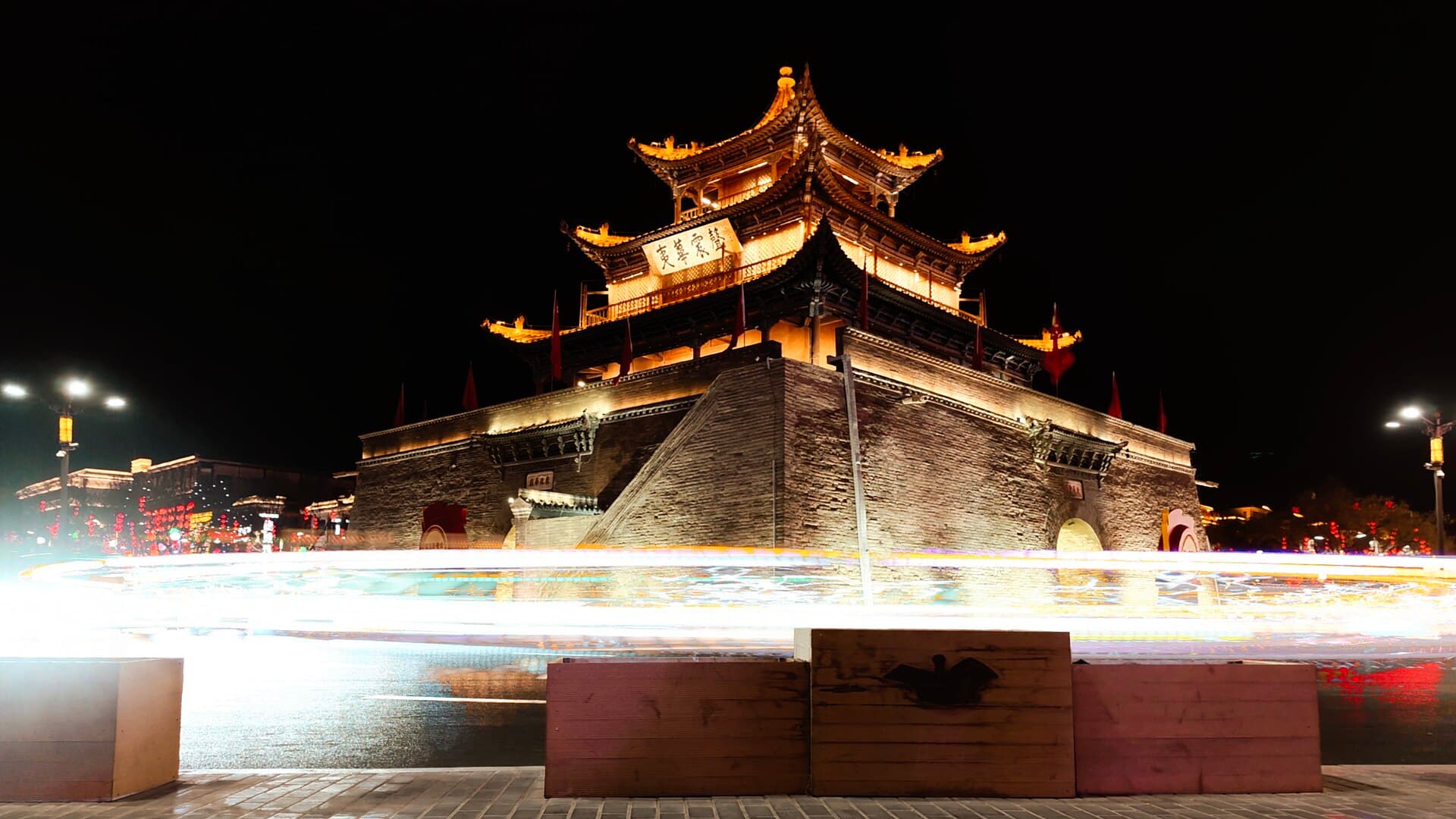 Pcemzumark / CC BY-SA 4.0, via Wikimedia Commons
Tour de audio autoguiado de Jiuquan — ruta GPS a pie, reproducción offline, narración en 32 idiomas.
“Donde los ecos de la antigua Ruta de la Seda se encuentran con el futuro de la exploración espacial.”
No las postales. Las historias que ni los locales conocen — al oído, justo donde ocurrieron.
Jiuquan, que significa 'Manantial de Vino', tiene una legendaria historia de origen ligada a un general victorioso.
La fortaleza más occidental de la Gran Muralla guarda un secreto sobre su construcción que habla de una precisión milenaria.
Incluso en una ciudad con una larga historia, algunas narrativas se desarrollan solo en momentos específicos.
Descubre todos los secretos de Jiuquan
Cada dirección, cada revelación al completo — a tu oído, justo donde ocurrió.
Eliges tus paradas. Caminas. La voz te revela lo que los demás ignoran.


Tu tour de audioguía por Jiuquan te espera — elige tus lugares, tu idioma y empieza al llegar.
ComprarLume incluye una guía de realidad aumentada. Levanta el móvil y su cámara muestra la calle que tienes delante, con una flecha luminosa sobre la imagen real que siempre apunta a tu próxima parada — sin mapas que descifrar, sin giros equivocados. Como todo en Lume, funciona completamente sin conexión.
Jiuquan, una ciudad en la provincia de Gansu, China, presenta una fusión cautivadora del legado de la antigua Ruta de la Seda y la exploración espacial contemporánea. Ubicada en el extremo occidental del Corredor de Hexi, sirvió durante siglos como un punto de paso crucial, uniendo Oriente y Occidente a través del comercio y el intercambio cultural. Hoy en día, la ciudad es quizás más reconocida como el hogar del Centro de Lanzamiento de Satélites de Jiuquan, la instalación de lanzamiento espacial más antigua y extensa de China, que ha sido fundamental en las empresas de la nación más allá de la Tierra.
Más allá de su importancia aeroespacial, Jiuquan extiende un encanto desértico distintivo, con paisajes que van desde el árido Gobi hasta picos nevados. Su tejido cultural está tejido con influencias Han chinas, musulmanas Hui y nómadas de Asia Central, una herencia directa de sus días en la Ruta de la Seda. Los viajeros pueden explorar antiguas defensas, admirar el arte budista en las grutas cercanas e sumergirse en las costumbres locales que continúan floreciendo en esta intrigante extensión del noroeste de China.
## Un Centinela de la Ruta de la Seda La historia de Jiuquan se remonta al año 111 a.C. cuando fue establecida como un puesto militar por la Dinastía Han. Inicialmente conocida como Fulu, rápidamente se convirtió en un puesto de avanzada fundamental a lo largo del Corredor de Hexi, un estrecho pasaje esencial para la antigua Ruta de la Seda. Esta posición estratégica facilitó el movimiento de bienes, conceptos y culturas entre las Llanuras Centrales de China y Asia Central.
Bajo la Dinastía Sui, la ciudad se convirtió en el centro administrativo de la prefectura de Suzhou, una designación que mantuvo hasta la Dinastía Tang (618-907 d.C.) cuando recibió su nombre actual, Jiuquan. Durante esta era, prosperó como un centro de comercio, particularmente para productos como el ruibarbo. A partir del siglo V, la Montaña Wenshu, aproximadamente a 14 kilómetros al suroeste de la ciudad, se convirtió en un punto focal para una práctica espiritual centrada en sus templos rupestres.
Tras el declive de la antigua Ruta de la Seda, la importancia de Jiuquan disminuyó hasta el siglo XX. El desarrollo moderno comenzó a fines de la década de 1950 con el descubrimiento de depósitos de mineral de hierro y el establecimiento de minas de carbón, lo que llevó a la construcción de una gran planta integrada de hierro y acero. Hoy en día, Jiuquan también es reconocida como el lugar de nacimiento de las industrias petrolera y nuclear de China.
## Cuna del Programa Espacial de China Un momento crucial en la narrativa moderna de Jiuquan llegó con el establecimiento del Centro de Lanzamiento de Satélites de Jiuquan (JSLC) en 1958. Aunque el centro de lanzamiento en sí está situado a más de 100 kilómetros de distancia en la Región Autónoma de Mongolia Interior, Jiuquan es la principal área urbana más cercana. Esta instalación ha sido central para los esfuerzos espaciales de China, incluyendo el lanzamiento de su primer vuelo espacial tripulado, Shenzhou 5, en 2003, que llevó al astronauta Yang Liwei a órbita. El JSLC ha realizado con éxito numerosos lanzamientos de satélites y naves espaciales, consolidando el papel de Jiuquan como símbolo de los avances científicos y tecnológicos de China.
Comience su viaje en el Parque de Jiuquan y el Manantial de Vino de la Dinastía Han Occidental, un jardín clásico bien mantenido con una historia que abarca más de 2.000 años. El parque cuenta con un manantial vivaz, un lago ondulante, esculturas y palacios, proporcionando un retiro tranquilo. Justo al oeste de la ciudad se encuentra el Paso de Jiayuguan, el formidable extremo occidental de la Gran Muralla China. Esta fortaleza estratégica, construida en 1372, ofrece una ventana a las antiguas defensas militares.
Para aquellos interesados en el arte y la historia, las Cuevas de Mogao son un destino fascinante. Este antiguo complejo budista, con cientos de templos interconectados, exhibe miles de estatuas y murales centenarios. Las Tumbas de Dingjiazha, ubicadas al noroeste de la ciudad, contienen algunos de los murales más antiguos de China, que datan de la Dinastía Jin Oriental (317-420 d.C.). El Museo de Jiuquan ofrece una exploración más profunda del pasado de la Ruta de la Seda de la región, exhibiendo artefactos y reliquias antiguas. Para probar la cultura local, pasee por los animados mercados, donde se pueden encontrar barrios tradicionales musulmanes Hui y arquitectura centenaria.
El momento más oportuno para visitar Jiuquan es durante los meses de primavera y otoño, específicamente de mayo a octubre. Durante estos períodos, el clima es templado y agradable, perfecto para explorar las atracciones de la ciudad. Los veranos pueden ser cálidos, mientras que los inviernos son fríos y secos, con temperaturas que bajan considerablemente. La primavera y el otoño también experimentan menos viento y polvo en comparación con otras épocas del año.
Se puede llegar a Jiuquan en tren y autobús desde las principales ciudades de la provincia de Gansu, como Lanzhou, Jiayuguan y Dunhuang. Aunque no hay un aeropuerto civil directamente dentro del área urbana de Jiuquan, los viajeros pueden volar al Aeropuerto de Jiayuguan (aproximadamente a 27 km de distancia) o al Aeropuerto de Dunhuang (aproximadamente a 378 km de distancia) y luego viajar a Jiuquan en coche. Dentro de la ciudad, los autobuses locales, taxis y aplicaciones de viaje compartido están disponibles para el tránsito. Para distancias más largas o excursiones específicas, considere contratar un coche privado. La moneda local es el Yuan chino (CNY). Es aconsejable llevar algo de efectivo, aunque las opciones de pago móvil son ampliamente aceptadas. Una estancia sugerida de 2 a 3 días permite una exploración exhaustiva de los puntos destacados naturales y culturales.
Jiuquan en coreano, en chino o en hebreo — y 29 idiomas más, cada parada narrada por una voz nativa. La mayor variedad de idiomas de cualquier audioguía autoguiada.
Disponible en: