Moqui Cave
Avant de devenir un musée, cette grotte naturelle servait à un tout autre usage, très animé, pour les habitants et les célébrités de passage.
L'histoire complète se débloque dans le tour
 P199 / CC BY-SA 3.0, via Wikimedia Commons
Visite audio autoguidée de Kanab — parcours GPS à pied, lecture hors ligne, narration en 32 langues.
“Là où la roche rouge rencontre le grand écran, et les secrets ancestraux flottent au gré du vent.”
Pas les cartes postales. Les histoires que même les habitants ignorent — soufflées à l'oreille, là où elles se sont passées.
Avant de devenir un musée, cette grotte naturelle servait à un tout autre usage, très animé, pour les habitants et les célébrités de passage.
Ce tunnel de drainage apparemment anodin est le théâtre d'une légende locale bien plus troublante que son nom fantaisiste ne le suggère.
À une époque où le droit de vote des femmes était encore relativement nouveau, Kanab a fait une déclaration politique révolutionnaire.
Découvrez tous les secrets de Kanab
Chaque adresse, chaque révélation en entier — dans ton oreille, là où elle s'est passée.
Tu choisis tes lieux. Tu marches. La voix te révèle ce que les autres ignorent.

Votre visite audioguidée de Kanab vous attend — choisissez vos lieux, votre langue, et lancez-vous dès votre arrivée.
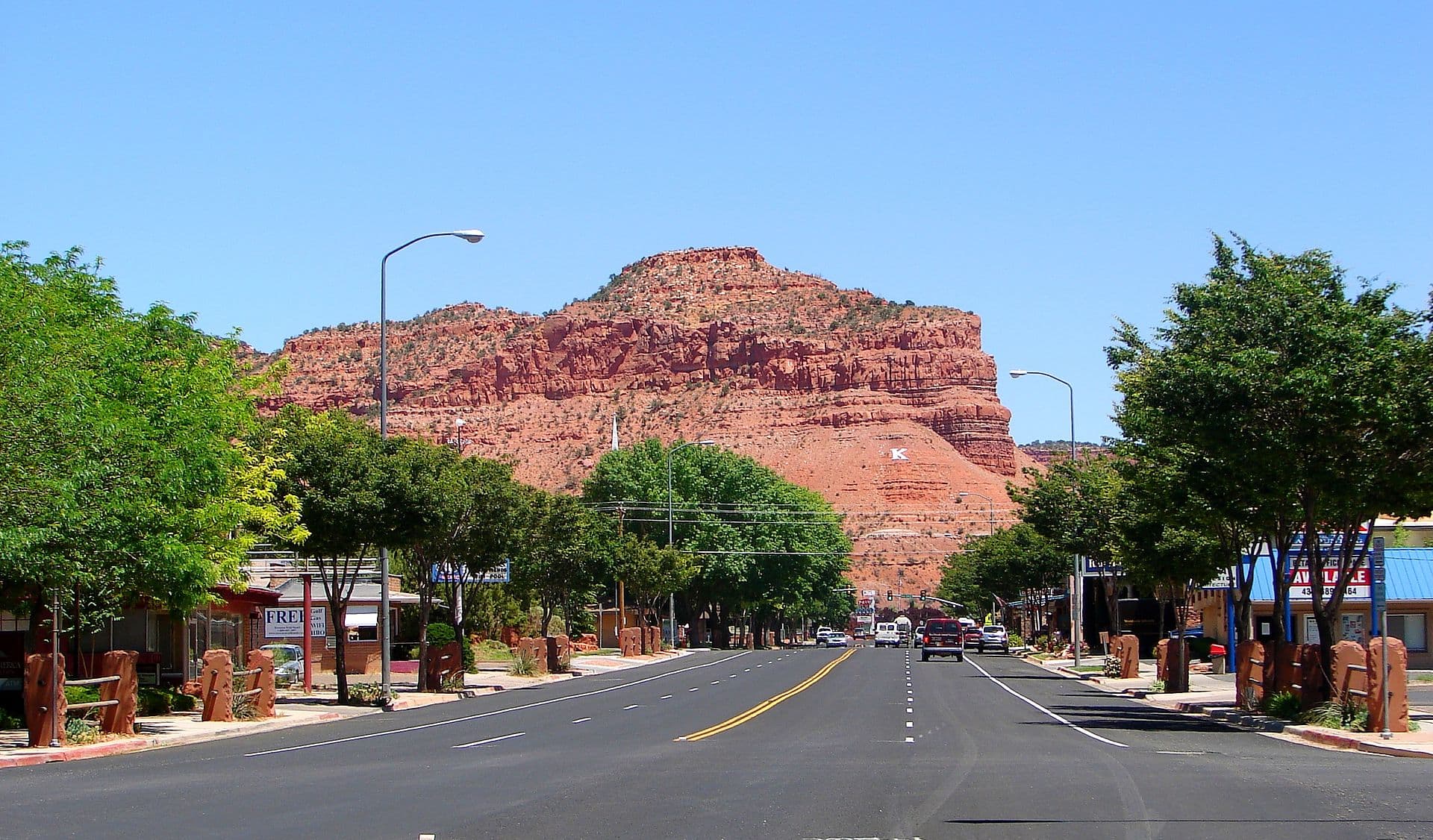
AcheterKanab, Utah, une petite ville près de la frontière de l'Arizona, sert de porte d'entrée captivante vers certaines des merveilles naturelles les plus emblématiques du sud-ouest américain. Affectueusement connue sous le nom de « Little Hollywood » en raison de sa longue histoire en tant que lieu de tournage pour les westerns et d'autres productions, Kanab offre un mélange unique de nostalgie cinématographique et d'aventure en plein air inégalée.
Entourée d'une gamme diversifiée de paysages de roches rouges, y compris des falaises roses corail, de vastes dunes de sable, des formations volcaniques spectaculaires et de profonds canyons à fente, Kanab est un paradis pour les amateurs de plein air. Son emplacement stratégique la place à une courte distance en voiture du parc national de Zion, du parc national de Bryce Canyon et de la rive nord du Grand Canyon, ce qui en fait un camp de base idéal pour explorer la beauté majestueuse de la région.
Au-delà de ses paysages saisissants, Kanab possède un récit culturel fascinant, de ses premiers habitants amérindiens et colons pionniers mormons à son passé politique surprenant et son héritage durable dans l'industrie cinématographique. Les larges rues bordées d'arbres et l'architecture historique de la ville invitent les visiteurs à plonger dans son histoire unique tout en profitant d'une ambiance accueillante de petite ville.
La région aujourd'hui connue sous le nom de Kanab possède une histoire profonde, avec des preuves d'Anciens Puebloens habitant le sud de l'Utah jusqu'au XIIe ou XIIIe siècle. Après cette période, le peuple Paiute du Sud a fait de cette région son foyer. Le nom « Kanab » lui-même est dérivé d'un mot Paiute signifiant « lieu des saules », en référence à l'abondance de saules le long du Kanab Creek.
Les premières tentatives d'Anglo-Américains pour coloniser la région ont commencé en 1858, menées par des pionniers mormons cherchant à établir de nouvelles communautés et à étendre leur influence dans le nord de l'Arizona. Cependant, ces premiers efforts ont rencontré la résistance des tribus amérindiennes, désireuses de protéger leurs terres, ce qui a conduit à une série de tentatives de colonisation infructueuses. Fort Kanab a été construit en 1864 pour la défense et comme base d'exploration, mais il a été abandonné en 1866 après des attaques amérindiennes.
En 1870, dix familles mormones ont réinstallé le fort abandonné, marquant l'établissement officiel de la ville. Brigham Young, le président de l'Église mormone, a visité Kanab deux fois la même année, offrant des conseils et supervisant la planification de la ville. Pendant de nombreuses années, Kanab est restée l'une des villes les plus isolées des États-Unis, accessible uniquement par des chemins de terre accidentés à travers la Bande de l'Arizona.
La fortune de Kanab a commencé à changer au début du XXe siècle, notamment avec l'arrivée de l'industrie cinématographique. En 1924, Tom Mix y a tourné « Deadwood Coach », mettant en valeur les paysages spectaculaires de la région. Les frères Parry, entrepreneurs locaux, ont activement promu Kanab à Hollywood, transformant leur entreprise de guides en une machine de production cinématographique. Ils ont photographié des lieux de tournage potentiels depuis les airs et à cheval, attirant des cinéastes influents. Cette initiative a été particulièrement vitale pendant la Grande Dépression, car la production cinématographique a fourni des revenus indispensables à la communauté d'éleveurs en difficulté.
Kanab a rapidement gagné le surnom de « Little Hollywood », accueillant plus de 100 films et plusieurs centaines d'émissions de télévision, en particulier des westerns, pendant l'âge d'or du cinéma dans les années 1940 et 1950. Les habitants ont activement participé aux productions, travaillant comme figurants, dresseurs d'animaux et fournisseurs, gagnant souvent en une journée ce que leurs autres emplois leur rapportaient en une semaine. L'historique Parry Lodge, construit en 1931, est devenu un choix d'hébergement populaire pour les équipes de tournage et des stars comme John Wayne, Gregory Peck et Ronald Reagan. La ville tenait même un répertoire de casting des habitants, classés par « chaque barbe et chaque blonde », pour la commodité des cinéastes de passage.
Au-delà de sa renommée cinématographique, Kanab occupe une place unique dans l'histoire politique américaine. De 1912 à 1914, la ville a été gouvernée par un conseil municipal et une maire entièrement féminins, une réalisation remarquable pour l'époque. Leur objectif était la sécurité et l'embellissement de la ville. Aujourd'hui, Kanab continue d'attirer les visiteurs par son mélange de beauté naturelle, d'opportunités d'aventure et un lien tangible avec son passé légendaire.
Kanab est un excellent point de départ pour explorer les formations géologiques uniques et les parcs nationaux du sud de l'Utah. À une courte distance en voiture se trouvent le parc national de Zion et le parc national de Bryce Canyon, tous deux offrant des vues imprenables et des possibilités de randonnée. La rive nord du Grand Canyon est également accessible pour une excursion d'une journée.
Plus près de la ville, découvrez les couleurs vives du Coral Pink Sand Dunes State Park, où vous pouvez faire de la randonnée, du tout-terrain ou même essayer le sandboard. Pour des formations rocheuses distinctives, recherchez les Toadstool Hoodoos, une randonnée facile menant à des piliers rocheux en forme de champignons. Le mystérieux Belly of the Dragon, un tunnel de drainage artificiel, offre une opportunité photographique inhabituelle.
Plongez dans le passé cinématographique de Kanab au Little Hollywood Land: Museum & Trading Post, qui présente d'authentiques décors de cinéma. Le Kanab Heritage House Museum, une maison des années 1890 magnifiquement restaurée, offre un aperçu de la vie des pionniers. Pour une expérience vraiment unique, visitez Moqui Cave, une grotte naturelle qui servait autrefois de salle de danse et de bar pour les stars d'Hollywood et abrite maintenant un musée.
Les amateurs d'aventure peuvent explorer de nombreux canyons à fente dans la région, avec des options de visites guidées de canyoning. Pour une expérience vraiment exclusive, tentez votre chance pour obtenir un permis pour The Wave, une formation de grès surréaliste dans le Vermilion Cliffs National Monument. D'autres merveilles géologiques comme The Great Chamber, une immense alcôve de grès avec une dune de sable intérieure, peuvent être explorées, nécessitant souvent un véhicule 4x4 ou une visite guidée.
Kanab offre des expériences agréables toute l'année. Pour les activités par temps chaud comme la randonnée et l'exploration des parcs nationaux, la meilleure période pour visiter est de mi-juin à mi-septembre, bien que les étés puissent être chauds avec des températures moyennes d'environ 33°C. La chaleur sèche, cependant, la rend plus gérable, avec des soirées plus fraîches. Le printemps (mars-mai) et l'automne (septembre-novembre) sont considérés comme des saisons idéales, offrant des températures douces, des brises fraîches et des fleurs sauvages ou un riche feuillage d'automne. L'hiver (novembre-mars) offre une évasion paisible avec moins de foules et des températures douces, en moyenne de 9-13°C pendant la journée. Bien qu'il neige, la neige ne persiste généralement pas, créant un paysage magique saupoudré de neige. Plus de visites sont souvent disponibles pendant les mois d'hiver.
Kanab est située à environ 7 miles au nord de la frontière de l'Arizona sur l'US Alternate 89. Bien qu'elle ait été autrefois l'une des villes les plus isolées, c'est maintenant une destination pittoresque facilement accessible en voiture. La ville a une population d'environ 4 600 à 5 000 habitants. L'économie de Kanab est largement tirée par le tourisme, vous trouverez donc une variété d'options d'hébergement, y compris des motels et des locations de vacances. Les options de restauration vont des cafés locaux aux restaurants proposant diverses cuisines.
De nombreuses attractions naturelles de la région, en particulier les canyons à fente et les sites géologiques isolés, peuvent nécessiter un véhicule 4x4 ou une visite guidée en raison des routes non pavées et des terrains sablonneux. Le service cellulaire peut être limité dans certaines zones reculées, il est donc conseillé de télécharger des cartes et de planifier à l'avance. La rive nord du Grand Canyon a subi des dommages dus à un incendie de forêt et a été fermée pendant toute la saison de voyage 2025 ; consultez le site du NPS pour les informations actuelles.
Kanab en coréen, en chinois ou en hébreu — et dans 29 autres langues, chaque étape narrée par une voix native. La plus large gamme de langues de tous les audioguides autoguidés.
Disponible en :