Springdale Town Park
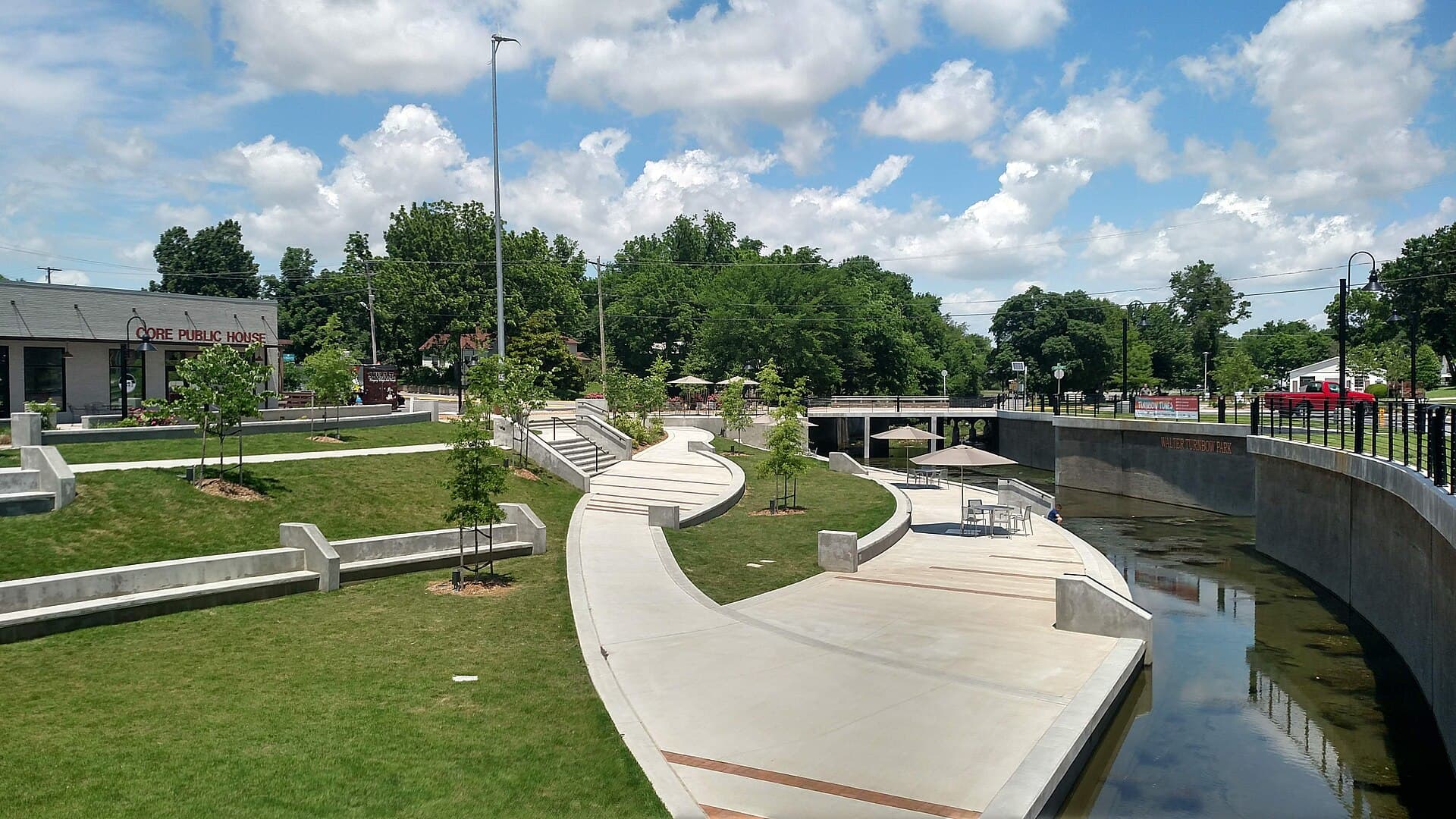
Most visitors to Springdale focus on the grandeur of Zion National Park, often overlooking a local favorite that offers a different kind of outdoor escape.
Full story unlocks in the tour
 Brandonrush / CC0, via Wikimedia Commons
Self-guided audio walking tour of Springdale — GPS route, offline playback, story-driven narration in 32 languages.
“Where towering sandstone cliffs meet the winding Virgin River, Springdale is more than a gateway—it's Zion's embrace.”
Not the postcards. The stories even locals don't know — whispered in your ear, right where they happened.
Most visitors to Springdale focus on the grandeur of Zion National Park, often overlooking a local favorite that offers a different kind of outdoor escape.
For nearly a century, Springdale was a secluded settlement with only one way in and out of the canyon, making it a truly isolated community.
While the dramatic rock formations capture most of the attention in Springdale, a quieter, constant presence has shaped the landscape and the town's very existence.
Discover every secret of Springdale
Every address, every reveal in full — in your ear, right where it happened.
You pick your stops. You walk. The voice reveals what the others miss.


Your self-guided audio tour of Springdale is ready — pick your landmarks, choose your language, and start the moment you arrive.
BuyLume has a built-in augmented-reality guide. Hold your phone up and its camera shows the street ahead of you, with a glowing arrow laid over the real view that always points to your next stop — no map to puzzle over, no wrong turns. Like everything in Lume, it works fully offline.
Springdale, Utah, is a compact town with a population of around 500 residents, serving as the primary entry point to Zion National Park. Situated in Washington County, Springdale sits directly at the mouth of Zion Canyon, with towering red, white, and pink striped cliffs defining its dramatic landscape. The North Fork Virgin River courses through the town, contributing to the verdant environment that contrasts with the surrounding desert. This unique geographical position places Springdale at the western edge of the Colorado Plateau, in a transition zone between the plateau, the Great Basin, and the Mojave Desert.
More than just a convenient base for park visitors, Springdale offers a walkable and relaxed atmosphere where cafes, galleries, and shops blend seamlessly with the natural beauty. The town's main thoroughfare, Zion Park Boulevard, provides immediate access to local amenities and sweeping views, making it feel like an extension of the park itself. Its closeness to Zion National Park, often described as one of the most beautiful places in the country, makes Springdale an ideal destination for those seeking both adventure and tranquility amidst remarkable scenery.
The history of Springdale stretches back to ancient times, with archaeological evidence indicating that basket-making people inhabited the Zion Canyon region as early as 500 A.D. Later, the Ancestral Puebloans lived in the area until approximately 1200 A.D., leaving behind rock writings and remnants of their homes and tools. By the 18th and 19th centuries, the Paiute Indians occupied the region, utilizing the Virgin River for growing crops.
European exploration of the region began in 1776 with the Dominguez-Escalante party, who crossed the Virgin River near present-day La Verkin. However, the permanent settlement of Springdale by Mormon pioneers began in 1862. Brigham Young, then President of the Church of Jesus Christ of Latter-Day Saints, called for the establishment of a Cotton Mission in Southern Utah. A group of these pioneers settled at the mouth of the canyon where Springdale now stands. Local lore suggests that Albert Petty, one of the first Mormon settlers, chose a spot near natural springs for his home, and his wife named the location "Springdale."
The town site was surveyed in 1863. Initially, Springdale was a branch of the larger, more developed community of Rockville, a few miles to the west. For many years, Springdale settlers traveled to Rockville for shopping, church services, and to send and receive messages. It wasn't until around 1885 that Springdale constructed its first public building, which served as both a school and a church, and the first post office opened in 1897. Early houses were rudimentary, often built with logs or willows from the river and sealed with mud, reflecting the challenges of frontier life.
Springdale remained a quiet agricultural settlement until the early 20th century. Improved roads brought the first automobile to Springdale around 1912, and by 1917, tourists from as far as Salt Lake City were visiting. The dedication of Mukuntuweap National Monument (later Zion National Park) on September 15, 1919, marked a turning point. However, Springdale remained relatively isolated until the construction of the Zion-Mount Carmel Highway and Tunnel in 1930. This mile-long tunnel, carved through solid sandstone, opened up access to the park from the east, bringing the world to Springdale's doorstep. The town was incorporated as a municipality in 1959, as residents recognized the need for local government to manage its growing tourist economy. While modern structures now cater to the bustling tourism, many core values and architectural features, such as native sandstone, still reflect its pioneer past.
In 1992, a significant earthquake in St. George caused approximately $1 million in damage to Springdale, destroying three houses and affecting utilities. A large landslide in the Balanced Rock Hills area also covered part of Utah State Route 9, requiring several hours to clear. Today, Springdale continues to thrive as a tourist center, with a 2020 population of 514, growing to an estimated 621 by 2026.
Springdale acts as the southern entry point to Zion National Park, offering direct access to its iconic landscapes. You can stroll along the Pa'rus Trail, a paved path that follows the Virgin River, offering sweeping views and connecting Springdale directly to the park entrance. This trail is also accessible for bicycles. For a different perspective, consider renting an e-bike to explore the Zion Canyon Scenic Drive at your own pace, enjoying the sandstone walls and desert breeze.
Beyond the park entrance, Springdale itself provides a charming array of activities. Wander down Zion Park Boulevard to explore local art galleries, gift shops, and cafes. The Bumbleberry Gift Shop offers treats and souvenirs, while Hoodoos General Store provides outdoor gear and local goods. For those interested in geology, Zion Prospector and Zion Rock & Highlight showcase fossils, minerals, and stone specimens. The town also hosts live music events and festivals during warmer months.
Dining options in Springdale are diverse, ranging from casual eateries to upscale bistros. Enjoy Tex-Mex at Oscar's Cafe, American comfort food at Camp Outpost, or a fine dining experience at King's Landing Bistro. Many restaurants offer outdoor seating with incredible views of Zion National Park. Don't miss the opportunity for stargazing, as Springdale's dark-sky protections and Zion's efforts create ideal conditions for viewing constellations from canyon viewpoints or riverbanks.
Just four miles outside Springdale lies Grafton, a historic ghost town established in 1859. You can explore its abandoned buildings and learn about its compelling past.
The ideal times to visit Springdale and Zion National Park for mild weather and comfortable hiking conditions are during the spring (March to May) and fall (September to October). In spring, daytime temperatures are in the 70s°F (21-26°C), with wildflowers blooming and trails like The Narrows reopening. Fall offers similarly mild weather, fewer crowds, and the added beauty of canyon colors, with highs ranging from 64–79°F (18-26°C) and lows between 37–48°F (3-9°C).
Summer (June to August) brings high temperatures, often exceeding 100°F (38°C), and can include monsoon storms that increase the risk of flash floods in canyons. Winter (December to February) is quieter with fewer crowds and cooler temperatures, though some higher trails may have snow and ice. Daily temperature swings of 30°F (17°C) or more are common year-round.
Springdale is designed for easy navigation, with a free town shuttle service that stops at nine locations along Zion Park Boulevard. This shuttle connects directly to the Zion National Park Pedestrian/Bike Entrance, where you can then transfer to the Zion Canyon Line shuttle to access trailheads and viewpoints within the park. The park shuttle is required for accessing most of Zion Canyon Scenic Drive during its operational season. Both town and park shuttles are free to use.
Entrance to Zion National Park costs $35 per private vehicle, valid for seven days, or $20 per person for those entering on foot or bicycle. An $80 America the Beautiful Annual Pass covers entrance to all federal recreation sites for one year, a good option if you plan to visit multiple national parks. Permits are required for certain popular hikes like Angels Landing and The Narrows (top-down), as well as for backcountry camping and canyoneering routes.
Springdale offers a variety of lodging options, including hotels, inns, and lodges such as Desert Pearl Inn, Cable Mountain Lodge, and Cliffrose Springdale. Many accommodations provide sweeping canyon views. Dining options range from casual cafes to upscale restaurants, with many offering locally sourced ingredients and Southwestern cuisine.
Springdale in Korean, in Chinese or in Hebrew — and 29 more languages, every stop narrated by a native voice. The widest language range of any self-guided audio tour.
Available in: