Taberna Wyman
Esta modesta taberna del siglo XVIII desempeñó un papel fundamental en la génesis del Dartmouth College y la Revolución Americana.
La historia completa se desbloquea en el tour
 Jon Platek / CC BY-SA 3.0, via Wikimedia Commons
Tour de audio autoguiado de Keene — ruta GPS a pie, reproducción offline, narración en 32 idiomas.
“Más allá de la cosecha otoñal, una ciudad de Nueva Inglaterra con historias arraigadas y giros inesperados.”
No las postales. Las historias que ni los locales conocen — al oído, justo donde ocurrieron.
Esta modesta taberna del siglo XVIII desempeñó un papel fundamental en la génesis del Dartmouth College y la Revolución Americana.
Antes de la llegada de los colonos europeos, este valle fluvial albergaba una de las habitaciones conocidas más antiguas de Nueva Inglaterra.
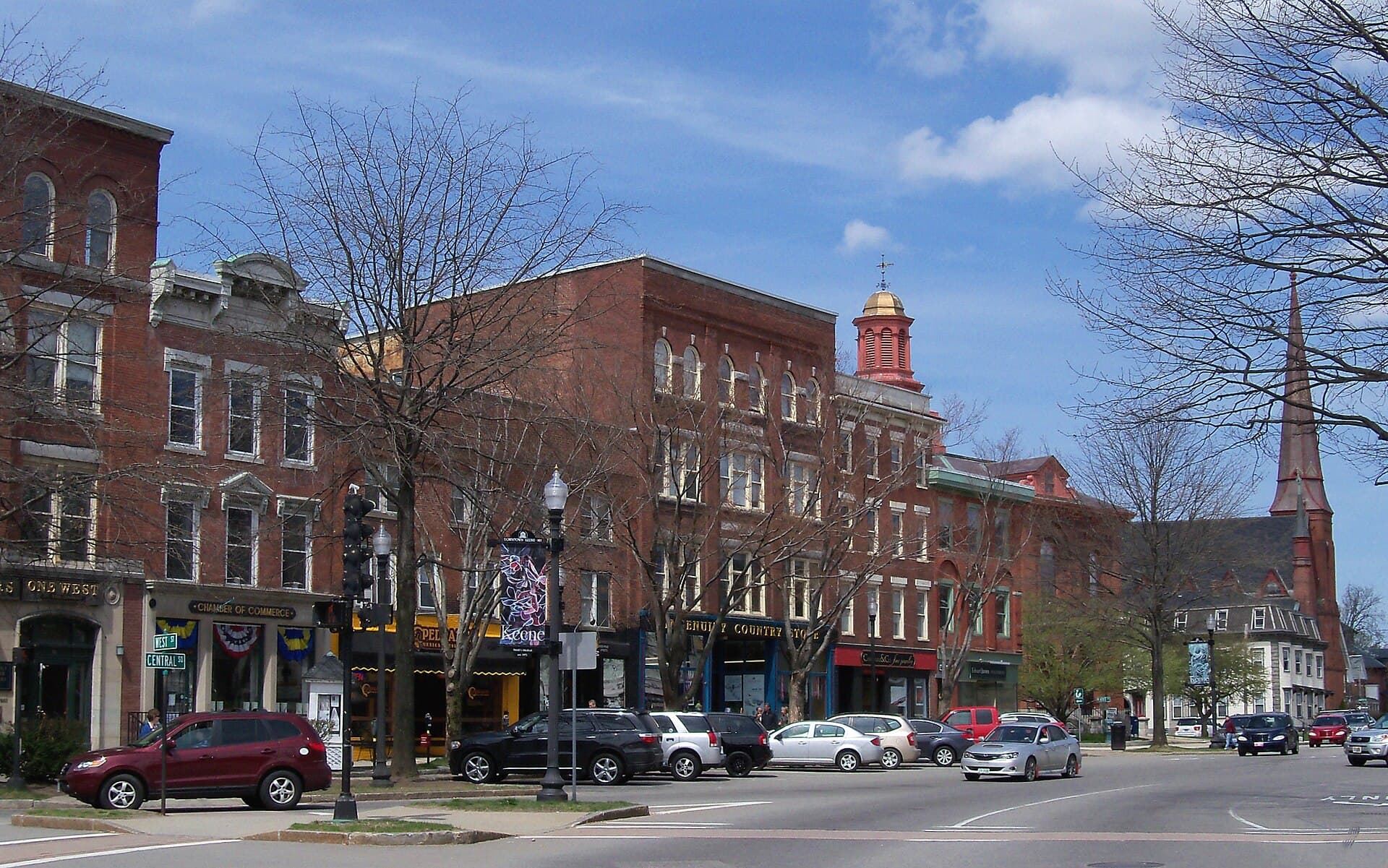
La famosa y expansiva Main Street de Keene alguna vez sirvió para propósitos mucho más allá de los desfiles y el tránsito diario.
Descubre todos los secretos de Keene
Cada dirección, cada revelación al completo — a tu oído, justo donde ocurrió.
Eliges tus paradas. Caminas. La voz te revela lo que los demás ignoran.
Tu tour de audioguía por Keene te espera — elige tus lugares, tu idioma y empieza al llegar.
ComprarKeene, New Hampshire, es una ciudad donde los ecos de la gracia colonial se encuentran con un espíritu contemporáneo vibrante. Situada en el suroeste del estado, sirve como sede del condado de Cheshire y un punto focal tanto para el aprendizaje como para la cultura. La ciudad se define por su excepcionalmente amplia Main Street, bordeada de venerables estructuras de ladrillo que ahora albergan una diversa variedad de tiendas y restaurantes, dotando al centro de un carácter distintivamente transitable y acogedor.
Más allá de su atractivo arquitectónico, Keene está profundamente conectada con el esplendor natural de la Región de Monadnock, con el río Ashuelot serpenteando a través de su paisaje y las colinas circundantes dando forma a sus contornos. Es un lugar que ha preservado cuidadosamente su integridad histórica mientras nutre una animada escena artística y un profundo sentido de comunidad.
Ya sea atraído por su arquitectura georgiana bien conservada, su pasado como centro industrial y ferroviario, o su más reciente renombre como antigua anfitriona de una celebración de calabazas que batió récords, Keene ofrece una fusión de historia, actividades al aire libre y encuentros culturales que la establecen como un destino distintivo de Nueva Inglaterra.
## De Puesto Fronterizo a Corazón Industrial La narrativa de Keene comienza en 1735, cuando el gobernador colonial Jonathan Belcher la concedió como 'Upper Ashuelot'. Concebida como una ciudad fortificada, funcionó como un baluarte protector durante las Guerras Francesa e India. El asentamiento inicial encontró dificultades, incluyendo un asalto de los pueblos nativos en 1747 durante la Guerra del Rey Jorge, que resultó en que el pueblo fuera consumido por el fuego y los colonos huyeran antes de regresar para reconstruir en 1749. En 1753, el gobernador Benning Wentworth volvió a conceder la ciudad, otorgándole el nombre de 'Keene' en homenaje a Sir Benjamin Keene, un ministro inglés y asociado de Wentworth en el comercio de las Indias Occidentales españolas.
La posición central de Keene dentro del condado de Cheshire la estableció rápidamente como un nexo para el comercio. El río Ashuelot proporcionó la energía hidráulica esencial, lo que llevó al establecimiento de numerosos molinos, principalmente aserraderos, desde la década de 1730 en adelante. Las primeras industrias incluyeron molinos harineros, batanes y curtidurías. Para el siglo XIX, Keene evolucionó hacia un importante centro de fabricación, reconocido por artículos de madera, sillas, ventanas, puertas, cerámica, vidrio y zapatos, junto con una fábrica de ladrillos y una fundición de metales.
La llegada del Ferrocarril de Cheshire en 1848 marcó un momento decisivo, conectando Keene con los mercados de Boston e impulsando una mayor expansión industrial. Para 1890, Keene se había convertido en un centro ferroviario regional con conexiones que se extendían a Massachusetts, Vermont y Nueva York. El ferrocarril trajo prosperidad, pero también un trabajo intenso, ya que los inmigrantes irlandeses soportaron condiciones brutales construyendo las líneas. La ciudad se incorporó oficialmente en 1874, con su población aumentando a 6,784 en 1880. Si bien la actividad manufacturera disminuyó en el siglo XX, particularmente durante la Gran Depresión, Keene se adaptó, llegando a ser conocida por los seguros, la educación y el turismo, todo ello mientras salvaguardaba muchas de sus hermosas estructuras victorianas y georgianas.
Comience su viaje en Central Square, el corazón del centro de Keene, reconocido por su amplia calle principal y su arquitectura perdurable. Muchas estructuras del siglo XVIII persisten, incluyendo la Wyman Tavern, erigida en 1762, que sirvió como lugar de reunión para los fideicomisarios del Dartmouth College y los milicianos de la Guerra de Independencia; ahora funciona como una casa museo. Pasee por las calles para admirar la impresionante colección de edificios georgianos y bloques comerciales intrincadamente adornados.
Para una visión del pasado industrial de Keene, explore el Cheshire Recreational Rail Trail. Este pintoresco sendero de 42 millas sigue la ruta del antiguo Ferrocarril de Cheshire, que fue fundamental en el desarrollo de la ciudad. A lo largo del sendero, especialmente cerca de Railroad Street, puede observar marcadores históricos que detallan las industrias de Keene posteriores a la Guerra Civil, incluyendo lanas, bicicletas, zapatos, muebles y platería, y presenciar cómo los antiguos edificios de fábricas han sido remodelados. La Historical Society of Cheshire County ofrece una inmersión más profunda en la historia local, incluyendo la narrativa del ferrocarril y su profunda influencia.
Keene también presenta atracciones culturales como The Colonial Theatre, un lugar bellamente restaurado que alberga conciertos y espectáculos. Para los entusiastas del arte, la Thorne Sagendorph Art Gallery en Keene State College exhibe diversas exposiciones. Aquellos que aprecian la naturaleza pueden visitar Stonewall Farm, una granja orgánica en funcionamiento con senderos, o explorar el cercano Madame Sherri Forest para hacer senderismo, que incluye los restos del Castillo de Madame Sherri. El propio río Ashuelot es una característica natural significativa, que ofrece oportunidades para la contemplación tranquila y una conexión con el pasado antiguo de la región.
El período ideal para experimentar Keene para actividades y exploraciones de clima cálido se extiende desde finales de junio hasta principios de septiembre. Durante estos meses, las temperaturas son agradables, con máximas promedio que alcanzan alrededor de 27°C en julio. Para una espectacular exhibición de follaje otoñal, planifique su viaje para la primera semana de octubre, con los colores pico a menudo apareciendo alrededor del 5 o 6 de octubre, cuando los arces, abedules y robles transforman el paisaje en un brillante espectáculo. Los inviernos en Keene pueden ser severos, con nevadas considerables, lo que hace que finales de primavera a principios de otoño sea la temporada preferida para la mayoría de los visitantes.
Keene es eminentemente transitable, con aceras en cada calle, lo que simplifica la exploración del centro a pie. Numerosas carreteras estatales convergen en Keene, proporcionando un acceso conveniente a otras ciudades y regiones, incluyendo Concord y Manchester. Una carretera de circunvalación ayuda a gestionar el tráfico alrededor del bullicioso centro. La ciudad es el hogar de Keene State College y Antioch University New England, lo que contribuye a una animada atmósfera de ciudad universitaria. Las opciones de alojamiento van desde hoteles hasta posadas locales, y es aconsejable reservar con antelación, particularmente durante el apogeo de la temporada de follaje. La ciudad ofrece una variada selección de restaurantes, desde establecimientos informales hasta cocinas internacionales.
Keene en coreano, en chino o en hebreo — y 29 idiomas más, cada parada narrada por una voz nativa. La mayor variedad de idiomas de cualquier audioguía autoguiada.
Disponible en: