Basilique Saint-Laurent
Sous la grandeur baroque ornée de la basilique Saint-Laurent se cache un secret qui précède ses fondations chrétiennes.
L'histoire complète se débloque dans le tour
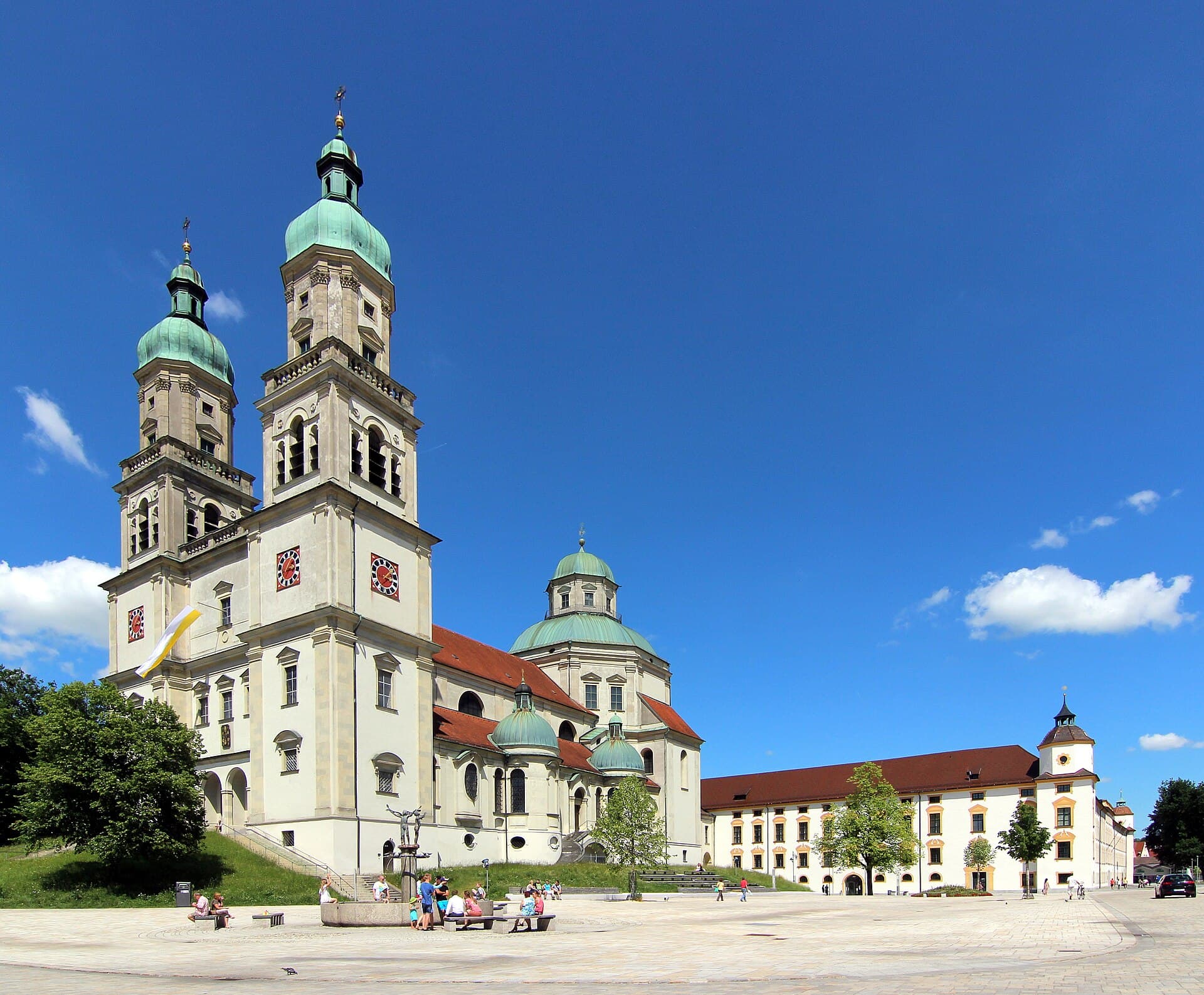 Hilarmont / CC BY-SA 3.0 de, via Wikimedia Commons
Visite audio autoguidée de Kempten — parcours GPS à pied, lecture hors ligne, narration en 32 langues.
“Là où les fondations romaines rencontrent la splendeur baroque au cœur de l'Allgäu.”
Pas les cartes postales. Les histoires que même les habitants ignorent — soufflées à l'oreille, là où elles se sont passées.
Sous la grandeur baroque ornée de la basilique Saint-Laurent se cache un secret qui précède ses fondations chrétiennes.
Les somptueuses salles d'apparat de la Residenz Kempten, avec leur splendeur rococo, réservent une curieuse directive aux visiteurs.
Au parc archéologique de Cambodunum, vous pouvez vous promener à travers les vestiges d'une ville romaine, mais une découverte particulière met en lumière la vie domestique de ses anciens habitants.
Découvrez tous les secrets de Kempten
Chaque adresse, chaque révélation en entier — dans ton oreille, là où elle s'est passée.
Tu choisis tes lieux. Tu marches. La voix te révèle ce que les autres ignorent.


Votre visite audioguidée de Kempten vous attend — choisissez vos lieux, votre langue, et lancez-vous dès votre arrivée.
AcheterLume intègre un guide en réalité augmentée. Levez votre téléphone : sa caméra montre la rue devant vous, avec une flèche lumineuse posée sur l'image réelle qui pointe toujours vers votre prochain arrêt — aucune carte à déchiffrer, aucun mauvais virage. Comme tout dans Lume, ça fonctionne entièrement hors-ligne.
Kempten, située dans la région de l'Allgäu en Bavière, est l'une des plus anciennes agglomérations urbaines d'Allemagne, avec une histoire documentée de plus de 2 000 ans. Cette ville attrayante offre un mélange fascinant de patrimoine romain, d'élégance baroque et de vie bavaroise moderne. C'est un endroit où des ruelles sinueuses mènent à d'importants sites historiques, et où les contreforts alpins environnants offrent un cadre naturel.
Souvent appelée la « métropole de l'Allgäu », Kempten est un centre culturel et économique pour la région. Les voyageurs peuvent explorer une histoire stratifiée, des ruines romaines du parc archéologique de Cambodunum à la magnificence de la basilique Saint-Laurent et de la Residenz Kempten. Au-delà de son importance historique, Kempten offre une atmosphère animée avec des marchés, des festivals et un esprit accueillant, invitant à la découverte de son caractère unique.
## D'établissement celtique à capitale romaine Les origines de Kempten remontent à un établissement celtique connu sous le nom de Kambodounon, mentionné par le géographe grec Strabon vers 50 av. J.-C., ce qui en fait l'une des plus anciennes références écrites à une ville allemande. Vers 15 av. J.-C., les troupes romaines conquirent la région, établissant la ville romaine de Cambodunum. Cet établissement romain se développa considérablement, devenant la capitale de la province romaine de Rhétie au 1er siècle après J.-C. Le parc archéologique de Cambodunum préserve et présente aujourd'hui ces racines romaines, avec des vestiges fouillés d'un forum, d'une basilique et de thermes.
## La ville divisée : Monastère contre ville impériale Après le départ des Romains, l'histoire médiévale précoce de Kempten reste quelque peu obscurcie. Cependant, on sait que des moines bénédictins arrivèrent au 8e siècle, établissant un monastère qui deviendrait le premier de la région de l'Allgäu. Pendant des siècles, Kempten fut une « ville double rivale », divisée entre la ville monastique catholique dirigée par un prince-abbé et une ville impériale libre fidèle à la foi protestante. Cette division unique a façonné le développement de la ville, conduisant à des styles architecturaux distincts — gothique dans la vieille ville et baroque dans la ville haute, monastique.
## Splendeur baroque et unité moderne La guerre de Trente Ans apporta la destruction à Kempten, le monastère et l'église étant pillés et détruits en 1632. Cependant, une période de reconstruction suivit, avec le prince-abbé Roman Giel von Gielsberg commandant la construction d'un nouveau monastère et d'une résidence en 1651, aux côtés de la basilique Saint-Laurent. Cela marqua la création du premier complexe monastique baroque monumental d'Allemagne. Les deux villes rivales furent finalement unifiées sous la direction bavaroise en 1818, conduisant à l'harmonieuse Kempten que l'on voit aujourd'hui. La ville continue de célébrer son passé stratifié, avec des musées et des sites archéologiques donnant vie à ses 2 000 ans d'histoire.
Commencez votre exploration au Parc Archéologique de Cambodunum (APC), un musée en plein air présentant les vestiges de la ville romaine de Cambodunum. Ici, vous pouvez vous promener à travers un quartier de temples gallo-romains reconstitué, explorer les petits thermes et voir les fondations du forum et de la basilique. Des expositions interactives et une application multimédia enrichissent l'expérience, offrant un aperçu de la vie quotidienne romaine.
Ensuite, visitez la Basilique Saint-Laurent, un monument éminent et un chef-d'œuvre de l'architecture baroque précoce. Sa façade imposante à double tour et son puissant dôme dominent le paysage urbain, tandis que l'intérieur éblouit avec des stucs ornés, des fresques d'Andreas Asper et des autels dorés. Adjacente à la basilique se trouve la Residenz Kempten, l'ancienne résidence princière des princes-abbés. Faites une visite guidée de ses salles d'apparat pour admirer les somptueux intérieurs rococo, y compris la magnifique Salle du Trône.
Promenez-vous sur la Rathausplatz, la place principale historique, où l'Hôtel de Ville médiéval témoigne du passé de Kempten en tant que ville impériale libre. À proximité, la Salle d'exposition de la Chapelle Erasmus offre une exposition archéologique souterraine captivante, révélant les couches du Kempten médiéval. Pour des vues imprenables sur la ville et les Alpes environnantes, envisagez une visite à la Burghalde, une ancienne ruine qui faisait autrefois partie des fortifications de la ville.
La meilleure période pour visiter Kempten pour les activités par temps chaud est de fin juin à fin août, lorsque les températures diurnes moyennes sont d'environ 21-22°C. Le printemps au début de l'automne (avril-octobre) offre généralement un temps agréable pour explorer les marchés et les festivals. Bien que juillet soit le mois le plus chaud, il connaît également les précipitations les plus élevées. L'hiver (décembre à février) apporte des températures plus froides, en moyenne autour de 0-3°C, créant un cadre pittoresque pour les marchés de Noël et les paysages enneigés.
Kempten est facilement accessible en train, avec des liaisons directes depuis des villes comme Munich et Augsbourg. Le centre-ville est en grande partie piétonnier, ce qui facilite l'exploration des principales attractions à pied. Pour ceux qui envisagent de s'aventurer plus loin dans la région de l'Allgäu ou les Alpes voisines, avoir une voiture offre une plus grande flexibilité. Les transports en commun à Kempten sont efficaces.
Les options d'hébergement vont du budget au milieu de gamme, avec des hôtels près de la zone piétonne ou autour des places St. Mang et Hildegard offrant un accès pratique aux sites et aux restaurants. La cuisine locale propose des plats souabes copieux, avec un accent sur les ingrédients frais et régionaux. Ne manquez pas de goûter les Allgäuer Kässpatzen (nouilles au fromage) et les fromages locaux. La ville possède également une université, contribuant à une scène culturelle et culinaire dynamique.
Kempten en coréen, en chinois ou en hébreu — et dans 29 autres langues, chaque étape narrée par une voix native. La plus large gamme de langues de tous les audioguides autoguidés.
Disponible en :