Wat Thung Setthi
Ce temple moderne se distingue par sa façade blanche éclatante et ses accents dorés, mais la véritable surprise se révèle à l'intérieur.
L'histoire complète se débloque dans le tour
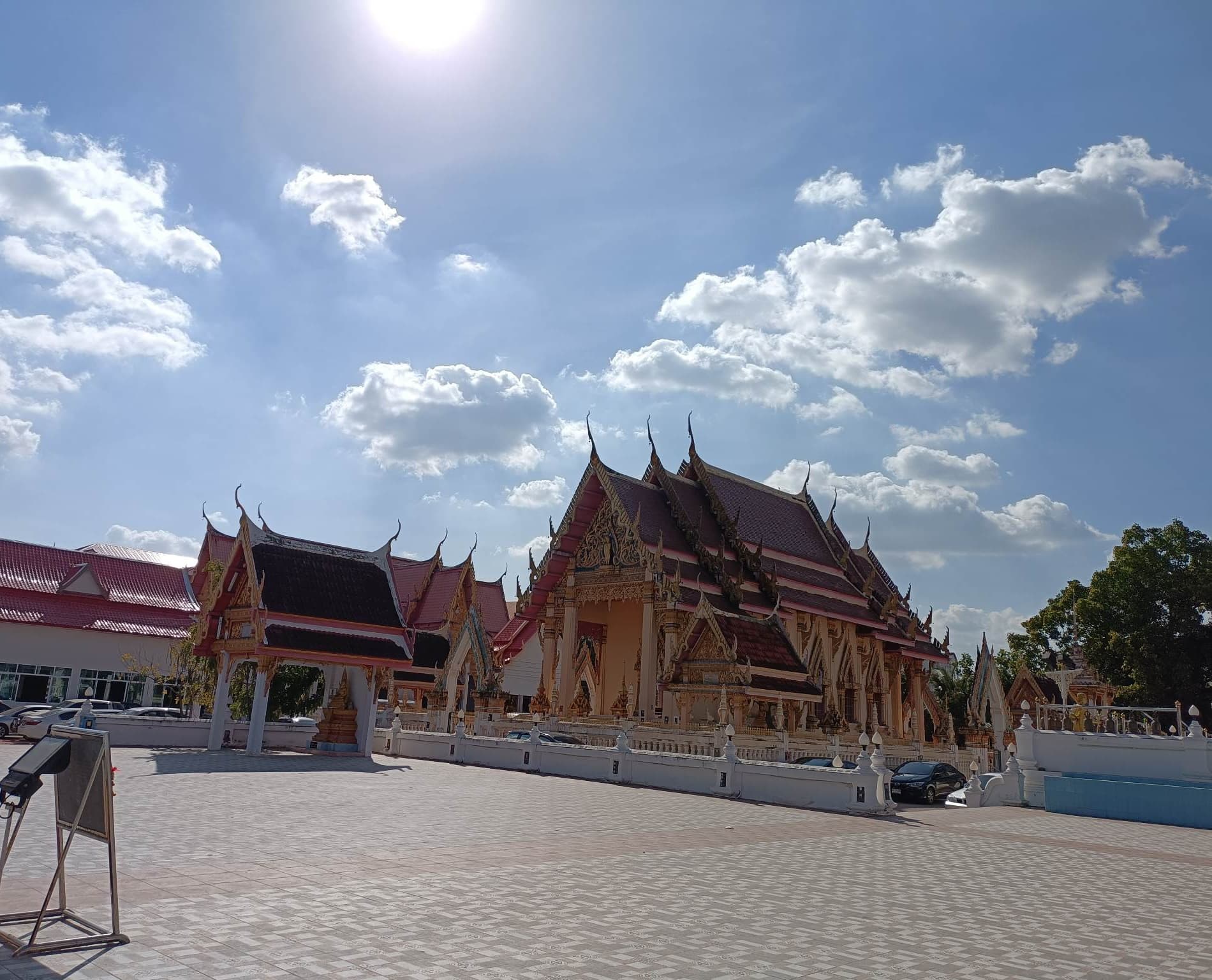 SiamAtlas / CC BY-SA 4.0, via Wikimedia Commons
Visite audio autoguidée de Khon Kaen — parcours GPS à pied, lecture hors ligne, narration en 32 langues.
“Khon Kaen : Là où les échos anciens rencontrent les rythmes modernes au cœur de l'Isan thaïlandais.”
Pas les cartes postales. Les histoires que même les habitants ignorent — soufflées à l'oreille, là où elles se sont passées.
Ce temple moderne se distingue par sa façade blanche éclatante et ses accents dorés, mais la véritable surprise se révèle à l'intérieur.
Ce vaste lac artificiel constitue le cœur de la vie quotidienne de Khon Kaen, pourtant ses origines sont plus pratiques que pittoresques.
This expansive, man-made lake forms the heart of Khon Kaen's daily life, yet its origins are more practical than picturesque.
Découvrez tous les secrets de Khon Kaen
Chaque adresse, chaque révélation en entier — dans ton oreille, là où elle s'est passée.
Tu choisis tes lieux. Tu marches. La voix te révèle ce que les autres ignorent.


Votre visite audioguidée de Khon Kaen vous attend — choisissez vos lieux, votre langue, et lancez-vous dès votre arrivée.
AcheterLume intègre un guide en réalité augmentée. Levez votre téléphone : sa caméra montre la rue devant vous, avec une flèche lumineuse posée sur l'image réelle qui pointe toujours vers votre prochain arrêt — aucune carte à déchiffrer, aucun mauvais virage. Comme tout dans Lume, ça fonctionne entièrement hors-ligne.
Khon Kaen, l'une des quatre principales villes de la région de l'Isan en Thaïlande, offre une expérience distincte des destinations les plus fréquemment visitées du pays. Elle fonctionne comme un centre économique et éducatif important, mêlant une énergie jeune à une identité culturelle profondément enracinée. Bien que n'étant pas une destination première pour les primo-visiteurs en Thaïlande, Khon Kaen offre un aperçu authentique de la vie thaïlandaise locale, à l'abri des foules de touristes. L'atmosphère de la ville est un mélange réfléchi de marchés traditionnels, de temples sereins et de développements contemporains, reflétant son rôle de centre régional en pleine croissance.
Située à environ 440 kilomètres au nord-est de Bangkok, Khon Kaen occupe une place stratégique en tant que porte d'entrée vers l'Indochine, soutenue par d'excellentes liaisons de transport. C'est une ville qui surprend souvent par son mélange particulier d'histoire, notamment ses liens avec les dinosaures préhistoriques, et son industrie florissante de la soie. Les visiteurs peuvent flâner dans les marchés nocturnes animés, admirer l'architecture complexe des temples et plonger dans le passé de la région dans des musées bien organisés, tout en découvrant l'hospitalité authentique du peuple Isan.
L'histoire enregistrée de Khon Kaen en tant que ville officielle a commencé en 1783 sous le règne du roi Rama I, lorsqu'un groupe de colons du Laos, dirigé par Thao Phia Mueang Phaen, a établi une colonie près de ce qui est aujourd'hui le lac Bueng Kaen Nakhon. Le roi Rama I a officiellement reconnu cette nouvelle colonie, accordant à son chef le titre de souverain et consolidant la place de Khon Kaen sur la carte du royaume. Cependant, les preuves archéologiques indiquent que l'histoire de la région remonte beaucoup plus loin, avec une occupation humaine datant de mille ans plus tôt pendant la période Dvaravati. Cette présence préhistorique est encore soulignée par la découverte de fossiles de dinosaures, suggérant un passé profond et ancien bien avant l'établissement humain.
Tout au long de sa première période, l'économie de Khon Kaen était principalement agraire, centrée sur la culture du riz gluant et la pêche en eau douce. L'identité culturelle de la ville a été considérablement façonnée par les traditions laotiennes, y compris l'artisanat durable de la production de soie Mudmee, qui est devenu une marque de fabrique de l'économie et de la culture locales. En 1879, après plusieurs délocalisations, la ville a été établie de manière permanente sur son site actuel. En 1897, lors des réformes administratives du Siam, Khon Kaen est devenue le centre administratif des territoires environnants.
L'achèvement d'une ligne de chemin de fer reliant Khon Kaen à Bangkok en 1933 a ouvert la région à un commerce accru, et en 1935, la ville a obtenu le statut officiel de municipalité, marquant le début de son urbanisation moderne. L'aménagement contemporain de la ville, caractérisé par un quadrillage clair et de larges avenues, est en grande partie le résultat d'une planification centralisée mise en œuvre pendant le Plan national de développement économique dans les années 1960. Le développement de Khon Kaen a été stratégiquement favorisé par sa position géographique au cœur du plateau de Khorat, ce qui en a fait un carrefour naturel et un centre vital pour la région de l'Isan. Aujourd'hui, elle est reconnue comme un centre commercial et éducatif majeur, abritant l'Université de Khon Kaen, et un acteur clé dans l'industrie thaïlandaise des MICE (Réunions, Incentives, Conférences et Expositions).
Commencez votre exploration au lac Bueng Kaen Nakhon, une caractéristique centrale de la ville où les habitants se rassemblent pour les loisirs. Promenez-vous le long de ses rives, visitez les sanctuaires et temples environnants, et peut-être dégustez de la cuisine de rue au petit marché nocturne qui s'y installe quotidiennement. Surplombant le lac se trouve le Phra Mahathat Kaen Nakhon, également connu sous le nom de Wat Nong Wang. Cet impressionnant chedi de neuf étages offre une vue imprenable sur la ville depuis ses étages supérieurs et abrite des expositions liées au bouddhisme.
Pour une plongée plus profonde dans le passé de la région, le Musée national de Khon Kaen présente des artefacts de la préhistoire à l'époque moderne, offrant un aperçu de l'histoire et de la culture de l'Isan. Un autre site culturel unique est le Wat Thung Setthi, un temple moderne connu pour sa façade blanche étincelante et son architecture distinctive, mélangeant les styles thaïlandais contemporains et classiques.
Au-delà du centre-ville, envisagez une excursion au Parc national de Phu Wiang, à environ 80 kilomètres au nord-ouest de Khon Kaen. Ce parc est réputé pour ses sites de fouilles de dinosaures, et le Musée des dinosaures de Phu Wiang fournit des informations et des expositions complètes sur les fossiles de dinosaures découverts dans la région. Pour un avant-goût de la vie et de la cuisine locales, le marché de Ton Tann est un bazar nocturne animé avec de nombreux stands de nourriture, des boutiques locales et de la musique live.
La période la plus agréable pour visiter Khon Kaen est pendant la saison fraîche et sèche, qui s'étend de novembre à février. Pendant ces mois, les températures sont confortables, variant généralement entre 20 et 30 degrés Celsius (68-86°F), avec une humidité plus faible et un ciel dégagé. Cette période est idéale pour les activités de plein air et l'exploration des attractions de la ville. La saison des pluies, de juin à octobre, apporte des paysages verdoyants mais aussi des averses quotidiennes, tandis que la saison chaude (mars à mai) peut voir les températures atteindre jusqu'à 40 degrés Celsius (104°F), rendant les excursions en extérieur moins confortables.
Se rendre à Khon Kaen est simple, avec des vols directs depuis Bangkok prenant moins d'une heure. La ville est également un arrêt sur la ligne de chemin de fer reliant Bangkok à Nong Khai et au Laos. Une fois à Khon Kaen, les options de transport incluent les tuk-tuks pour les courtes distances, les songthaews (camionnettes partagées) pour les trajets plus longs, et les taxis. Louer un vélo ou une moto offre plus de liberté pour l'exploration, bien que la circulation puisse être dense. Lors de la visite des temples, une tenue respectueuse couvrant les épaules et les genoux est exigée. Bien que l'eau du robinet soit traitée, la plupart des habitants boivent de l'eau en bouteille, ce qui est conseillé aux visiteurs. Pour rester connecté, le Wi-Fi est largement disponible dans les hôtels et les cafés, et les cartes SIM locales ou les eSIM sont des options pratiques.
Khon Kaen en coréen, en chinois ou en hébreu — et dans 29 autres langues, chaque étape narrée par une voix native. La plus large gamme de langues de tous les audioguides autoguidés.
Disponible en :