Centre de tissage de la soie de Ban Tha Sawang
Certaines des soies les plus exquises de Thaïlande sont tissées ici, mais la complexité de leur création est presque incroyable.
L'histoire complète se débloque dans le tour
 JJ Harrison (https://www.jjharrison.com.au/) / cc by 3.0, via Wikimedia Commons
Visite audio autoguidée de Surin — parcours GPS à pied, lecture hors ligne, narration en 32 langues.
“Au-delà des éléphants, un rythme plus profond de soie ancienne, d'échos khmers et de vie isaan.”
Pas les cartes postales. Les histoires que même les habitants ignorent — soufflées à l'oreille, là où elles se sont passées.
Certaines des soies les plus exquises de Thaïlande sont tissées ici, mais la complexité de leur création est presque incroyable.
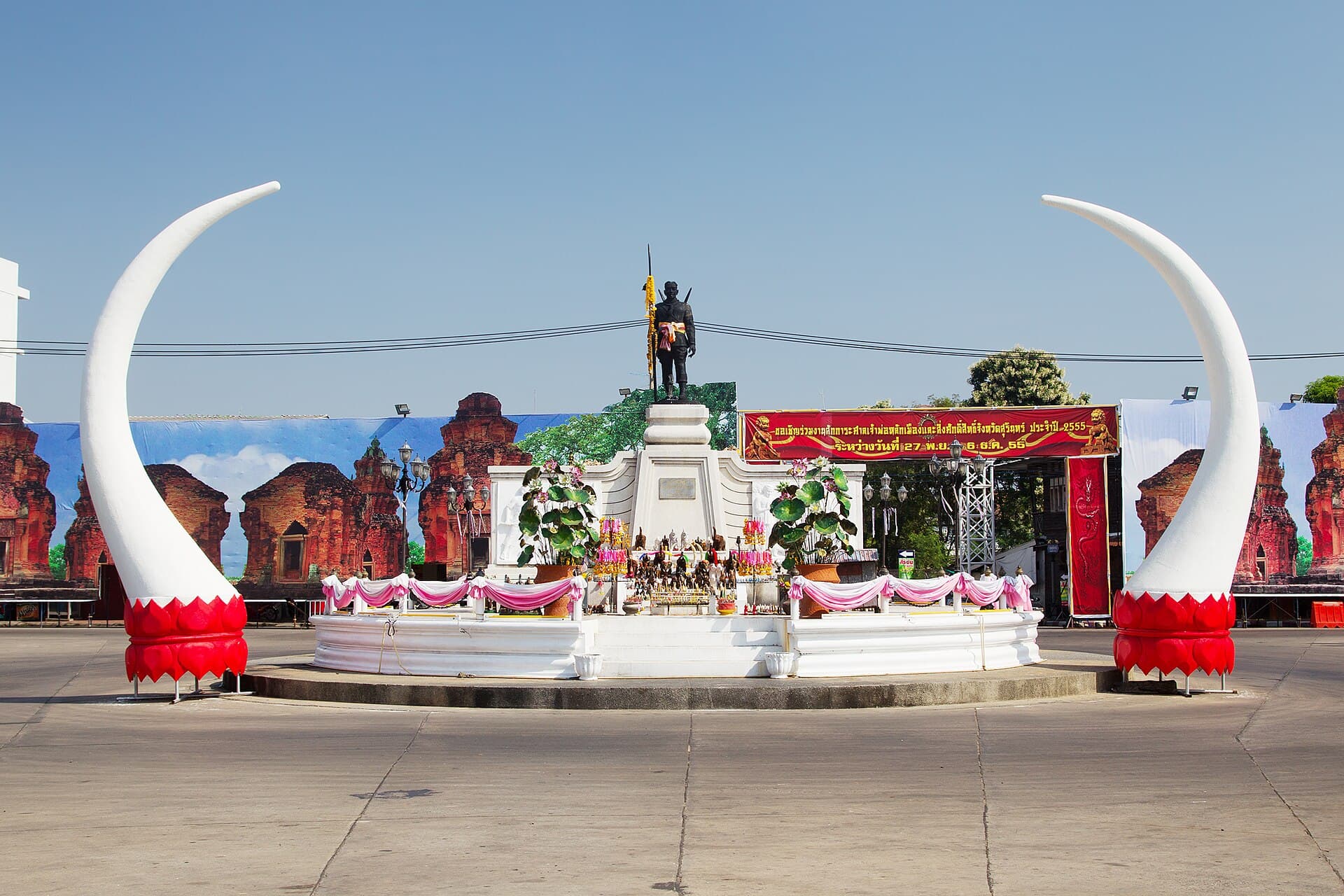
La plupart des villes thaïlandaises ont un sanctuaire du pilier de la ville, mais celui de Surin se distingue par une influence architecturale inattendue.
Dans ce marché frontalier animé, vous pourriez apercevoir des plantes inhabituelles vendues dans un but surprenant.
Découvrez tous les secrets de Surin
Chaque adresse, chaque révélation en entier — dans ton oreille, là où elle s'est passée.
Tu choisis tes lieux. Tu marches. La voix te révèle ce que les autres ignorent.

Votre visite audioguidée de Surin vous attend — choisissez vos lieux, votre langue, et lancez-vous dès votre arrivée.
AcheterLume intègre un guide en réalité augmentée. Levez votre téléphone : sa caméra montre la rue devant vous, avec une flèche lumineuse posée sur l'image réelle qui pointe toujours vers votre prochain arrêt — aucune carte à déchiffrer, aucun mauvais virage. Comme tout dans Lume, ça fonctionne entièrement hors-ligne.
Surin, une ville de la région Isaan du nord-est de la Thaïlande, offre un aperçu d'une partie moins fréquentée du pays, où les traditions anciennes et un mélange culturel unique prospèrent. L'identité de Surin est profondément liée aux éléphants, une connexion célébrée chaque année lors du rassemblement d'éléphants de Surin.
Au-delà de son héritage éléphantin, Surin révèle un paysage façonné par le puissant Empire khmer, avec d'anciennes ruines parsemant la campagne, rappelant la grandeur d'Angkor. La ville est également un centre de production de soie exquise, où des techniques de tissage ancestrales créent des tissus complexes brodés d'or. Ici, le rythme de vie est plus lent, offrant une expérience thaïlandaise authentique loin des sentiers touristiques plus fréquentés, invitant à une exploration plus approfondie de son histoire, de son artisanat et de l'hospitalité chaleureuse de ses habitants.
L'histoire de Surin remonte à plus de 2 000 ans, avec des preuves d'établissements humains datant de la préhistoire, y compris les périodes néolithique, de l'âge du bronze et de l'âge du fer. La première période historique connue est le Dvaravati, une culture d'origine indienne qui a influencé la région du 7e au 11e siècle de notre ère, période pendant laquelle le bouddhisme est devenu la religion dominante.
Après l'ère Dvaravati, le puissant Empire khmer a étendu son influence, faisant de Surin une partie importante de son domaine du 7e au 13e siècle de notre ère. Des inscriptions khmères sur pierre datant d'environ 600 de notre ère et un nombre croissant de sites khmers, tels que Prasat Sikhoraphum, témoignent de cette période significative. Ces sites faisaient partie d'un réseau plus vaste d'infrastructures khmères centrées sur Prasat Phanom Rung. Avec l'effondrement de l'Empire khmer au 13e siècle, Surin a disparu des registres historiques pendant une période.
Surin a réémergé au 18e siècle. La légende attribue sa fondation moderne à un chef local Kuay nommé Chiangpum, qui est devenu le souverain royalement nommé de la région. Il a gagné la faveur en présentant un éléphant blanc rare à Chao Phaya Chakri, le futur roi Rama I. En signe de gratitude, Chiangpum a reçu le titre royal Luang Surin Phakdi et a été nommé chef de village. En 1763, Chiangpum a déplacé son village à son emplacement actuel, qui a ensuite été élevé au rang de ville nommée Muang Prathai Saman. En 1786, le roi Rama I a officiellement nommé la ville Surin en l'honneur de son gouverneur royal.
La province a lentement grandi, avec un afflux continu de personnes, principalement des régions environnantes, y compris le Cambodge, ce qui a conduit à une composition ethnique diversifiée qui comprend des Thaïlandais, des Laotiens, des Khmers et des Kui. Bien que largement autosuffisante et quelque peu isolée, l'arrivée du chemin de fer en 1922 (et l'ouverture de la gare de Surin en 1926) a marqué une percée économique significative, reliant Surin à Bangkok et stimulant le commerce et la croissance démographique. Le rassemblement annuel d'éléphants de Surin, organisé pour la première fois sous sa forme moderne dans les années 1960, a renforcé l'identité culturelle unique de la ville et son lien profond avec les éléphants.
Surin offre un mélange d'histoire ancienne, d'expériences culturelles et de vie locale. Commencez par le Monument de Phraya Surin Phakdi Si Narong Changwang, dédié au fondateur de la ville, une figure vénérée connue pour ses compétences en matière de dressage d'éléphants. À proximité, le Sanctuaire du Pilier de la Ville de Surin (San Lak Mueang) est un exemple frappant d'architecture d'influence khmère, avec sa tour modelée d'après le prang du temple de Phanom Rung.
Pour une plongée plus profonde dans le passé de la région, le Musée national de Surin abrite des découvertes archéologiques de temples khmers et des expositions détaillant la longue relation de la province avec les éléphants. Aventurez-vous en dehors de la ville pour explorer d'anciennes ruines khmères comme Prasat Sikhoraphum, un complexe de temples du XIIe siècle avec des sculptures complexes, ou le complexe reculé de Prasat Ta Muean, offrant un sentiment de découverte. Prasat Ban Phlai, bien que moins connu, offre un aperçu paisible d'un site hindou du XIe siècle.
Découvrez la culture vivante de Surin au Centre de tissage de la soie de Ban Tha Sawang, où vous pourrez observer le processus minutieux de création de soies exquises brodées d'or. Le Village des éléphants de Surin (Ban Ta Klang) offre un regard intime sur la vie des cornacs et de leurs éléphants, y compris un cimetière d'éléphants. Pour un avant-goût de la vie et de la cuisine locales, le Bazar nocturne de Surin est un marché du soir animé avec un large éventail de plats de rue et de produits locaux. Pour une expérience plus active, le Parc forestier de Phanom Sawai propose des sentiers de randonnée, des paysages montagneux sereins et des sites religieux sur ses trois sommets.
La meilleure période pour visiter Surin est pendant la saison fraîche et sèche, qui s'étend de novembre à mars. Pendant ces mois, les températures sont plus confortables, ce qui est idéal pour explorer la ville et ses attractions environnantes. Cette période coïncide également avec le rassemblement d'éléphants de Surin, qui a généralement lieu la troisième semaine de novembre. Alors que les autres mois peuvent être humides ou chauds, la saison sèche offre le temps le plus agréable pour une visite vraiment agréable.
Surin est accessible en train et en bus depuis Bangkok. Les trains partent du terminal central de Krung Thep Aphiwat, tandis que les bus partent du terminal de bus de Mochit Northern Bangkok, les trajets durant environ 7 à 8 heures. Pour un voyage plus rapide, vous pouvez prendre un vol pour l'aéroport voisin de Buriram, les billets combinés incluant souvent un transfert en minibus vers Surin. Une fois à Surin, se déplacer dans la ville est facile avec les songthaews (taxis partagés) pour un tarif fixe d'environ 10 bahts, ou vous pouvez louer des samlaws (taxis à vélo) et des taxis motos pour des trajets plus personnalisés.
Les options d'hébergement vont des hôtels de milieu de gamme dans le centre-ville aux maisons d'hôtes. Si vous visitez pendant le festival des éléphants en novembre, il est fortement conseillé de réserver votre logement bien à l'avance, car les prix peuvent augmenter de 20 à 30 %. Bien que Surin soit généralement sûre, il est toujours sage d'être conscient de votre environnement. La monnaie locale est le baht thaïlandais (THB).
Surin en coréen, en chinois ou en hébreu — et dans 29 autres langues, chaque étape narrée par une voix native. La plus large gamme de langues de tous les audioguides autoguidés.
Disponible en :