Kirillo-Belozersky Monastery
This immense monastery, once among Russia's wealthiest, held a surprising secret about a notorious tsar.
Full story unlocks in the tour
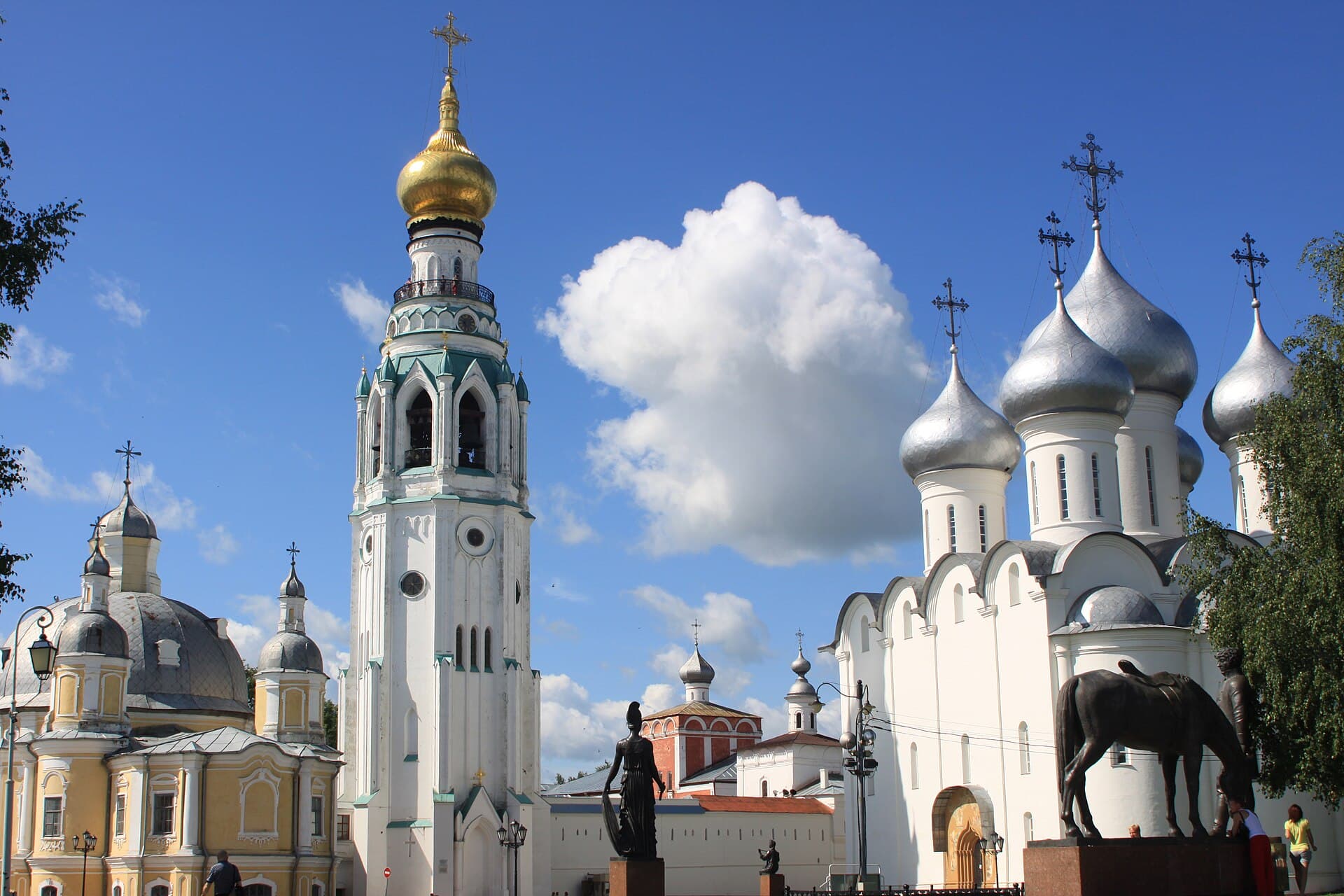 Photo of Vologda, via Wikimedia Commons
Self-guided audio walking tour of Kirillov — GPS route, offline playback, story-driven narration in 32 languages.
“Where ancient walls hold the echoes of power and piety.”
Not the postcards. The stories even locals don't know — whispered in your ear, right where they happened.
This immense monastery, once among Russia's wealthiest, held a surprising secret about a notorious tsar.
The radiant frescoes within this UNESCO site offer a clue to the hurried pace of their creation.
Before the age of printing, one Northern Russian monastery rivaled the grandest centers of learning.
Discover every secret of Kirillov
Every address, every reveal in full — in your ear, right where it happened.
You pick your stops. You walk. The voice reveals what the others miss.
Your self-guided audio tour of Kirillov is ready — pick your landmarks, choose your language, and start the moment you arrive.
BuyLume has a built-in augmented-reality guide. Hold your phone up and its camera shows the street ahead of you, with a glowing arrow laid over the real view that always points to your next stop — no map to puzzle over, no wrong turns. Like everything in Lume, it works fully offline.
Kirillov, a small town in Russia's Vologda Oblast, rests peacefully on the shores of Lake Siverskoye. Its identity is inextricably linked to the magnificent Kirillo-Belozersky Monastery, a vast fortified complex that once served as a spiritual and defensive bulwark in Northern Russia. Founded in 1397, the monastery's imposing walls and ancient cathedrals define the landscape, offering a tangible connection to centuries of Russian history and faith.
Beyond the monastery, Kirillov offers a tranquil atmosphere and picturesque natural vistas. It serves as a gateway to exploring the wider Kirillovsky District, including the nearby Ferapontov Monastery, a UNESCO World Heritage site renowned for its exquisite 15th-century frescoes.
## From Hermitage to Fortress Kirillov's origins trace back to the late 14th century when Saint Cyril of White Lake, a monk and disciple of Saint Sergius of Radonezh, founded the Kirillo-Belozersky Monastery on the shores of Lake Siverskoye in 1397. A monastic settlement, or sloboda, gradually grew around this spiritual center.
## A Powerful Spiritual and Economic Hub Over the 15th to 17th centuries, the Kirillo-Belozersky Monastery blossomed into one of the most influential monasteries in Russia. Its strategic location in the Zavolochie region, connecting important trade routes, contributed to its prominence. The monastery controlled agriculture, farming, fish trade, and salt production, accumulating immense wealth through these ventures and generous donations from the Moscow elite, including Tsar Ivan IV the Terrible.
## Shifting Fortunes and Modern Status The 18th century brought a decline in the monastery's wealth as new Baltic Sea ports diminished the importance of the northern trade routes. Following the 1917 revolution, the monastery was closed by the Bolsheviks in 1924 and transformed into a museum. Today, the Kirillo-Belozersky Museum of History, Art, and Architecture oversees all museums in the Kirillovsky District, preserving this monumental heritage.
## Ferapontov Monastery's Legacy Just 20 kilometers from Kirillov lies the Ferapontov Monastery, founded in 1398 by Saint Ferapont, a fellow monk of Saint Cyril. This monastery gained renown under Saint Martinian, a disciple of Cyril, and was favored by the family of Ivan III. Its Cathedral of the Nativity of the Virgin, built in 1490, is a treasure trove of Russian medieval art, housing the only fully preserved frescoes by the celebrated painter Dionisy. In 2000, the Ferapontov Monastery was recognized as a UNESCO World Heritage site, cementing its global cultural significance.
The primary draw in Kirillov is undoubtedly the Kirillo-Belozersky Monastery, a colossal fortified complex that demands ample time for exploration. Wander through its extensive grounds, marveling at the formidable stone walls and ten towers, and discover its numerous churches, many dating back to the 16th century. The monastery also houses the Kirillo-Belozersky Museum of History, Art, and Architecture, offering a rich collection of icons and exhibits.
A short journey from Kirillov, the Ferapontov Monastery is an essential visit. This UNESCO World Heritage site is home to the compelling frescoes by Dionisy, which completely cover the interior walls of the Cathedral of the Nativity of the Virgin. These 15th-century masterpieces are among the best-preserved examples of Russian medieval art.
Beyond the monasteries, consider a visit to the Goritsky Monastery, another historic monastic site in the vicinity. The town of Kirillov itself, situated on the picturesque Lake Siverskoye, offers a peaceful setting for strolls and enjoying the natural beauty of the Russian North.
The most popular time to visit Kirillov and the surrounding Vologda Oblast is during the summer months, from late June to mid-August. Temperatures are mild and pleasant, averaging between 20 and 25 degrees Celsius, with long daylight hours ideal for exploring the monasteries and natural landscapes. Early autumn in September also offers beautiful golden foliage, though be prepared for cooler temperatures and increased chances of rain. Winters are cold and snowy, transforming the region into a quiet, picturesque retreat, appealing to those who appreciate stark, wintry scenery.
Kirillov is a small town with limited dining and accommodation options compared to larger regional centers like Vologda. It's advisable to check bus schedules in advance, especially for return journeys, as public transport can be less frequent. The region experiences cold winters and variable summer weather, so dressing in layers is recommended. Comfortable walking shoes are a necessity, particularly for exploring the expansive grounds of the Kirillo-Belozersky Monastery. While accessible by road, the Volga-Baltic Waterway runs near Kirillov, and the Northern Dvina Canal also passes through the southern part of the town, connecting it to larger waterways.
Kirillov in Korean, in Chinese or in Hebrew — and 29 more languages, every stop narrated by a native voice. The widest language range of any self-guided audio tour.
Available in: