Château de MacLellan
Le formidable château de MacLellan, une maison-tour du XVIe siècle, possède une histoire d'origine plutôt inattendue pour ses matériaux de construction.
L'histoire complète se débloque dans le tour
 M J Richardson / CC BY-SA 2.0, via Wikimedia Commons
Visite audio autoguidée de Kirkcudbright — parcours GPS à pied, lecture hors ligne, narration en 32 langues.
“Là où l'art, l'histoire et la lumière du Solway convergent.”
Pas les cartes postales. Les histoires que même les habitants ignorent — soufflées à l'oreille, là où elles se sont passées.
Le formidable château de MacLellan, une maison-tour du XVIe siècle, possède une histoire d'origine plutôt inattendue pour ses matériaux de construction.
La vénérable Tolbooth, qui fonctionnait comme centre administratif, tribunal et prison de la ville, a autrefois emprisonné un individu qui allait plus tard acquérir une reconnaissance mondiale.
Parmi les marqueurs solennels de l'ancien cimetière de Kirkcudbright repose un mémorial à un homme dont la durée de vie rapportée et la vie de famille prolifique défient la crédulité.
Découvrez tous les secrets de Kirkcudbright
Chaque adresse, chaque révélation en entier — dans ton oreille, là où elle s'est passée.
Tu choisis tes lieux. Tu marches. La voix te révèle ce que les autres ignorent.

Votre visite audioguidée de Kirkcudbright vous attend — choisissez vos lieux, votre langue, et lancez-vous dès votre arrivée.
AcheterLume intègre un guide en réalité augmentée. Levez votre téléphone : sa caméra montre la rue devant vous, avec une flèche lumineuse posée sur l'image réelle qui pointe toujours vers votre prochain arrêt — aucune carte à déchiffrer, aucun mauvais virage. Comme tout dans Lume, ça fonctionne entièrement hors-ligne.
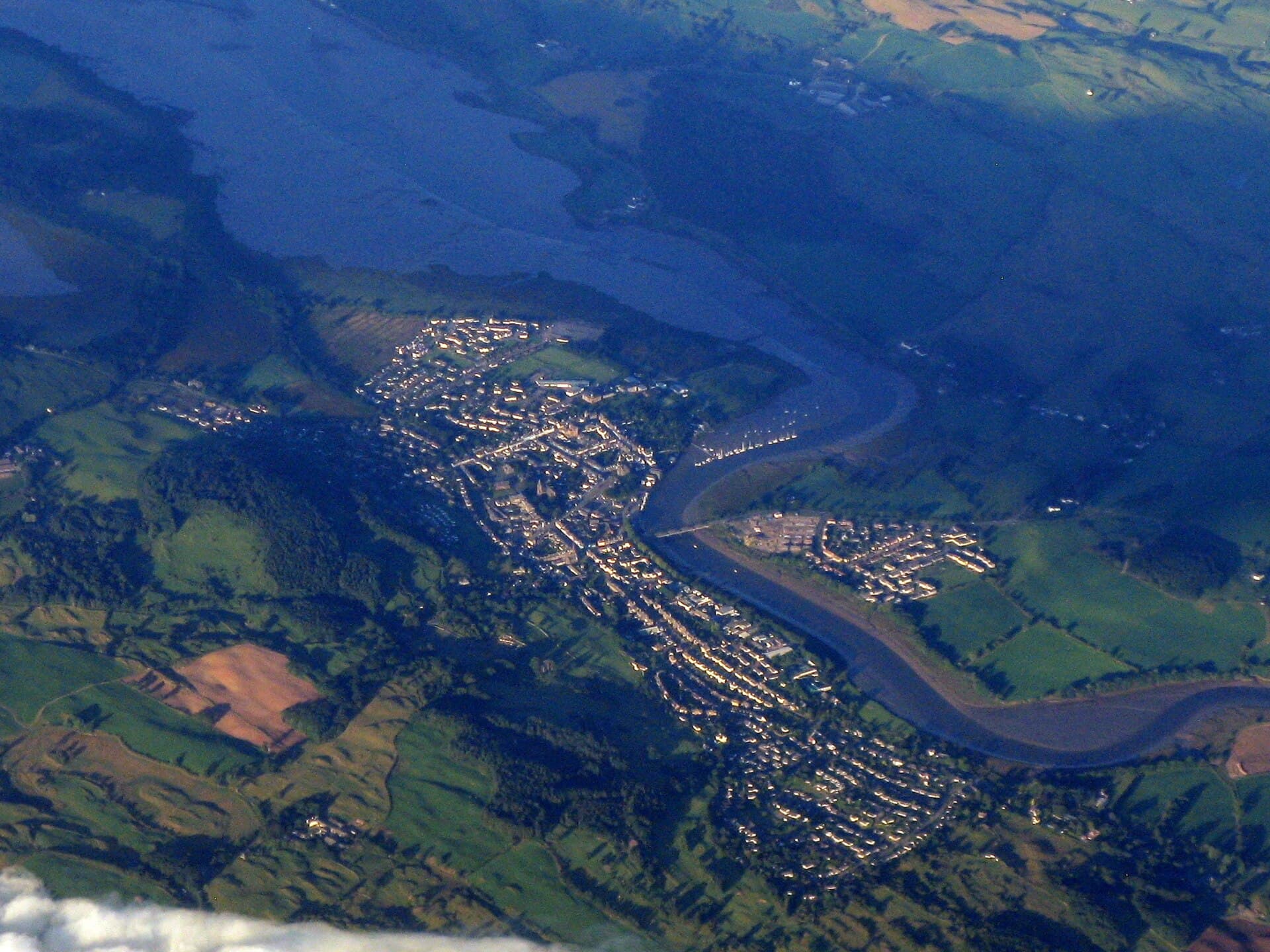
Kirkcudbright, une ville du Dumfries and Galloway, en Écosse, s'étend le long de l'estuaire de la Dee sur le Firth de Solway septentrional. Connue sous le nom de 'La Ville des Artistes', elle a longtemps attiré peintres, sculpteurs et artisans grâce à sa qualité de lumière unique et à son environnement tranquille. L'architecture de la ville, un mélange de bâtiments écossais traditionnels et d'influences géorgiennes, crée une atmosphère distinctive.
En se promenant dans Kirkcudbright, on découvre une ville où la créativité semble imprégner l'air. Les galeries et les ateliers sont nombreux, présentant des talents locaux et internationaux. L'attrait durable de la ville pour les artistes témoigne de sa beauté sereine et du jeu inspirant de la lumière sur ses paysages terrestres et aquatiques.
## Premières Fondations Les origines de Kirkcudbright remontent aux débuts du christianisme, son nom dérivant de 'Kirkcudbright' signifiant 'Église de Saint Cuthbert'. Saint Cuthbert, un moine anglo-saxon de Northumbrie, aurait visité la région, établissant une présence religieuse qui a façonné le développement initial de la ville. Les premiers registres indiquent qu'une colonie s'est formée autour d'une communauté monastique, faisant de la ville un centre spirituel et, finalement, un centre de marché.
## Importance Médiévale Pendant la période médiévale, Kirkcudbright a gagné en importance, devenant un bourg royal en 1455. Sa position stratégique sur la rivière Dee en a fait un port important pour le commerce, reliant l'Écosse à l'Irlande et au-delà. La construction du château de MacLellan au XVIe siècle a souligné la proéminence croissante de la ville et le pouvoir de ses seigneurs locaux. La Tolbooth, un bâtiment administratif central, date également de cette époque, reflétant la structure civique et l'autorité juridique en développement de la ville.
## L'Émergence de la Ville des Artistes Les XIXe et début du XXe siècles ont vu Kirkcudbright se transformer en une colonie artistique renommée. Des artistes, attirés par la qualité exceptionnelle de la lumière et les paysages pittoresques, ont commencé à s'installer dans la ville. Des figures comme E.A. Hornel, Samuel Peploe et Jessie M. King ont établi des ateliers, formant ce qui est devenu connu sous le nom d'« École de Kirkcudbright » d'artistes. Cet afflux de talents créatifs a cimenté l'identité de la ville en tant que havre pour les arts, une réputation qu'elle conserve encore aujourd'hui. L'héritage artistique de la ville est évident dans ses nombreuses galeries, ateliers et la présence durable d'individus créatifs qui continuent de trouver l'inspiration dans son environnement unique.
Explorez le château de MacLellan, une impressionnante maison-tour du XVIe siècle, qui se dresse en évidence dans la ville. Sa structure préservée offre un lien tangible avec le passé de l'Écosse. Visitez le Kirkcudbright Tolbooth Art Centre, un bâtiment historique abritant désormais des galeries et des expositions, reflétant l'esprit artistique de la ville. Le Stewartry Museum offre un aperçu de l'histoire et du patrimoine local de la région, avec des collections couvrant l'archéologie, l'histoire naturelle et la vie sociale. Flânez dans les rues de la ville, découvrant des boutiques indépendantes, des ateliers d'artisans et des cafés. La zone portuaire offre des vues sur l'estuaire de la Dee et les bateaux qui utilisent encore ses eaux.
Les mois les plus chauds, de mai à septembre, sont idéaux pour une visite, offrant un temps agréable pour explorer la ville et ses environs. Pendant cette période, de nombreuses galeries et attractions locales sont pleinement opérationnelles, et la ville accueille fréquemment des festivals d'art et des événements. La lumière à cette période de l'année est particulièrement attrayante pour les artistes et les photographes.
Kirkcudbright est accessible par la route, avec des parkings disponibles dans et autour du centre-ville. Les options de transport en commun incluent des services de bus locaux reliant les grandes villes. L'hébergement va des maisons d'hôtes et B&B aux gîtes indépendants. Les choix de restauration comprennent des plats écossais traditionnels, des cafés et des restaurants. Il est conseillé de réserver l'hébergement et les restaurants populaires à l'avance, surtout pendant la haute saison. Des informations sur les événements et services locaux peuvent être trouvées aux points d'information touristique de la ville.
Kirkcudbright en coréen, en chinois ou en hébreu — et dans 29 autres langues, chaque étape narrée par une voix native. La plus large gamme de langues de tous les audioguides autoguidés.
Disponible en :