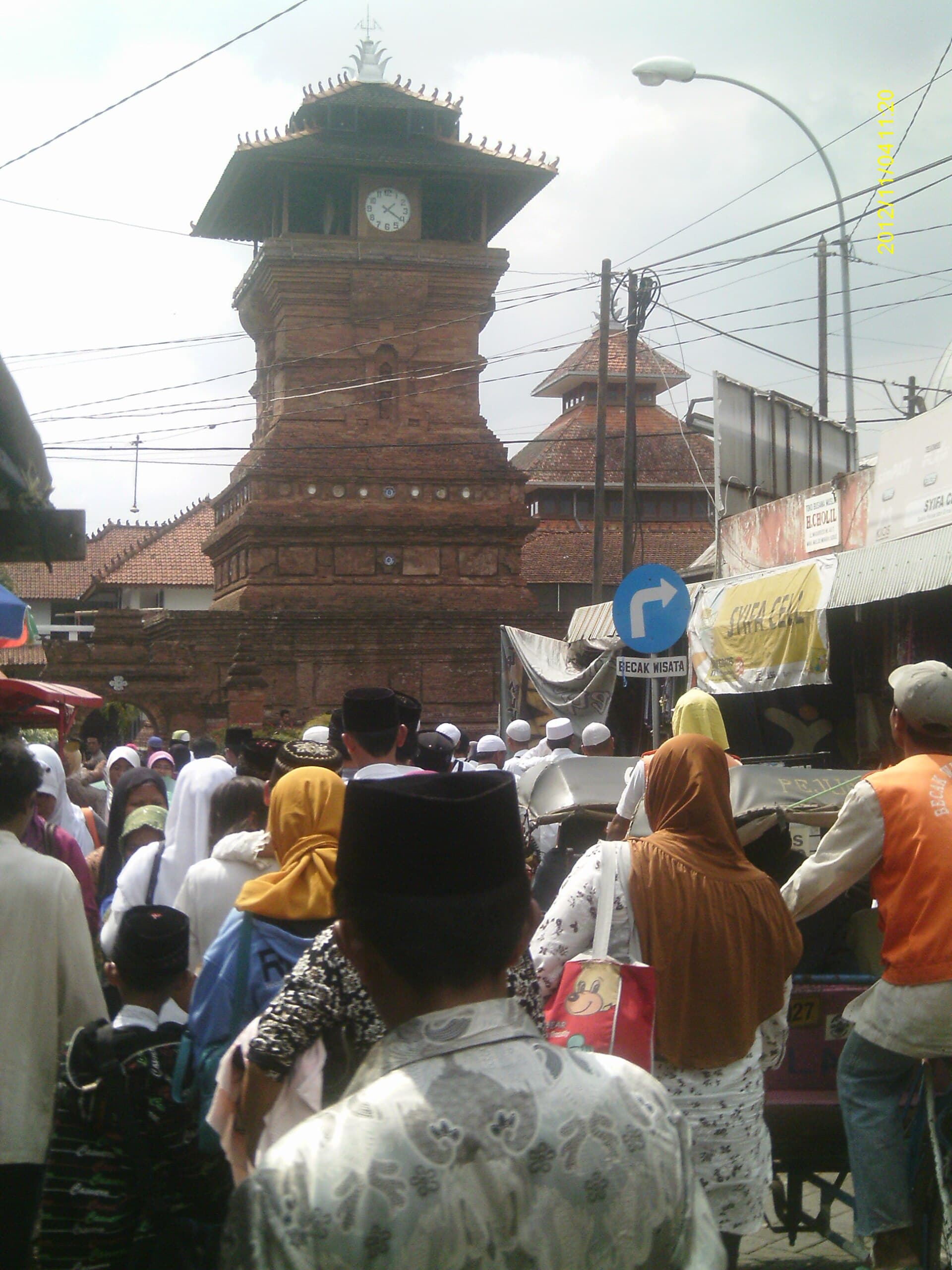
The minaret of Kudus's most iconic mosque departs from typical Islamic design. What ancient architectural style does it echo, and why?
Ihsan Ariswanto / CC0, via Wikimedia CommonsKudus
Self-guided audio walking tour of Kudus — GPS route, offline playback, story-driven narration in 32 languages.
“Where ancient traditions interlace with the scent of cloves.”
Kudus, as no one tells it.
Not the postcards. The stories even locals don't know — whispered in your ear, right where they happened.
Kudus is known as a 'holy city' in Java, yet one particular neighborhood holds a special historical significance, deeply connected to the spread of Islam. What distinguishes Kudus Kulon?
Kudus is synonymous with a specific Indonesian cigarette. How did this distinctive product come into being, and who conceived it?
Discover every secret of Kudus
Every address, every reveal in full — in your ear, right where it happened.
You pick your stops. You walk. The voice reveals what the others miss.
How long do you have in Kudus?
Your self-guided audio tour of Kudus is ready — pick your landmarks, choose your language, and start the moment you arrive.
BuyThe story of Kudus
Kudus, a city in Central Java, Indonesia, presents a singular blend of cultural richness, historical weight, and natural splendor. It occupies a special place in Indonesian history as a cradle of Islam in Java; its very name, 'al-Quds,' meaning 'the holy or sacred' in Arabic, reflects its profound spiritual heritage. As the smallest regency on Java Island, Kudus offers an intimate glimpse into traditional Javanese life interwoven with a living Islamic legacy.
The city is famously connected to Sunan Kudus, one of the revered Wali Songo (nine saints) who played a pivotal role in spreading Islam across the island in the 15th and 16th centuries. This legacy is most vividly apparent in its iconic Menara Kudus Mosque, an architectural marvel that gracefully blends Hindu-Buddhist and Islamic influences. Beyond its religious sites, Kudus is also recognized as the birthplace and a primary production center of the distinctive kretek (clove) cigarette, adding another dimension to its identity.
Sacred Origins and the Spread of Islam
Kudus's history is deeply embedded in the propagation of Islam across Java, particularly through the endeavors of Sunan Kudus, one of the esteemed Wali Songo. The city's name, derived from the Arabic 'al-Quds' (Jerusalem), signifies its standing as a holy city. Sunan Kudus, born Ja'far Sadiq, founded the city and its iconic mosque in the 16th century, skillfully integrating existing Hindu-Buddhist architectural styles to foster the peaceful acceptance of Islam. This approach is most evident in the Menara Kudus Mosque, whose minaret strikingly resembles a Hindu temple, a testament to cultural adaptation rather than forceful conversion.
Colonial Era and Industrial Development
During the Dutch East Indies era, Kudus served as the administrative center of the Kudus Regency, part of the Semarang Residency from 1817. For a brief span between 1928 and 1931, it even became the administrative center of the short-lived Koedoes Residency, encompassing neighboring Demak and Jepara regencies. This period also witnessed the rise of Kudus as an industrial hub, particularly with the conception of the kretek (clove) cigarette by Haji Djamari. The city became, and remains, a significant center for kretek production, with large companies like Djarum contributing to its economic development.
Post-Independence and Contemporary Realities
In the post-independence era, Kudus experienced significant events, including a clash in 1951 between ex-426 Battalion fighters and the Indonesian Armed Forces, marking the beginning of the Battalion 426 rebellion. Today, Kudus continues to evolve, balancing its profound heritage with modern development. However, like many regions in Indonesia, Kudus is susceptible to natural events, with flash floods occasionally affecting the area, particularly during the rainy season. Despite these challenges, Kudus maintains its identity as a city deeply connected to Javanese culture, Islamic history, and a unique industrial legacy.
Begin your exploration at the Menara Kudus Mosque, a 16th-century marvel whose minaret merges Hindu-Javanese and Islamic architectural styles, offering a tangible link to the peaceful spread of Islam in Java. Within the mosque complex, pay respects at the Tomb of Sunan Kudus, one of the revered Wali Songo.
Delve into the city's unique industrial heritage at the Kretek Museum, displaying the history and traditional production of Indonesia's iconic clove cigarettes. For a glimpse into traditional Javanese living, observe the distinctive Kudus traditional houses, known as Joglo Pencu, with their intricate carvings and climate-adapted designs.
Those drawn to nature can venture to Mount Muria, where you can hike or visit the Tomb of Sunan Muria in the Colo district. Do not overlook the picturesque Monthel Waterfall for a refreshing natural escape. The Kudus City Museum offers further insights into the region's history and culture through its artifacts and exhibits. Finally, the modern Gerbang Kudus Kota Kretek (Kudus Kretek City Gate) provides an illuminated landmark, symbolizing the city's identity.
The ideal time to visit Kudus, and Indonesia generally, is during the dry season, which extends from April to October. During these months, you will experience warm and sunny weather, perfect for exploring cultural sites and natural attractions. May and June are particularly favorable, offering minimal rain and fewer crowds before the peak European school vacation period. While the rainy season occurs from November to March, bringing heavy rainfall, this period can offer quieter temple visits and cooler temperatures in the highlands. However, be aware that flash floods can occur during the wet season.
Kudus is relatively compact, making it straightforward to navigate, particularly around the Menara Kudus Mosque area. While public transport options may be limited, renting a motorbike offers a convenient way to explore the city and its surroundings. For longer journeys, the nearest airport and railway station are in Semarang, approximately 1-2 hours to the west, with taxis available for transfer to Kudus.
Kudus generally offers a secure travel experience, even for solo female travelers, with locals known for their geniality. However, it is always wise to remain attentive in crowded areas to prevent pickpocketing and to respect local customs and dress codes. The local currency is the Indonesian Rupiah (IDR). Emergency numbers include 112 (general emergency), 110 (police), 113 (fire), and 118 (ambulance). Consider purchasing a local SIM card for more affordable calls and internet access.
- What is Kudus most recognized for?
- Kudus is most recognized for its unique Menara Kudus Mosque, which blends Hindu-Buddhist and Islamic architecture, and as the birthplace and primary production center of the Indonesian clove cigarette, 'kretek'.
- Is Kudus a sacred city?
- Yes, Kudus is considered a sacred city in Java, with its name derived from the Arabic 'al-Quds' (Jerusalem), reflecting its significant role in the spread of Islam by Sunan Kudus.
- What local dishes should I experience in Kudus?
- You should experience Soto Kudus, a local soup typically prepared with chicken or buffalo meat, and Lentog Tanjung, a dish featuring rice cakes with vegetable soup and tofu.
- What characterizes the traditional architecture in Kudus?
- Traditional Kudus houses, known as Joglo Pencu, are distinguished by their wooden construction, intricate carvings, open courtyards, and designs optimized for the tropical climate, including sloping roofs and strategic ventilation.
- How can I travel within Kudus?
- While public transport is limited, renting a motorbike is a convenient way to travel within Kudus. Taxis are available from Semarang, the nearest city with an airport and railway station.
- Is Kudus secure for visitors?
- Kudus is generally considered secure for visitors, including solo female travelers, with friendly locals. However, standard precautions against pickpocketing in crowded areas and respecting local customs are advised.