L'Église Paroissiale de Notre-Dame de l'Assomption
À l'intérieur de l'église, une statue est le sujet d'une légende particulière datant du XVIIe siècle.
L'histoire complète se débloque dans le tour
 Conde negro / CC BY-SA 3.0 es, via Wikimedia Commons
Visite audio autoguidée de La Alberca — parcours GPS à pied, lecture hors ligne, narration en 32 langues.
“Là où les vieilles pierres murmurent des secrets et un cochon se promène en liberté.”
Pas les cartes postales. Les histoires que même les habitants ignorent — soufflées à l'oreille, là où elles se sont passées.
À l'intérieur de l'église, une statue est le sujet d'une légende particulière datant du XVIIe siècle.
Observez les portes autour de la place centrale, et vous pourriez y discerner un emblème historique frappant.
Chaque soir, une tradition distinctive résonne dans le village, une pratique qui perdure depuis des siècles.
Découvrez tous les secrets de La Alberca
Chaque adresse, chaque révélation en entier — dans ton oreille, là où elle s'est passée.
Tu choisis tes lieux. Tu marches. La voix te révèle ce que les autres ignorent.
Votre visite audioguidée de La Alberca vous attend — choisissez vos lieux, votre langue, et lancez-vous dès votre arrivée.
AcheterLume intègre un guide en réalité augmentée. Levez votre téléphone : sa caméra montre la rue devant vous, avec une flèche lumineuse posée sur l'image réelle qui pointe toujours vers votre prochain arrêt — aucune carte à déchiffrer, aucun mauvais virage. Comme tout dans Lume, ça fonctionne entièrement hors-ligne.
La Alberca, un village de la province de Salamanque, est la première ville rurale d'Espagne à être désignée Monument Historique National en 1940. Elle repose sur les pentes nord de la Sierra de Francia, à une altitude de 1 048 mètres (3 438 pieds) au-dessus du niveau de la mer, au sein d'une Réserve de Biosphère de l'UNESCO. Le village est connu pour son architecture médiévale remarquablement préservée, avec des rues étroites et sinueuses pavées de pierre et des bâtiments construits à partir de pierre locale, de granite et de solides poutres en bois, certaines structures datant du XIVe siècle.
Entrer à La Alberca, c'est comme traverser le temps, où des traditions séculaires ne sont pas seulement rappelées, mais activement vécues. Le caractère singulier du village est forgé par ses coutumes religieuses profondément enracinées, ses récits locaux et un profond sens de la communauté qui a résisté aux courants du changement. De son style architectural distinctif, influencé par les colons français au XIe siècle, à son célèbre cochon en liberté, La Alberca offre une fenêtre sur une histoire vivante et animée.
Des preuves suggèrent que l'habitation humaine dans la région de La Alberca remonte à 5 000 ans, avec des dessins rupestres et des découvertes archéologiques à proximité. Un ancien fort, ou castra, se trouve sous une partie de la ville moderne. Bien que peu de vestiges wisigoths subsistent, on pense que leurs matériaux de construction ont été réutilisés pour des structures comme l'ancienne chapelle de Majadas.
Le village de La Alberca lui-même a commencé à prendre forme dans les années 1300. Au XIIIe siècle, il servait de greffier de la couronne, l'un des rares endroits de la Sierra de Francia appartenant au comté de Miranda. La région a connu un afflux de travailleurs français au début des années 1200, encouragés par Raymond de Bourgogne, un noble français marié à la reine Urraca I de León. Cette influence française se reflète dans le style architectural local, caractérisé par de solides poutres en bois et des structures à trois étages.
La Alberca regorge de légendes, y compris un récit de 1465 où les femmes de la ville auraient vaincu les troupes portugaises, s'emparant de leur drapeau, qui est toujours précieusement conservé. Ce triomphe est célébré chaque année le deuxième jour de Pâques. Au XVe siècle, Jean II de Castille plaça la ville sous la domination de la Maison d'Albe.
Une période plus sombre de l'histoire espagnole, l'Inquisition espagnole (1478-1834), a également laissé son empreinte sur La Alberca. L'Inquisition visait à combattre l'hérésie et à consolider le pouvoir, ciblant les conversos — Juifs et Musulmans convertis au christianisme mais soupçonnés de pratiquer secrètement leurs anciennes religions. Pour démontrer leur conversion, certains résidents juifs et musulmans étaient contraints d'élever publiquement des animaux non casher ou non halal, tels que des porcs. Cette pratique est considérée comme l'une des origines de la tradition durable du 'Cochon de San Antón' du village. Le symbole de l'Inquisition, une main saisissant une croix, un rameau d'olivier et une épée, peut encore être observé au-dessus de certaines portes, servant de rappel frappant de cette époque.
La Alberca a réussi à maintenir une certaine autonomie, établissant même ses propres ordonnances en 1515. L'église paroissiale de Notre-Dame de l'Assomption, achevée en 1733, présente une chaire en granite polychrome du XVIe siècle et un clocher construit environ 212 ans plus tôt, financé par le premier duc d'Albe. Le village a été déclaré monument historique national en 1940, une désignation qui a contribué à préserver son tissu urbain et son architecture traditionnelle. Depuis 2000, la Vallée de Las Batuecas, adjacente à La Alberca, a également été déclarée site historique.
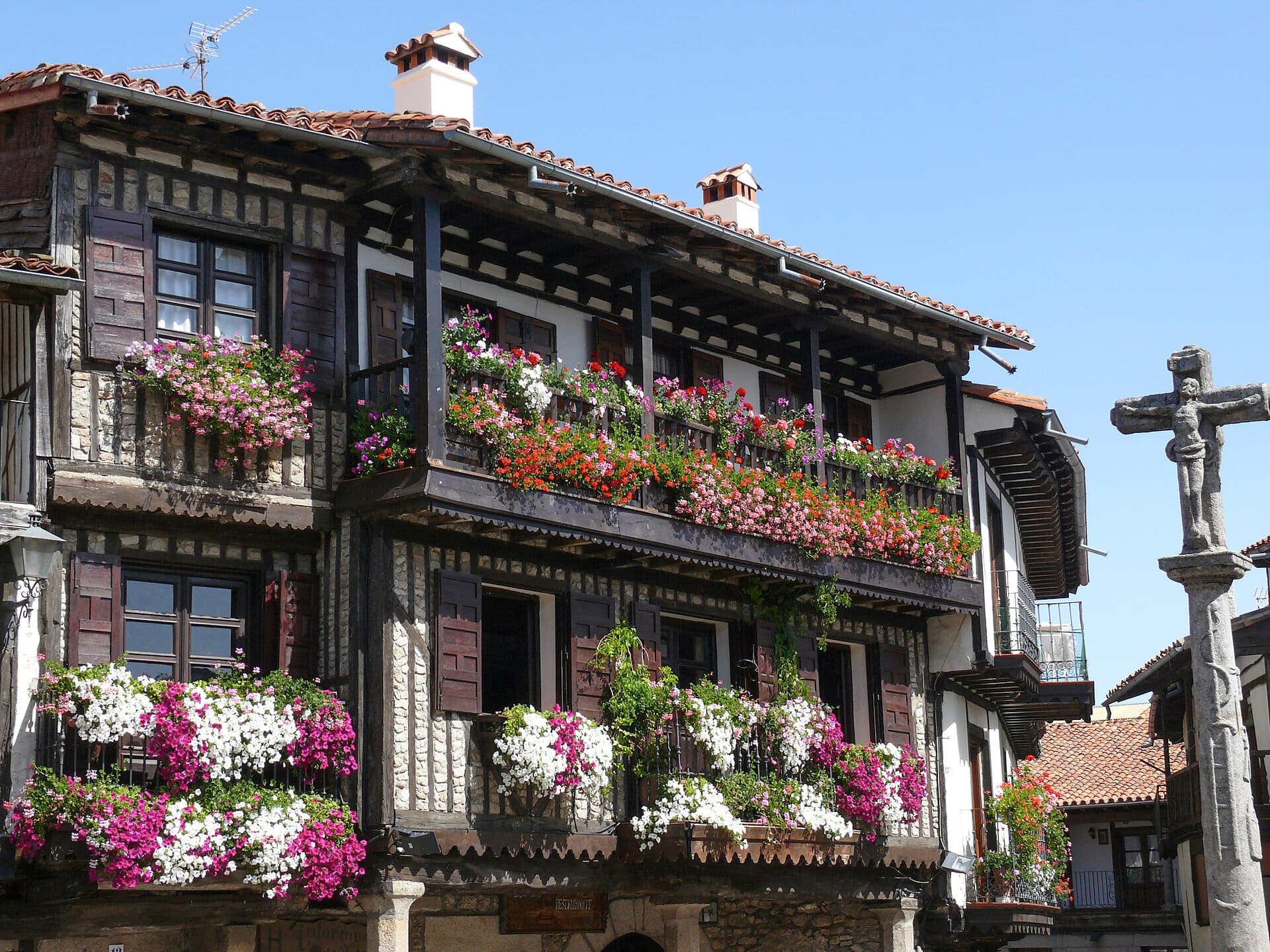
Commencez votre exploration sur la Plaza Mayor, le cœur social de La Alberca, distinguée par son agencement irrégulier, ses arcades en pierre et ses balcons ornés de fleurs. La place accueille fréquemment des événements locaux et constitue un point central pour observer la vie du village.
Visitez l'Église Paroissiale de Notre-Dame de l'Assomption, une structure baroque du XVIIIe siècle construite sur un temple antérieur. Elle abrite une chaire en granite polychrome du XVIe siècle et est connue pour le Christ Béni de la Sueur. Le clocher de l'église, antérieur à la structure principale, affiche toujours les armoiries du premier duc d'Albe.
En vous promenant dans les rues étroites et pavées de pierre, observez l'architecture distinctive avec ses poutres en bois et ses façades en pierre. Cherchez le Marrano de San Antón, le cochon en liberté, un résident chéri du village pendant une partie de l'année. Vous pourriez également remarquer le Signe de l'Inquisition Espagnole au-dessus de certaines portes.
Pour ceux qui s'intéressent à la culture locale, le Musée des Costumes Traditionnels offre un aperçu des tenues et des bijoux typiques du village des XVIIIe et XIXe siècles. La Maison-Musée Satur-Juanela donne un aperçu de l'architecture traditionnelle et des coutumes du passé. À proximité, le Parc Naturel Las Batuecas-Sierra de Francia, une Réserve de Biosphère de l'UNESCO, offre des opportunités de randonnée et de profiter du paysage diversifié de chênes, de châtaigniers et d'amandiers. Vous pouvez également visiter le Monastère de Las Batuecas, un couvent carmélite établi en 1599.
La période la plus agréable pour visiter La Alberca pour les activités par temps chaud s'étend de fin juin à début septembre, lorsque les températures varient généralement de 12 à 26 °C (53 à 79 °F). Les étés sont courts, arides et généralement clairs. Les saisons intermédiaires du printemps (avril à juin) et du début de l'automne (septembre à octobre) offrent également un temps agréable, moins de foules et des conditions favorables à la découverte. Octobre connaît les précipitations les plus élevées, tandis que juillet est le mois le plus sec. Pendant les mois d'hiver plus frais, la population est plus faible, offrant une expérience plus tranquille.
La Alberca est située dans la province de Salamanque, à environ quatre heures de route de Madrid et à environ 80 kilomètres au sud-ouest de la ville de Salamanque. Bien que le centre du village soit largement piétonnier, avec seulement les voitures des résidents autorisées, les rues étroites et pavées de pierre sont mieux explorées à pied.
Les options d'hébergement à La Alberca reflètent souvent son charme traditionnel, avec diverses maisons d'hôtes et petits hôtels. Dîner à La Alberca offre un avant-goût des spécialités locales, en particulier les produits du porc ibérique, tels que le jamón ibérico, le chorizo et le salchichón, que l'on trouve dans les bars à tapas traditionnels. La région est réputée pour ses porcs ibériques noirs nourris aux glands, ce qui contribue à la saveur distinctive de ses charcuteries. De nombreux magasins proposent également des bijoux uniques et des pâtisseries produites localement.
Pour ceux qui s'intéressent à la randonnée, la Sierra de Francia environnante offre de nombreux sentiers, y compris le 'Chemin des Racines' (Camino de la Raíces).
La Alberca en coréen, en chinois ou en hébreu — et dans 29 autres langues, chaque étape narrée par une voix native. La plus large gamme de langues de tous les audioguides autoguidés.
Disponible en :