The George Inn
Cette maison publique du XIVe siècle recèle un ustensile de cuisine d'une époque révolue.
L'histoire complète se débloque dans le tour
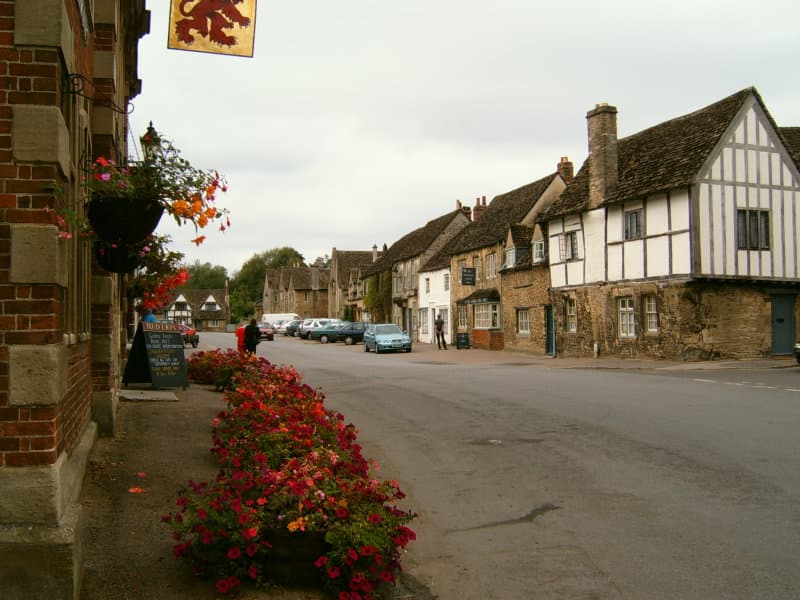 Ettlz at English Wikipedia / CC BY-SA 3.0, via Wikimedia Commons
Visite audio autoguidée de Lacock — parcours GPS à pied, lecture hors ligne, narration en 32 langues.
“Là où les contours médiévaux rencontrent l'aube de la photographie.”
Pas les cartes postales. Les histoires que même les habitants ignorent — soufflées à l'oreille, là où elles se sont passées.
Cette maison publique du XIVe siècle recèle un ustensile de cuisine d'une époque révolue.
Une fenêtre particulière de l'abbaye marque un moment crucial de l'ingéniosité humaine.
Au-delà de son apparence accueillante, un bâtiment évoque un ancien défi lié aux matériaux de construction.
Découvrez tous les secrets de Lacock
Chaque adresse, chaque révélation en entier — dans ton oreille, là où elle s'est passée.
Tu choisis tes lieux. Tu marches. La voix te révèle ce que les autres ignorent.


Lume intègre un guide en réalité augmentée. Levez votre téléphone : sa caméra montre la rue devant vous, avec une flèche lumineuse posée sur l'image réelle qui pointe toujours vers votre prochain arrêt — aucune carte à déchiffrer, aucun mauvais virage. Comme tout dans Lume, ça fonctionne entièrement hors-ligne.
Lacock, un village du Wiltshire, en Angleterre, offre un voyage palpable dans le passé. Avec son quadrillage précis de quatre rues principales, le village a conservé une grande partie de son caractère originel, de nombreux bâtiments datant du XVIIIe siècle ou plus tôt. Presque entièrement sous la tutelle du National Trust, l'apparence intacte de Lacock en a fait un décor recherché pour les productions cinématographiques et télévisuelles, y compris Orgueil et Préjugés, Downton Abbey et les films Harry Potter.
Au-delà de son attrait cinématographique, Lacock revêt une profonde signification dans la chronique de la photographie. Ce fut la résidence de William Henry Fox Talbot, qui a conçu le négatif photographique au début du XIXe siècle. Le village abrite également l'abbaye de Lacock, une maison de campagne érigée sur les fondations d'un couvent du XIIIe siècle, qui abrite aujourd'hui le musée Fox Talbot.
## D'un établissement saxon à un couvent augustinien Les origines de Lacock remontent à l'époque saxonne, lorsque les colons le nommèrent 'Lacuc' d'après le 'petit ruisseau' (Bide Brook) qui le traversait. Le village apparaît dans le Domesday Book de 1086, avec une population enregistrée de 160 à 190 habitants, ainsi que deux moulins et un vignoble.
En 1232, Ela, comtesse de Salisbury, une femme formidable qui fut également shérif du Wiltshire, établit l'abbaye de Lacock comme couvent augustinien. Le village et ses terres faisaient partie de la dotation de l'abbaye. Ela elle-même devint abbesse de Lacock en 1240. L'abbaye prospéra tout au long du Moyen Âge, en grande partie grâce à son industrie lainière florissante, soutenue par un troupeau pouvant atteindre 2 000 moutons. Un marché hebdomadaire fut accordé en 1242, et une foire annuelle à partir des années 1250, consolidant davantage la position économique de Lacock.
## Dissolution et une nouvelle ère Avec la dissolution des monastères au XVIe siècle, l'abbaye de Lacock et son domaine, y compris le village, furent vendus à William Sharington. Sharington transforma le couvent en résidence privée, et la propriété passa plus tard à la famille Talbot par mariage. L'apparence du village se fixa en grande partie au XVIIIe siècle, la plupart de ses maisons subsistantes datant de cette période ou plus tôt.
## La naissance de la photographie La contribution la plus profonde de Lacock à l'histoire mondiale est apparue avec William Henry Fox Talbot, qui hérita de l'abbaye de Lacock et y résida de 1800 à 1877. Polymathe avec des intérêts couvrant diverses sciences, les expériences de Talbot à l'abbaye le conduisirent à son invention révolutionnaire du négatif photographique en 1835. Cette innovation jeta les bases de la photographie moderne. En 1944, Matilda Talbot, une nièce de Henry Fox Talbot, légua l'abbaye et la majeure partie du village au National Trust, assurant sa conservation minutieuse pour les générations futures.
## Lacock aujourd'hui Aujourd'hui, Lacock continue d'attirer les visiteurs par son caractère intact. Ses rues et bâtiments bien conservés en ont fait un lieu de prédilection pour de nombreuses productions cinématographiques et télévisuelles. Le village maintient une population d'environ 1 073 habitants en 2024. Le National Trust gère activement le village et l'abbaye, offrant aux visiteurs une fenêtre sur des siècles d'histoire anglaise et la genèse d'une forme d'art révolutionnaire.
Commencez votre exploration à l'abbaye de Lacock, une maison de campagne construite sur les fondations d'un couvent du XIIIe siècle. Promenez-vous dans ses cloîtres médiévaux et découvrez la fenêtre même où William Henry Fox Talbot a capturé le premier négatif photographique. Dans l'enceinte de l'abbaye, le musée Fox Talbot explore l'histoire de la photographie, présentant les premières technologies photographiques et la vie de son inventeur. Le musée accueille également des expositions de photographie temporaires.
Promenez-vous dans le village de Lacock, en admirant les cottages à colombages et les bâtiments historiques en pierre qui bordent ses rues. Le village lui-même est un décor de film vivant, reconnaissable dans des productions comme Harry Potter et Downton Abbey. Ne manquez pas la grange dîmière du XIVe siècle, vestige du passé agricole de l'abbaye. Pour un moment de réflexion tranquille, visitez l'église St. Cyriac, qui remonte à la période normande.
Savourez un repas ou une boisson dans l'un des pubs historiques de Lacock, tels que The George Inn ou The Red Lion, tous deux offrant une fenêtre sur des siècles d'hospitalité. Pour une collation plus légère, le Stables Café et le Courtyard Tea-room proposent des rafraîchissements. Le village compte également des boutiques indépendantes, dont la Lacock Bakery et le Lacock Village Shop and Deli, où vous pouvez trouver des friandises locales et des souvenirs.
Lacock offre une expérience invitante tout au long de l'année. Le printemps et l'été offrent des jardins verdoyants et des heures de clarté prolongées pour explorer le village et les terrains de l'abbaye. Les pièces principales de l'abbaye sont généralement ouvertes de mars à octobre. Pendant les mois plus froids (novembre à février), les pièces principales de l'abbaye sont fermées, bien que les terrains, le musée et la boutique restent généralement accessibles, souvent avec des horaires ajustés. Il est recommandé de consulter le site web du National Trust pour connaître les heures d'ouverture spécifiques avant votre visite.
Lacock est situé à environ 3 miles au sud de Chippenham, Wiltshire, et à environ 30 minutes de Bath. Si vous conduisez, prenez la sortie 17 de l'autoroute M4 et suivez l'A350. Il y a un grand parking du National Trust en bordure du village (SN15 2RQ), qui est gratuit pour les membres du National Trust et coûte 5 £ pour les non-membres. Il est conseillé de se garer ici, car les routes du village sont étroites et le stationnement est limité. Des bornes de recharge pour véhicules électriques sont disponibles dans le parking.
Pour ceux qui utilisent les transports en commun, Chippenham et Melksham ont des gares, avec des lignes de bus (Faresaver X34) reliant Lacock. Le village est facilement accessible à pied, et de nombreuses zones sont accueillantes pour les piétons. Des toilettes accessibles sont disponibles dans la cour de l'abbaye et près du Stables Café. Des scooters de mobilité, des trikes de montagne et des fauteuils roulants manuels peuvent être empruntés gratuitement à la réception des visiteurs pour une utilisation dans les jardins de l'abbaye, bien qu'une réservation préalable soit recommandée. Les chiens d'assistance sont les bienvenus sur tout le site.
Lacock en coréen, en chinois ou en hébreu — et dans 29 autres langues, chaque étape narrée par une voix native. La plus large gamme de langues de tous les audioguides autoguidés.
Disponible en :