Garhwali Mess
One of Lansdowne's oldest buildings, the Garhwali Mess, holds a secret beyond its Victorian facade.
Full story unlocks in the tour
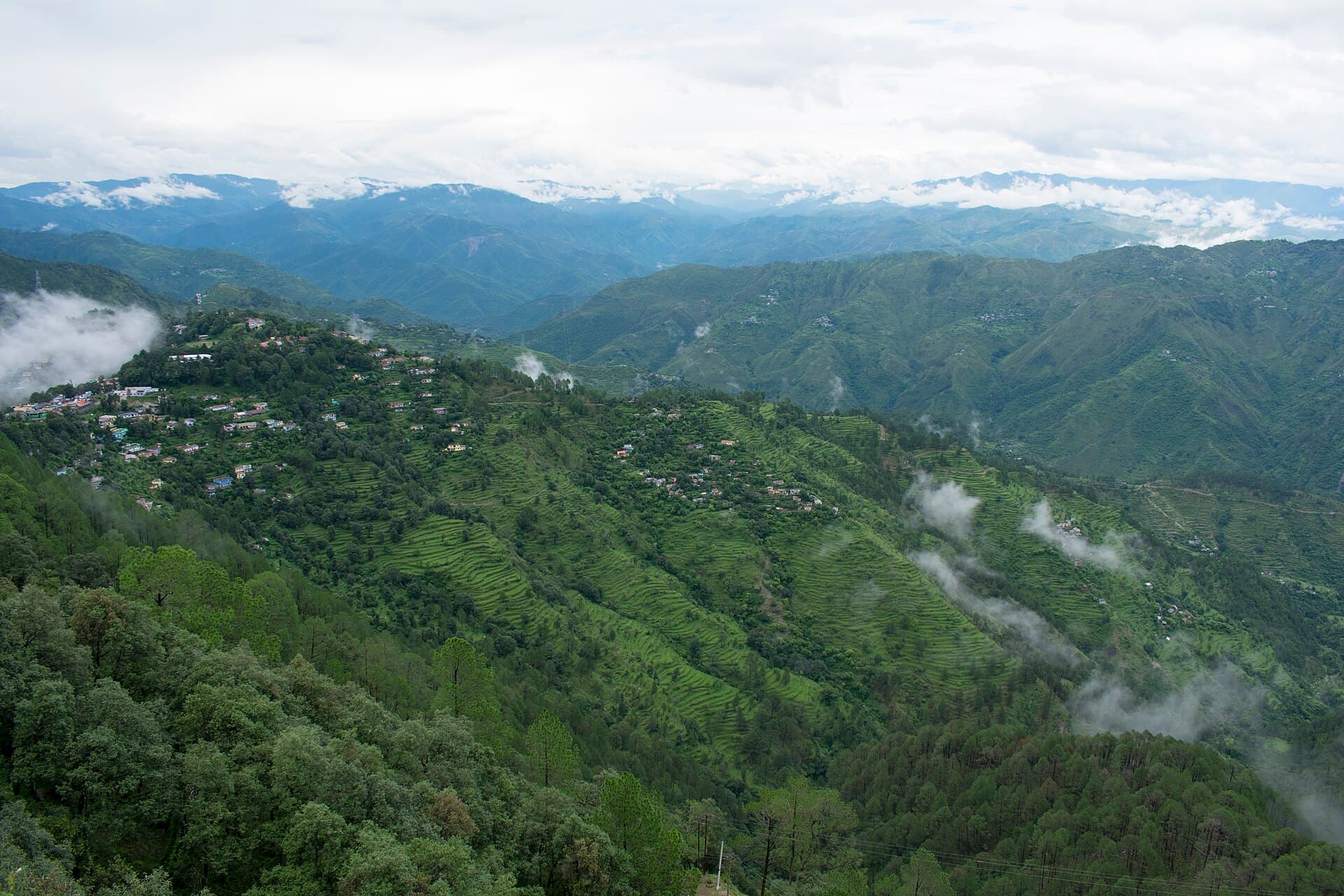 Ravi krishnan gupta / CC BY-SA 4.0, via Wikimedia Commons
Self-guided audio walking tour of Lansdowne — GPS route, offline playback, story-driven narration in 32 languages.
“Where colonial echoes meet Himalayan whispers.”
Not the postcards. The stories even locals don't know — whispered in your ear, right where they happened.
One of Lansdowne's oldest buildings, the Garhwali Mess, holds a secret beyond its Victorian facade.
This beautiful Gothic Revival church, constructed in 1895, has a surprising second life.
Two massive, perfectly balanced rocks here tell a tale of mythological strength.
Discover every secret of Lansdowne
Every address, every reveal in full — in your ear, right where it happened.
You pick your stops. You walk. The voice reveals what the others miss.


Your self-guided audio tour of Lansdowne is ready — pick your landmarks, choose your language, and start the moment you arrive.
BuyLume has a built-in augmented-reality guide. Hold your phone up and its camera shows the street ahead of you, with a glowing arrow laid over the real view that always points to your next stop — no map to puzzle over, no wrong turns. Like everything in Lume, it works fully offline.
Lansdowne, originally known as Kaludanda, is a tranquil cantonment town situated at an elevation of approximately 1,700 meters (5,577 feet) in the Pauri Garhwal district of Uttarakhand, India. Established by the British in 1887 and named after Lord Lansdowne, the then Viceroy of India, it was developed as a recruit training center for the Garhwal Rifles. Today, it serves as the command office and regimental center for this esteemed Indian Army regiment, which continues to train its soldiers here.
Unlike many other active hill stations, Lansdowne has largely retained its serene and unspoiled character, marked by its colonial-era architecture, dense oak and blue pine forests, and clear mountain views. It offers a peaceful escape for those seeking solitude and a connection with nature, making it an ideal destination for relaxation, nature walks, and quiet contemplation amidst the Himalayan landscape.
The town's military presence contributes to its well-maintained environment and a sense of discipline and cleanliness. Visitors can explore its historical sites, enjoy the cool mountain breeze, and immerse themselves in a less commercialized experience, making Lansdowne a distinctive and refreshing getaway in the Garhwal region.
## From Kaludanda to Cantonment Lansdowne's origins trace back to its local name, Kaludanda, meaning 'Black Hills' in Garhwali, a nod to its dark oak and pine forests. This serene location captured the attention of the British Raj, who, in 1887, established a military cantonment here. The town was subsequently named after Lord Lansdowne, who served as the Viceroy of India from 1888 to 1894.
The primary purpose of establishing Lansdowne was to serve as a recruit training center for the Garhwal Rifles, a regiment that would go on to play a significant role in both World Wars. On November 5, 1887, the first battalion of the Garhwal Rifles migrated to Lansdowne from Almora, marking the formal beginning of its military heritage. The British developed the town with a distinct colonial architectural style, which is still evident in its preserved buildings and local traditions.
## A Legacy of Valor Lansdowne's history is deeply intertwined with the valor of the Garhwal Rifles. The regiment's command office and training center remain in Lansdowne to this day. The town was also a significant hub for freedom fighters from British Garhwal during the British Raj. Over the decades, Lansdowne has transformed from a strategic military outpost into a tranquil hill station, yet it proudly maintains its military discipline and heritage.
Post-independence in 1947, Lansdowne became part of the newly formed Indian state of Uttarakhand. The Garhwal Rifles Regimental Museum, also known as Darwan Singh Sanghralaya, established in 1983, stands as a testament to this deep past, housing artifacts, photographs, and documents that chronicle the regiment's contributions. Even the town's infrastructure, like the Kotdwar Railway Station, established in 1890, played a role in the region's development, initially facilitating timber transportation.
Begin your exploration at the War Memorial at the Parade Ground, honoring the Garhwal Rifles. Nearby, the Darwan Singh Museum (also known as the Garhwal Rifles Regimental Museum) offers a deep dive into the regiment's history with artifacts, photographs, and weapons. For expansive views of the Western Himalayas, head to Tip-in-Top Point (also known as Tip N Top).
Nature lovers will enjoy Bhulla Tal, a serene man-made lake perfect for boating, surrounded by quiet walking trails. Explore the colonial character at St. Mary's Church, a beautifully restored Anglican church now functioning as a museum with historical exhibits and an audio-visual presentation. Do not miss St. John's Catholic Church, the only operational church in Lansdowne, recognized for its colonial architecture.
For a spiritual retreat, visit the ancient Tarkeshwar Mahadev Temple, dedicated to Lord Shiva, set in a deodar forest about 35 km away. The Kaleshwar Temple, believed to be over 500 years old, is another significant shrine. For wildlife enthusiasts, the Kalagarh Tiger Reserve, a part of the larger Jim Corbett National Park, is about 10-13 km away, offering opportunities for jungle safaris and birdwatching.
Lansdowne is a year-round destination, but the most agreeable times to visit are during spring (March-June) and autumn (October-November). In summer (March-June), the weather is pleasant with temperatures ranging from 15°C to 37°C, offering clear skies ideal for outdoor activities like trekking and birdwatching. Autumn (October-November) brings clear skies, dramatic views of the Himalayas, and cooler temperatures between 8°C and 26°C. Winters (October-March) are chilly, with temperatures dropping to 0°C or even sub-zero, and offer a chance of snowfall from December to February, creating a picturesque setting. Monsoon season (July-September) transforms the landscape into lush greenery, but heavy rainfall can lead to slippery roads and occasional landslides, making travel challenging.
Lansdowne is approximately 250-280 km from Delhi, a 6-8 hour drive. The nearest airport is Jolly Grant Airport (DED) in Dehradun, about 145-155 km away, from where you can hire a taxi or take a bus. The closest railway station is Kotdwar, around 40-45 km from Lansdowne. From Kotdwar, shared taxis, private cabs, or local buses are readily available for the uphill journey.
Within Lansdowne, most major attractions like Tip-in-Top, Bhulla Lake, St. Mary's Church, Darwan Singh Museum, and Paltan Bazaar are within walking distance. For longer distances or those with mobility needs, local cabs are available for hire. While local buses operate, their frequency and connectivity might not be ideal for visitors. It is advisable to carry cash as ATMs can be limited, and mobile network coverage might be patchy. Respect the cantonment rules, especially regarding cleanliness. Accommodation options range from resorts and hotels to guesthouses and homestays.
Lansdowne in Korean, in Chinese or in Hebrew — and 29 more languages, every stop narrated by a native voice. The widest language range of any self-guided audio tour.
Available in: