Château Gaillard
Richard the Lionheart's 'saucy castle' was considered impenetrable, yet it fell in a surprising way.
Full story unlocks in the tour
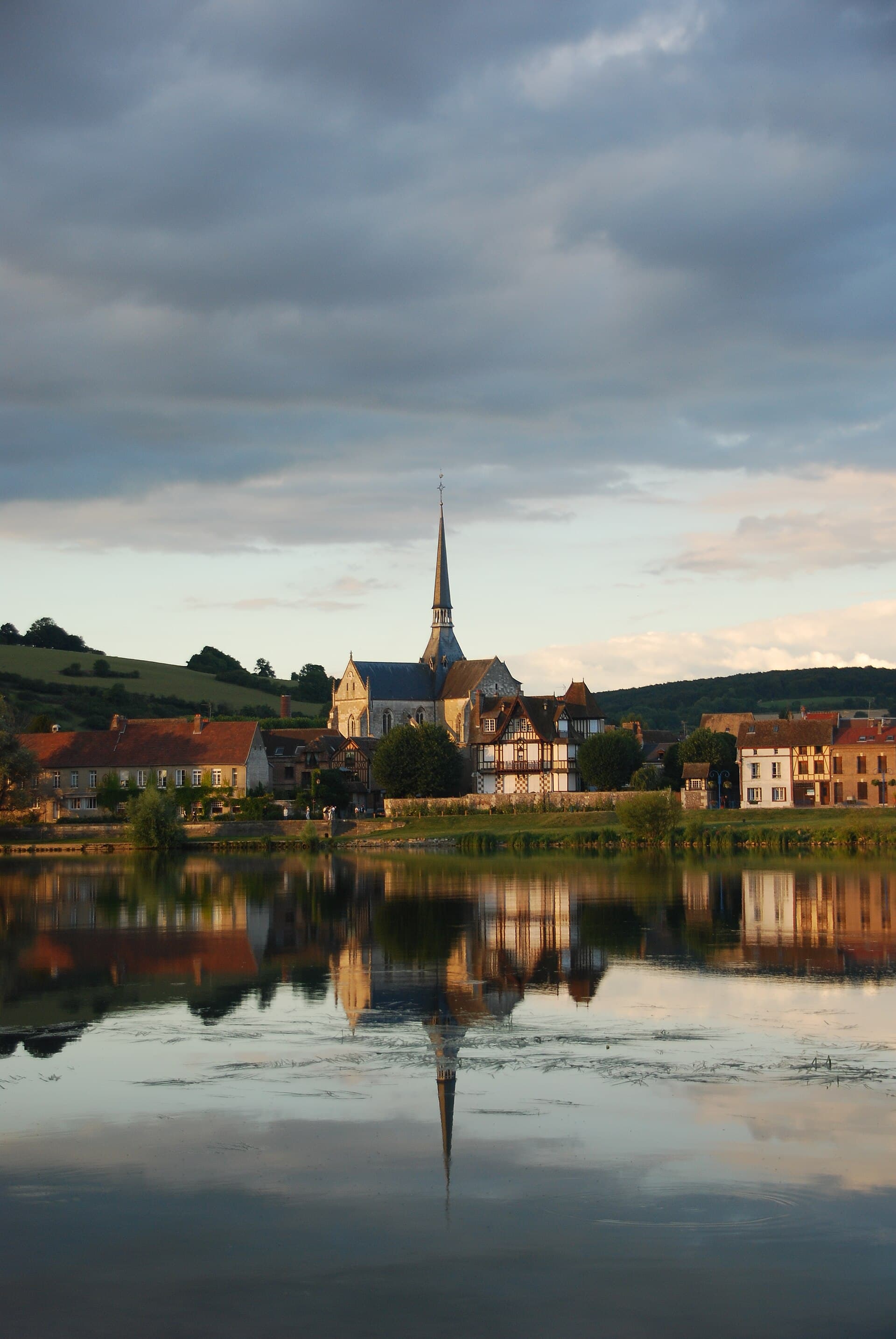 Casper Moller / CC BY 2.0, via Wikimedia Commons
Self-guided audio walking tour of Les Andelys — GPS route, offline playback, story-driven narration in 32 languages.
“Where a Lionheart's legacy meets the meandering Seine.”
Not the postcards. The stories even locals don't know — whispered in your ear, right where they happened.
Richard the Lionheart's 'saucy castle' was considered impenetrable, yet it fell in a surprising way.
This grand church stands on ground with an unusually ancient spiritual lineage.
A local legend claims this spring once flowed with something far more intoxicating than water.
Discover every secret of Les Andelys
Every address, every reveal in full — in your ear, right where it happened.
You pick your stops. You walk. The voice reveals what the others miss.


Your self-guided audio tour of Les Andelys is ready — pick your landmarks, choose your language, and start the moment you arrive.
BuyLume has a built-in augmented-reality guide. Hold your phone up and its camera shows the street ahead of you, with a glowing arrow laid over the real view that always points to your next stop — no map to puzzle over, no wrong turns. Like everything in Lume, it works fully offline.
Les Andelys, a town in Normandy, France, divides into two distinct yet complementary areas: Grand-Andely and Petit-Andely. Grand-Andely, with its Gallo-Roman origins, lies slightly inland, while Petit-Andely, a medieval foundation, embraces a sweeping bend of the River Seine. This commune is framed by dramatic chalk cliffs and green hills, offering a serene escape into Normandy's heartland.
The town's most iconic landmark is the formidable Château Gaillard, a 12th-century fortress built by Richard the Lionheart, which stands in impressive ruins high above the river. From its ramparts, visitors can absorb expansive views of the Seine and the surrounding countryside. Beyond the castle, Les Andelys offers winding lanes, historic churches, and a tranquil riverside atmosphere, making it an ideal destination for those seeking history, architecture, and natural beauty.
The history of Les Andelys is inextricably linked to Richard the Lionheart, King of England and Duke of Normandy. In the late 12th century, a period of intense conflict between the Duchy of Normandy and the Kingdom of France, Richard sought to fortify his Norman territories against the ambitions of King Philip II of France. Between 1196 and 1198, in a remarkable feat of medieval engineering, Richard constructed Château Gaillard overlooking the Seine River at Les Andelys.
This fortress, whose name translates to "Saucy Castle," was a masterpiece of military architecture for its time, designed with concentric fortifications, dry moats, and a polygonal keep to withstand attack. Richard famously claimed he could hold it even if its walls were made of butter. However, this assertion was tested after Richard's death in 1199. In 1203, Philip Augustus laid siege to the castle, and after an eight-month struggle, it fell in 1204. The fall of Château Gaillard was a pivotal moment, signaling the end of English rule in Normandy and the region's absorption into the French kingdom.
The town itself developed from two distinct settlements: Grand-Andely, with its Gallo-Roman foundations, and Petit-Andely, which emerged during medieval times near the Seine. These two areas eventually merged into the single commune of Les Andelys after the French Revolution. Grand-Andely is home to the Collegiate Church of Notre-Dame, a Gothic church dating back to the 13th century, built on the site of an ancient abbey. Petit-Andely, a former fishing village, features charming riverside cottages and the 12th-century Saint-Sauveur Church, originally built for the 3,000 workers constructing Château Gaillard.
Over the centuries, Les Andelys has witnessed various conflicts, including battles during the Hundred Years' War. In 1599, the now strategically obsolete Château Gaillard was demolished by order of King Henri IV. Today, the town preserves its heritage through its historic buildings, scenic riverfront, and the enduring ruins of Richard the Lionheart's ambitious fortress.
The undisputed highlight of Les Andelys is Château Gaillard, the imposing 12th-century fortress built by Richard the Lionheart. Explore its outer walls and towers, and ascend to the ramparts for panoramic views of the Seine River and the surrounding chalk cliffs.
In Petit-Andely, the more picturesque part of town, stroll along the Seine's banks. Here, you'll find charming riverside cottages and the Church of Saint-Sauveur, a 12th-century edifice with a distinctive wooden porch and Gothic interior.
Move inland to Grand-Andely to discover the Collegiate Church of Notre-Dame, a Gothic structure from the 13th century, featuring impressive stained-glass windows and ornate carvings. The town also has the Musée Nicolas Poussin, dedicated to the renowned painter born in Les Andelys.
For outdoor enthusiasts, the riverside paths offer scenic walking and cycling routes, with particularly photogenic views of Château Gaillard from the water level. Consider a boat cruise on the Seine to appreciate the valley's beauty from a different perspective. The town also hosts a local market on Saturdays in Grand Andely, where you can find regional products.
The best times to visit Les Andelys are during spring (April–June) and early autumn (September–October). During these months, the weather is generally pleasant, and the landscapes are at their most appealing. Summer (late June to early September) is also popular, offering lively river activities, though it can be more crowded. Château Gaillard and other local sites typically operate from April to November, with reduced hours or closures in winter. The warmest month is July, with an average high of 73°F (23°C), while January is the coldest. The clearest skies are usually in July.
Les Andelys is approximately 100 km from Paris and 40 km from Rouen, easily accessible by car via the A13 motorway. While there's no train station directly in town, the nearest rail connections are in Gaillon-Aubevoye or Vernon-Giverny, both a 20–30 minute taxi or local bus ride away. A car is recommended for exploring the surrounding area. Free parking is available in both Grand and Petit Andely, including near the base of the climb to Château Gaillard.
The town has local bus services provided by SN'Go, covering Les Andelys, Vernon, Pacy-sur-Eure, and Saint Marcel. For dining, options range from French cuisine to Lebanese, with several restaurants in both Grand and Petit Andely. Local shops offer regional products like apple cider, Calvados, and cheeses. Be aware that Château Gaillard and many footpaths in town are not fully wheelchair accessible due to the historical nature and terrain.
Les Andelys in Korean, in Chinese or in Hebrew — and 29 more languages, every stop narrated by a native voice. The widest language range of any self-guided audio tour.
Available in: