Lewes Castle
Most castles feature a single defensive mound, but Lewes presents a rare double formation. There is a practical reason for this unusual design, though it defies common expectation.
Full story unlocks in the tour
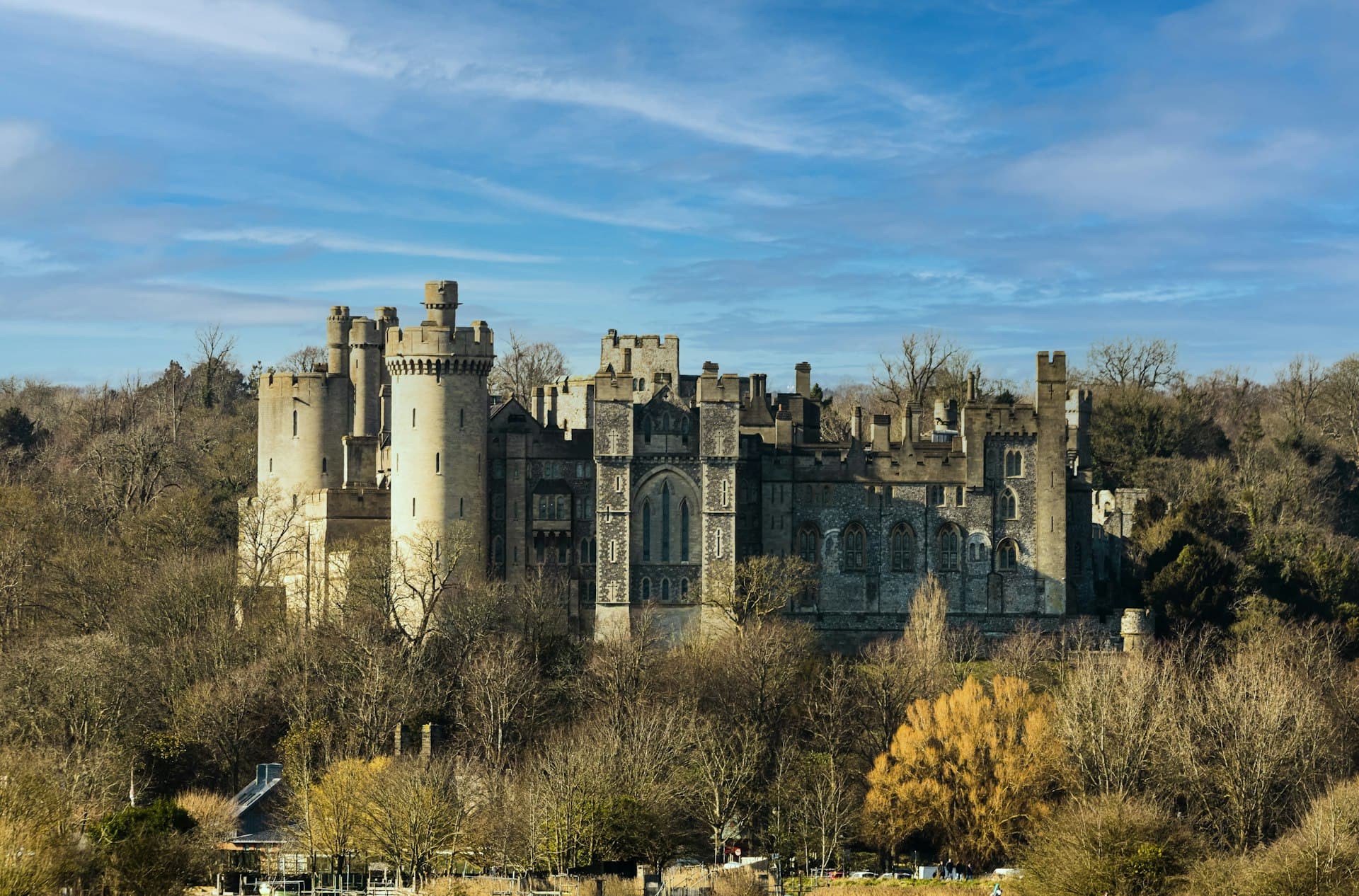 Photo of Arundel, via Wikimedia Commons
Self-guided audio walking tour of Lewes — GPS route, offline playback, story-driven narration in 32 languages.
“Where ancient foundations meet an enduring, independent spirit.”
Not the postcards. The stories even locals don't know — whispered in your ear, right where they happened.
Most castles feature a single defensive mound, but Lewes presents a rare double formation. There is a practical reason for this unusual design, though it defies common expectation.
The founders of Lewes Priory received a grand burial, yet their final resting place was disturbed by a very modern innovation.
This Tudor dwelling carries the name of one of Henry VIII's wives, yet she never once stepped through its doors.
Discover every secret of Lewes
Every address, every reveal in full — in your ear, right where it happened.
You pick your stops. You walk. The voice reveals what the others miss.


Your self-guided audio tour of Lewes is ready — pick your landmarks, choose your language, and start the moment you arrive.
BuyLume has a built-in augmented-reality guide. Hold your phone up and its camera shows the street ahead of you, with a glowing arrow laid over the real view that always points to your next stop — no map to puzzle over, no wrong turns. Like everything in Lume, it works fully offline.
Lewes, the county seat of East Sussex, is a place where medieval pathways meander through a landscape of chalky escarpments and gentle hills. Situated on the South Downs, this ancient market town offers a blend of deep history, distinctive shops, and a lively cultural presence. Its name, likely derived from the Saxon word for 'hill' or 'slopes,' hints at its undulating terrain, providing sweeping viewpoints across the town.
Just an hour and a half from London and a brief 20-minute journey from Brighton, Lewes serves as an accessible starting point for exploring the surrounding South Downs National Park. Visitors can wander through narrow passages known as 'twittens,' explore independent boutiques, and discover welcoming pubs and cafes. Beyond its allure, Lewes is also recognized for its dramatic annual Bonfire Night celebrations, among the largest and most spectacular in the UK.
## From Saxon Settlement to Norman Stronghold Lewes's origins trace back to the 6th century, likely established by the Saxons. The town's layout still largely follows the street plan laid out by Alfred the Great, and it even hosted a royal mint for a period. Following the Norman Conquest of 1066, Lewes was granted to William de Warenne, a powerful baron who began building Lewes Castle in 1066. The castle, originally known as Bray Castle, was constructed to oversee the gap carved by the River Ouse through the South Downs. It stands as one of only two castles in England featuring two mottes, or defensive mounds.
## The Battle of Lewes and Religious Strife Lewes played a central role in English history during the Battle of Lewes in May 1264. This significant conflict, part of the Second Barons' War, saw the forces of Simon de Montfort defeat King Henry III's royal army, leading to the capture of the king and the eventual founding of the first democratic English Parliament. The Priory of St. Pancras, founded by William de Warenne around 1077, became one of England's most important and wealthiest Cluniac monasteries. However, its grandeur was short-lived, as much of the priory was destroyed during Henry VIII's Dissolution of the Monasteries in the 16th century.
The town also bears witness to a darker period of religious persecution. During the reign of Queen Mary I (1555-1557), 17 Protestant martyrs were burned at the stake on Lewes High Street for refusing to renounce their faith. A plaque on the Town Hall and an obelisk on nearby Cliffe Hill commemorate these individuals.
## Revolutionary Thinkers and Enduring Traditions Lewes has been home to notable figures, including Thomas Paine, the revolutionary philosopher influential in the American War of Independence, who resided in Bull House on the High Street between 1768 and 1774. The town's independent spirit is perhaps best embodied by its annual Bonfire Night, a spectacular and dramatic event held every November 5th. This tradition, which has continued for over 300 years, commemorates both the Gunpowder Plot of 1605 and the 17 Protestant martyrs, with torchlit processions, effigies, and fireworks drawing thousands of spectators.
Begin your exploration at Lewes Castle, a Norman fortress offering wide views of the town and the South Downs from its Keep. Adjacent to the castle, the Barbican House Museum provides archaeological exhibits and insights into local history. Just a short walk away, discover the ruins of Lewes Priory, once a powerful Cluniac monastery, now a peaceful space for quiet reflection amidst its remnants.
Step back in time at Anne of Cleves House, a 15th-century timber-framed Wealden hall house that was part of Anne of Cleves' annulment settlement from Henry VIII. The house is furnished with period items, offering a window into Tudor life. For a serene escape, visit Southover Grange Gardens, beautifully landscaped with flower beds, ancient trees, and a tranquil atmosphere.
Explore the town's distinctive shopping and arts scene at The Needlemakers, a Victorian factory building now housing independent shops, crafts, and a cafe. Beer enthusiasts can visit Harvey's Brewery, a local institution. Do not miss the narrow, historic lanes known as 'twittens,' such as Keere Street, with their unique architecture and views. For those seeking nature, the South Downs National Park is easily accessible, offering opportunities for hiking and scenic walks, including sections of the South Downs Way.
Lewes welcomes visitors throughout the year, but the most agreeable weather for exploration generally falls between spring and autumn. The summer months, particularly July and August, offer comfortable temperatures, with daytime highs averaging around 21°C (70°F). This period is ideal for outdoor activities and enjoying local events like the Glyndebourne Opera Festival. While November brings the dramatic Lewes Bonfire Night, it is also the busiest time, requiring advance planning due to road closures and high visitor numbers.
Lewes is a compact town, easily explored on foot, with most attractions within walking distance of the town centre and train station. While local bus services are available, walking is often the most convenient way to navigate, though be prepared for some inclined streets. Cycling is also encouraged as an environmentally conscious option.
Driving in Lewes can be challenging due to narrow roads, one-way systems, and limited parking. If arriving by car, it is advisable to use one of the town's car parks, as incorrect parking can result in substantial fines. The town is well-connected by train, with the station located near the centre, offering easy access from London and Brighton. Many independent shops, cafes, and pubs accept card payments, but it is always wise to carry some cash, especially for smaller establishments or market stalls.
Lewes in Korean, in Chinese or in Hebrew — and 29 more languages, every stop narrated by a native voice. The widest language range of any self-guided audio tour.
Available in: