Chapelle Saint-Martin
Cette petite chapelle recèle un secret lié à un puissant roi anglais et à un meurtre choquant.
L'histoire complète se débloque dans le tour
 Bordeaux at German Wikipedia / CC BY-SA 3.0, via Wikimedia Commons
Visite audio autoguidée de Limeuil — parcours GPS à pied, lecture hors ligne, narration en 32 langues.
“Là où deux rivières se rencontrent, des siècles d'histoires s'écoulent.”
Pas les cartes postales. Les histoires que même les habitants ignorent — soufflées à l'oreille, là où elles se sont passées.
Cette petite chapelle recèle un secret lié à un puissant roi anglais et à un meurtre choquant.
Une maison particulière de Limeuil offre un aperçu des pratiques de plomberie médiévales qui pourraient vous surprendre.
Le bâtiment crénelé qui semble être un château médiéval au sommet du village a une origine plus exotique et récente.
Découvrez tous les secrets de Limeuil
Chaque adresse, chaque révélation en entier — dans ton oreille, là où elle s'est passée.
Tu choisis tes lieux. Tu marches. La voix te révèle ce que les autres ignorent.

Votre visite audioguidée de Limeuil vous attend — choisissez vos lieux, votre langue, et lancez-vous dès votre arrivée.
AcheterLume intègre un guide en réalité augmentée. Levez votre téléphone : sa caméra montre la rue devant vous, avec une flèche lumineuse posée sur l'image réelle qui pointe toujours vers votre prochain arrêt — aucune carte à déchiffrer, aucun mauvais virage. Comme tout dans Lume, ça fonctionne entièrement hors-ligne.
Limeuil, officiellement reconnu comme l'un des 'Plus Beaux Villages de France', est un village captivant de la Dordogne où convergent les rivières Vézère et Dordogne. Cet emplacement stratégique, au confluent de deux voies navigables importantes, a façonné sa longue et riche histoire. Le village se caractérise par ses rues pavées, ses maisons en pierre couleur miel et les vestiges de son passé fortifié, le tout serpentant sur une colline escarpée.
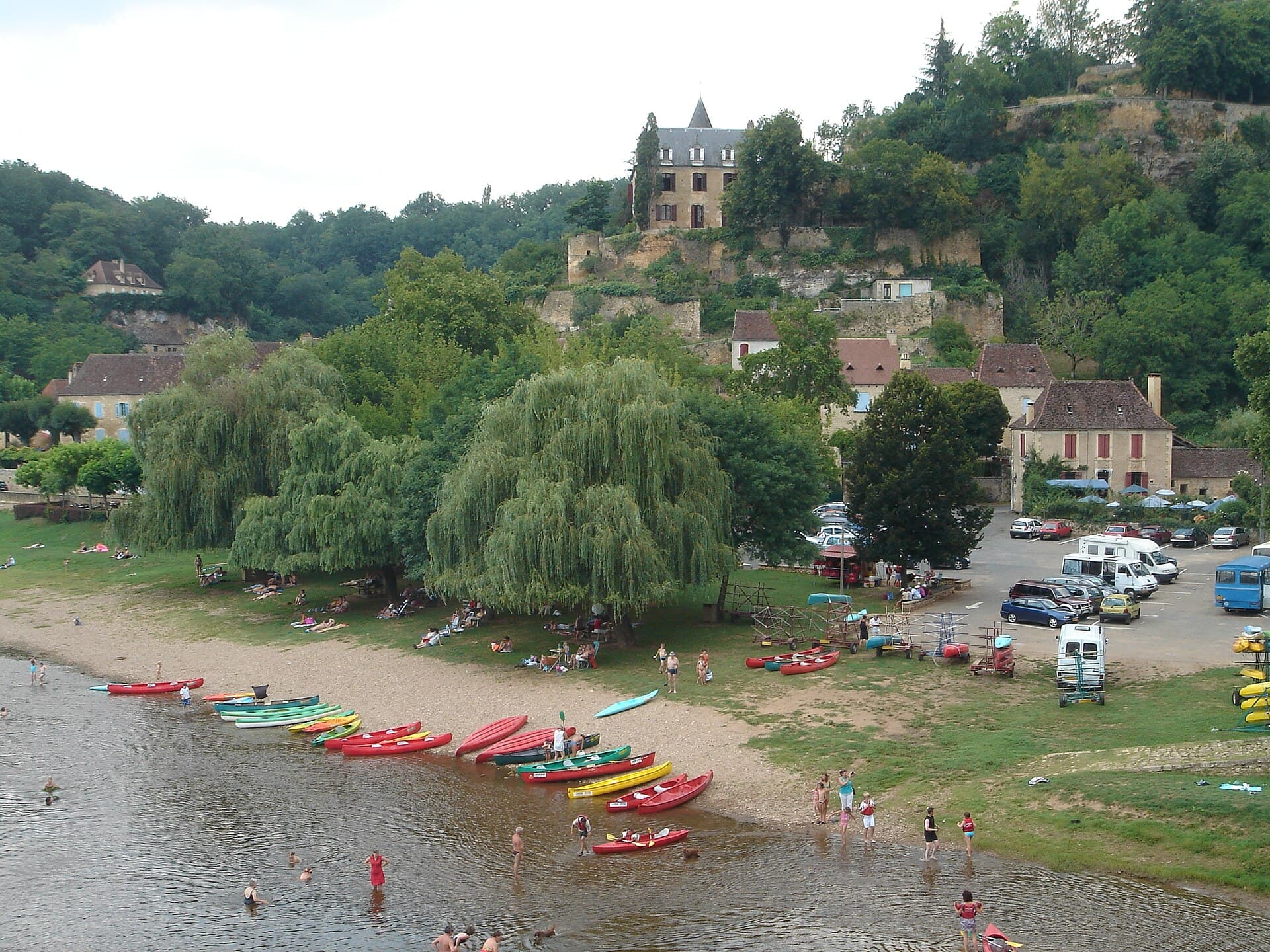
Les visiteurs sont invités à se garer en bas de la colline et à explorer le village à pied, un choix délibéré pour préserver son charme et gérer le flux de ses quelque 250 000 visiteurs annuels. De la plage fluviale, prisée pour la baignade et le canoë, aux jardins panoramiques au sommet, Limeuil offre un voyage à travers le temps et une occasion d'apprécier la beauté naturelle du Périgord.
## Du peuplement préhistorique à la forteresse médiévale L'histoire de Limeuil remonte à environ 15 000 ans, avec des preuves d'habitation humaine magdalénienne, notamment des plaques de calcaire sculptées trouvées dans une grotte non ouverte au public. Les Celtes furent les premiers habitants, nommant leur village 'Lemoialum', signifiant 'lieu planté d'ormes'. Les Romains établirent plus tard une garnison sur le promontoire stratégique surplombant le confluent des rivières, tirant parti des défenses naturelles de l'affleurement calcaire.
Avec le déclin de l'Empire romain, le village fut confronté aux invasions vikings du VIIIe au XIe siècle, incitant la population à se déplacer vers des terrains plus élevés pour plus de sécurité. Une forteresse, initialement probablement en bois, fut construite sur la plus haute terrasse, suivie de murs défensifs en pierre autour de la forteresse et du village, dont beaucoup restent remarquablement intacts aujourd'hui. Pendant la Guerre de Cent Ans (1337-1453), la position stratégique de Limeuil en fit un site contesté, changeant de mains à plusieurs reprises entre Français et Anglais. Le village souffrit grandement pendant cette période, et en 1420, les habitants exaspérés de Limeuil assassinèrent même leur seigneur, Jean de Beaufort.
## Commerce fluvial et transformations modernes Après la Guerre de Cent Ans, Limeuil entra dans une ère de prospérité grâce à son port fluvial animé. Des bateaux à fond plat, appelés 'gabarres', transportaient des marchandises comme des fûts de chêne et du bétail le long de la Dordogne jusqu'à Bordeaux. Le village était un centre économique dynamique, soutenant environ 80 artisans au XVIIIe siècle, sur une population d'environ 800 habitants. Cependant, l'avènement du chemin de fer au XIXe siècle entraîna le déclin du commerce fluvial, faisant perdre à Limeuil sa prééminence économique.
Malgré ce changement, le caractère médiéval de Limeuil fut largement préservé, en partie parce que l'eau courante n'atteignit les maisons qu'en 1973. Aujourd'hui, le village conserve son attrait historique, avec trois de ses quatre portes fortifiées d'origine toujours debout. Les deux ponts en pierre qui enjambent la Dordogne et la Vézère, créant un cadre pittoresque, furent construits en 1891.
Commencez votre exploration à la plage fluviale, un endroit populaire pour se rafraîchir, pique-niquer ou organiser une excursion en canoë sur la Dordogne. De là, traversez l'une des anciennes portes en pierre pour entrer dans le village historique. Les rues sinueuses et pavées de pierre, bordées de maisons couleur miel, mènent en haut de la colline. Cherchez l'église médiévale Sainte-Catherine, dédiée à la patronne des bateliers, qui date des XIVe et XVe siècles et repose sur des fondations du XIIe siècle.
Continuez votre ascension jusqu'aux Jardins Panoramiques, situés au sommet de la colline. Ces deux hectares de jardins à l'anglaise offrent des vues imprenables sur le confluent de la Dordogne et de la Vézère. Les jardins comprennent un jardin aquatique, un jardin médiéval, un jardin des insectes et même un jardin des sorcières. En bordure de Limeuil, à environ un kilomètre sur la route en direction du Bugue, vous trouverez la Chapelle Saint-Martin du XIIe siècle, qui contient des fresques originales. Dans tout le village, vous trouverez également diverses boutiques d'artisans, notamment des potiers et des souffleurs de verre.
Le meilleur moment pour visiter Limeuil est pendant les mois les plus chauds, de mai à octobre. Juillet et août offrent le temps le plus chaud, avec des températures diurnes autour de 29°C (84°F), et de nombreux événements spéciaux et marchés nocturnes. Cependant, ces mois voient également le plus grand nombre de touristes. Mai, juin et septembre offrent une chaleur agréable, souvent aussi chaude que le milieu de l'été, mais avec moins de monde et une probabilité légèrement plus élevée de pluie. La campagne est particulièrement luxuriante au printemps.
Limeuil se découvre idéalement à pied, les visiteurs se garant généralement sur le parking désigné près de la rivière à l'entrée du village. Ce parking est souvent payant, ce qui contribue à l'entretien du site historique. La rue principale du village est raide, il est donc recommandé de porter des chaussures de marche confortables. L'office de tourisme est situé en bas de la colline, près de la Mairie, et propose des cartes et des informations. Il y a quelques petites boutiques de souvenirs et cafés dans le village, ainsi qu'un bar à mi-chemin de la colline. La location de canoës est disponible à la plage fluviale.
Limeuil en coréen, en chinois ou en hébreu — et dans 29 autres langues, chaque étape narrée par une voix native. La plus large gamme de langues de tous les audioguides autoguidés.
Disponible en :