Taizhou City Wall
This ancient fortification isn't just for defense; it held a surprising dual purpose that saved it from destruction.
Full story unlocks in the tour
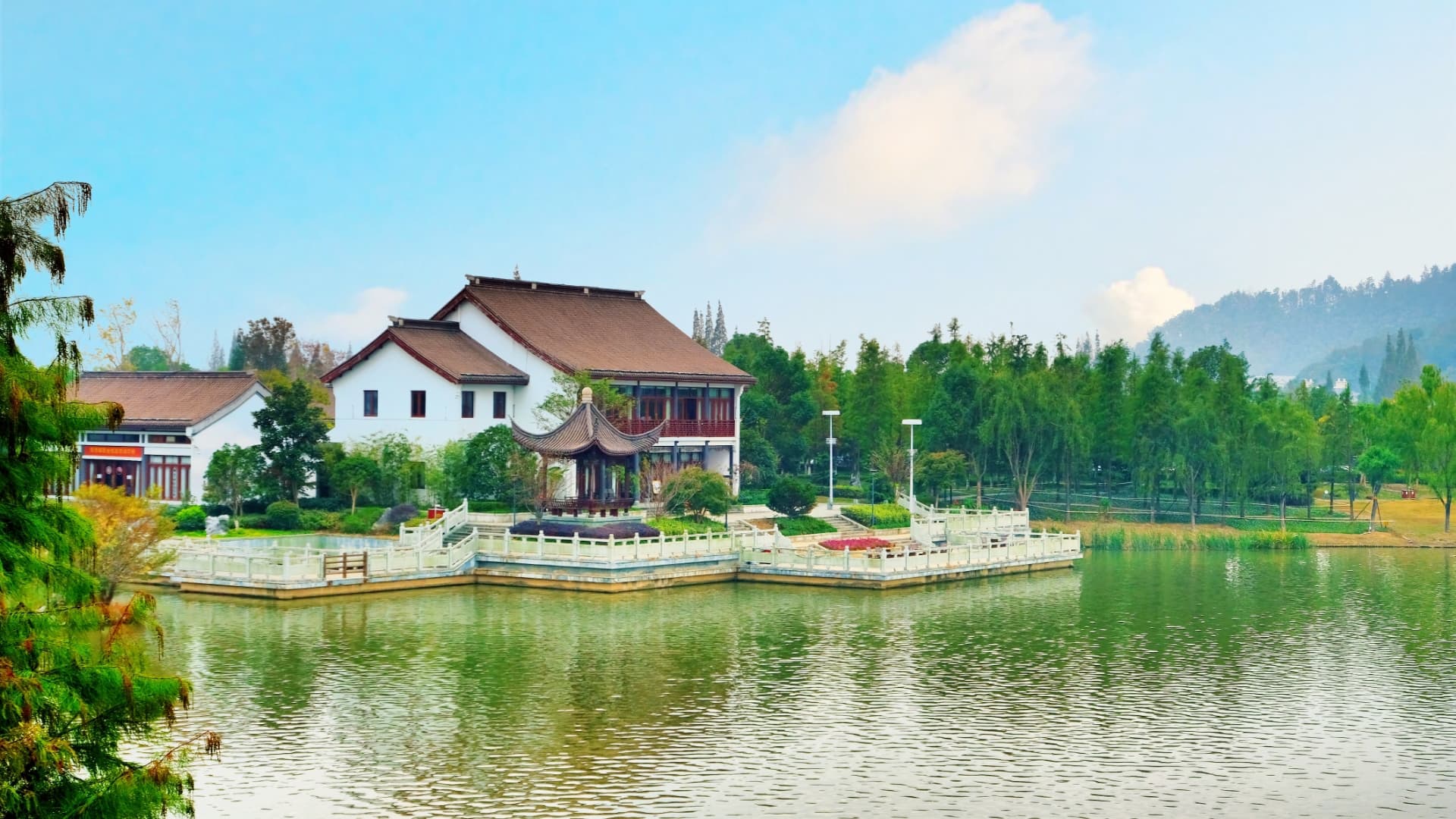 黑揍红 / CC BY 2.5, via Wikimedia Commons
Self-guided audio walking tour of Linhai — GPS route, offline playback, story-driven narration in 32 languages.
“Where ancient walls meet living history, a southern secret unfolds.”
Not the postcards. The stories even locals don't know — whispered in your ear, right where they happened.
This ancient fortification isn't just for defense; it held a surprising dual purpose that saved it from destruction.
Beyond its ancient facade, this street is considered 'living' for a reason that goes beyond mere preservation.
This Tang Dynasty temple played a pivotal, yet often overlooked, role in the spread of Buddhism far beyond China's borders.
Discover every secret of Linhai
Every address, every reveal in full — in your ear, right where it happened.
You pick your stops. You walk. The voice reveals what the others miss.


Your self-guided audio tour of Linhai is ready — pick your landmarks, choose your language, and start the moment you arrive.
BuyLume has a built-in augmented-reality guide. Hold your phone up and its camera shows the street ahead of you, with a glowing arrow laid over the real view that always points to your next stop — no map to puzzle over, no wrong turns. Like everything in Lume, it works fully offline.
Linhai, a county-level city within Taizhou in Zhejiang province, offers a journey through centuries of Chinese history and culture. Often called the 'Jiangnan Great Wall' city, its ancient fortifications are a testament to its strategic importance and enduring legacy. Surrounded by mountains on three sides and the East China Sea to its east, Linhai presents a harmonious blend of historical depth and natural beauty.
More than just a historical site, Linhai is a city where life unfolds at a measured pace, offering an authentic glimpse into provincial China. Its well-preserved ancient city wall, historic streets, and cultural heritage have earned it recognition as a 'National Historical and Cultural City of China' and an 'Excellent Tourism City.' Whether you're drawn to ancient architecture, tranquil lakes, or local culinary traditions, Linhai provides a refreshing escape from more bustling urban centers.
The history of Linhai stretches back to the Han Dynasty (2nd century BC – 2nd century AD), when Huipu County was officially established. Its name, 'Linhai,' meaning 'facing the sea,' reflects its strategic coastal location. The city's founding was driven by both administrative and defensive purposes, quickly evolving into a key transportation hub connecting inland areas with the coast along the Linjiang River.
By the 6th century, during the Sui Dynasty, Linhai had ascended to become the administrative center of the Taizhou region, solidifying its political influence in eastern China. The Tang Dynasty (618–907 AD) marked a significant cultural flourishing, with the founding of the renowned Longxing Temple in 621 AD, which became a pivotal center for the Tiantai school of Buddhism. This period also saw expansions to the city walls, initially built during the Eastern Jin Dynasty (317–420 AD).
The city walls underwent large-scale reconstruction during the Song Dynasty (960–1279 AD), transforming Linhai into a formidable defensive complex. A notable innovation during this time was the facing of the rammed earth wall with blue bricks and stone strips on the water-facing side, enhancing its stability and flood control capabilities. These fortifications were further perfected during the Ming and Qing Dynasties. General Qi Jiguang modernized the city walls in 1553 AD to protect against pirates, and it is believed that the design features of Linhai's walls served as a prototype for the modernization of the Great Wall of China in the Badaling section.
The architectural ensemble of Ziyang Street, the heart of the old town, largely developed during the Qing Dynasty (1644–1912 AD) and retains the layout of a Song Dynasty neighborhood. In 1994, Linhai was officially included in the list of 'National Historical and Cultural Cities of China,' recognizing its enduring heritage. A major program for cultural heritage preservation and restoration of the 'Southern Great Wall' was launched in 2012.
The most prominent attraction in Linhai is the Taizhou City Wall, often referred to as the 'Jiangnan Great Wall' or 'Southern Great Wall.' This ancient fortification, over 5,000 meters of which remain preserved, dates back to the Eastern Jin Dynasty and is unique for its dual function of military defense and flood control. Walking along its crest offers expansive views of the city and surrounding hills.
Adjacent to the city wall is East Lake, a classical Qing Dynasty imperial lake. It's a tranquil spot for strolls, admiring the scenery, and enjoying boat tours. The Lansheng Gate is located opposite the north exit of East Lake, providing convenient access to the Jiangnan Great Wall.
The heart of Linhai's old town is Ziyang Ancient Street, a 1,080-meter-long street that preserves the aesthetic of the Song, Ming, and Qing eras. Here, you'll find traditional Chinese shops, artisan workshops, teahouses, and a variety of local snacks. It's also home to the Wang Tian Shun Bakery, over 100 years old, known for its savory cakes.
For those interested in religious history, Longxing Temple is a significant site. Founded in 621 AD during the Tang Dynasty, it played a crucial role in the spread of Buddhism and is notable for its Thousand-Buddha Pagoda.
Linghu Park offers a blend of natural beauty, cultural attractions, and recreational activities, with lush trees and trails around Linghu Lake, ideal for walking and cycling.
Linhai experiences a subtropical monsoon climate with distinct seasons. The most comfortable times to visit are spring (April–May) and autumn (September–October/November), when temperatures are mild and stable, ideal for outdoor activities and sightseeing. Spring brings mild temperatures and relatively abundant rainfall, particularly in May. Autumn offers gradually decreasing temperatures and pleasant weather. Summers (June–August) are hot and humid with significant rainfall, especially in June. Winters (December–February) are cooler and drier, with occasional cold waves.
Linhai Railway Station is the main transport hub, with high-speed trains connecting to cities like Shanghai, Hangzhou, and Taizhou. The journey from Shanghai takes a few hours. The nearest airport is Taizhou Luqiao Airport (HYN), about 15 minutes away, with daily flights to major Chinese cities. Larger international airports are in Hangzhou (Xiaoshan International Airport) and Wenzhou (Yongqiang Airport), both about 100-160 km from Linhai.
Within Linhai, taxis are inexpensive and convenient, and electric scooters and bicycles are popular. Public buses are also available. English is not widely spoken, so an offline translator and addresses in Chinese characters are recommended. The local currency is the yuan. For accommodation, options are available in Linhai itself, or you could consider nearby Jinzhou as a base for day trips.
Linhai in Korean, in Chinese or in Hebrew — and 29 more languages, every stop narrated by a native voice. The widest language range of any self-guided audio tour.
Available in: