Grottes de Longyou
Sous des étangs ordinaires du comté de Longyou se cache un secret extraordinaire : une série de chambres souterraines colossales, taillées avec une précision impossible.
L'histoire complète se débloque dans le tour
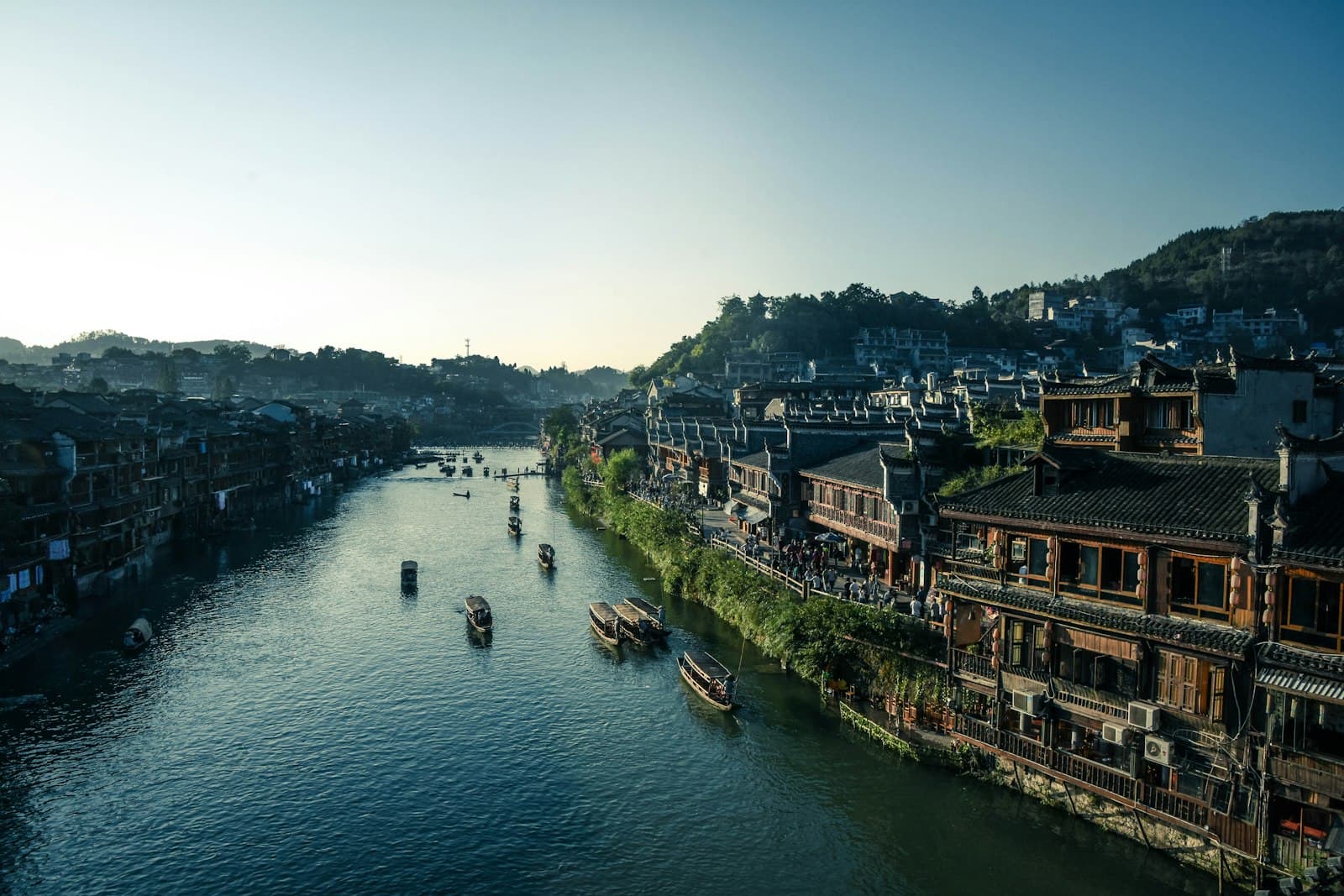 Photo: Emile Guillemot / Unsplash
Visite audio autoguidée de Quzhou — parcours GPS à pied, lecture hors ligne, narration en 32 langues.
“Là où les mystères ancestraux rencontrent les traditions piquantes.”
Pas les cartes postales. Les histoires que même les habitants ignorent — soufflées à l'oreille, là où elles se sont passées.
Sous des étangs ordinaires du comté de Longyou se cache un secret extraordinaire : une série de chambres souterraines colossales, taillées avec une précision impossible.
Si de nombreux remparts anciens racontent des histoires de défense, les fortifications de Quzhou se distinguent par un lien unique avec un jeu de société chinois crucial.
Les plats locaux de Quzhou sont réputés pour un coup de fouet ardent qui pourrait surprendre les visiteurs s'attendant à des saveurs chinoises plus douces.
Découvrez tous les secrets de Quzhou
Chaque adresse, chaque révélation en entier — dans ton oreille, là où elle s'est passée.
Tu choisis tes lieux. Tu marches. La voix te révèle ce que les autres ignorent.


Votre visite audioguidée de Quzhou vous attend — choisissez vos lieux, votre langue, et lancez-vous dès votre arrivée.
AcheterLume intègre un guide en réalité augmentée. Levez votre téléphone : sa caméra montre la rue devant vous, avec une flèche lumineuse posée sur l'image réelle qui pointe toujours vers votre prochain arrêt — aucune carte à déchiffrer, aucun mauvais virage. Comme tout dans Lume, ça fonctionne entièrement hors-ligne.
Quzhou, une ville de l'ouest de la province du Zhejiang, est une destination captivante où l'histoire ancienne, une culture profonde et une beauté naturelle saisissante convergent. Située au carrefour des provinces du Zhejiang, du Fujian, du Jiangxi et de l'Anhui, Quzhou a longtemps servi de plaque tournante vitale pour le transport et le commerce dans le sud-est de la Chine. Sa position stratégique sur les cours supérieurs de la rivière Qiantang a façonné son développement pendant plus de 1 800 ans, lui valant des titres tels que « Ville historique et culturelle de niveau national » et « Ville touristique chinoise de premier plan ».
La ville est reconnue comme la « Patrie du confucianisme du Sud », un héritage qui influence profondément sa vie quotidienne et son paysage culturel. Au-delà de son importance historique, Quzhou offre des paysages diversifiés, des montagnes et grottes karstiques aux lacs sereins et forêts de bambous, ce qui en fait une retraite attrayante pour ceux qui recherchent à la fois la profondeur culturelle et l'exploration naturelle. Son mélange unique de patrimoine, d'écologie et d'une tradition culinaire épicée distinctive assure un voyage mémorable à tout voyageur.
Les origines de Quzhou remontent à 192 après J.-C., sous la dynastie des Han de l'Est, avec la création du comté de Xin'an, jetant les bases de la ville moderne. Le nom de « Préfecture de Quzhou » a été officiellement adopté en 621 après J.-C., sous la dynastie Tang, un nom qui est resté depuis. Tout au long de sa longue histoire, la position stratégique de Quzhou au confluent de quatre provinces et son emplacement sur les cours supérieurs de la rivière Qiantang en ont fait un centre crucial pour le commerce, le transport et l'administration.
Un moment charnière de l'histoire de Quzhou s'est produit au XIIe siècle. Après la chute de la dynastie des Song du Nord, les descendants directs de Confucius ont migré vers le sud et se sont installés à Quzhou. Cet événement a transformé la ville en le deuxième centre le plus important du confucianisme en Chine, conduisant à la construction du temple ancestral pour la branche sud de la famille de Confucius. Cela a solidifié le statut culturel unique de Quzhou, qu'elle conserve encore aujourd'hui, le temple confucéen du Sud étant l'un des deux seuls temples familiaux de ce type dans tout le pays.
Au fil des siècles, Quzhou a continué d'évoluer, devenant le centre administratif de la Route de Quzhou sous la dynastie mongole des Yuan, puis une préfecture (Fu) sous la dynastie Ming, renforçant encore son importance politique et économique. Les anciens remparts de la ville, dont certaines parties remontent à la dynastie des Jin de l'Ouest, témoignent de son passé militaire et de son héritage durable en tant que ville ancienne bien préservée dans la région sud du fleuve Yangtze. En 1994, Quzhou a été reconnue comme une « Ville historique et culturelle de niveau national », témoignage de son récit historique durable.
Commencez votre exploration au Temple confucéen du Sud, l'un des deux seuls temples familiaux confucéens en Chine. Ce site, s'étendant sur environ 13 900 mètres carrés, est une destination de pèlerinage pour ceux qui s'intéressent à la philosophie et à l'architecture chinoises. Adjacent au temple se trouve le Musée de la ville de Quzhou, offrant un contexte historique supplémentaire.
Découvrez les énigmatiques Grottes de Longyou, une série de 24 cavernes souterraines massives, construites par l'homme il y a plus de 2 000 ans. Ces grottes, avec leurs marques de ciseau uniformes et leur ingénierie précise, restent un mystère archéologique.
Promenez-vous le long de sections de l'Ancien rempart de Quzhou, une relique culturelle protégée au niveau national, dont certaines parties datent de la dynastie des Jin de l'Ouest. La zone autour du quartier historique de Shuitingmen offre des jardins paysagers et des vues sur la rivière. Pour la beauté naturelle et un lien avec la culture chinoise du Go, visitez la Zone panoramique du mont Lanke, connue sous le nom de « Pays des fées du jeu de Go chinois ».
Pour changer de rythme, explorez le Mont Jianglang, un site du patrimoine mondial de l'UNESCO reconnu pour sa spectaculaire formation de Danxia avec trois pics proéminents. Un autre point fort naturel est le Lac Jiulong de Quzhou, un endroit populaire pour des vues sereines et la baignade pendant les mois les plus chauds. Ne manquez pas l'occasion de vous promener dans l'Ancienne ville d'Ershibadu, qui préserve les styles architecturaux traditionnels et les coutumes folkloriques, offrant un aperçu d'une époque révolue.
Les périodes les plus confortables pour visiter Quzhou pour les activités par temps chaud sont généralement de la mi-septembre à la mi-octobre, ou pendant le printemps (mars à mai) et la fin de l'automne (octobre à novembre). Ces périodes offrent des températures agréables et moins de précipitations. Les étés (juin à août) sont chauds, humides et souvent nuageux avec des précipitations importantes, tandis que les hivers (décembre à février) sont froids, humides et généralement clairs.
Quzhou est bien desservie, avec l'aéroport de Quzhou (JUZ) offrant des vols directs vers plusieurs grandes villes chinoises. Les trains à grande vitesse permettent des trajets efficaces, avec des voyages depuis Hangzhou prenant environ une heure et depuis Shanghai environ 2 à 2,5 heures. La ville dispose également d'un réseau de bus complet la reliant à d'autres villes du Zhejiang et des provinces voisines.
L'hébergement à Quzhou est généralement plus abordable que dans les grands centres touristiques. Les options vont des maisons d'hôtes économiques aux hôtels de milieu de gamme offrant un bon rapport qualité-prix. Lorsque vous dînez, sachez que la cuisine de Quzhou est réputée pour son piquant. Si vous préférez des saveurs plus douces, n'oubliez pas de demander « bu la » (sans épices) ou « wei la » (légèrement épicé).
Quzhou en coréen, en chinois ou en hébreu — et dans 29 autres langues, chaque étape narrée par une voix native. La plus large gamme de langues de tous les audioguides autoguidés.
Disponible en :