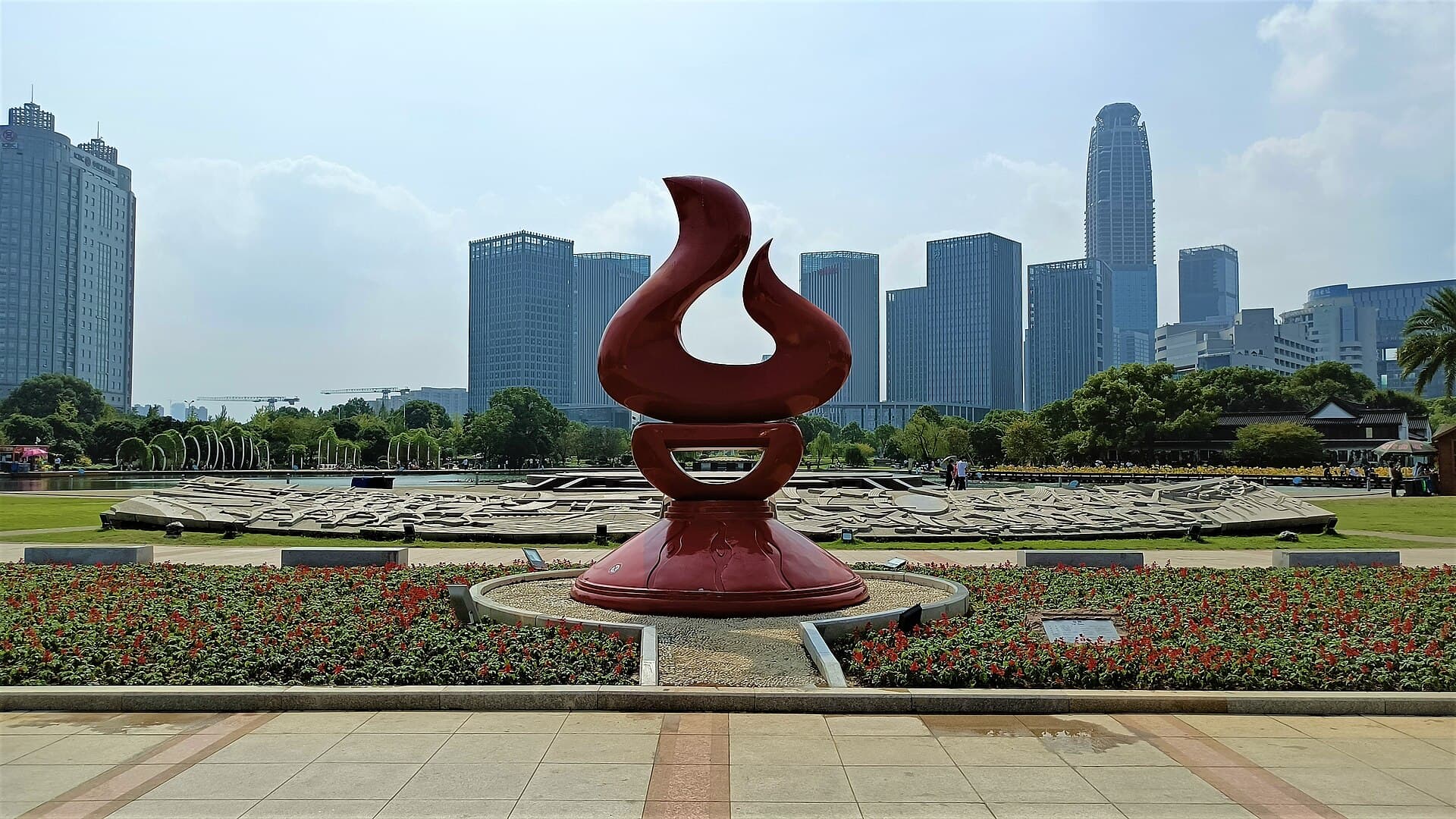
Taizhou, ChinaRowingbohe / CC BY-SA 4.0, via Wikimedia Commons
CN

Taizhou

Self-guided audio walking tour of Taizhou — GPS route, offline playback, story-driven narration in 32 languages.

Where ancient walls meet mystical mountains, and water flows with quiet stories.

The secrets of Taizhou

Taizhou, as no one tells it.

Not the postcards. The stories even locals don't know — whispered in your ear, right where they happened.

3 secrets below. Many more wait inside the tour.
Southern Great Wall (Linhai Great Wall)

Many consider the Great Wall of China a singular marvel, yet a lesser-known counterpart in Taizhou holds a surprising architectural secret.

Full story unlocks in the tour
Tiantai Mountain

The origin story of Tiantai Mountain, a significant Buddhist site, involves a mythical creature and a goddess.

Full story unlocks in the tour
Guoqing Temple

Within the enduring Guoqing Temple, the founding site of an influential Buddhist school, lies a relic of its esteemed founder.

Full story unlocks in the tour
The full tour

Discover every secret of Taizhou

Every address, every reveal in full — in your ear, right where it happened.

Get the key to Taizhou

You pick your stops. You walk. The voice reveals what the others miss.

Choose your time

How long do you have in Taizhou?

Your self-guided audio tour of Taizhou is ready — pick your landmarks, choose your language, and start the moment you arrive.

Buy
About Taizhou

The story of Taizhou

Taizhou, a coastal city in China's Zhejiang Province, offers a blend of natural splendor, enduring history, and spiritual depth. Positioned south of Ningbo and Shaoxing, and north of Wenzhou, it is often referred to as a 'water city' due to its extensive river network, drawing comparisons to Suzhou and Hangzhou. Beyond its waterways, Taizhou is recognized for Tiantai Mountain, a sacred location considered the birthplace of the Tiantai School of Buddhism and Southern Taoism.

With a history extending back over 5,000 years to Neolithic settlements, Taizhou has evolved from an early administrative center to a modern port city. It played a crucial role in coastal defense and trade, particularly during the Ming Dynasty. Today, Taizhou stands as an important manufacturing base and a significant center for fruit and fishing industries in Zhejiang.

History

From Ancient Settlements to Spiritual Cradle

The history of Taizhou is a deep narrative, beginning with human habitation around 5,000 years ago during the Neolithic Age. The earliest administrative references date to 85 BC, when Huipu County was established during the Western Han Dynasty. The name 'Taizhou' itself emerged in 622 AD during the Tang Dynasty, honoring the prominent Tiantai Mountain within its territory.

Taizhou holds immense spiritual significance as the origin point of two major Chinese philosophical movements. The Tiantai Buddhist school, one of the most influential in Chinese Buddhism, was founded here in the 6th century. Its center, Guoqing Temple, became a pilgrimage destination, and the school's doctrine was systematized by Master Zhiyi on Tiantai Mountain. Additionally, Taizhou is the birthplace of the Southern School of Taoism, founded by Zhang Boduan, a native of the region. These spiritual traditions have profoundly shaped the area's unique cultural identity.

Strategically positioned on the East China Sea coast and within the Yangtze River Delta, Taizhou's development was influenced by trade and navigation. To protect against floods and invaders, construction of the Taizhou City Wall, often called the 'Southern Great Wall,' began as early as the 4th century during the Eastern Jin Dynasty. This ancient wall, extended in later dynasties and renovated during the Ming and Qing, served as a vital defense and flood control system. Under the Ming Dynasty, Taizhou was a center for state salt administration, bringing considerable wealth to local merchants. In 1994, Taizhou was officially established as a prefecture-level city.

What to see

Explore the enduring legacy of Taizhou through its remarkable sites. The Southern Great Wall, located in Linhai, is a well-preserved ancient fortification initially built in the Eastern Jin Dynasty. This 6,000-meter-long wall (with about 5,000 meters still standing) is notable for its unique structure and is considered a 'prototype' for sections of the Great Wall in Beijing. You can walk along its length, immersing yourself in centuries of history.

Tiantai Mountain, a national AAAA scenic area, offers both captivating natural scenery and profound cultural significance. It is known for its unusual peaks, rocks, and waterfalls, and is home to the ancient Guoqing Temple, dating back to 598 AD. The temple is a vast complex with numerous halls and priceless cultural treasures.

Stroll down Ziyang Ancient Street in Linhai, a historical commercial block over 1,000 meters long, named after Taoist founder Zhang Boduan. Here, you will find shops, eateries, and a glimpse into the city's past. For more natural beauty, Shenxianju Scenic Area in Xianju County captivates visitors with its 'fairy landscape' of uniquely shaped peaks and waterfalls. East Lake, excavated during the Northern Song Dynasty, is a picturesque garden with mountains and water, offering a tranquil escape.

When to visit

The best times to visit Taizhou are during spring (March to May) and autumn (September to November). Spring offers mild weather and the beauty of cherry blossoms and radiant rape blossoms, with festivals like the Azalea Festival and Stone Culture Festival often held in April and May. Autumn also provides mild temperatures, ideal for exploring outdoor attractions like Tiantai Mountain and the Southern Great Wall without extreme heat or cold. For those interested in waterfalls, the rainy season from June to August can be particularly striking at places like Shenxianju Scenic Area.

Practical

Taizhou is located in the central area of Zhejiang, east China. Mandarin Chinese is the primary language, and while English is limited, it may be spoken in hotels and major tourist sites. Translation apps are recommended for broader communication. The city is accessible by bullet train, with services from cities like Shanghai. Within Taizhou, transportation options include local buses and taxis. When visiting popular sites like the Southern Great Wall, consider avoiding weekends and holidays to minimize crowds. Local cuisine includes fresh seafood and various street foods found at night markets like the Huangyan Night Market. Many attractions, such as the Ancient City of Taizhou, have free entry, though some scenic areas may have ticket prices.

Good to know
Where is Taizhou located?
Taizhou is located in the central area of Zhejiang Province, on the eastern coast of China.
What is Taizhou known for?
Taizhou is known for Tiantai Mountain, the birthplace of the Tiantai School of Buddhism and Southern Taoism, and the Southern Great Wall. It is also recognized as a 'water city' with a dense river network and a significant manufacturing and agricultural base.
What is the best time of year to visit Taizhou?
The best times to visit Taizhou are during spring (March to May) and autumn (September to November) due to the mild weather.
Is there a Great Wall in Taizhou?
Yes, Taizhou is home to the Linhai Great Wall, also known as the 'Southern Great Wall,' which was built during the Jin Dynasty for defense and flood control.
What kind of food can I expect in Taizhou?
Taizhou offers delicious local food, including fresh seafood, various street snacks, and dumplings, often found in local eateries and night markets.
Do I need a visa to visit Taizhou, China?
Most international visitors will need a visa to visit Taizhou, Zhejiang, as it is part of mainland China.
On the map
Taizhou
€9.90
No booking · activate anytime · 12h to walk it
Load on Wi-Fi, then walk offline — no roaming abroad
Get the key to Taizhou