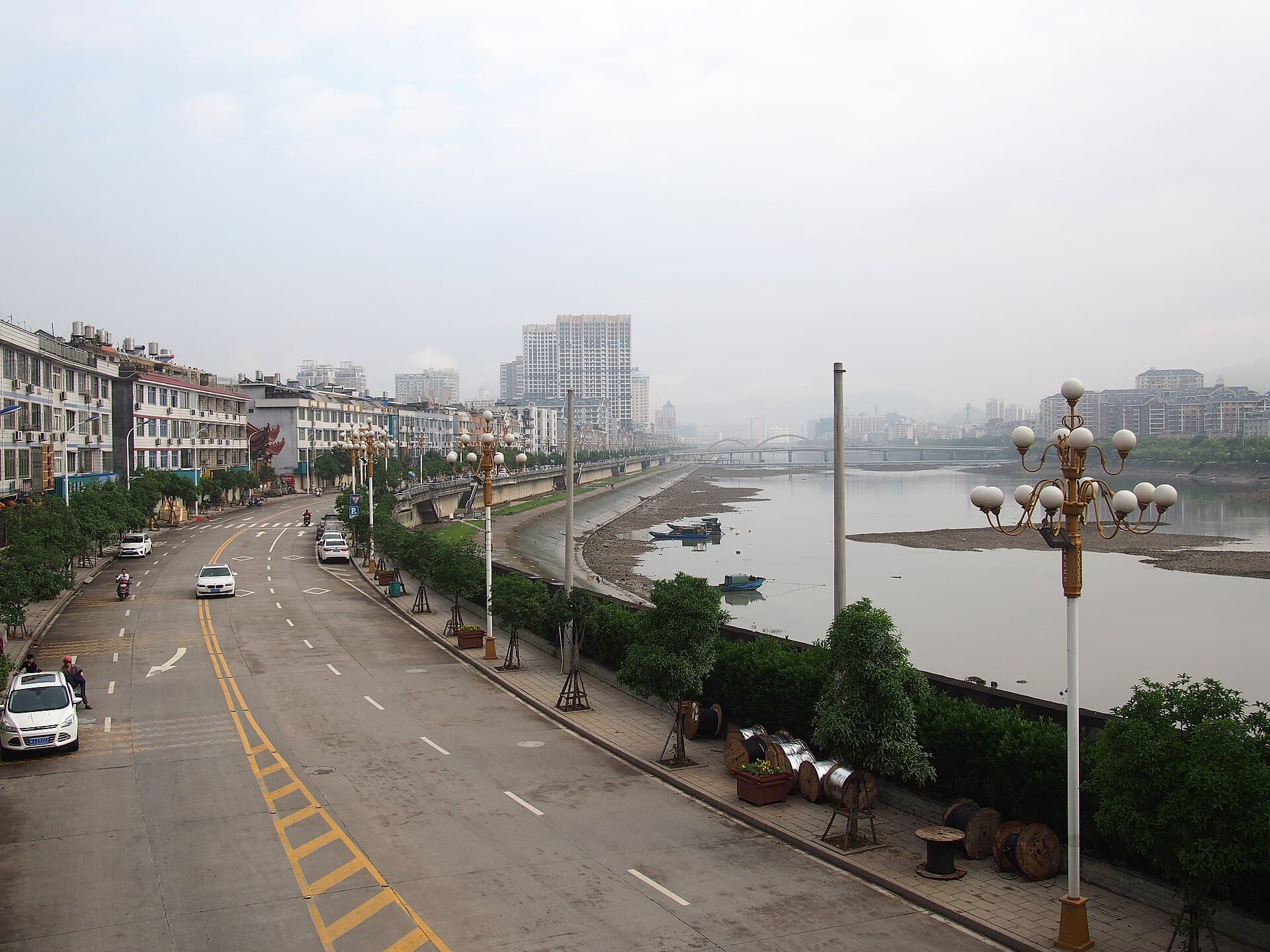
Bahía de Sandu
Esta serena bahía, que alguna vez fue un bullicioso puerto internacional, aún conserva una sorprendente reliquia de su pasado global.
La historia completa se desbloquea en el tour
 rheins / CC BY 3.0, via Wikimedia Commons
Tour de audio autoguiado de Ningde — ruta GPS a pie, reproducción offline, narración en 32 idiomas.
“Donde las montañas esmeralda se encuentran con el Mar de China Oriental, y la innovación surge de raíces antiguas.”
No las postales. Las historias que ni los locales conocen — al oído, justo donde ocurrieron.
Esta serena bahía, que alguna vez fue un bullicioso puerto internacional, aún conserva una sorprendente reliquia de su pasado global.
Una ciudad que alguna vez fue conocida por sus industrias tradicionales se convirtió rápidamente en un líder mundial en una tecnología de vanguardia.
Imagine un lecho de río tan singularmente plano y expansivo que se considera el único de su tipo en el mundo.
Descubre todos los secretos de Ningde
Cada dirección, cada revelación al completo — a tu oído, justo donde ocurrió.
Eliges tus paradas. Caminas. La voz te revela lo que los demás ignoran.


Tu tour de audioguía por Ningde te espera — elige tus lugares, tu idioma y empieza al llegar.
ComprarLume incluye una guía de realidad aumentada. Levanta el móvil y su cámara muestra la calle que tienes delante, con una flecha luminosa sobre la imagen real que siempre apunta a tu próxima parada — sin mapas que descifrar, sin giros equivocados. Como todo en Lume, funciona completamente sin conexión.
Ningde, una ciudad a nivel de prefectura en la costa noreste de la provincia china de Fujian, ofrece una atractiva combinación de dramáticos paisajes naturales y un paisaje industrial en rápida evolución. Con una costa que se extiende casi 200 kilómetros, la región es un importante centro de acuicultura, donde las montañas se encuentran con el Mar de China Oriental.
Más allá de sus pintorescas bahías y plantaciones de té, Ningde es reconocida por su patrimonio cultural único, que incluye artes populares tradicionales como la danza del león con marionetas y el intrincado corte de papel. La ciudad también ha atraído la atención internacional por su notable crecimiento económico, impulsado por su surgimiento como líder mundial en tecnología de nueva energía.
La historia de Ningde se remonta a tiempos antiguos, con asentamientos humanos en la zona que datan de 10,000 a 20,000 años durante el Paleolítico Superior tardío. La historia administrativa documentada de la región comenzó en el año 282 d.C., durante la Dinastía Jin, con el establecimiento del condado de Wenma. El nombre 'Ningde' en sí se originó a mediados del siglo IX, durante la Dinastía Tang, de la combinación de los primeros caracteres de dos municipios fusionados, Ningchuan y Gande.
Establecido oficialmente como condado de Ningde en el año 933 d.C., su ubicación costera fue fundamental para su desarrollo, fomentando la próspera pesca, el comercio marítimo y el comercio, y consolidando su papel como un importante puerto en la costa de China. El terreno montañoso también moldeó su identidad agrícola, particularmente el cultivo de variedades de té de renombre. A lo largo de los siglos, el estatus administrativo de Ningde evolucionó, reflejando su creciente importancia económica y política dentro de la región, pasando de un pequeño condado a una importante ciudad a nivel de prefectura.
La economía temprana de Ningde se basó en la agricultura y los recursos marinos, con los residentes locales dedicados activamente a la cría de mariscos, especialmente el gran corvina amarilla, y al cultivo de té, especialmente el té blanco. La vida cultural de la ciudad se enriqueció por su proximidad al mar, fomentando una cultura marítima única e integrando a Ningde en la histórica Ruta Marítima de la Seda. Antiguos templos y tradiciones artesanales, como el corte de papel y las artesanías de conchas, aún se conservan en la región.
La era moderna ha visto a Ningde experimentar una rápida transformación. La apertura de la Bahía de Sandu como puerto comercial internacional en 1898 marcó un punto de inflexión, atrayendo inversión extranjera e integrando a Ningde en el comercio global, particularmente para las exportaciones de té. Más recientemente, Ningde ha surgido como un importante centro industrial y tecnológico, en gran parte debido al establecimiento de Contemporary Amperex Technology Co., Limited (CATL) en 2011. CATL, con sede en Ningde, se ha convertido en el mayor proveedor mundial de baterías de iones de litio para vehículos eléctricos, impulsando el crecimiento económico de la ciudad y atrayendo a profesionales cualificados. Esto ha transformado a Ningde de una ciudad costera tradicional a un nodo clave en la industria global de vehículos eléctricos, con su PIB casi triplicándose entre 2012 y 2021.
Ningde ofrece una variedad de atracciones que resaltan su belleza natural y profundidad cultural. El Parque de la Montaña Taimu es un atractivo natural principal, conocido por sus formaciones rocosas únicas, templos antiguos y vistas panorámicas. Una pasarela de cristal ofrece una perspectiva aérea de los paisajes de Danxia. Para una experiencia verdaderamente distintiva, visite el Área Escénica de Baishuiyang, hogar de la única 'plaza de agua poco profunda' del mundo, un vasto lecho de río plano donde los visitantes pueden caminar con el agua hasta los tobillos.
La región costera de Xiapu es un paraíso para los fotógrafos, celebrada por sus vastos y hermosos llanos de marea que ofrecen atractivos efectos de luz y sombra, especialmente durante el amanecer y el atardecer. La Isla Dayushan, reconocida como una de las islas más bellas de China y la más alta de Fujian, cuenta con lagos centrales y extensas praderas. Explore el lado cultural de Ningde en sus pueblos históricos, como Longtan y Qiantou, que albergan fascinantes museos agrícolas que muestran artesanías tradicionales y la vida campesina. El Museo de Historia de Ningde ofrece información sobre el desarrollo de la ciudad a través de artefactos de varias épocas. Para aquellos interesados en el arte local, el Museo de Artes y Oficios en Jinshi Lane ofrece una mirada a las técnicas y talleres artesanales.
Ningde experimenta un clima subtropical influenciado por el Mar de China Oriental, con veranos calurosos y húmedos e inviernos suaves y frescos. El clima más favorable para visitar Ningde es durante los meses de primavera (abril-junio) y otoño (septiembre-noviembre). Durante estos períodos, las temperaturas son cómodas para actividades al aire libre y la precipitación es significativamente menor. El verano (julio-agosto) es ideal para actividades acuáticas, pero tenga en cuenta los tifones ocasionales y consulte los pronósticos. El invierno ofrece una experiencia más tranquila, con la montaña Taimu a menudo envuelta en niebla, creando un encanto único.
Ningde no tiene su propio aeropuerto civil; la opción más conveniente es volar al Aeropuerto Internacional Fuzhou Changle (FOC). Desde Fuzhou, puede llegar a Ningde en autobús directo de larga distancia (1.5-2 horas), taxi (1.5-2 horas) o tren de alta velocidad (40-60 minutos desde la Estación de Tren del Sur de Fuzhou). El tren de alta velocidad conecta Ningde con las principales ciudades como Shanghái, Xiamen, Hangzhou y Wenzhou. Dentro de la ciudad, los taxis (a través de aplicaciones como Didi) y los autobuses son convenientes para moverse.
Al planificar su viaje, considere llevar ropa ligera hecha de telas naturales para el verano y conjuntos por capas para las noches más frescas y el invierno. Los zapatos cómodos son esenciales para caminar por senderos de montaña y calles antiguas. Es aconsejable evitar los principales días festivos nacionales, ya que los sistemas de transporte pueden estar sobrecargados. Al cenar, especialmente mariscos, confirme los precios y pesos de antemano para evitar cargos excesivos. No olvide probar el té blanco local, una especialidad regional, y visitar una tienda de té tradicional para una experiencia cultural.
Ningde en coreano, en chino o en hebreo — y 29 idiomas más, cada parada narrada por una voz nativa. La mayor variedad de idiomas de cualquier audioguía autoguiada.
Disponible en: