Aldea Huangluo Yao
Las mujeres de la aldea Huangluo Yao son conocidas por su cabello extraordinario, una tradición que abarca siglos.
La historia completa se desbloquea en el tour
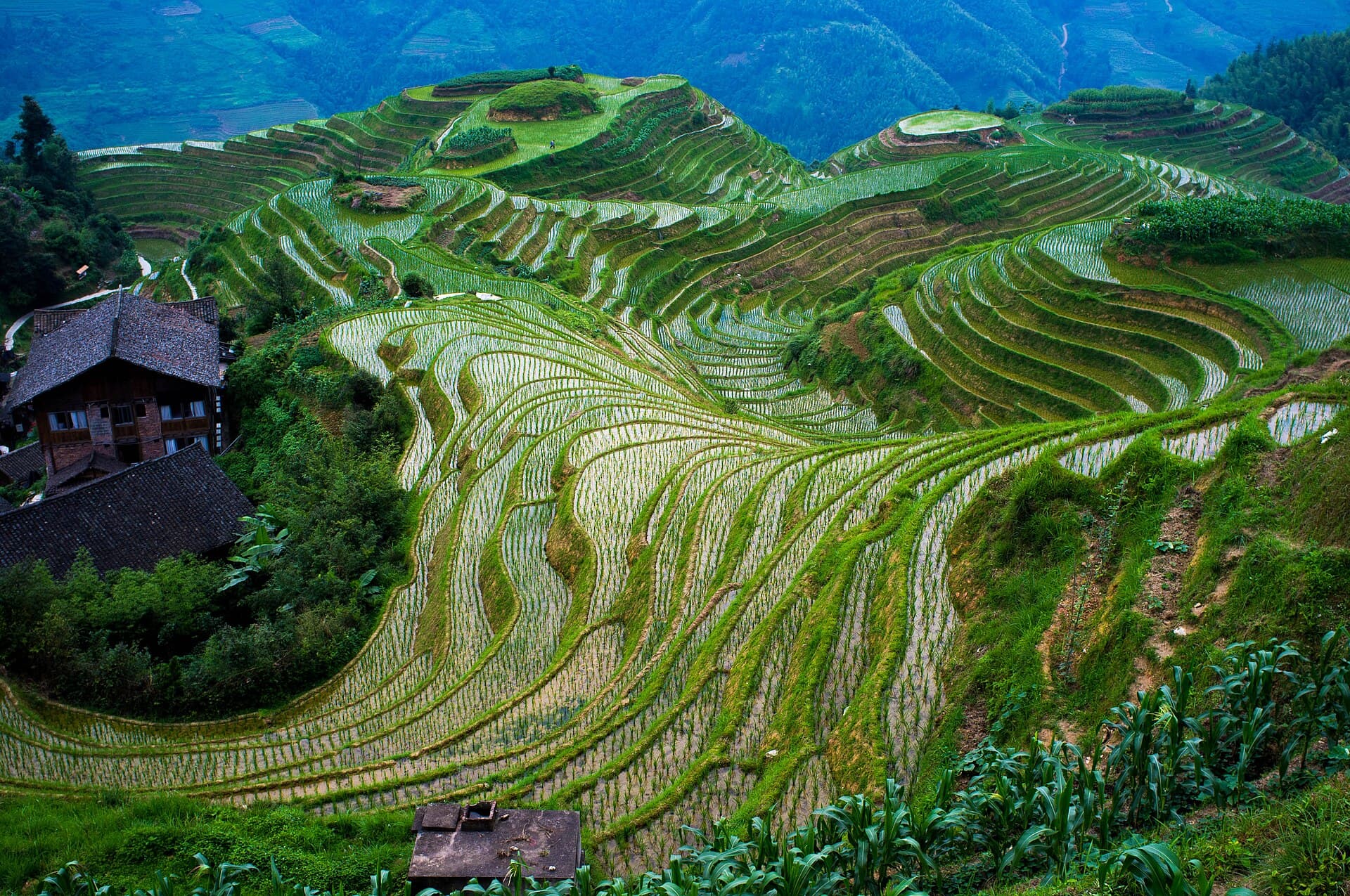 severin.stalder / CC BY-SA 3.0, via Wikimedia Commons
Tour de audio autoguiado de Longsheng — ruta GPS a pie, reproducción offline, narración en 32 idiomas.
“Donde las montañas respiran y los dragones duermen, grabado en esmeralda y oro.”
No las postales. Las historias que ni los locales conocen — al oído, justo donde ocurrieron.
Las mujeres de la aldea Huangluo Yao son conocidas por su cabello extraordinario, una tradición que abarca siglos.
La aldea Dazhai, un asentamiento Red Yao, fue una vez designada como la aldea agrícola modelo de China.
La aldea Ping'an, un asentamiento de la minoría Zhuang, tiene un estilo arquitectónico único diseñado tanto para personas como para animales.
Descubre todos los secretos de Longsheng
Cada dirección, cada revelación al completo — a tu oído, justo donde ocurrió.
Eliges tus paradas. Caminas. La voz te revela lo que los demás ignoran.

Tu tour de audioguía por Longsheng te espera — elige tus lugares, tu idioma y empieza al llegar.
ComprarLume incluye una guía de realidad aumentada. Levanta el móvil y su cámara muestra la calle que tienes delante, con una flecha luminosa sobre la imagen real que siempre apunta a tu próxima parada — sin mapas que descifrar, sin giros equivocados. Como todo en Lume, funciona completamente sin conexión.
Longsheng, un condado autónomo en la Región Autónoma Zhuang de Guangxi, China, es un lugar donde la ingeniosidad humana y la grandeza de la tierra convergen. Es principalmente conocido por las Terrazas de Arroz de Longji, a menudo llamadas la “Espina Dorsal del Dragón” por su parecido con escamas de dragón que serpentean por las laderas de las montañas. Estos campos aterrazados, que cubren 66 kilómetros cuadrados, son un testimonio de siglos de labor agrícola de las minorías étnicas Zhuang y Yao.
Más allá de los extensos paisajes, Longsheng ofrece una ventana al tejido cultural de sus diversos grupos étnicos, incluidos los Zhuang, Yao, Miao y Dong. Las casas tradicionales de madera, las antiguas técnicas agrícolas y las vívidas costumbres siguen siendo parte integral de la vida diaria en los pueblos dispersos por toda la región. Longsheng ofrece un escape tranquilo de la vida urbana, invitando a los visitantes a explorar sus rutas de senderismo, interactuar con las comunidades locales y presenciar un estilo de vida profundamente conectado con la tierra.
La historia de las Terrazas de Arroz de Longsheng, también conocidas como Terrazas de Longji, abarca más de 2.300 años, con las primeras formas de cultivo en terrazas surgiendo durante las dinastías Qin (221-206 a. C.) y Han (206 a. C.-220 d. C.). Se produjeron expansiones significativas durante las dinastías Tang (618-907 d. C.) y Song (960-1279 d. C.), impulsadas por el crecimiento demográfico y las políticas agrícolas. Sin embargo, las terrazas tal como se ven hoy en día fueron construidas principalmente durante la última dinastía Yuan (alrededor de 1361-1406 d. C.) por minorías étnicas migrantes, particularmente los pueblos Zhuang y Yao, que buscaban tierras cultivables en las regiones escarpadas y montañosas del sur de China.
Frente a la turbulencia social y el desplazamiento, estos grupos se trasladaron a las zonas montañosas del condado de Longsheng para establecer nuevos asentamientos y sistemas agrícolas. El intrincado sistema de terrazas continuó expandiéndose y se completó en gran parte durante las dinastías Ming (1368-1644 d. C.) y Qing (1644-1912 d. C.). A principios de la dinastía Qing, las terrazas habían alcanzado su escala completa, con campos interconectados que abarcaban múltiples aldeas y cubrían aproximadamente 1.174 hectáreas en el área central de Longji. Los desarrollos clave incluyeron la integración de canales de riego por gravedad durante los siglos XVII y XVIII, que aprovechaban los arroyos de montaña para mantener el extenso sistema.
Durante más de 800 años, las comunidades locales, especialmente los Zhuang y Yao, han mantenido estos campos mediante métodos tradicionales, incluyendo técnicas de doble arado y triple rastrillado para la siembra de arroz, sin insumos químicos, fomentando la biodiversidad y el equilibrio ecológico. El trabajo de ingeniería colectivo y meticuloso, con muros de terrazas colocados en piedra sin mortero, refleja una profunda comprensión de la tierra y una relación armoniosa entre el esfuerzo humano y la naturaleza. En 2018, las Terrazas de Arroz de Longsheng recibieron la designación de Sistema Importante del Patrimonio Agrícola Mundial de la FAO, reconociendo su significado perdurable.
Durante siglos, muchas de las aldeas de Longsheng permanecieron aisladas. Por ejemplo, los ancestros de la aldea Ping'an se mudaron allí hace unos 650 años, y durante cientos de años, no hubo una carretera que la conectara con el valle. No fue hasta finales de la década de 1980 que los turistas extranjeros comenzaron a visitar la aldea Ping'an, después de mejoras en las carreteras. De manera similar, la aldea Dazhai, una vez un asentamiento remoto y empobrecido, se hizo accesible por carreteras pavimentadas en 2003. El desarrollo del turismo rural ha traído cambios significativos, transformando la vida de los aldeanos y aumentando sus ingresos.
Hoy en día, Longsheng sigue siendo un lugar donde las culturas tradicionales prosperan junto con una creciente apreciación por sus paisajes únicos. Los grupos étnicos Zhuang y Yao mantienen sus costumbres distintivas, vestimenta tradicional y estilos arquitectónicos, ofreciendo a los visitantes una experiencia cultural inmersiva. Festivales, cocina local y artesanías contribuyen al mosaico cultural de Longsheng.
El principal atractivo de Longsheng son las Terrazas de Arroz de Longji, también conocidas como las Terrazas de la Espina Dorsal del Dragón. Estos extensos campos en terrazas ofrecen diferentes vistas según la estación, desde reflejos como espejos en primavera hasta un verde exuberante en verano y tonos dorados en otoño.
Las terrazas se dividen en varias áreas escénicas, siendo las más destacadas la Aldea Zhuang de Ping'an y Jinkeng Gran Dazhai (o Aldea Dazhai). Ping'an, hogar del grupo étnico Zhuang, presenta campos en terrazas que datan de hace más de 650 años y ofrece vistas panorámicas desde lugares como "Siete Estrellas con la Luna" y "Nueve Dragones y Cinco Tigres". Puedes explorar sus casas tradicionales de madera de tres pisos y un museo que detalla los orígenes de los arrozales locales.
La Aldea Dazhai, un asentamiento Red Yao, es la más grande de las tres áreas escénicas. Desde aquí, puedes tomar un teleférico hasta miradores como "Música de la Colina Oeste", "Terrazas de Mil Capas" y "Pico del Buda Dorado" para disfrutar de vistas expansivas de los campos en cascada. Dazhai también es conocida por la Aldea Huangluo Yao, donde las mujeres Red Yao son famosas por su cabello excepcionalmente largo y oscuro, una tradición profundamente arraigada en su cultura.
Más allá de las terrazas, Longsheng también cuenta con el Parque Forestal Nacional de Aguas Termales de Longsheng, que ofrece la oportunidad de relajarse en medio de la naturaleza. Para aquellos interesados en diversas culturas étnicas, consideren visitar la Aldea Dong de Yinshui, conocida por su arquitectura y costumbres distintivas.
Las Terrazas de Arroz de Longji en Longsheng revelan una belleza distinta a lo largo del año. Las épocas más recomendadas para visitar son de mediados de abril a mediados de junio y de finales de septiembre a octubre.
Desde mediados de abril hasta mediados de junio, las terrazas se llenan de agua para la siembra del arroz, creando superficies reflectantes que espejan el cielo y las nubes, ideales para la fotografía. De finales de septiembre a octubre, el arroz madura, transformando los campos en un mar de tonos dorados, ofreciendo espectaculares vistas de la cosecha. El verano (junio a mediados de septiembre) presenta exuberantes plantas de arroz verdes, mientras que el invierno (enero y febrero) puede traer paisajes tranquilos y cubiertos de nieve. La región tiene un clima monzónico subtropical con temperaturas suaves, pero puede haber una diferencia notable entre las temperaturas diurnas y nocturnas, por lo que es aconsejable llevar ropa de abrigo.
Longsheng se encuentra aproximadamente a 80-100 kilómetros (50-62 millas) de Guilin. La forma más común de llegar a las Terrazas de Arroz de Longji desde Guilin es en autobús, lo que toma entre 2 y 2.5 horas. Los autobuses suelen salir de la estación de autobuses de Qintan de Guilin o cerca de la estación de tren. Puedes tomar un autobús directo a Dazhai o al pueblo de Longsheng, y luego hacer transbordo a un autobús local para Ping'an. Los traslados privados también son una opción.
Una vez en las terrazas, los visitantes a menudo necesitan estacionar debajo de los pueblos y tomar un minibús hasta los aparcamientos superiores o las entradas de Ping'an o Dazhai. El senderismo es la forma principal de explorar las terrazas y moverse entre los pueblos. Algunos pueblos, como Ping'an, requieren una caminata cuesta arriba de 40 minutos desde donde los coches pueden acceder. Hay un teleférico disponible en Dazhai para subir la colina. La tarifa de entrada para el Área Escénica de las Terrazas de Arroz de Longji es de alrededor de 100 RMB. Es aconsejable llevar efectivo, ya que los servicios de cambio de divisas no están fácilmente disponibles en Longsheng. Muchas casas de huéspedes en los pueblos ofrecen servicios de recogida y regreso.
Longsheng en coreano, en chino o en hebreo — y 29 idiomas más, cada parada narrada por una voz nativa. La mayor variedad de idiomas de cualquier audioguía autoguiada.
Disponible en: