Xingping Fishing Village
This ancient village, visited by two presidents, holds a secret to its residents' past prosperity beyond its scenic beauty.
Full story unlocks in the tour
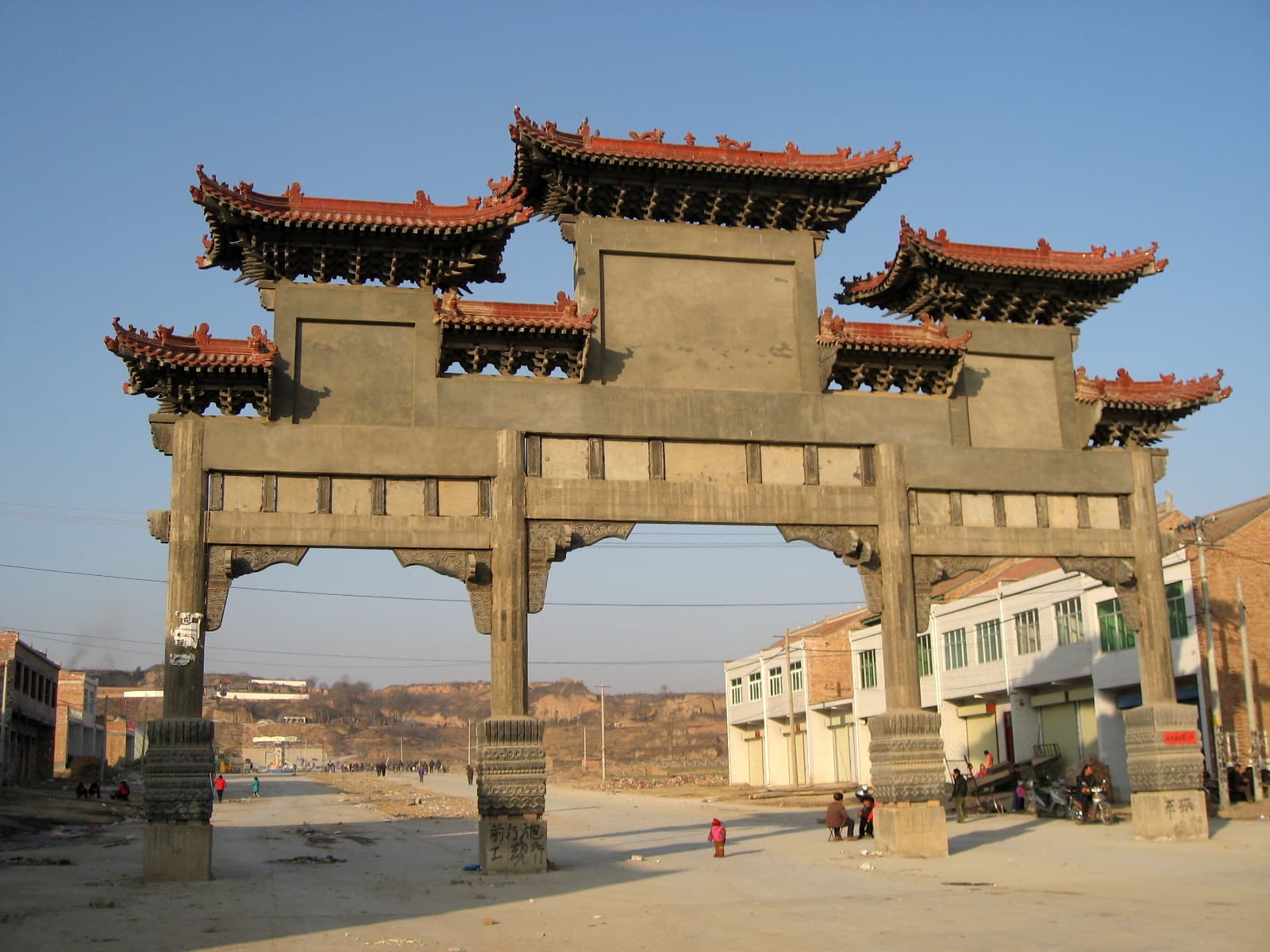 Tiger@西北 / CC BY-SA 3.0, via Wikimedia Commons
Self-guided audio walking tour of Xingping — GPS route, offline playback, story-driven narration in 32 languages.
“Where the Li River etches its most iconic masterpiece.”
Not the postcards. The stories even locals don't know — whispered in your ear, right where they happened.
This ancient village, visited by two presidents, holds a secret to its residents' past prosperity beyond its scenic beauty.
The ascent to one of Xingping's most expansive panoramic views reveals a surprising act of international friendship.
The emblematic cormorant fishermen of the Li River, representing traditional life, are now masters of a different craft.
Discover every secret of Xingping
Every address, every reveal in full — in your ear, right where it happened.
You pick your stops. You walk. The voice reveals what the others miss.

Your self-guided audio tour of Xingping is ready — pick your landmarks, choose your language, and start the moment you arrive.
BuyLume has a built-in augmented-reality guide. Hold your phone up and its camera shows the street ahead of you, with a glowing arrow laid over the real view that always points to your next stop — no map to puzzle over, no wrong turns. Like everything in Lume, it works fully offline.
Xingping, an ancient town along the Li River in China's Guangxi region, extends a serene invitation into a landscape often likened to a classical ink painting. It is positioned between the larger cities of Guilin and Yangshuo, yet maintains a distinct, calmer atmosphere. The town is recognized for its dramatic karst peaks and the tranquil flow of the Li River, a scene so emblematic it is featured on the 20 RMB banknote.
Stepping into Xingping feels like a journey through time, with its preserved Ming and Qing Dynasty architecture, stone-paved streets, and a rhythm of life that encourages unhurried exploration. Unlike the more commercialized areas nearby, Xingping retains an authentic character, where local existence unfolds against a backdrop of unparalleled natural beauty. It serves as an ideal foundation for those seeking to immerse themselves in the region's cultural heritage and striking scenery without the press of large crowds.
Xingping's history stretches back over 1,700 years, with its origins as a settlement dating to 265 AD during the Three Kingdoms era. It once served as the regional center for Yangshuo County until 590 AD. The town's strategic position along the Li River, a vital waterway, contributed to its growth as a thriving trading port and a center for cultural exchange along the historic Tea Horse Road.
Over the centuries, Xingping has preserved much of its ancient character. The town's streets are lined with traditional buildings, primarily from the Ming (1368–1644) and Qing (1644–1911) Dynasties, displaying architectural styles with blue brickwork, black tiles, sloping roofs, and carved wooden windows. These structures offer a tangible link to Xingping's past, reflecting the Lingnan, or southeastern Chinese provincial, culture.
Beyond the main town, Xingping Fishing Village, located two kilometers away, possesses a history of over 500 years, founded in 1506 during the Ming Dynasty. This village is particularly notable for its 48 remarkably well-preserved traditional residences. The area has also drawn significant visitors, including Dr. Sun Yat-sen, the first president of the Republic of China, in 1921, and later, U.S. President Bill Clinton and First Lady Hillary Clinton in 1998, who both praised the village's genuine features and beautiful scenery.
Cultural and historical relics can be found throughout Xingping, including the Guandi Temple, constructed during the Qianlong Emperor's reign in the Qing Dynasty. The town's enduring appeal lies in its ability to maintain its traditional appearance and a sense of calm, offering a stark contrast to more developed tourist areas while remaining deeply connected to the iconic Li River landscape.
Xingping's allure resides in its combination of natural splendor and ancient charm. A key sight is the 20 RMB banknote viewpoint, where the emblematic karst peaks and Li River scenery, depicted on the Chinese currency, can be admired. This spot is particularly evocative in the early morning mist or at dusk.
Explore Xingping Ancient Town's streets, which are paved with stone and bordered by traditional Ming and Qing Dynasty buildings. Wander through narrow lanes to discover local shops, small cafes, and the quiet rhythm of daily life. The Xingping Fishing Village, a short distance from the town, offers a glimpse into historical residences and traditional village life.
For expansive vistas, embark on a hike up Laozhai Mountain. The ascent takes approximately 30 minutes and rewards climbers with broad views of the surrounding karst landscape and the Li River, especially striking at sunset. Another popular activity is a bamboo raft trip on the Li River, providing a more intimate perspective of the dramatic scenery. While traditional cormorant fishing is now primarily a performance for tourists, you can still observe or photograph these unique fishermen on the river.
The most agreeable times to visit Xingping are during spring (March–May) and autumn (September–November). These seasons offer mild temperatures, misty mornings, and clear views of the Li River. Summer (June–August) is characterized by heat, humidity, and frequent rain, which can make outdoor activities less comfortable. While June offers warm and comfortable temperatures, with averages between 18–30°C (64–86°F), it is part of the rainy season. To avoid larger crowds, it is advisable to steer clear of major Chinese holidays.
Xingping is readily accessible. From Yangshuo, frequent buses depart every 15 minutes, with a journey time of about 40 minutes and a low fare. The Yangshuo high-speed railway station is conveniently situated near Xingping, making train travel from Guilin a quick 20-minute journey. Alternatively, direct buses are available from Guilin South Bus Station, taking approximately 1.5 hours.
Accommodation options range from budget-friendly hostels to more comfortable hotels within or on the edge of the ancient village. While Xingping Ancient Town itself is free to enter, some activities like bamboo rafting or organized cormorant fishing photoshoots will incur a fee. Local cuisine, similar to Yangshuo, includes specialties like Beer Fish and various hot pot dishes, often served with local sauces.
For exploring, walking is ideal for the ancient town. Electric scooters or private cars can be used for reaching viewpoints further afield.
Xingping in Korean, in Chinese or in Hebrew — and 29 more languages, every stop narrated by a native voice. The widest language range of any self-guided audio tour.
Available in: