Ermitage de la Vera Cruz
Cet ermitage roman, autrefois un bastion templier, est lié à une disparition miraculeuse et à un fragment de la Sainte Croix.
L'histoire complète se débloque dans le tour
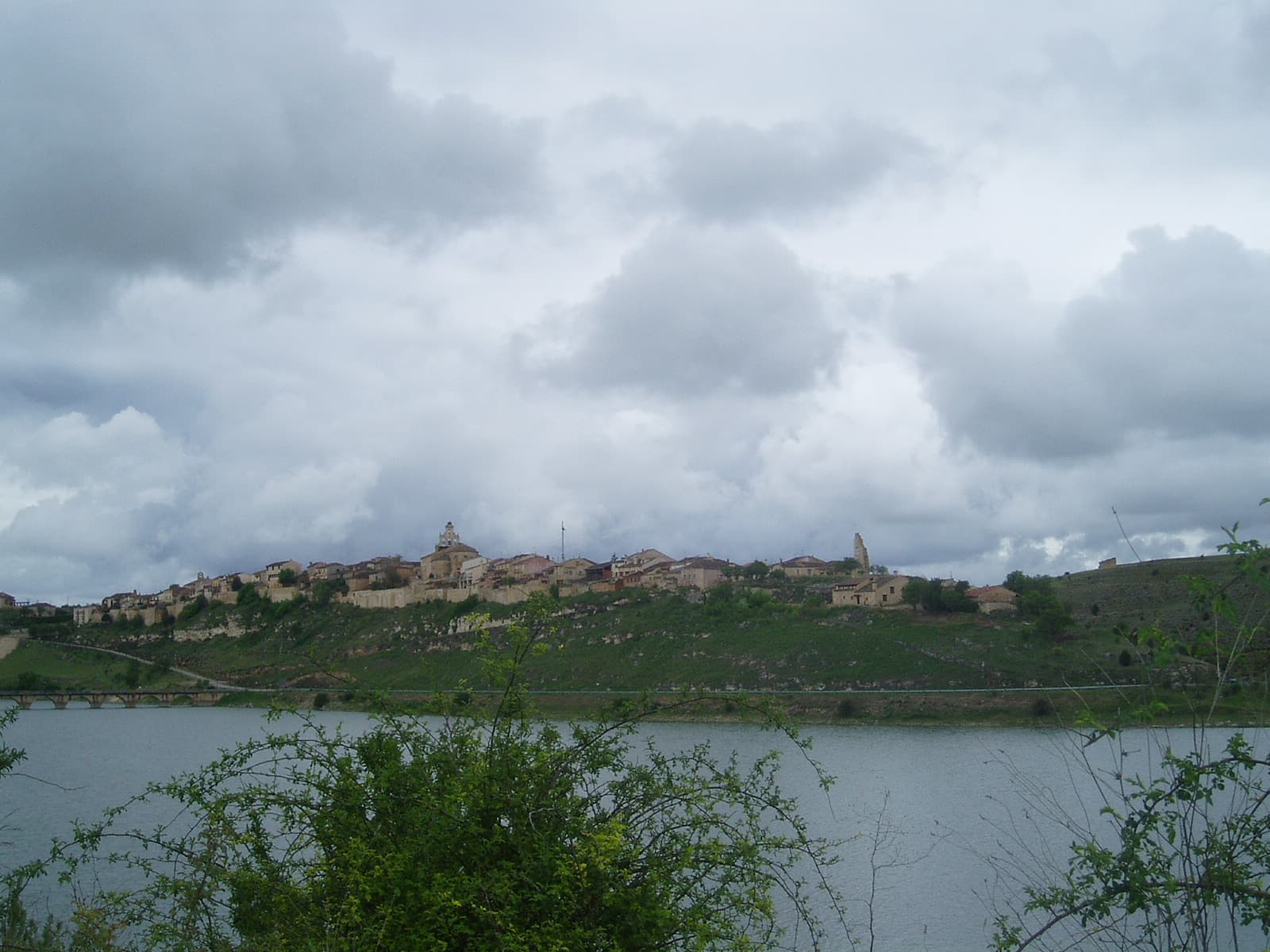 Tuispi / cc by-sa 4.0, via Wikimedia Commons
Visite audio autoguidée de Maderuelo — parcours GPS à pied, lecture hors ligne, narration en 32 langues.
“Là où les pierres médiévales racontent des histoires de chevaliers, de Templiers et d'un esprit indomptable.”
Pas les cartes postales. Les histoires que même les habitants ignorent — soufflées à l'oreille, là où elles se sont passées.
Cet ermitage roman, autrefois un bastion templier, est lié à une disparition miraculeuse et à un fragment de la Sainte Croix.
Sous les anciennes ruelles de Maderuelo se cache un réseau labyrinthique de passages, qui, selon la rumeur, dissimulerait un trésor important.
Beneath the ancient lanes of Maderuelo lies a labyrinthine network of passages, rumored to conceal a significant treasure.
Découvrez tous les secrets de Maderuelo
Chaque adresse, chaque révélation en entier — dans ton oreille, là où elle s'est passée.
Tu choisis tes lieux. Tu marches. La voix te révèle ce que les autres ignorent.

Votre visite audioguidée de Maderuelo vous attend — choisissez vos lieux, votre langue, et lancez-vous dès votre arrivée.
AcheterLume intègre un guide en réalité augmentée. Levez votre téléphone : sa caméra montre la rue devant vous, avec une flèche lumineuse posée sur l'image réelle qui pointe toujours vers votre prochain arrêt — aucune carte à déchiffrer, aucun mauvais virage. Comme tout dans Lume, ça fonctionne entièrement hors-ligne.
Maderuelo, une commune de la province de Ségovie, en Castille-et-León, Espagne, est un village historique perché qui semble suspendu dans le temps. Il est situé à environ 150 kilomètres (93 miles) au nord de Madrid. Couronnée par d'anciennes murailles et surplombant le vaste réservoir de Linares, cette petite ville, avec une population d'environ 100 habitants, offre un aperçu de l'Espagne médiévale. Son centre urbain a été reconnu comme Bien d'Intérêt Culturel dans la catégorie des ensembles historiques depuis 1993, et depuis 2013, Maderuelo fait partie du réseau des « Plus Beaux Villages d'Espagne ».
L'attrait de la ville réside dans son architecture médiévale bien préservée, ses rues étroites et le cadre serein du réservoir de Linares, un lac artificiel qui alimente la région en eau et crée un paysage pittoresque. Les voyageurs sont attirés par Maderuelo pour explorer son passé et profiter de sa splendeur naturelle, où les vautours fauves planent souvent au-dessus, ajoutant à l'atmosphère évocatrice.
L'histoire de Maderuelo remonte à l'Antiquité, avec des preuves d'établissement par la tribu celtibère des Arévacos. L'emplacement stratégique sur une colline près de la rivière Riaza, avec d'abondants pâturages et forêts, en faisait un site attrayant. Après la soumission romaine, la région fut intégrée au Conventus de Clunia. La présence romaine est indiquée par un plateau d'alquerque ciselé trouvé sur deux blocs de pierre, un jeu utilisé par les Romains. Les Wisigoths s'installèrent également sur la colline, laissant derrière eux des stèles en pierre avec des inscriptions géométriques.
Au cours du Xe siècle, Maderuelo devint une zone frontalière disputée entre les forces maures et chrétiennes, changeant fréquemment de mains. Elle fut reconquise par le comte Fernán González de Castille, bien qu'elle fut ensuite ravagée par le calife Abd al-Rahman III en 939 et occupée par Almanzor. La ville, désignée sous le nom de « Castro Maderolum » en 1010, fut finalement repeuplée à la fin du XIe siècle, avec des chrétiens mozarabes, du nord et castillans coexistant avec des populations musulmanes et juives. Maderuelo fut initialement subordonnée à Sepúlveda mais obtint son propre statut de « Villa y Tierra », devenant le chef d'une communauté.
Au XIIe siècle, Maderuelo comptait dix paroisses, mais une récession démographique à la fin du XIIIe et au XIVe siècle entraîna un déclin, certains habitants se déplaçant pour repeupler le sud de la péninsule. Le destin de la ville fut lié aux entreprises impérialistes et aux guerres de Castille, telles que la Guerre de Succession, qui conduisirent à l'appauvrissement. L'agriculture ne retrouva jamais la puissance économique autrefois détenue par l'élevage ovin.
En 1384, le roi Juan Ier de Castille accorda Maderuelo et son château à Mosén Beraudon de Faudoas, l'ambassadeur de France. Plus tard, en 1389, la reine Leonor de Navarre acheta la ville. En 1423, le roi Juan II conféra la Seigneurie à Don Álvaro de Luna, et Maderuelo resta dans sa lignée jusqu'à l'abolition de toutes les seigneuries en 1811. La construction du réservoir de Linares sur la rivière Riaza en 1951 entraîna la submersion de la ville voisine de Linares del Arroyo et la quasi-dépopulation de Maderuelo. Ce statut quasi-inhabité incita le naturaliste Félix Rodríguez de la Fuente à promouvoir le Refuge d'oiseaux rapaces des Gorges de la rivière Riaza, inauguré en 1975. Aujourd'hui, Maderuelo, bien que faisant partie de l'« España vaciada » (Espagne vidée) avec une petite population, continue d'attirer les visiteurs par son caractère médiéval durable.
Le tracé médiéval de Maderuelo est évident dans ses anciennes portes et ses rues sinueuses. La porte d'entrée principale, préservée de l'époque médiévale, mène au village. Une autre entrée notable est la Puerta del Barrio, une porte voûtée qui donnait autrefois accès au quartier juif. La ville conserve d'importantes sections de ses murailles médiévales du XIIe siècle, et une tour de son ancien château est visible à l'extrémité est du village.
L'architecture religieuse comprend l'église romane de San Miguel, située au centre de la ville, remarquable par son abside simple. L'église de Santa María del Castillo, que l'on croit avoir fait partie des défenses du village avant le XIe siècle, présente un mélange de pierre de taille, de maçonnerie et de brique, avec des éléments romans comme son portail sud. À l'intérieur, les visiteurs peuvent découvrir les restes momifiés d'une jeune fille, María, dans une niche vitrée. Juste à l'extérieur de la ville, de l'autre côté de la rivière Riaza, se dresse l'Ermita de la Vera Cruz, une chapelle romane des XIe ou XIIe siècles qui abritait autrefois d'impressionnantes peintures murales, désormais conservées ailleurs.
L'environnement naturel environnant est également un attrait. Maderuelo offre des vues sur le réservoir de Linares, où en été, il est possible de nager ou de faire du canoë. Le parc naturel voisin des Hoces del Río Riaza est un endroit idéal pour l'observation des oiseaux, en particulier des vautours fauves.
Les périodes idéales pour visiter Maderuelo sont la fin du printemps (avril à mai) et le début de l'automne (septembre à octobre). Pendant ces saisons intermédiaires, le temps est agréable, avec des températures douces et un ciel clair, ce qui rend l'exploration de la ville et de ses environs naturels confortable. Il y a également moins de voyageurs par rapport aux mois d'été de pointe. L'été (juin à août) peut être chaud, avec des températures souvent élevées, et attire de plus grandes foules. Bien que l'hiver (décembre à février) offre une expérience plus calme, il peut faire froid et certains services peuvent être limités.
Maderuelo est située dans la province de Ségovie, à environ 149 kilomètres de Madrid, un trajet qui prend environ 1 heure et 46 minutes en voiture via l'autoroute A-1. Depuis Ségovie, il faut environ 1 heure et 16 minutes de route (101 km) via la N-110. Bien qu'il existe un service de bus vers la province de Ségovie qui passe par Maderuelo, les horaires sont limités, il est donc recommandé de louer une voiture ou d'utiliser votre propre véhicule pour plus de commodité.
Le stationnement est disponible, avec une esplanade en terre/herbe signalée près de la Chapelle de la Vera Cruz (SG-945), souvent utilisée pour des séjours gratuits d'une nuit. Une autre zone de stationnement mixte (bus/voitures) est située à côté de la route d'Aranda à l'entrée du village, bien qu'elle puisse nécessiter des manœuvres pour les véhicules plus grands. La ville elle-même est petite, avec des rues intérieures étroites, et le terrain peut être glissant lorsqu'il est mouillé. Les options d'hébergement à Maderuelo et dans ses environs comprennent des hôtels de charme, des maisons d'hôtes, des locations de vacances indépendantes et des auberges de jeunesse économiques.
Maderuelo en coréen, en chinois ou en hébreu — et dans 29 autres langues, chaque étape narrée par une voix native. La plus large gamme de langues de tous les audioguides autoguidés.
Disponible en :