During the devastating U.S.-Dakota War of 1862, when much of New Ulm was burned to the ground, one prominent business was mysteriously spared. Why?
Schwerdf / CC BY 4.0, via Wikimedia CommonsNew Ulm
Self-guided audio walking tour of New Ulm — GPS route, offline playback, story-driven narration in 32 languages.
“Where Bavarian spirit meets Minnesota grit.”
New Ulm, as no one tells it.
Not the postcards. The stories even locals don't know — whispered in your ear, right where they happened.
Beneath a historic German athletic club, a basement bar contains murals painted by a surprising group, and they were once covered.
This impressive musical clock tower, one of the few freestanding carillons of its size globally, holds a secret connection to its namesake city in Germany.
Discover every secret of New Ulm
Every address, every reveal in full — in your ear, right where it happened.
You pick your stops. You walk. The voice reveals what the others miss.
How long do you have in New Ulm?
Your self-guided audio tour of New Ulm is ready — pick your landmarks, choose your language, and start the moment you arrive.
BuyThe story of New Ulm
New Ulm, Minnesota, is a city where German heritage isn't just a theme; it's the very foundation. Situated at the confluence of the Cottonwood and Minnesota rivers, this community of approximately 14,000 people offers a distinctive blend of Old-World character and Midwestern fortitude. Often called the 'Most German of German Cities' and even the 'Polka Capital,' New Ulm's identity is deeply rooted in the aspirations of its 19th-century German immigrant founders.
From its Bavarian-inspired architecture to its lively festivals and historic institutions, New Ulm invites visitors to step into a cultural experience unlike any other in the United States. It's a place where history is alive, from monuments honoring ancient Germanic heroes to a brewery that has withstood wars and Prohibition. The city's welcoming spirit, often described as 'Minnesota nice,' ensures that every visitor feels like an old friend discovering a new place.
## A Utopian German Vision New Ulm's story began in 1854 when the German Land Company of Chicago selected the site for a new settlement. Many of these original settlers hailed from Ulm, Württemberg, Germany, inspiring the name 'New Ulm.' Two years later, they were joined by the Turner Colonization Society of Cincinnati, a group of German gymnasts who believed in a 'Sound Mind, Sound Body.' These two groups merged, driven by a shared vision to create a utopian German community on the American frontier.
## The Dakota War of 1862 Just a few years after its incorporation in 1857, New Ulm faced its greatest challenge: the U.S.-Dakota War of 1862. The city was attacked twice in August of that year by Dakota forces. The conflict arose from mounting frustrations among the Dakota, including delayed annuity payments and rumors of corruption. Though much of the town was destroyed by fire and over 50 settlers were killed, the residents, led by figures like Captain Jacob Nix and later Judge Charles Flandrau, mounted a fierce defense. The town was eventually evacuated, but settlers soon returned to rebuild.
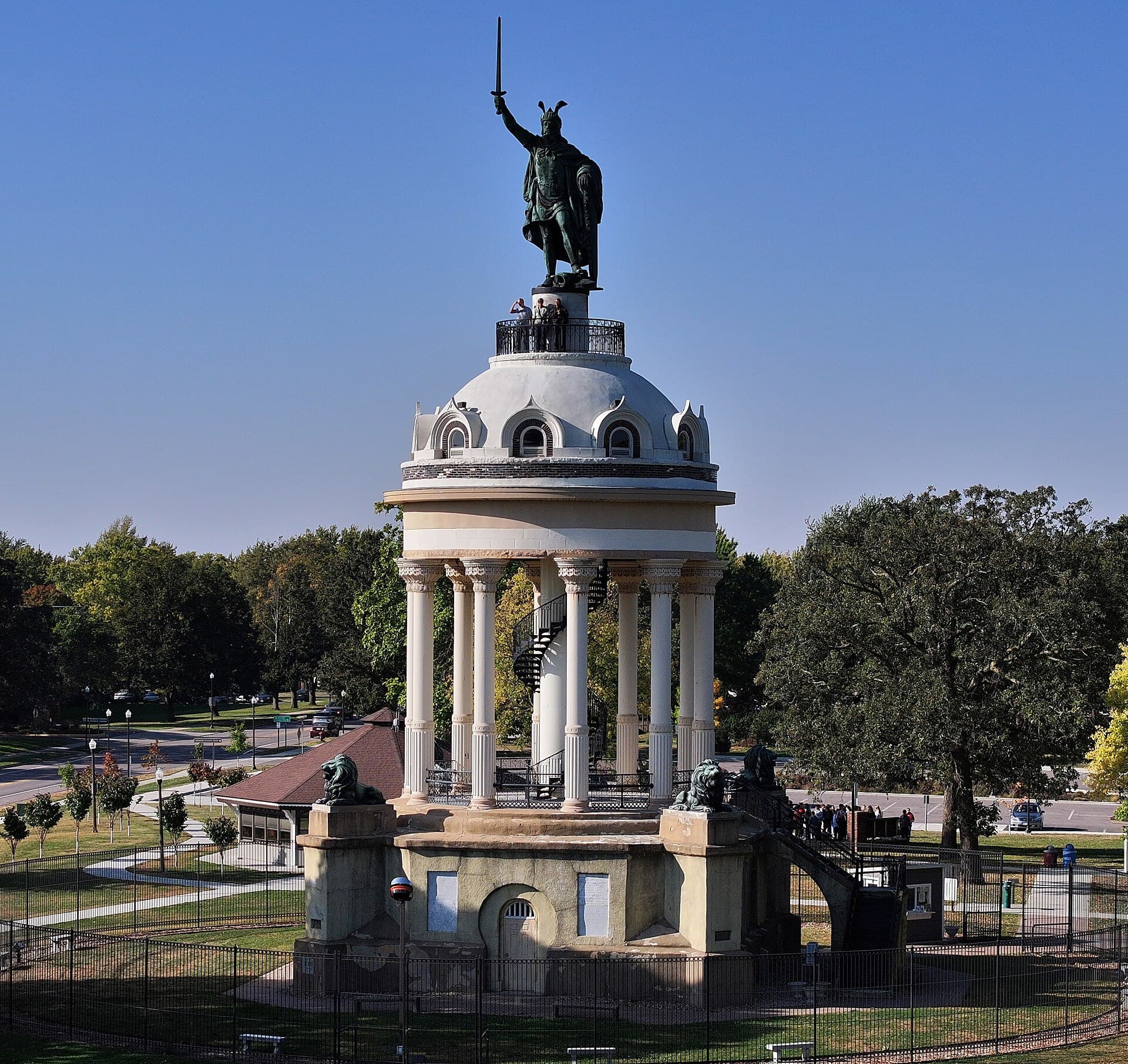
## German Pride and Industrial Growth Despite the devastation, New Ulm quickly rebounded. The 1870s saw the rise of four key industries: flour, beer, cigars, and bricks, which became the backbone of the local economy. The city's German heritage continued to flourish, evident in institutions like the August Schell Brewing Company, established in 1860, which remarkably survived the Dakota War. In 1897, the towering Hermann Monument, a symbol of German national pride, was dedicated, a project spearheaded by Julius Berndt, a New Ulm resident and national secretary of the Sons of Hermann organization.
## A Legacy Preserved New Ulm's commitment to its heritage continues today. The city was designated a Preserve America Community in 2006, and the New Ulm Heritage Preservation Commission works to protect its historical, cultural, and architectural treasures. Landmarks like the 45-foot Glockenspiel, dedicated in 1980, and the continually operating Turner Hall with its historic Rathskeller, serve as enduring reminders of the city's unique past and ongoing German traditions.
Begin your exploration at the Hermann Monument, a 102-foot statue of Hermann the Cheruscan, a German chieftain who triumphed over Rome. Ascend the spiral staircase for expansive views of the city and the Minnesota River Valley.
Next, head to the August Schell Brewing Company, the second-oldest family-owned brewery in the United States. Take a tour to learn about its history, explore the gardens, and sample their beers.
In downtown New Ulm, make sure to see the Glockenspiel in Schonlau Park. This 45-foot musical clock tower features 37 bells and animated figures that depict New Ulm's history and culture, performing several times a day.
For a taste of local history and German culture, visit Turner Hall, home to the oldest Turner Hall in the United States still used for its original purpose. Enjoy a meal in the historic Rathskeller, adorned with murals.
The Brown County Historical Society Museum, housed in a 1910 Federal Post Office building, offers major exhibits on the Dakota Conflict of 1862 and local history.
Finally, explore German Park, which includes the German-Bohemian Heritage Monument, honoring immigrants to the area.
The best time to visit New Ulm for warm-weather activities and festivals is from mid-June to early September. July is the warmest month, with average highs around 83°F (28°C), making it ideal for outdoor exploration. Autumn, particularly September and early October, offers pleasant, moderately warm weather with less rain, providing a comfortable experience for those who prefer to avoid extreme heat. New Ulm is known for its year-round festivals, including Oktoberfest and Bavarian Blast, so check the local events calendar for specific dates.
New Ulm is located about 90 miles southwest of Minneapolis, making it an accessible day trip or weekend getaway from the Twin Cities. The city is easily navigable by car, and a historic walking tour is available from the Convention and Visitors Bureau to guide you through downtown. Accommodations include hotels and charming bed and breakfasts. Dining options range from authentic German cuisine at local restaurants like Kaiserhoff to American favorites. New Ulm is also noted for surprisingly low grocery prices compared to other parts of Minnesota, which can be a pleasant surprise for longer stays.
- What is New Ulm best known for?
- New Ulm is best known for its strong German heritage, evident in its architecture, festivals, and cultural institutions. It's often called the 'Most German City in the USA' and the 'Polka Capital.'
- What is the Hermann Monument?
- The Hermann Monument is a 102-foot-tall statue of Hermann the Cheruscan, an ancient Germanic hero who defeated Roman legions. It symbolizes German pride and offers expansive views of the Minnesota River Valley.
- Is the August Schell Brewing Company still operating?
- Yes, the August Schell Brewing Company, established in 1860, is the second-oldest family-owned brewery in America and is still actively brewing a variety of beers.
- What is the New Ulm Glockenspiel?
- The New Ulm Glockenspiel is a 45-foot musical clock tower with 37 bells and animated figures that depict the city's history and culture through scheduled performances throughout the day.
- What happened in New Ulm during the U.S.-Dakota War of 1862?
- New Ulm was attacked twice by Dakota forces in August 1862. Much of the town was destroyed by fire, but settlers successfully defended it before a temporary evacuation. Only seven structures from before the war remain today.
- Are there any German festivals in New Ulm?
- Yes, New Ulm is known as the 'City of Festivals' and hosts several German-themed events throughout the year, including Oktoberfest, Bavarian Blast, and Bock Fest.