Kumtepa Bazaar
The Kumtepa Bazaar pulses with energy, but a specific time reveals its most unique and sought-after items.
Full story unlocks in the tour
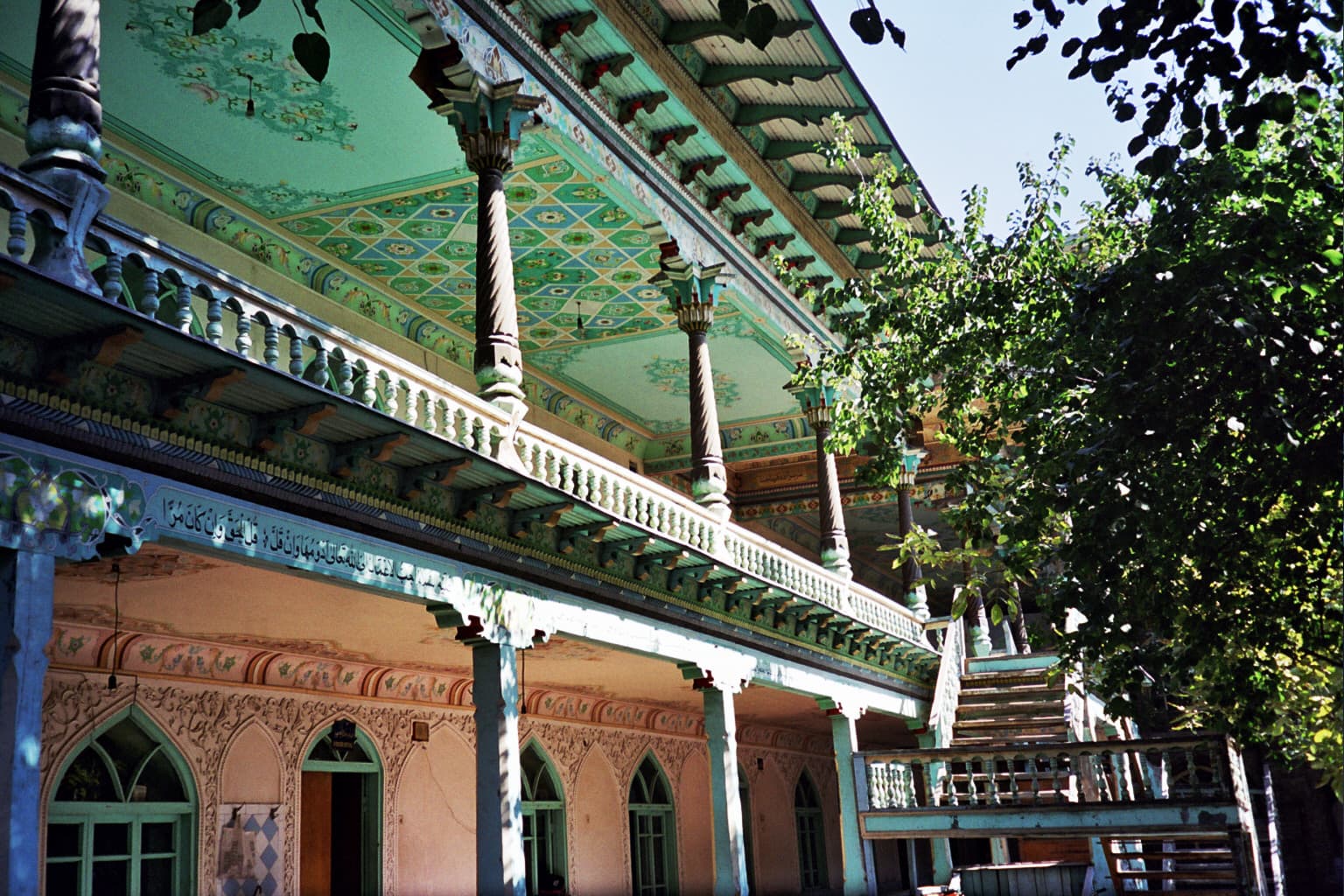
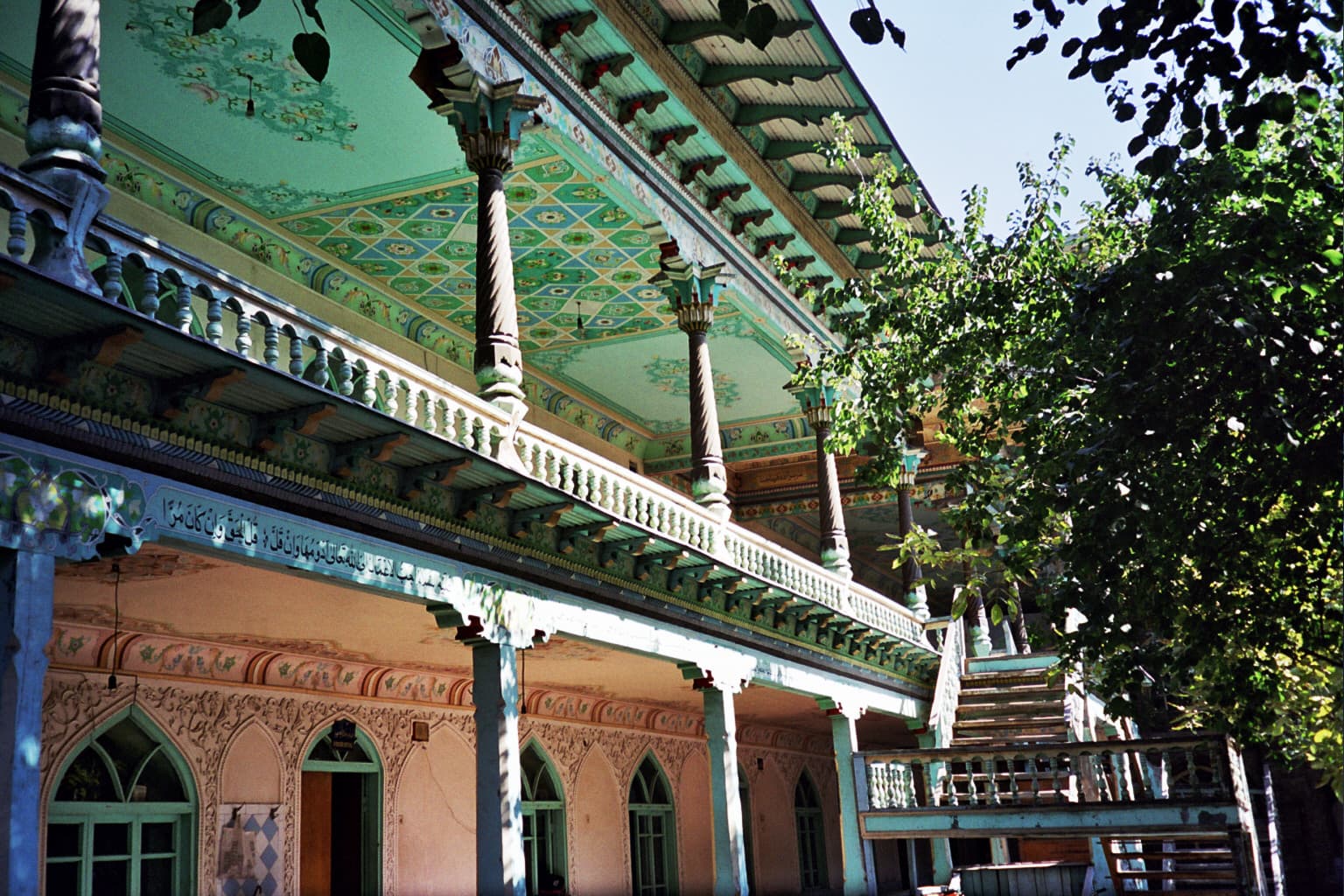 upyernoz from Haverford, USA / CC BY 2.0, via Wikimedia Commons
Self-guided audio walking tour of Margilan — GPS route, offline playback, story-driven narration in 32 languages.
“Margilan: Where the threads of history are woven into living silk.”
Not the postcards. The stories even locals don't know — whispered in your ear, right where they happened.
The Kumtepa Bazaar pulses with energy, but a specific time reveals its most unique and sought-after items.
While the Yodgorlik Silk Factory showcases traditional silk production, a particular part of the process reveals the true artistry behind the famous ikat patterns.
During the Soviet era, Margilan held a singular and somewhat rebellious reputation within Uzbekistan.
Discover every secret of Margilan
Every address, every reveal in full — in your ear, right where it happened.
You pick your stops. You walk. The voice reveals what the others miss.
Your self-guided audio tour of Margilan is ready — pick your landmarks, choose your language, and start the moment you arrive.
BuyLume has a built-in augmented-reality guide. Hold your phone up and its camera shows the street ahead of you, with a glowing arrow laid over the real view that always points to your next stop — no map to puzzle over, no wrong turns. Like everything in Lume, it works fully offline.
Margilan, a city in Uzbekistan's fertile Fergana Valley, is a place where the past and present are inextricably linked by the shimmering threads of silk. With a history stretching back over 2,000 years, Margilan has been a vital stop on the Silk Road, recognized for its exquisite textiles. Today, it remains the heart of Central Asian silk production, a living testament to ancient craftsmanship.
Beyond its reputation as the "silk capital," Margilan offers a glimpse into authentic Uzbek life, less polished than some of its more frequented counterparts. Here, you will find active markets, traditional workshops, and a rhythm of life that feels deeply connected to its heritage. The city's population, estimated at around 262,810 in 2026, is a diverse community, with Uzbeks forming the majority. Margilan was recognized in 2017 by UNESCO for its Craft Development Center and named a World Craft City for silk and ikat in 2022.
## Ancient Origins and Silk Road Significance Margilan's roots trace back to the 2nd–1st centuries BCE, with archaeological evidence suggesting irrigated agriculture was practiced in the region as early as the 4th–3rd centuries BCE. Its strategic location in the Fergana Valley made it a crucial hub on the ancient Silk Road, facilitating trade between China and the West. By the 9th century, Margilan was a well-established stop on the route to Kashgar across the Alay Mountains.
Legend attributes the city's name to Alexander the Great, who, upon being served "murginon" (chicken and bread) during a visit, supposedly named the city after the dish. While this tale persists, historians suggest the name might derive from the Tajik words for "green grass" and "place," translating to "green place." Another theory links the name to silk craftsmen from the Gilan Valley who settled here.
## A Legacy of Silk and Scholarship Margilan's renown for silk goods dates back to at least the 10th century, with its luxurious products, particularly the celebrated khan-atlas, being exported to distant lands like Byzantium, Baghdad, Greece, Egypt, Khorasan, and Kashgar. The city's merchants were key players in Central Asian commerce for centuries.
In the early 16th century, Babur, the founder of the Mughal dynasty, praised Margilan in his memoirs, Baburnama, noting its superb pomegranates and apricots, good game, and the "feisty" nature of its people. He also mentioned the prevalence of exorcism and that many renowned exorcists of Samarkand and Bukhara were from Margilan. The city was also home to notable scholars, including Burhanuddin al-Marghinani (1123–1197), an influential Islamic legal scholar whose work Al-Hidayah remains a primary source for Hanafi law.
## Modern Times and Enduring Traditions Margilan became part of the Kokand Khanate from 1710 to 1876, serving as a key administrative and craft center. After its incorporation into the Russian Empire, it was fortified with adobe walls, towers, and twelve gates in the late 19th century. During Soviet times, despite centralization efforts, Margilan maintained its reputation for independent commerce, becoming a center for black-market trading. Today, Margilan continues to be a stronghold of conservative Islam. In 1942, during World War II, the 9th Infantry Division of the Polish Anders' Army was stationed and organized in Margilan before being evacuated to fight Nazi Germany.
Margilan's primary allure is its living silk tradition. A visit to the Yodgorlik Silk Factory offers a comprehensive tour, allowing you to witness every step of the silk production process, from boiling silkworm cocoons and extracting threads to spinning, dyeing with natural pigments like pomegranate skins, and weaving intricate ikat patterns on traditional looms. Arriving early, between 8-9 AM, is recommended to see all stages in full swing.
For an authentic market experience, head to the Kumtepa Bazaar, located about 5 kilometers west of the city center. This sprawling market, operational only on Thursdays and Sundays, is an active spectacle of local life, offering a wide array of goods, particularly hand-tied ikat textiles. Beyond silk, you will find fresh produce, aromatic spices, and local foods like samsa and plov.
Other notable sites include the Said Akhmad-Khoja Madrasah, a 19th-century building that now houses the Margilan Crafts Development Center, preserving traditional textile-making technologies. The Khonakhan Mosque, the oldest religious structure in the Fergana Valley, and the Khodja-Maggiz Mausoleum, an 18th-century architectural monument, also offer glimpses into the city's historical and religious heritage.
For a deeper dive into the region's cultural heritage, the Margilan Museum of Local Lore showcases artifacts, traditional clothing, and exhibits that provide context to local customs and history.
The most comfortable times to visit Margilan are spring (April–May) and autumn (September–October). During these months, temperatures are mild and pleasant, ranging from 15-25°C (59-77°F) in spring and 20-28°C (68-82°F) in autumn, making it ideal for exploring markets and workshops. Summers (July–August) are long, hot, and dry, with temperatures often exceeding 35°C (95°F), which can make midday sightseeing challenging. Winters are moderately cold, with average temperatures around 0°C (32°F).
The quickest way to reach Margilan is by flying into Fergana International Airport (FEG), which has regular flights from Tashkent and other international cities. From Fergana, you can take a bus or taxi for the short 20-30 minute journey to Margilan. Alternatively, trains from Tashkent to Andijan stop in Margilan, offering a scenic route through the Kamchik mountains. Shared taxis are also a common and affordable way to travel between cities in the Fergana Valley.
Within Margilan, many key sites are within walking distance, especially in the city center. For longer distances, fixed-route taxis (Damas minivans) and buses are available and inexpensive. Taxis are also readily available, but it is advisable to agree on the fare beforehand as meters are not common. Accommodation options directly in Margilan are somewhat limited, with budget guesthouses typically ranging from $20-$50 per night. Many travelers opt to stay in larger hotels in Fergana and make day trips to Margilan.
Margilan in Korean, in Chinese or in Hebrew — and 29 more languages, every stop narrated by a native voice. The widest language range of any self-guided audio tour.
Available in: