Château de Mayenne
This thousand-year-old fortress holds a surprising secret within its walls, far removed from its military past.
Full story unlocks in the tour
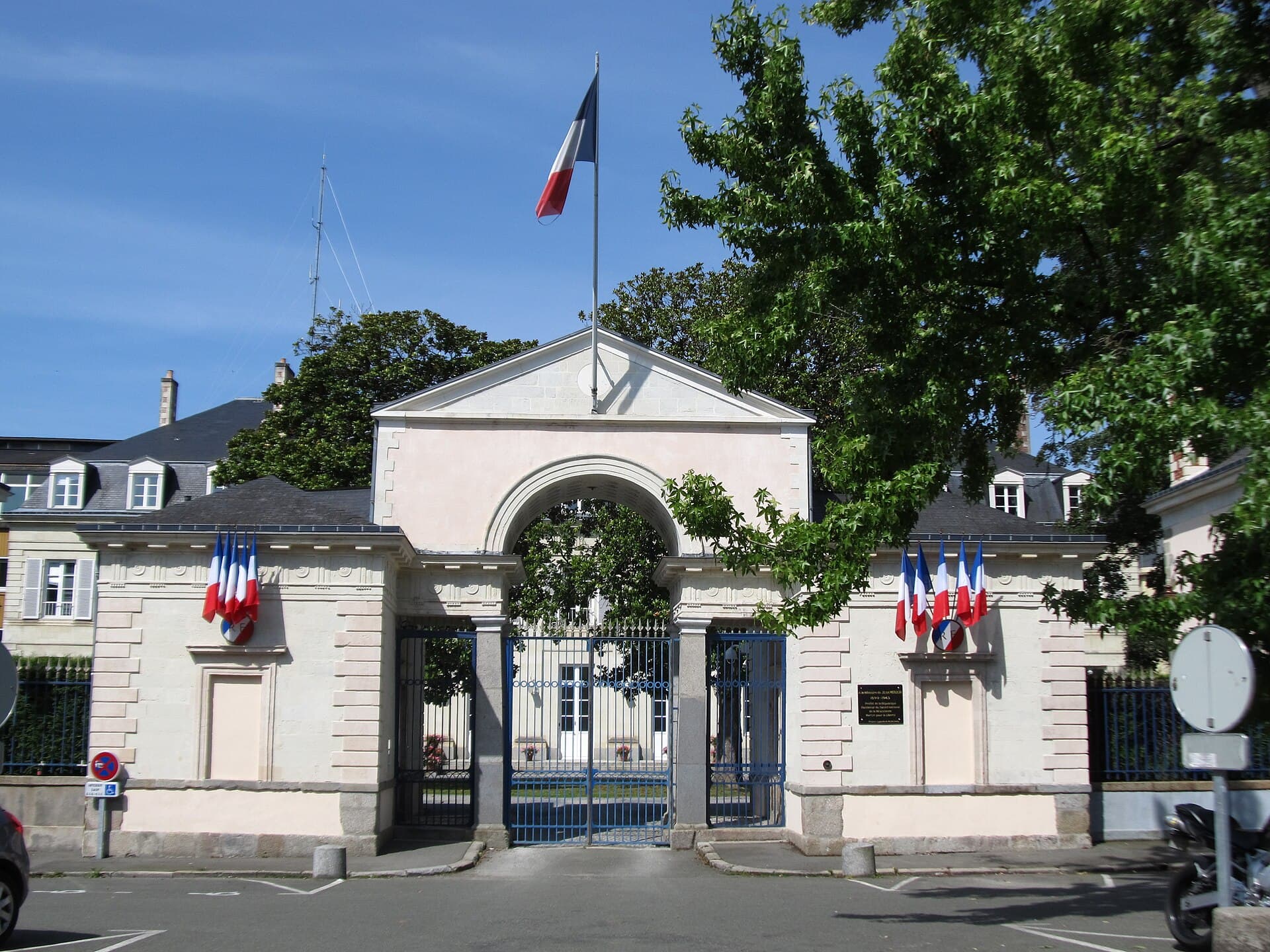 Celeste (permission given to User:Oie blanche) / CC BY 3.0, via Wikimedia Commons
Self-guided audio walking tour of Mayenne — GPS route, offline playback, story-driven narration in 32 languages.
“Where ancient stones meet a flowing river.”
Not the postcards. The stories even locals don't know — whispered in your ear, right where they happened.
This thousand-year-old fortress holds a surprising secret within its walls, far removed from its military past.
Beneath this basilica, a secluded space usually remains closed to the public.
The serene Mayenne River, now a peaceful waterway, once played a role in an ambitious, unfulfilled engineering project.
Discover every secret of Mayenne
Every address, every reveal in full — in your ear, right where it happened.
You pick your stops. You walk. The voice reveals what the others miss.


Your self-guided audio tour of Mayenne is ready — pick your landmarks, choose your language, and start the moment you arrive.
BuyLume has a built-in augmented-reality guide. Hold your phone up and its camera shows the street ahead of you, with a glowing arrow laid over the real view that always points to your next stop — no map to puzzle over, no wrong turns. Like everything in Lume, it works fully offline.
Mayenne, a town in the Pays de la Loire region of northwest France, is defined by the river that shares its name. It is a place where history is etched into the very stones of its buildings, and the landscape invites a slower pace of life. Situated at the edge of Normandy, the town offers a blend of rural charm and historical depth, making it an appealing destination for those seeking an authentic French experience away from more crowded tourist routes.
The town of Mayenne itself, an ancient ducal city, developed around its formidable castle and the Church of Notre-Dame in the 11th and early 12th centuries. Today, it serves as a tranquil base for exploring the wider Mayenne department, known for its rolling hills, verdant forests, and numerous châteaux. Whether one is drawn to medieval architecture, leisurely river cruises, or simply savoring local delicacies, Mayenne provides a refreshing journey into rural France.
The earliest mention of Mayenne dates back to around 778, when Charlemagne restored a villa of this name to the Bishop of Le Mans. The town's origins are deeply intertwined with its castle, a site that saw a wooden structure in the 8th century before being rebuilt in stone around 920. This Carolingian palace, one of the best-preserved civil buildings of the early Middle Ages in Europe, formed the nucleus around which the settlement grew.
Mayenne's strategic location between Maine, Anjou, Brittany, and Normandy meant it was often at the heart of historical conflicts. The castle was enlarged in the 13th century, transforming into a fortress with a dungeon and ramparts that still stand today. During the French Wars of Religion, Mayenne was besieged twice, in 1574 and 1590, suffering significant damage before being rebuilt in the following century with the support of Cardinal Mazarin.
The town endured a plague in 1707 and, more recently, sustained heavy damage and casualties from an RAF bombing on June 9, 1944, during World War II. The Mayenne department itself was created on March 4, 1790, during the French Revolution, formed from parts of the former provinces of Maine and Anjou. Today, the Château de Mayenne, acquired by the city in 1936, has been meticulously restored and since 2008, houses a museum showcasing its deep history and archaeological finds. The Basilique Notre-Dame-des-Miracles, originally founded in 1110, also bears the marks of centuries of architectural evolution, with elements from the 12th, 16th, and 19th centuries.
The most prominent landmark in Mayenne is the Château de Mayenne, a Carolingian palace dating back to the 10th century. This ancient fortress, which has also served as a prison, now houses the Musée du Château de Mayenne, offering an interactive journey through its thousand-year history and displaying rare medieval artifacts.
Another significant site is the Basilique Notre-Dame-des-Miracles, a composite building with architectural elements from the 12th, 16th, and 19th centuries. Inside, visitors can find a polychrome wood statuette of Our Lady of the Miracles. The Romanesque Church of St. Martin, an 11th-century granite building, is also worth a visit.
Beyond these historical structures, the town offers pleasant riverside walks along the Mayenne River. For those interested in local life, the town market takes place twice a week, on Saturdays and Mondays. The Kiosque cultural center hosts various performances and exhibitions throughout the year. Additionally, the surrounding Mayenne department is dotted with numerous châteaux, such as the Château de Laval and Château de Lassay, and offers natural sites like the Normandie-Maine Regional Nature Park for outdoor activities.
Mayenne is a destination that can be enjoyed year-round, but the most agreeable time for warm-weather activities and exploring the countryside is from late June to early September. During these months, average daytime temperatures range from 19°C to 24°C, with comfortable conditions for outdoor pursuits. Spring and autumn also offer pleasant weather, with autumn providing particularly beautiful foliage along the riverbanks. While winter is quieter, it is a good time to experience the region's cozy villages and hearty cuisine. The clearest skies are typically seen in July, while January tends to be the cloudiest.
Mayenne is located in the Pays de la Loire region, approximately 20 minutes by car from Laval. The town market operates on Saturdays and Mondays, offering a chance to sample local specialties like rillettes de porc and regional cheeses. Dining options range from traditional restaurants to a Michelin-starred establishment. For those interested in river activities, boat and pedalo rentals are available from May to September. Guided tours of Mayenne are offered on Wednesday mornings in July and August. The town also hosts events such as the Arts'Borescences festival in late June and the Summer of 6 Thursdays with outdoor concerts from mid-July to late August. The local tourist office can provide further assistance in planning your stay.
Mayenne in Korean, in Chinese or in Hebrew — and 29 more languages, every stop narrated by a native voice. The widest language range of any self-guided audio tour.
Available in: