Before modern engineering, an ancient civilization transformed the Sonoran Desert into an agricultural haven with a sprawling network of waterways. The sheer scale of their achievement, however, often goes unexamined.
Cygnusloop99 / CC BY-SA 3.0, via Wikimedia CommonsMesa
Self-guided audio walking tour of Mesa — GPS route, offline playback, story-driven narration in 32 languages.
“Where ancient canals meet desert innovation.”
Mesa, as no one tells it.
Not the postcards. The stories even locals don't know — whispered in your ear, right where they happened.
During World War II, two airfields in Mesa were central to pilot training, but their existence had an unexpected and lasting impact on the city's expansion.
Mesa is Arizona's third-largest city, yet its downtown offers a surprising and free way to explore its core attractions.
Discover every secret of Mesa
Every address, every reveal in full — in your ear, right where it happened.
You pick your stops. You walk. The voice reveals what the others miss.


How long do you have in Mesa?
Your self-guided audio tour of Mesa is ready — pick your landmarks, choose your language, and start the moment you arrive.
BuyThe story of Mesa
Mesa, Arizona, is a sprawling desert city that blends ancient history with contemporary innovation. As Arizona's third-largest city and the 35th largest in the United States, Mesa offers a distinctive entry point to the dynamic Phoenix metropolitan area. Located within the Sonoran Desert, it experiences a hot desert climate characterized by mild winters and intensely hot, dry summers, with an average of 301 days of sunshine each year.
From its prehistoric origins, shaped by the ingenious Hohokam people, to its present status as a flourishing community, Mesa presents a diverse range of experiences. The city's topography is defined by its flat-topped, raised areas, which gave Mesa its name—the Spanish word for 'table top.' Visitors can embark on outdoor adventures amidst striking desert scenery, engage with a lively arts and culture environment, and uncover historical narratives that span millennia.
From Ancient Canals to Modern Metropolis
The history of Mesa extends back at least 2,000 years, beginning with the arrival of the Hohokam culture. These early inhabitants were skilled engineers, constructing an extensive and sophisticated network of irrigation canals. These hand-dug waterways, some as wide as 90 feet and 10 feet deep, stretched for miles, transforming over 110,000 acres of the Sonoran Desert into a fertile agricultural oasis. This system was the largest in the prehistoric New World, a testament to the Hohokam's ingenuity. The Hohokam thrived in the valley for over 1,500 years, living in communities of up to 500 people.
In 1877, Mormon pioneers, dispatched from Utah by Brigham Young, settled the Mesa area. Known as the 'Utah Company,' they initially established homes and businesses in what is now Lehi, in Northern Mesa, drawn by the fertile soil near the Salt River. The Pima and Maricopa people, already residing in the area, assisted these early pioneers in establishing their lives in the desert. Mesa was officially registered as a townsite on July 17, 1878, initially encompassing a modest one square mile of land.
The town expanded slowly, with a population of only 300 by 1883, but it steadily progressed. Power plants were constructed and operated using the widened canals, a strategic move that allowed Mesa to own its utilities. This self-sufficiency helped the city navigate the Great Depression more effectively than many other places.
A significant period of expansion occurred in the 1940s with the establishment of Falcon Field and Williams Field, military airfields that brought an influx of personnel to the area. The post-war era, coupled with the widespread adoption of air conditioning and a burgeoning tourism industry, led to a population surge in Mesa and the greater Phoenix region. In May 1979, Mesa was recognized as an 'All American City' by the National Municipal League for its collaborative efforts in addressing community challenges. Today, Mesa stands as a flourishing desert community, continuing its legacy of expansion and innovation.
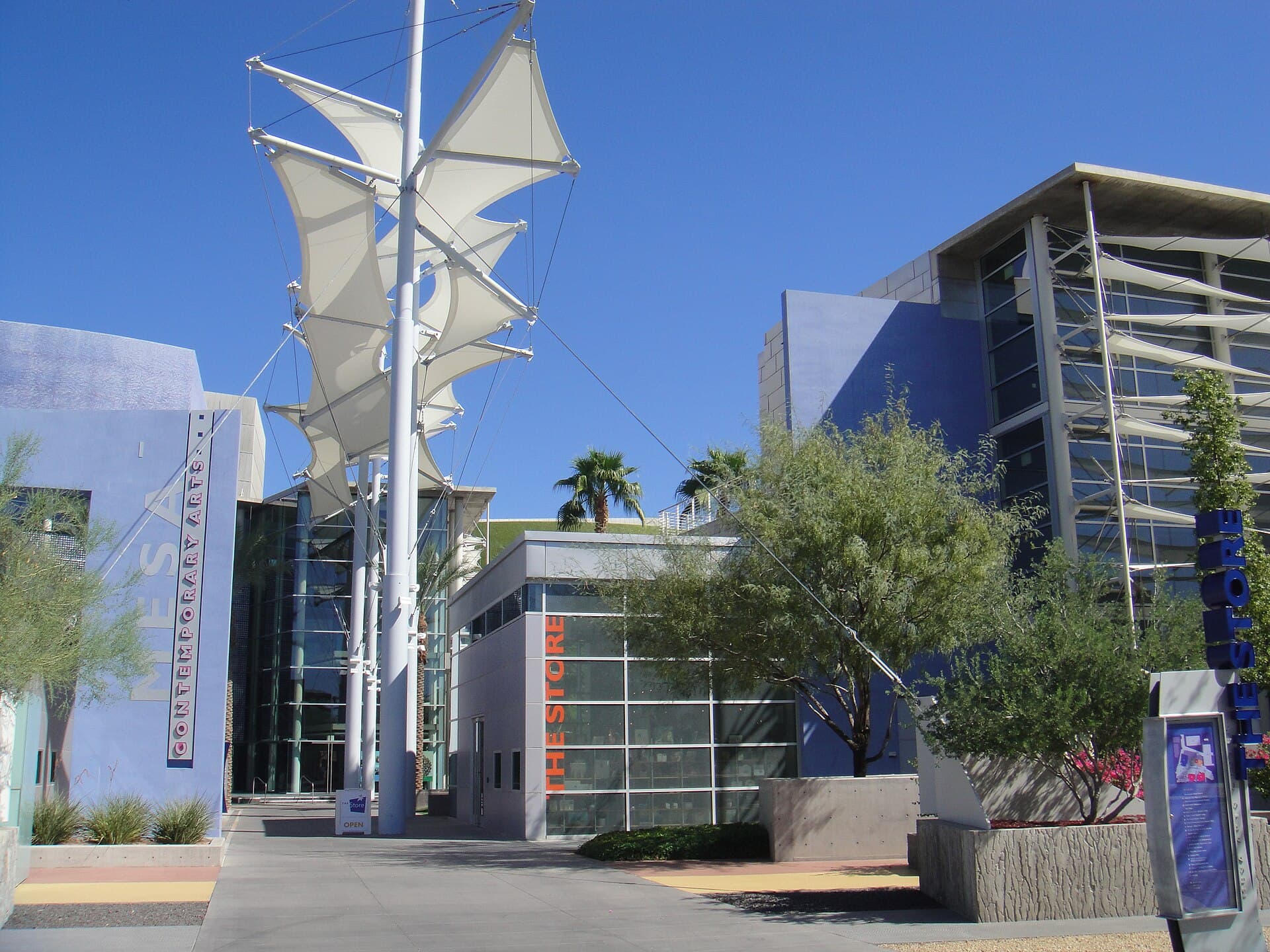
Mesa offers a varied collection of attractions for all interests. For those who appreciate art and culture, the Mesa Arts Center is a prominent destination. It is Arizona's largest arts campus, featuring 14 art studios, 5 art galleries, and 4 theaters within its 210,000 square feet. Outdoor adventurers can explore the natural beauty of the Superstition Mountains, a favored location for hiking, kayaking, tubing, and ziplining. Usery Mountain Regional Park and Papago Park also provide scenic trails for hiking. History comes alive at the Arizona Museum of Natural History, which offers insights into the region's past. For family-friendly entertainment, Mesa presents various museums and old west towns. The city also maintains a permanent sculpture collection in Downtown Mesa, including a sidewalk sculpture gallery with over 30 pieces.
Mesa experiences a hot desert climate with mild winters and intensely hot summers. The most pleasant times to visit for general outdoor activities are from mid-April to mid-June and from late September to late October, with a peak in the second week of May, when temperatures are agreeable. For those seeking cooler temperatures, late November to late February offers favorable conditions for outdoor adventures like hiking and biking. The hot season, from late May to early July and late August to late September, is suitable for hot-weather activities like swimming. Summers, particularly June to August, are scorching, with average highs often exceeding 100°F (38°C), making it a good time for indoor or water-based activities.
Mesa is served by two primary airports: Phoenix Sky Harbor International Airport (PHX) and Phoenix-Mesa Gateway Airport (AZA). Phoenix-Mesa Gateway Airport, located in southeast Mesa, is a growing regional airport with direct passenger service from Allegiant Air and Sun Country Airlines to over 40 nonstop destinations. It offers convenient access to major freeways. Public transportation in Mesa is provided through Valley Metro, offering local bus service, express service, and the Metro Light Rail. The light rail has three stops in Downtown Mesa, connecting visitors to attractions and extending into Tempe and Central Phoenix. Additionally, the free 'Downtown Buzz' bus circulates within downtown Mesa. While public transit options exist, many visitors find having a car advantageous for exploring the wider Mesa area due to its expansive nature. When visiting, especially during warmer months, always be prepared for abundant sunshine by bringing a hat, sunscreen, and plenty of water.
- What is the average temperature in Mesa?
- Mesa has an average annual temperature of 86°F (30°C). The warmest month is July, with an average high of 105°F (41°C), and the coldest month is January, with an average low of 44°F (7°C).
- Does it rain much in Mesa?
- Mesa receives less than ten inches of annual precipitation and rarely experiences snow. The driest period is in spring and early summer, particularly April and May, with minimal to no rainfall.
- What airlines fly into Phoenix-Mesa Gateway Airport (AZA)?
- Allegiant Air and Sun Country Airlines provide commercial flight service to Phoenix-Mesa Gateway Airport (AZA).
- Is there public transportation in Mesa?
- Yes, Mesa offers public transportation through Valley Metro, which includes local bus service, express service, and the Metro Light Rail. There is also a free 'Downtown Buzz' bus in the downtown area.
- What is Mesa known for historically?
- Mesa is historically known for the ancient Hohokam people who constructed an extensive and sophisticated irrigation canal system, transforming the desert into an agricultural hub.
- When is the best time for outdoor activities in Mesa?
- The best times for general outdoor tourist activities are from mid-April to mid-June and from late September to late October. For cooler outdoor activities, late November to late February is ideal.